Akira Kurosawa: Filmmaking Techniques, Seven Samurai & Ran Analysis
> This guide contains affiliate links. BlockReel may earn a small commission on qualifying purchases at no extra cost to you. All commissions go directly toward funding our DAO Film Festival and supporting independent filmmakers.
The final battle begins in rain. Not a cinematic drizzle, but a torrential, elemental downpour that turns the earth to a churning slurry of mud. Figures slip and fall, their footing lost to a world dissolving under their feet. The environment is not a backdrop; it is an antagonist, an active force of chaos that clings to every combatant, dragging them down, obscuring their vision, and amplifying the desperation of their struggle. The sound is a thick wash of water, mud, and steel. Watching the climactic sequences of Seven Samurai (1954), one is struck by the sheer physicality of the filmmaking. Akira Kurosawa does not merely stage a fight; he submerges it in a hostile natural world, making the human drama a contest against both other men and the indifferent violence of the elements. This commitment to rendering abstract conflict through tangible, sensory detail is a core component of his aesthetic. The moral stakes of the battle are felt in the strain of muscles pulling a sword from thick mud, the exhaustion of men fighting against gravity itself. For Kurosawa, the grand questions of honor, sacrifice, and social order are not debated in dialogue alone. They are tested and revealed in the body, under the punishing gaze of a camera that understands weather as drama and movement as meaning.
The Arc
Akira Kurosawa’s path to becoming the first Japanese director to achieve major international acclaim was one of patient apprenticeship and explosive breakthrough. His formation was twofold. He began as a painter, a background that informed his meticulous compositions and, in his later work, his command of color. This painterly sensibility was then disciplined by the industrial craft of filmmaking during a seven-year tenure as an assistant director, most notably under Kajiro Yamamoto. This period, beginning in the mid-1930s, grounded his artistic vision in the practical realities of the Japanese studio system, culminating in his directorial debut with Sanshiro Sugata (1943). The early postwar years were a period of consolidation, where Kurosawa began to forge the key collaborations that would define his most iconic work. The year 1948 marked a turning point, initiating his long and creatively vital partnerships with the volatile actor Toshirō Mifune and the composer Fumio Hayasaka, whose scores would become integral to the dynamic rhythm of his films.
The decisive moment in his career, and for the global reception of Japanese cinema, was the release of Rashomon in 1950. The film’s radical narrative structure, which presents four contradictory accounts of a single violent event, was a formal gauntlet thrown down to the world. Its success was not gradual; it was immediate and seismic. The film won the Golden Lion at the 1951 Venice Film Festival and an Honorary Academy Award (the Best Foreign Language Film category did not yet exist) as the most outstanding foreign language film released in the United States in 1951, catapulting Kurosawa from a respected domestic director to an international master. Rashomon established his name as a synonym for moral ambiguity and the fallibility of human perception, a theme he would return to, but never again with such concentrated formal invention. The film made Mifune an international star and opened the floodgates for a Western world suddenly eager to engage with the cinema of Japan.
What followed was a period of astonishing productivity and artistic range. Kurosawa resisted being typecast by his international success, demonstrating a remarkable genre elasticity. He followed the philosophical puzzle of Rashomon with the quiet, profound humanism of Ikiru (1952), a contemporary drama about a bureaucrat confronting his own mortality. This film solidified his reputation as a filmmaker concerned with deep ethical questions, proving his mastery was not confined to period settings. Then came Seven Samurai, a film whose scale and influence are difficult to overstate. An epic of spatial clarity and ensemble action, it established a template for the modern action film and was famously remade in the West as The Magnificent Seven (1960). Throughout the 1950s and into the 1960s, Kurosawa moved with confidence between genres, from the sharp, cynical swordplay of Yojimbo (1961), which would in turn influence the Spaghetti Western, to the taut, modern crime procedural of High and Low (1963). This body of work reveals a director in full command of his craft, applying a signature visual dynamism and rigorous dramatic architecture to a wide spectrum of narratives. He was a synthesist, blending the narrative traditions of the West (Shakespeare, the Western, the detective novel) with Japanese history and aesthetics to create a cinematic language that was internationally legible without sacrificing its cultural specificity.
The later phase of his career saw his painterly origins come full circle. After a difficult period in the 1970s, he returned to epic filmmaking with Kagemusha (1980), which won the Palme d'Or at Cannes, and Ran (1985). Ran, a vast and tragic adaptation of King Lear, is a monumental work of color filmmaking. The carefully orchestrated battles, with their color-coded armies and sweeping landscape compositions, feel like the work of a master painter given the budget and logistical power of a general. It was a culmination of his lifelong obsessions with power, betrayal, and the chaos of history, now rendered with the full force of the color spectrum. Kurosawa continued working into the 1990s, with his final feature being Madadayo (1993). His career was bookended by industry recognition, from the early shock of Rashomon’s Golden Lion to the Academy Award for Lifetime Achievement he received in 1990. By the end of his five-decade career, Kurosawa’s arc was complete: from painter to apprentice, from domestic director to global auteur, and finally, to a foundational figure in the history of cinema whose work continues to be a primary text for filmmakers everywhere.
Signature Techniques
The Unreliable Narrative as Form
While many filmmakers explore subjective points of view, Kurosawa’s formal innovation in Rashomon (1950) was to construct the entire film from the collision of mutually exclusive subjectivities. The film does not present a core event and then offer variations; rather, the event itself only exists through the irreconcilable testimonies of its participants. A bandit, a noblewoman, a murdered samurai (speaking through a medium), and a woodcutter each recount a violent encounter in a grove, and each account is presented with the full conviction of cinematic reality. This makes the unreliability of the narrator the film’s central structural principle, not merely a character trait.
The technique forces the viewer into an active, epistemological struggle. Where a conventional narrative works to establish a clear chain of cause and effect, Rashomon systematically dismantles it. The audience is denied the comfort of a definitive truth, and the film’s tension derives from this denial. The question shifts from “What happened?” to “Why is each person telling this version of what happened?” The filmmaking itself becomes an investigation into the nature of memory, pride, and self-deception. This structure, which has become a cultural shorthand (the “Rashomon effect”), stands in stark contrast to the work of a director like Alfred Hitchcock, who might use a misleading point of view for temporary suspense before ultimately revealing an objective reality. For Kurosawa in Rashomon, the competing realities are the final statement.
Weather as a Dramatic Agent
In Kurosawa’s cinema, the environment is rarely a passive backdrop. It is an active, often antagonistic, force that shapes the physical and emotional contours of the drama. The most cited example is the climactic battle in Seven Samurai (1954), staged in a torrential downpour that turns the village into a morass of mud. The rain is not decorative; it is a tactical and thematic element. It dictates the terms of the engagement, impeding movement, obscuring vision, and amplifying the sheer physical misery of combat. The samurai and bandits do not simply fight each other; they fight the landscape itself. The mud clings to them, slowing their lunges and swallowing the fallen, creating a visceral sense of struggle that is as much elemental as it is human.
This use of weather as a participant extends beyond that single sequence. In Rashomon, the relentless rain that traps the characters at the ruined gate is a physical manifestation of the moral gloom and confusion that hangs over the story. It is a world being washed, but not cleansed. In Yojimbo (1961), a sudden, violent gust of wind can punctuate a moment of decision or signal an impending confrontation, giving the forces of nature an almost sentient quality. By integrating weather so forcefully into the mise-en-scène, Kurosawa ensures that his characters’ struggles are never isolated from the world they inhabit. Their internal conflicts are mirrored and magnified by the external turmoil of the elements, a technique that gives his dramas a profound, almost mythic weight.
The Legibility of Chaos: Ensemble Blocking
Staging large-scale action involving dozens or hundreds of participants presents a fundamental directorial challenge: how to convey the scale and chaos of battle without sacrificing spatial coherence. Kurosawa’s handling of the village defense sequences in Seven Samurai remains a masterclass in maintaining legibility amidst complexity. Watching these scenes, one is always oriented. The geography of the village, its strategic entry points, and the defensive measures put in place are established with such clarity that the audience can follow the tactical flow of the conflict.
Kurosawa achieves this not through frantic cutting but through disciplined blocking and composition. He organizes figures in deep space, allowing the viewer to perceive multiple planes of action simultaneously. The movement of one group of characters has a clear spatial relationship to the movement of another. When the bandits make a charge, we understand which perimeter they are attacking and which group of samurai is moving to counter them. This approach builds suspense from comprehension rather than confusion. The audience understands the stakes of each maneuver because the film has provided the necessary geographic and strategic information. This stands in marked contrast to much contemporary action filmmaking, which often prioritizes the kinetic impact of individual shots over a sustained, coherent depiction of the overall event. Kurosawa’s method respects the audience’s intelligence, trusting that the drama is more potent when the viewer can follow the logic of the battle as a strategist would.
The Bifurcated Structure
Kurosawa’s genre elasticity is evident in his masterful crime procedural, High and Low (1963). The film’s most distinct formal quality is its severe two-part structure, which functions as a cinematic argument about social class. The first half is a masterwork of contained tension, a chamber piece set almost entirely within the spacious, air-conditioned hilltop apartment of a wealthy shoe executive whose son has been targeted by a kidnapper. The drama is psychological, playing out through tense phone calls and moral debates, with the city of Yokohama visible but distant through the panoramic windows.
Then, at its midpoint, the film breaks its own form. It descends from the executive’s sterile perch into the city below, transforming into a sprawling, naturalistic police procedural. The camera leaves the world of the privileged and plunges into the sweltering, grimy streets, diners, and drug dens of the criminal underworld. This is not simply a change of scenery; it is a deliberate structural schism. The film’s physical journey from the “high” world to the “low” makes the social stratification of modern Japan its true subject. The suspense of the kidnapping plot is the engine, but the film’s core investigation is into the vast, invisible gulf between the two worlds that coexist in the same city. By cleaving the narrative in two, Kurosawa forces the audience to experience this social distance not as an abstract concept, but as a tangible, spatial reality.
Color as Thematic Organization
After a long and distinguished career in black and white, Kurosawa’s late-period work embraced color with the discipline and symbolic force of a painter. In Ran (1985), his epic retelling of King Lear, color is not used for simple realism; it is a primary organizational tool for both spectacle and theme. The most prominent example is the color-coding of the three sons’ armies. The forces of Taro, the eldest, are identified by yellow banners; Jiro’s by red; and Saburo’s by blue.
On a practical level, this system provides immediate legibility during the film’s vast battle sequences. As armies clash and maneuver across immense landscapes, the viewer can instantly identify the different factions, track their movements, and comprehend the shifting tides of the conflict. It is a brilliant solution to the problem of visual information overload in epic filmmaking. But the function is also thematic. The bold, primary colors create compositions that feel less like historical reenactments and more like monumental, moving tapestries. The violence is abstracted into a terrifyingly beautiful spectacle of pure color and form. When Lord Hidetora’s gray castle is besieged and its inhabitants slaughtered, the splashes of red and yellow from the attacking armies against the monochrome stone create a formal statement about the destruction of order. It is color used not as decoration, but as a fundamental element of the film’s dramatic and visual architecture.
Case Study: Rashomon
The arrival of Akira Kurosawa’s Rashomon (1950) on the world stage was not merely a career breakthrough; it was a seismic event that reconfigured the global cinematic map. Winning the Golden Lion at the 1951 Venice Film Festival and a subsequent Honorary Academy Award in 1952, the film introduced international audiences not only to Kurosawa but to the formal and thematic possibilities of Japanese cinema. For working filmmakers, its primary lesson remains one of structural audacity. The film’s enduring power lies in its decision to make narrative fallibility its central subject.
Based on two short stories by Ryūnosuke Akutagawa, Rashomon presents four contradictory accounts of a bandit’s assault on a samurai and his wife. Through the testimonies of the bandit (Toshirō Mifune), the wife, the samurai (speaking through a medium), and a woodcutter who claims to have witnessed the event, the film refuses to grant the audience a single, authoritative truth. This is not simply a mystery to be solved; it is a formal inquiry into the nature of memory, ego, and testimony itself. Kurosawa constructs the film as a mechanism for demonstrating how self-interest and shame irrevocably color the past. Each narrator, in their telling, emerges as the protagonist of their own tragedy or triumph, a performance of identity for an unseen court.
The collaboration with Mifune is foundational to the film’s effect. His portrayal of the bandit Tajōmaru is a work of explosive physicality, a performance that feels less psychological than elemental. He moves with a feral, almost animalistic energy that directly contrasts with the more stylized, Noh-influenced performances of the samurai and his wife. This clash of acting styles within the same frame reinforces the film’s central theme: that each person inhabits their own subjective reality, with its own distinct rules of conduct and expression.
Kurosawa’s direction, in concert with his collaborators, gives each testimony its own visual logic. The film’s celebrated cinematography, by the great Kazuo Miyagawa, famously shoots directly into the sun, a technical choice that was unconventional at the time. This visual motif of dappled, often blinding light filtering through the forest canopy does more than create atmosphere. It serves as a visual metaphor for the film’s elusive, fractured truth. The light is both revealing and obscuring, illuminating a patch of ground while casting the surrounding area into deep shadow. The truth of the incident, like the forest floor, is a mosaic of light and darkness, with no single perspective able to capture the whole.
The film’s structure has become so influential that the “Rashomon effect” is now common parlance for any situation marked by contradictory eyewitness accounts. Yet few subsequent films have been as rigorous in their commitment to ambiguity. Where a lesser filmmaker might eventually reveal the “true” version of events, Kurosawa denies this narrative comfort. The woodcutter’s final testimony, which initially appears to be the objective account, is itself revealed to be compromised. The film’s ultimate point is not to determine who is lying, but to suggest that a purely objective retelling may be impossible when human ego is at stake. For the filmmaker studying narrative, Rashomon is a masterclass in how to build a story where the form (the conflicting accounts) and the theme (the subjectivity of truth) are one and the same. It is a work that trusts the audience to grapple with uncertainty, offering not an answer but a profound and enduring question.
Case Study: Seven Samurai
If Rashomon announced Kurosawa as a master of philosophical inquiry, Seven Samurai (1954) cemented his status as a master of epic spectacle and kinetic storytelling. At a running time of nearly three and a half hours, the film is a monumental achievement in action filmmaking, but its genius lies not in scale for its own sake, but in its absolute clarity. For the contemporary director staging complex sequences, Seven Samurai remains the foundational text on how to manage spatial geography, ensemble movement, and dramatic pacing within a chaotic environment.
The film’s premise is famously direct: a village of farmers, besieged by bandits, hires a group of masterless samurai (rōnin) for protection. This simple structure provides the armature for a detailed study in logistics, strategy, and community. Kurosawa devotes a significant portion of the narrative to the planning of the village’s defense. We watch the samurai survey the terrain, map out fortifications, and train the terrified farmers. This procedural focus is not narrative padding; it is essential groundwork that makes the subsequent action legible. By the time the bandits attack, the audience understands the layout of the village, the strategic importance of its entry points, and the specific role of each samurai. This is a principle often neglected in modern action, where geographic coherence is frequently sacrificed for visceral impact. Kurosawa, like a great general, ensures his audience understands the battlefield before the first arrow is fired.
This clarity extends to the blocking of the ensemble. Each of the seven samurai has a distinct personality, fighting style, and function within the group, from the wise leader Kambei to the volatile aspirant Kikuchiyo (Toshirō Mifune). Kurosawa uses multiple cameras to capture the action, a technique that allowed him to film long, continuous takes of complex choreography from various angles. This method, while common now, was a significant operational choice at the time. It gives the editor a wealth of material to construct sequences that are both dynamic and comprehensible. Watching the battle sequences, one is never confused about where the combatants are in relation to one another or to the larger strategic objective. The cutting pattern prioritizes orientation, allowing the viewer to follow the shifting tides of the battle across multiple fronts simultaneously. One might contrast this with the more disorienting “shaky-cam” aesthetic of a director like Paul Greengrass, whose approach in the Bourne films prioritizes subjective panic over objective clarity. Kurosawa’s method achieves a different kind of immersion, one rooted in the spectator’s understanding of the total strategic situation.
Perhaps the most studied element of the film is its use of weather as a dramatic agent. The final, decisive battle is staged in a downpour, turning the village into a quagmire of mud and rain. This is not mere set dressing. The environment becomes an active participant in the conflict. The mud slows the movements of both samurai and bandits, making every step a struggle and every fall potentially fatal. The rain obscures vision and amplifies the sounds of struggle, creating an atmosphere of primal desperation. The physical exhaustion of the characters is palpable, written on their bodies as they slip and slide through the muck. The choice transforms the battle from a clean display of swordplay into a grueling war of attrition against both the enemy and the elements themselves. It is a powerful example of how environmental factors can be integrated into the core drama of an action sequence, externalizing the internal state of the characters and raising the physical stakes to an almost unbearable degree. Seven Samurai is more than an action film; it is a treatise on the architecture of conflict, a work whose lessons in spatial coherence and environmental storytelling are as relevant today as they were upon its release.
Collaborators
Akira Kurosawa’s cinema is one of grand authorial vision, yet that vision was realized through a set of recurring, foundational collaborations. His company of actors, technicians, and composers formed one of the great ensembles in film history, a group whose shared language enabled the director to escalate his formal and thematic ambitions from one project to the next.
His 16-film partnership with actor Toshirō Mifune is the most celebrated of these alliances. Beginning with Drunken Angel (1948), Kurosawa found in Mifune an instrument of raw, kinetic force. Mifune’s performance as the bandit Tajōmaru in Rashomon (1950) is a study in explosive, almost animalistic physicality, a portrayal that defined the film’s wild, untamable energy and became his international calling card. Yet Kurosawa also channeled this energy into disciplined, iconic forms, as with the cynical, swaggering ronin Sanjuro in Yojimbo (1961), where Mifune’s coiled stillness and sudden bursts of violence give the film its sardonic rhythm.
As a crucial counterweight to Mifune’s volatility, Kurosawa relied on the quiet gravitas of Takashi Shimura. Shimura’s work is defined by a profound stillness and moral authority, most indelibly in his portrayal of the dying bureaucrat Kanji Watanabe in Ikiru (1952). The film’s power rests almost entirely on Shimura’s subtle, internalized performance of a man awakening to his own mortality. In Seven Samurai (1954), he is Kambei, the wise, war-weary leader of the samurai, providing the film’s moral and strategic center. Where Mifune was the storm, Shimura was the mountain, and Kurosawa’s compositions often depended on the dialectic between them.
The look of Kurosawa’s most iconic black-and-white films was shaped by cinematographer Asakazu Nakai. Nakai shot Seven Samurai, Throne of Blood (1957), and High and Low (1963), among others. His contribution to the climactic battle in Seven Samurai involved orchestrating a multi-camera setup with long telephoto lenses, a strategy that compressed the chaotic space of the muddy village and allowed Kurosawa to cut between distinct planes of action captured simultaneously, creating a visceral sense of struggle and exhaustion. For Ran (1985), Nakai returned to Kurosawa’s side (along with Takao Saitō and Masaharu Ueda) to translate this principle into color, managing the logistics of capturing vast armies in motion with breathtaking clarity.
Kurosawa’s early soundscapes were defined by composer Fumio Hayasaka. For Rashomon, Hayasaka composed a score that famously echoes Maurice Ravel's "Boléro," using its insistent, looping rhythm to musically represent the obsessive and contradictory nature of the film’s testimonies. His work provided a psychological and emotional texture that moved beyond simple accompaniment, becoming an integral part of the film’s narrative architecture. After Hayasaka’s premature death in 1955, Kurosawa worked with Masaru Sato, but for his late-career epics, he turned to Toru Takemitsu. Takemitsu’s score for Ran is a monumental work of post-Mahlerian dissonance, eschewing traditional melodies for vast, atmospheric blocks of sound that evoke the film’s apocalyptic tone. During the film’s central castle siege, Kurosawa famously removes all diegetic sound, leaving only Takemitsu’s mournful, harrowing score to comment on the carnage, a decision that elevates the sequence from action spectacle to abstract tragedy.
Finally, the physical worlds of these films were the domain of production designer Yoshirō Muraki. From the cramped, oppressive police headquarters of High and Low to the sprawling village built for Seven Samurai, Muraki’s designs were exercises in dramatic function. His greatest achievement was the construction of the massive castle sets for Ran, built on the slopes of Mount Fuji only to be systematically destroyed by fire for the film’s central sequence, a testament to Kurosawa’s commitment to capturing physical reality on an epic scale.
Critical Reception and Counter-Readings
From the moment Rashomon won the Golden Lion at the 1951 Venice Film Festival, Akira Kurosawa’s work has been a central object of international film criticism. The dominant Western reading, solidified by influential critics like Donald Richie in his foundational book The Films of Akira Kurosawa, framed him as a great humanist. For Richie and others, Kurosawa’s films transcended their Japanese settings to explore universal questions of justice, truth, and existential meaning. Roger Ebert championed this view, writing of Ikiru that it is "one of the few movies that might actually be able to inspire the viewer to lead his or her life a little differently." This reading positions Kurosawa alongside figures like Ingmar Bergman and Vittorio De Sica as a master of moral inquiry, with Rashomon serving as the ultimate parable of subjective truth and Seven Samurai as a noble epic of collective action.
A second, more technical line of analysis comes from formalist critics, most notably David Bordwell. In works like On the History of Film Style and in numerous essays, Bordwell dissects the mechanics of Kurosawa’s craft. He focuses on the director’s use of the telephoto lens to create flattened, "planimetric" compositions, his precise control over ensemble staging, and his rhythmic cutting patterns. For Bordwell, Kurosawa’s genius is not just in his thematic depth but in his rigorous, problem-solving approach to visual storytelling. This formalist reading moves the conversation away from abstract "humanism" and toward a concrete appreciation of Kurosawa as a master stylist, a peer of Sergei Eisenstein in his command of montage and of Kenji Mizoguchi in his mastery of the long take.
These laudatory Western receptions have not been without their complications and counter-readings. Within Japan, particularly during the 1960s, a contingent of critics and filmmakers associated with the Japanese New Wave (like Nagisa Oshima) viewed Kurosawa with skepticism. The charge, stated in various forms, was that he was "too Western." His frequent adaptations of European literature (Shakespeare for Throne of Blood and Ran, Gorky for The Lower Depths (1957), Dostoevsky for The Idiot (1951)) and his use of narrative structures familiar to Hollywood were seen by some as a dilution of Japanese aesthetic purity. As scholar Mitsuhiro Yoshimoto argues in Kurosawa: Film Studies and Japanese Cinema, the "universal humanist" label itself can be seen as a Western critical construct that de-contextualizes the films from their specific Japanese cultural and historical moments.
More contemporary ideological critiques have re-examined the films through lenses of gender and power. While Rashomon is celebrated for its exploration of subjectivity, feminist film theory offers a crucial counter-reading of the testimony of the wife, Masako (Machiko Kyō). Her account is the only one that centers on her own sense of honor and shame, yet it is framed and ultimately superseded by the accounts of the men. The film’s narrative structure, which grants the final, "redeeming" perspective to the male woodcutter, can be read as a patriarchal containment of female agency. Such readings, emerging from academic journals like Camera Obscura and Signs, do not dismiss the film's formal power but complicate its humanism by asking whose humanity is truly at its center.
What Working Filmmakers Should Steal
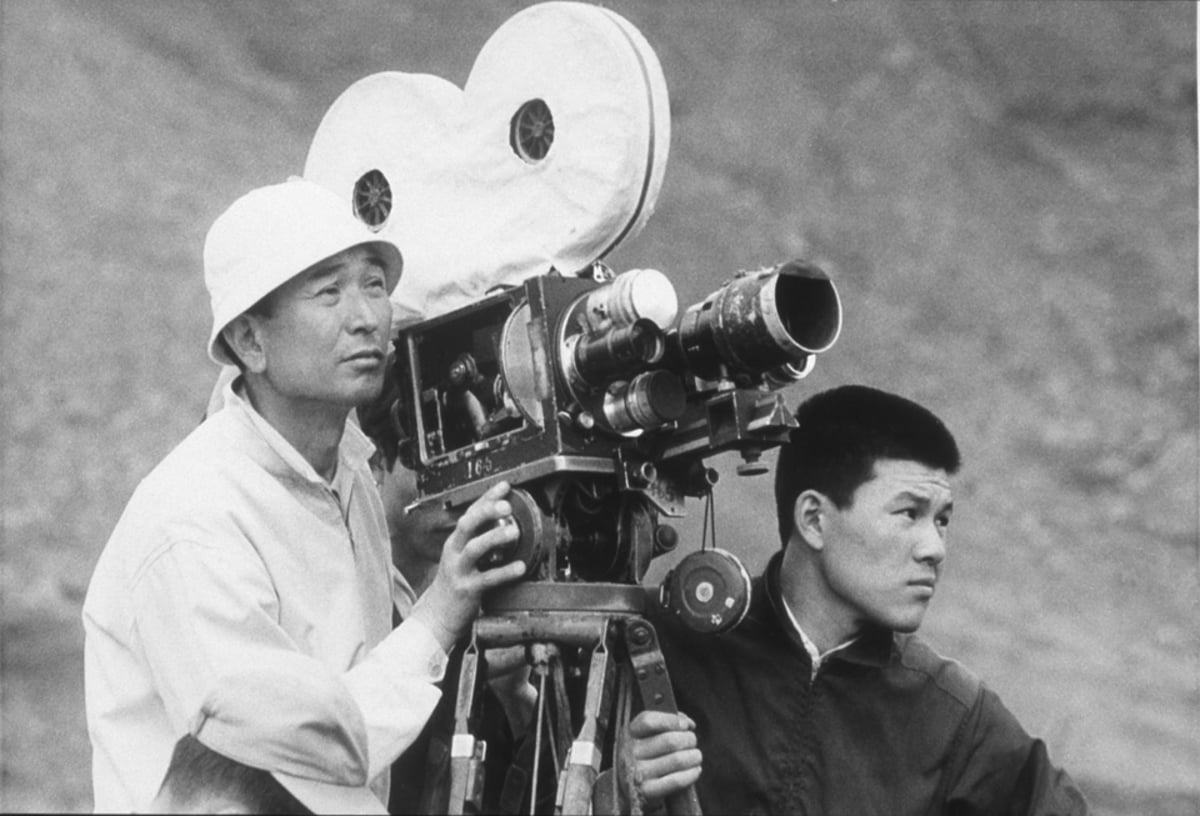
Telephoto Action Staging In the battle sequences of Seven Samurai and Ran, Kurosawa and his cinematographers used extremely long lenses. This technique compresses depth, making the space feel dense and claustrophobic. Movement toward or away from the camera (on the Z-axis) appears slow and arduous, emphasizing the physical effort of running through mud or charging up a hill. By stacking multiple planes of action into a single, flattened frame, a duel in the foreground can be visually linked to an army advancing in the background, creating a composition that is both chaotic and graphically clear.
The Wipe as Percussive Punctuation For Kurosawa, the wipe is not a gentle, old-fashioned transition but a sharp, rhythmic editing tool. In films like Yojimbo and Sanjuro (1962), he uses fast horizontal wipes that slash across the screen, functioning like a graphic match or a percussive drum hit. This connects disparate scenes with a jolt of energy, propels the narrative forward aggressively, and imposes a bold authorial signature onto the film's pacing. It is an edit that calls attention to itself to create a specific effect, rather than hiding in the service of seamless continuity.
Multi-Camera Coverage for Spontaneity Kurosawa was a pioneer of shooting action scenes with multiple cameras simultaneously. For the final battle in Seven Samurai, he had three cameras running at once, often with different lens lengths, capturing the action from various angles. This method serves two functions: it provides a wealth of coverage for the edit, allowing for complex and dynamic cutting patterns from a single performance of a stunt, and it liberates the actors to react spontaneously within the staged chaos, knowing that their movements will be captured. The key is that the blocking is designed to be legible from multiple vantage points.
Weather as a Primary Antagonist In Kurosawa's films, weather is never just atmosphere; it is a character and a narrative force. The torrential rain in Rashomon creates a purgatorial space for the telling of the story. The thick, persistent fog in Throne of Blood externalizes Washizu's moral confusion and traps him in the labyrinthine forest. The howling wind in Yojimbo sweeps dust through the desolate town, a physical manifestation of the social decay. The technique involves committing to the physical consequences: the mud, the cold, the obstructed vision, and the overwhelming sound design that makes the environment an active participant in the drama.
The Axial Cut as Exclamation Kurosawa frequently breaks the 30-degree rule by cutting along the camera's axis to a tighter shot of a subject without changing the angle. This "punch-in" is not meant to be invisible. It functions as a form of visual emphasis, a sudden intensification that underscores a moment of dawning realization, a critical line of dialogue, or a silent, intense reaction. This can be seen in the tense confrontations of High and Low, where an axial cut isolates a character's face at the precise moment the psychological stakes are raised.
Color as Structural and Symbolic Code In his later color films, Kurosawa used color not just for spectacle but as a core organizational principle. In Ran, the armies of Lord Hidetora’s three sons are assigned the primary colors of yellow, red, and blue. This coding makes the vast battle sequences instantly legible, allowing the viewer to track the shifting allegiances and tactical movements. On a symbolic level, it reduces the warring factions to elemental forces, turning the human tragedy into an abstract, color-coded diagram of self-destruction.
Further Study
Films, in viewing order
Rashomon* (1950), the film that opened Japanese cinema to the world and the clearest statement of Kurosawa's structural daring. Ikiru* (1952), the humanist center of the filmography and Takashi Shimura's greatest performance. Seven Samurai* (1954), the foundational text on staging ensemble action with geographic clarity. Throne of Blood* (1957), Shakespeare filtered through Noh, with the fog as a co-author. Yojimbo* (1961), the tonal blueprint later mined by Leone, Walter Hill, and the Coen brothers. High and Low* (1963), a masterclass in bifurcated structure and moral geography. Ran* (1985), the late-career color epic, Shakespeare rewritten as an elemental cosmology.
Primary and secondary reading
Kurosawa, Akira. Something Like an Autobiography. Translated by Audie E. Bock. Vintage, 1983, the essential primary source, ending at Rashomon*. * The Akira Kurosawa Foundation, the definitive scholarly hub, curated by researchers with access to family and studio archives. Roger Ebert, Great Movie: Seven Samurai and Great Movie: Ikiru*, the clearest articulation of the humanist reading.
Critical Texts and Scholarship
Richie, Donald. The Films of Akira Kurosawa*. University of California Press, third edition, 1998. The foundational English-language study; still the starting point for any serious inquiry. Yoshimoto, Mitsuhiro. Kurosawa: Film Studies and Japanese Cinema*. Duke University Press, 2000. The essential counter-reading that pushes back on the "universal humanist" frame and re-anchors the films in postwar Japan. Prince, Stephen. The Warrior's Camera: The Cinema of Akira Kurosawa*. Princeton University Press, revised edition, 1999. The most rigorous study of Kurosawa's visual system, from lens choice to editing rhythm. Bordwell, David. "Kurosawa and His Legacy," in Figures Traced in Light: On Cinematic Staging*. University of California Press, 2005. The formalist reading, focused on planimetric staging and axial cutting. Galbraith IV, Stuart. The Emperor and the Wolf: The Lives and Films of Akira Kurosawa and Toshiro Mifune*. Faber and Faber, 2002. The definitive dual biography of the director-actor partnership.
Sources and Further Reading
Research References
1. The Akira Kurosawa Foundation (akirakurosawa.info), official archive maintained by the Kurosawa estate.
---
© 2026 BlockReel DAO. Master Studies series. Licensed under CC BY-NC-ND 4.0.