BBC Studios Greenlights Live-Action Kiki's Delivery Service Series
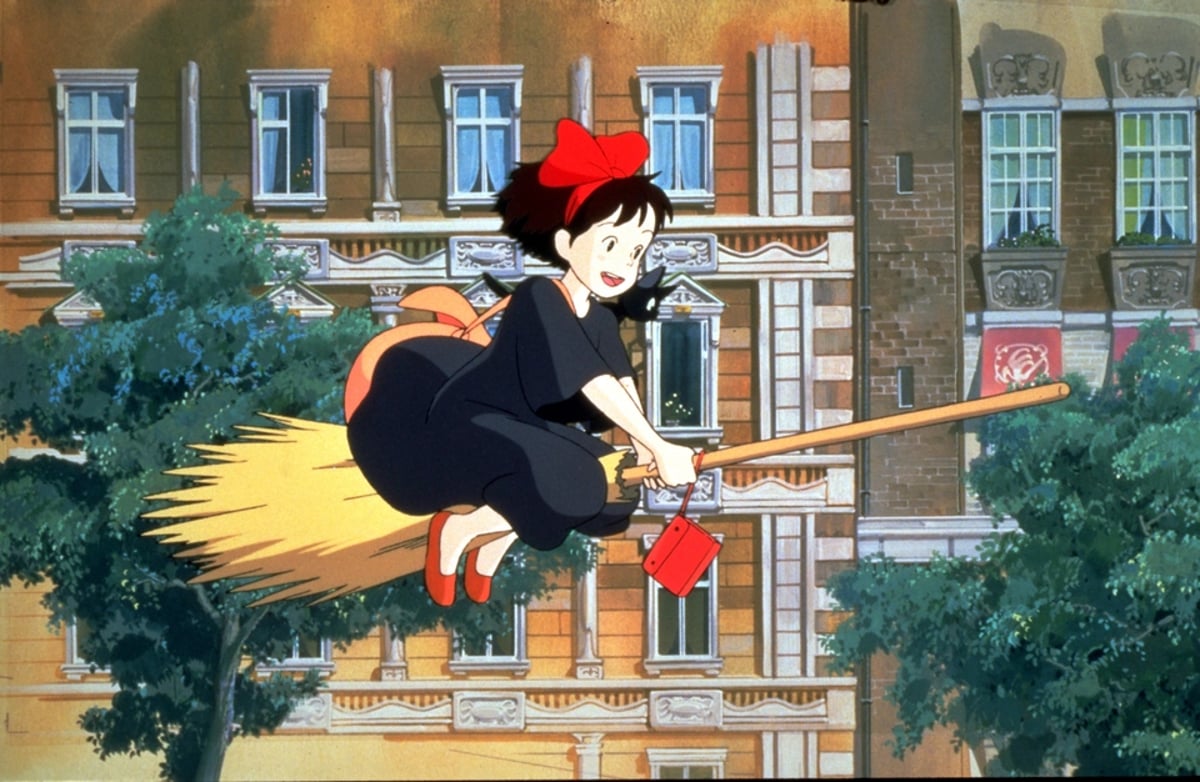
Another day, another beloved animated classic slated for the live-action treatment. This time, it's Hayao Miyazaki's _Kiki''s Delivery Service_, the Studio Ghibli touchstone, making the leap not to the big screen, but to the small one. BBC Studios Kids & Family has announced a partnership with UK-based Wheel In Motion and Japan's Kadokawa Corporation to develop a 10 x 30-minute live-action series based on the Eiko Kadono books that originally inspired Miyazaki's critically acclaimed film. (For context on the original's enduring theatrical pull, see our coverage of the 4K IMAX restoration returning to theaters.)
One might question the impulse to adapt a property already so meticulously crafted and globally cherished in its original form. Is it an urge for broader accessibility, a new revenue stream, or simply a production executive's quiet conviction they can, in fact, "do it better" this time around? Whatever the impetus, the move underscores a persistent industry trend: the exhaustive mining of established intellectual property, particularly animation, for new, typically live-action, iterations. It's a strategy that rarely veers into the truly novel, instead relying on the built-in audience and brand recognition that accompanies a property like _Kiki''s Delivery Service_. The tensions around IP stewardship, authorship, and reinterpretation are explored in our piece on the conflicted meta-narrative of Riz Ahmed's 'Bait'.
Per the announcement from Max Goldbart at Deadline, Irena Brignull, known for her work on _The Boxtrolls_, Sky's _Skellig_, and Netflix's _The Little Prince_, is attached to pen the adaptation. This marks the first time Kadono's narrative will be presented in a live-action series format. The production is currently in development, a crucial distinction often lost in the industry's rush to tout new projects. "In development" means scripts are being written, budgets are being crunched, and a thousand creative and financial hurdles still lie ahead before a single frame is shot. It's a long road from concept to screen, and many projects, even those with significant IP attached, never make it past this stage. Grainne McNamara, VP Development for BBC Studios Kids & Family, expressed enthusiasm, stating the collaboration aims "to bring _Kiki''s Delivery Service_ to life for a new generation on a global stage." She noted the "ambitious live-action adaptation offers a unique opportunity to reimagine its magic, warmth and sense of adventure."
The original _Kiki''s Delivery Service_, released by Studio Ghibli in 1989, grossed substantial numbers, garnered critical praise, and collected multiple awards. Its enduring appeal lies not just in its whimsical premise, but in its nuanced exploration of themes that resonate with audiences across generations. A 13-year-old witch leaving home to find her place in the world, establishing a fledgling delivery service in the port town of Koriko, forging unanticipated connections through optimism and kindness, it's a narrative foundation that, despite its fantastical elements, is deeply relatable. Miyazaki's masterful direction, coupled with the distinctive Ghibli animation aesthetic, created an experience that is at once intimate and expansive, deeply personal yet universal. To attempt to transpose this particular alchemy into live-action, for a serialized format no less, presents a series of fascinating, if daunting, challenges for cinematographers, production designers, and VFX supervisors alike.
Consider the visual language of the original film. Miyazaki's _Kiki_ is a paragon of world-building through subtle, consistent detail. The bustling European-inspired cityscapes of Koriko, the quaint charm of Kiki's family home, the lush, verdant landscapes, and the often-overcast, painterly skies, these elements are not mere backdrops; they are integral characters in Kiki's journey. Replicating this sense of place and atmosphere in live-action, where every leaf, every cobblestone, every reflection in a shop window must be physically constructed or digitally rendered, demands an extraordinary degree of foresight and artistic cohesion.
Adapting Animated Aesthetics to Live-Action Realities
For a cinematographer approaching this project, the core directive would likely be to translate the film's inherent warmth and soft light into live-action. Roger Deakins, for instance, frequently employs careful use of natural light and practical sources to imbue his frames with a sense of gentle realism, even in fantastical settings, as seen in his work on _Blade Runner 2049_ or _Sicario_. The challenge here would be capturing the vibrant reds, blues, and forest greens that define Kiki's palette without making them feel artificial in a live-action context. One might consider a soft, diffusion-heavy approach to lighting, perhaps leaning into techniques that emphasize natural fall-off and motivated sources, rather than overly theatrical setups. The full prep workflow that underpins decisions like these is mapped out in our cinematography pipeline guide.
The flying sequences, which are central to Kiki's character and business, offer another significant hurdle. Miyazaki's animation allows for an effortless grace in Kiki's broomstick flights, a sense of childlike wonder and freedom. Translating this to live-action without veering into outright CGI artificiality or losing the inherent charm will require sophisticated camera movement and thoughtful VFX integration. Is it a wire-work performance shot on greenscreen, composited against meticulously built digital matte paintings? Or will they aim for a more grounded, perhaps slightly less kinetic, approach that emphasizes Kiki's perspective and emotional state during flight, rather than simply pure spectacle?
One might look to films like Alfonso Cuarón's _Gravity_, where seamless digital environments and complex camerawork create a visceral sense of movement and presence. While _Kiki_ is a far gentler narrative, the principles of marrying performer movement with digital environments, and grounding the audience's perspective within that movement, remain relevant. Cinematographers often articulate a desire to "feel" the air, the speed, the wind in a character's hair. This is where subtle visual cues, the rustle of clothing, hair movement orchestrated by fans, the specific quality of light as it passes through thin air, become paramount.
Production design, under the leadership of a professional like Eve Stewart (known for her work on _The King's Speech_ and _Les Misérables_), would need to grapple with creating a Koriko that feels both European and distinctly Ghibli. The animated film's architecture, transportation, and mundane objects all possess a handmade quality, a sense of lived-in history. Replicating this without it feeling like a theme park requires an acute attention to textured surfaces, aged materials, and a deliberate avoidance of overly pristine or generic contemporary aesthetics. It's about building a world that feels as if it has always existed, rather than one freshly constructed for the camera. For a deeper look at how art departments stretch every dollar while still building believable worlds, see our production design on micro-budgets breakdown.
VFX supervisor involvement would be critical from the earliest stages of pre-production. The magic in _Kiki''s Delivery Service_ is subtle: a talking cat, a broomstick that flies, but otherwise, a world rooted in recognizable reality. The temptation might be to over-CGI these elements, losing the delicate balance that defines the original. The black cat, Jiji, for instance, is a pivotal companion. Will this be a practical animatronic puppet, sometimes subtly enhanced with CGI, or a fully digital creation? The choice has profound implications for performance, interaction, and audience connection. As seen with the uncanny valley many productions stumble into when attempting photo-realistic animal characters, restraint is often the more effective path. The restraint-versus-spectacle calculus is something we've examined across this year's Oscar VFX nominees.
The Nuance of Narrative in a New Format
Beyond the technical hurdles, there's the question of narrative rhythm. A 10 x 30-minute series allows for a more expansive exploration of Kiki's journey than a feature film. This could be an advantage, offering the opportunity to delve deeper into her internal struggles, her growing friendships, and the daily challenges of her fledgling business. The original film is a masterclass in elegant pacing, balancing moments of quiet introspection with engaging plot progression. The series format could potentially allow for a more nuanced character arc, showing the subtle shifts in Kiki's confidence and burgeoning independence, rather than condensing them.
The pressure on Irena Brignull, the screenwriter, is significant. _Kiki''s Delivery Service_ is ultimately a story about finding one's purpose, coping with self-doubt, and the quiet dignity of work and resilience. Will the series maintain this gentle, observational tone, or will it feel compelled to introduce more overt conflict or dramatic contrivances to sustain a serialized narrative? This is where many adaptations of beloved, character-driven properties face their greatest difficulty: balancing fidelity to source material with the demands of a new medium and contemporary audience expectations.
Often, producers and writers fall into the trap of believing that "more" plot or "higher" stakes are invariably better. But for a story like Kiki's, the stakes are profoundly personal and internal. Her struggle to maintain her magic, her feelings of inadequacy, her temporary loss of flying ability, these are emotional beats, not action sequences. To transform these into compelling weekly episodes without diluting their essence requires a deep understanding of the original work's thematic core. It also necessitates a keen sense of pacing for television, a craft in itself that differs significantly from feature film structuring. For writers wrestling with that craft, our screenwriting craft masterclass on theme, character, and scene design digs into the underlying principles.
The involvement of Kadokawa Corporation, the Japanese publishing giant, alongside BBC Studios and Wheel In Motion, signifies a continued global interest in leveraging established Japanese IP for international markets. This isn't a new phenomenon. For decades, Japanese manga and anime have served as a fertile ground for adaptation, with varying degrees of success. From the surprise critical reception of Netflix's live-action _One Piece_ to the misfires that preceded it, the industry constantly seeks to translate beloved narratives into new forms. However, the path is fraught with cultural nuances and audience expectations. The delicate balance needed to satisfy both existing fans and new viewers while remaining true to the spirit of the original is a tightrope walk few manage with consistent success.
The question for industry veterans is always: what does this particular adaptation truly bring to the table? Is it an opportunity to re-examine themes through a different lens, or is it a more pragmatic exercise in brand extension? For cinematographers, the challenge is always about how to tell the story with light and movement, regardless of the source. For editors, it's about finding the rhythm and emotional beats that resonate with an audience accustomed to a very particular cinematic language from the original. And for writers, the pressure is immense to capture the essence without imitation. The current "in development" status suggests there is still ample scope for these craft conversations to shape the project's eventual form. One hopes the collaborative spirit, much like Kiki's own, will foster a thoughtful, rather than purely commercial, approach to this cherished narrative.
---
© 2026 BlockReel DAO. All rights reserved. Licensed under CC BY-NC-ND 4.0 • No AI Training. Originally published on BlockReel DAO.