Boyle Targets 28 Years Later III Shoot for 2027
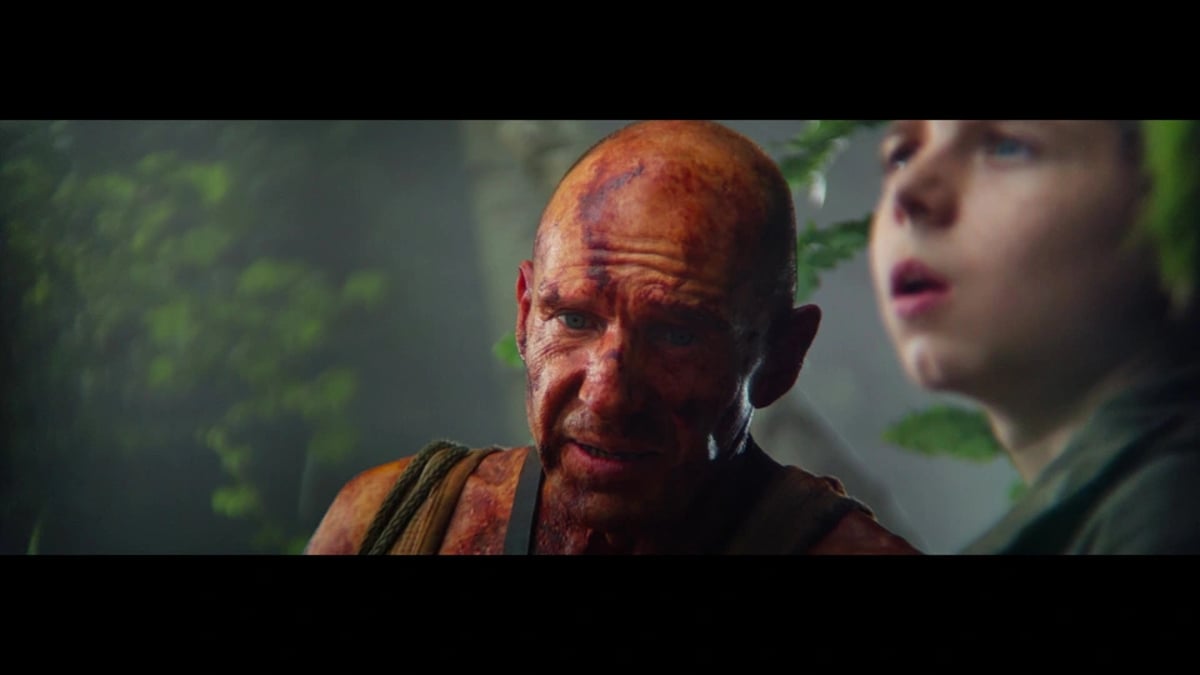
The seemingly endless cycle of franchise reboots and belated sequels often feels less like an artistic imperative and more like a quarterly earnings call directive. Yet, for certain properties, the conversation persists, fueled by original creative teams and a fervent audience. Such is the case with the 28 Days Later saga, where director Danny Boyle recently indicated his hope to film 28 Years Later III next year, aiming to conclude the narrative almost a quarter-century after its genesis.
Boyle, the Oscar-winning director whose diverse filmography ranges from taut thrillers to visually exuberant dramas, has been vocal about his desire to revisit the post-apocalyptic landscape he first envisioned in 2002. Following the latest installment, 28 Years Later: Bone Temple, Boyle expressed a pragmatic frustration, noting he would have preferred to have filmed the third chapter "consecutively with the previous two movies." The logistical realities of filmmaking, however, often intervene, even for seasoned directors. "We ran out of time," he told JoBlo, explaining the bottleneck revolved around location. "Because it's set in an area of Britain where you can only film at certain times of the year." He added, "We ran out of time this year, we literally ran out of time... So it'll be, hopefully, fingers crossed, next year."
This isn't just a director's idle wish. The project has moved beyond mere speculation. Last December, it was reported that Sony is moving forward with 28 Years Later III, with Alex Garland, the original screenwriter, returning to pen the script. Boyle, for his part, has consistently expressed interest in returning to the director's chair for this concluding chapter.
The journey of this particular trilogy, or rather, the expansion of a duology into a trilogy, offers an interesting case study in the evolution of franchise development within the studio system. When Sony secured the rights for the 28 Years Later trilogy, they had the option for the third film, but critically, they "waited to greenlight it." Instead, the studio opted to shoot the first two movies, 28 Years Later (directed by Boyle) and 28 Years Later: The Bone Temple (helmed by Nia DaCosta), back-to-back. This strategy, shooting sequential films concurrently or in close succession, is a known approach to manage costs, retain talent, and capitalize on production efficiencies. One need only look at Peter Jackson's Lord of the Rings or Hobbit trilogies, or the more recent Avatar sequels, to see this model in action. It's a bold move, requiring significant upfront investment and faith in the creative vision, but it can streamline what would otherwise be disparate productions spaced years apart.
The original film, 28 Days Later, which premiered in 2002, redefined the zombie genre, or at least the "infected" narrative, for a new generation. Directed by Boyle and written by Garland, it injected a raw, kinetic energy into the post-apocalyptic landscape. Its successor, Juan Carlos Fresnadillo's 28 Weeks Later (2007), expanded the world with arguably even more visceral intensity and a broader scope, albeit without Boyle or Garland at the directorial or writing helm, respectively. The current approach with 28 Years Later and the planned 28 Years Later III brings the core creative team, Boyle and Garland, back into alignment, which no doubt is a primary motivator for fans of the original.
For cinematographers and filmmakers considering the technical challenges of this franchise, the stylistic choices from 28 Days Later remain particularly instructive. The film famously utilized consumer-grade digital video cameras (Canon XL1 MiniDV cameras, in particular) rather than traditional film. This decision, at the time, was a radical departure for a mainstream horror-thriller and was not purely born of aesthetic preference. The production faced budgetary constraints, coupled with the desire for a fast, nimble shooting style that could capture the desolate, emptied-out cityscapes of London. The visual noise and inherent grittiness of MiniDV footage became a key part of the film's aesthetic, not a flaw to be overcome, but an intentional component of its unsettling realism and pervasive sense of decay. It demonstrated that visual fidelity, in the traditional sense, could be sacrificed for atmosphere and immediacy, profoundly influencing independent filmmaking and challenging conventional notions of what constituted "cinematic quality." That same democratizing impulse echoes in today's tools, as we explored in why the 2025 cameras-of-the-year list signals a new era for filmmaking tech.
One wonders if this same spirit of technological experimentation and resourcefulness will extend to 28 Years Later III. With 28 Years Later having been shot and Bone Temple already premiered, it will be interesting to observe if the aesthetic evolution continues, or if there's a conscious effort to reconnect with the raw energy of the original. The intervening decades have introduced a myriad of new digital cinema cameras, many of which can approximate or even surpass the dynamic range and low-light capabilities of medium-format film, while still offering the agility of smaller camera systems. The question for any DP on such a project becomes: how do you honor the visual language of the past while leveraging the tools of the present? Is it through specific lens choices, digital noise emulation, or a particular approach to lighting and color grading that evokes a similar mood without slavishly duplicating the original technical limitations?
And then, there's Cillian Murphy. The actor, who famously portrayed Jim in the original 2002 film, made an appearance at the end of 28 Years Later: Bone Temple. Following that, Murphy teased his interest in reprising his role from the original movie for 28 Years Later III. This is not a subtle nod to continuity; it's a full-throated embrace of the franchise's legacy. Bringing back an iconic lead actor, especially one who has since achieved significant critical and commercial success, provides a powerful gravitational pull for the audience and suggests a narrative conclusion with strong ties to its roots. His potential involvement speaks to the commitment of the original creative team to bring this particular story to a definitive close, rather than simply extending a lucrative IP.
The process of bringing a project of this scale to fruition, even one with established IP and a dedicated audience, is never straightforward. Boyle's comment about filming next year, while hopeful, is still couched in the pragmatic "fingers crossed." It reflects the myriad variables that must align, from talent availability and budget finalization to the often-overlooked but equally critical logistical constraints of specific shooting locations and seasonal weather patterns. For a film that hinges on a particular British landscape, these environmental factors can dictate production schedules as much as any actor's calendar.
Working with an original creative team like Boyle and Garland presents a unique set of challenges and opportunities. For a director of photography, it means understanding a shared history and a distinct aesthetic sensibility established years ago. Garland's scripts are typically dense with thematic resonance and sharp dialogue, often exploring existential dread and societal breakdown, themes that demand visual counterparts. The visual storytelling needs to be precise, whether through the brutal efficiency of a chase sequence or the quiet desolation of an abandoned landscape.
This kind of project also inevitably raises questions about audience expectations. 28 Days Later was released into a world quite different from 2026. The zombie genre, or its infected brethren, has been thoroughly explored, dissected, and parodied in the intervening decades. How does 28 Years Later III aim to distinguish itself, particularly with a returning creative team potentially leaning into a familiar visual and narrative language? The evolution seen between 28 Days Later and 28 Weeks Later showed a shift in scale and focus, but both retained a common thread of visceral urgency. With Boyle back at the helm for 28 Years Later and Nia DaCosta directing The Bone Temple, the creative continuity and divergence across the films should be fascinating to observe, particularly how their individual directorial imprints coalesce within Garland's overarching narrative.
The notion of a "trilogy" completion holds a certain narrative weight. It suggests a journey with a definitive beginning, middle, and end. For filmmakers, this implies a responsibility to tie up narrative threads, provide thematic closure, and leave the audience with a sense of resolution, whether hopeful or bleak. Achieving this in a genre that thrives on ambiguity and open-ended terror is a delicate balance.
The industry has seen numerous instances where original creators return to beloved franchises after a hiatus. Sometimes it revitalizes the property, bringing it back to critical and commercial acclaim. Other times, it falls short of recapturing past glory, a victim of shifting tastes, inflated expectations, or the simple passage of time. Boyle's stated desire to get this third film into production next year, with Garland's script in hand and Murphy having shown interest, indicates a strong internal drive to make this particular reunion work. It's a testament to the enduring power of specific stories and the creative partnerships that bring them to life, even decades later. It's a delicate dance of legacy, logistics, and creative ambition, and one that many in the industry will be watching closely, "fingers crossed" indeed.
---
© 2026 BlockReel DAO. All rights reserved. Licensed under CC BY-NC-ND 4.0 • No AI Training. Originally published on BlockReel DAO.