CAA Moebius 2026: Labs Boost Student Access
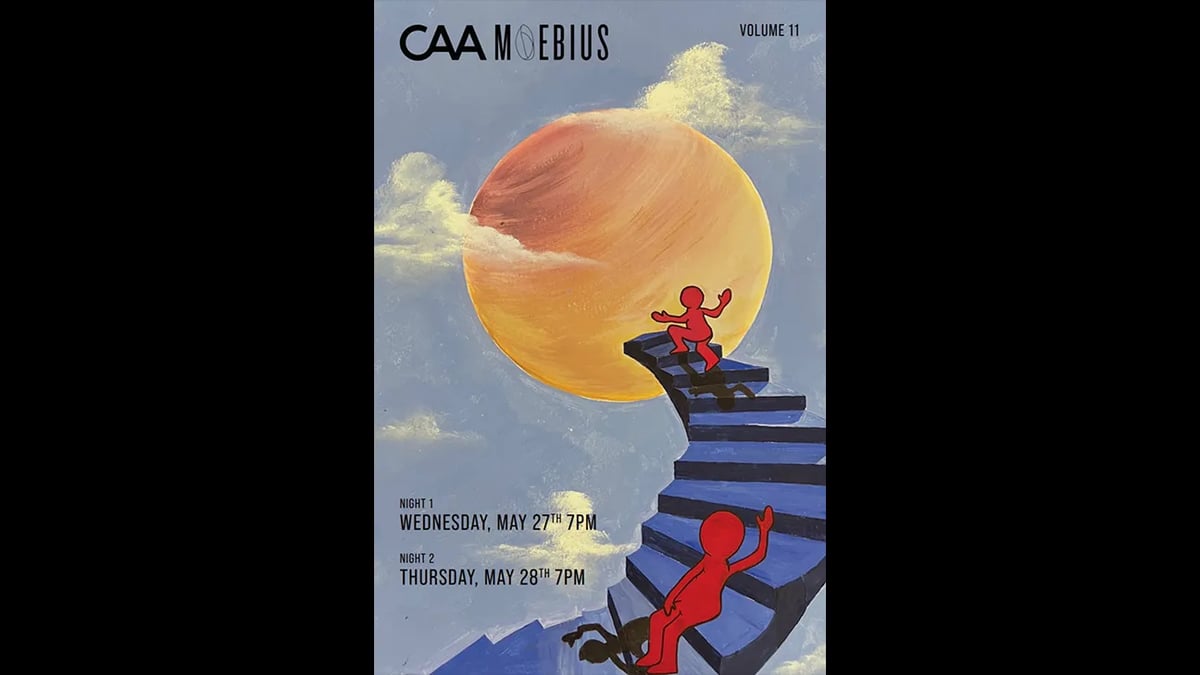
Does anyone genuinely believe that the next generation of storytellers lacks ambition or cinematic perspective? Hardly. The persistent challenge, as it always has been, is access and the often-fortuitous alchemy of being seen by the right person at the right time. Creative Artists Agency (CAA), a major player in the representation landscape, is apparently acknowledging this enduring hurdle with an expansion of their annual Moebius showcase. Now in its eleventh year, the program is introducing "Moebius Labs," a series of workshops and moderated conversations, ostensibly designed to bridge the chasm between fledgling talent and the industry's established echelons.
For years, these showcases have been a familiar fixture, providing a curated platform for student work. They are, in essence, a highly concentrated version of the festival circuit's emerging talent sections, but with the added weight and direct-line potential that an agency of CAA's stature can bring. Yet, a screening, no matter how prestigious, is ultimately a snapshot. The real, grinding work of building a career often begins long after the lights come up and the applause fades. It demands understanding the unspoken rules, navigating the complex web of development, and, perhaps most critically, forming authentic connections.
This year's Moebius showcase, running from May 27 to May 28, will continue its tradition of presenting ten short live-action films. These selections span a range of genres, tones, and perspectives, drawn from both undergraduate and graduate film programs across the country. One might observe that the breadth of genres represented reflects a healthy, if sometimes chaotic, creative environment in film schools, where experimentation is still, mercifully, encouraged before the market dictates tighter constraints.
The crucial addition, the Moebius Labs program, aims to furnish participating filmmakers with direct engagement opportunities. It's an initiative that suggests a recognition that simply seeing a film is insufficient; the emerging filmmaker also needs to hear, to question, and to learn from those who have already navigated this circuitous career path. These labs will grant access to creatives, producers, and executives working across film and television. The announced participants include screenwriter Julia Cox, who will engage in conversation with Liz Suggs; producer Jessie Henderson; and filmmaker David F. Sandberg. Furthermore, CAA's own motion picture literary agents will also be involved, which, one assumes, is the primary draw for any aspiring screenwriter or director hoping to translate a compelling short into a feature-length career.
One can almost picture the conference room: the keen eyes of young filmmakers, armed with notebooks and carefully rehearsed questions, facing off against industry veterans who have seen countless cycles of "next big things" come and go. It’s an unavoidable dynamic but one that, if managed well, can provide invaluable context for those fresh out of the academic bubble. What are the common pitfalls in early-career negotiations? What does a producer actually look for in a pitch, beyond the logline? These are the real-world considerations that often remain opaque until one is already deep within the fray.
The showcase also promises appearances from established directors, with filmmaker Max Barbakow set to return and host night one, delivering opening remarks. An Academy Award-winning writer/director, whose name remains, for now, under wraps, will host the second night. Such figures, while providing a degree of glamour, offer more than just star power. Their opening remarks, if they deviate from the standard inspirational platitudes, can offer genuine insights into the creative process, the frustrations of development, and the hard-won victories that accumulate over a career. One often finds that the most valuable advice comes not from those who have never stumbled, but from those who recount how they picked themselves back up.
The collaborative spirit behind Moebius is also worth noting. Conceived by CAA Motion Picture agents Christina Chou, Zach Kaplan, and Pete Stein, alongside Lingie Park, the showcase is organized by a cross-agency team of emerging leaders. This includes Derrick Davidian, Emily Ref, John O’Shea, Katy Needham, Laila Ghosheh, Milo Pepper, Ryan Uria, Sammie Johnson, Seth Parker, and Walter Szafran, along with CAA alum Chloe Landau, now at Netflix. Such a broad internal effort underscores the potential value an agency places on identifying and cultivating new talent, seeing it as an investment in their own future roster.
The joint statement from Chou, Kaplan, and Stein sheds some light on the program's evolving philosophy: “Over the past eleven years, Moebius has continued to grow alongside the filmmakers who have come through the program. With the introduction of Moebius Labs, we wanted to create a more direct exchange between emerging filmmakers and established creatives working at the highest levels of the industry. This year’s lineup reflects an incredible range of voices, ambition, and cinematic perspective, and we’re proud to continue building a platform that champions the next generation of storytellers.” This sentiment, while expected, nonetheless highlights the perpetual industry need for fresh voices and distinct viewpoints, lest the well of ideas run dry.
Let's glance at the lineup for the 2026 showcase itself, as these are the narrative kernels from which future careers might spring. The synopses offer a glimpse into the diverse thematic and stylistic approaches percolating in film schools:
Night 1, May 27 * “Loquita Por Ti,” directed by Greta Diaz Moreau (Columbia) This short, set in rural Spain during Y2K, focuses on 16-year-old Alma's desperate pursuit of life and the attention of local "heartbreaker" José. An unexpected guide in the form of a strange cow leads her to a deeper discovery. The premise suggests a coming-of-age narrative, likely tinged with magical realism or heightened subjective perception, a common and often effective approach for short-form storytelling. * “Becoming,” directed by Aidan Forte (Chapman) Set in a 1969 seminary, this film centers on a devout seminarian's frantic efforts to hide a contraband porno magazine and its hidden secret. This immediately conjures images of tightly wound tension, perhaps exploring forbidden desires or the hypocrisy of rigid institutions. The specific period setting also offers rich visual and thematic possibilities, reminding one of the detailed period reconstruction seen in numerous works, where production design becomes a crucial storytelling element. * “The Alternative Resolution,” directed by Harold Kahane (NYU) This short delves into the consequences of a lonely, obsessive programmer crashing global markets due to a moment of "voyeuristic weakness." He is then presented with a "grotesque ultimatum" by his superiors. The setup hints at a dark satire or a tech-thriller, tapping into contemporary anxieties about digital surveillance, corporate power, and the individual's lack of control in an increasingly interconnected world. The notion of a "grotesque ultimatum" is a fine hook for dramatic conflict, forcing a character into morally ambiguous choices. * “Poster Boy,” directed by India Opzoomer (UT-Austin) Set in the competitive world of 1990s boy bands, this film tracks a 16-year-old dancer's betrayal of his best friend and bandmates in a misguided bid for the spotlight. This evokes a specific cultural moment, rife with manufactured fame and the pressures of adolescent ambition. The premise offers potential for sharp commentary on the music industry, themes of loyalty and betrayal, and the corrosive nature of competitive environments. * “Dongmei,” directed by Rubing Zhang (NYU) Here, a mother, Dongmei, embarks on a journey of inquiry and reckoning after her daughter's arrest just three days before her wedding. This synopsis is concise but powerful, suggesting a character-driven drama focused on familial bonds, justice, and self-discovery under duress. The narrative of an ordinary person forced into extraordinary circumstances is a timeless dramatic engine.
Night 2, May 28 * “Club Rats,” directed by Grace Godvin (AFI) This film explores the fallout of a contested hole-in-one victory, plunging a young golf star into scandal, betrayal, and self-doubt. The setting, competitive golf, provides a unique backdrop for a narrative of ambition and moral compromise, reminiscent of the heightened stakes that can exist in seemingly innocuous competitive arenas. The transition from sporting achievement to personal crisis is a narrative technique that has powered many compelling dramas. * “Aayat,” directed by Sonia Bhatia (USC) Set on the India-Pakistan border, this short follows a young Kashmiri girl searching for her missing father, who forms an "unlikely connection" with an Indian soldier. This premise leverages a politically charged real-world setting to explore themes of human connection, conflict, and the search for family. The potential for nuanced character development and cross-cultural understanding within a tense environment is significant. * “Beware The Wolves,” directed by Alex Bush (AFI) During a stay with his grandparents, a fairy-tale-obsessed boy witnesses a disturbing act against his sister, prompting him to find a way to free them both. This sounds like a psychological thriller or a dark children's fable, blurring the lines between innocence and looming threat. The "fairy-tale-obsessed" detail suggests a rich visual and thematic palette, potentially using classic motifs to heighten contemporary fears. * “Norheimsund,” directed by Ana Alpizar (NYU) This story follows a Cuban girl whose long-distance romance with an older Norwegian man promises escape from austerity. Her dreams are shattered when she discovers he is not as idyllic as he seems. This premise delves into themes of dreams versus reality, immigration, and perhaps the exploitation that can occur in unequal relationships. It's a classic narrative of disillusionment, ripe for psychological depth. * “Kumquat,” directed by Lex Lee Morales (FSU) This film features disillusioned anchor Scott Kumquat, who plans a shocking live television stunt to expose the numbness, absurdity, and complicity of media culture. This is an overtly satirical piece, tapping into meta-commentary on media, a subject often explored in the industry itself. It promises a critique of our mediated reality and the quest for authenticity in a performative world. One can imagine how easily this could devolve into didacticism or elevate to sharp, biting social commentary, the tightrope walk of satire.
What these synopses illustrate is the persistent appeal of universal themes, coming of age, ambition, betrayal, familial crisis, societal critique, filtered through distinct voices and often inventive premises. These are the foundational elements of storytelling that ultimately resonate, irrespective of budget or technical wizardry. As an industry, we continually seek individuals who can articulate these human experiences with clarity, originality, and a keen visual sense.
The addition of Moebius Labs signals a maturation of CAA’s approach, moving beyond mere exhibition to a more explicit commitment to mentorship and professional development. For emerging talent often feeling adrift in a sea of competition, such guided access could prove invaluable. It's not merely about getting a foot in the door; it's about being handed a map once you're inside. The real question, of course, is what these filmmakers do with that map, and whether the industry truly makes space for where it might lead them. The showcase and labs are an opportunity, but the sustained career, as anyone who has been in this business for more than a few cycles can attest, demands a tenacious will and an unwavering conviction in one's own voice.
---
© 2026 BlockReel DAO. All rights reserved. Licensed under CC BY-NC-ND 4.0 • No AI Training. Originally published on BlockReel DAO.