Fast & Furious 25th Anniversary Heads to Cannes
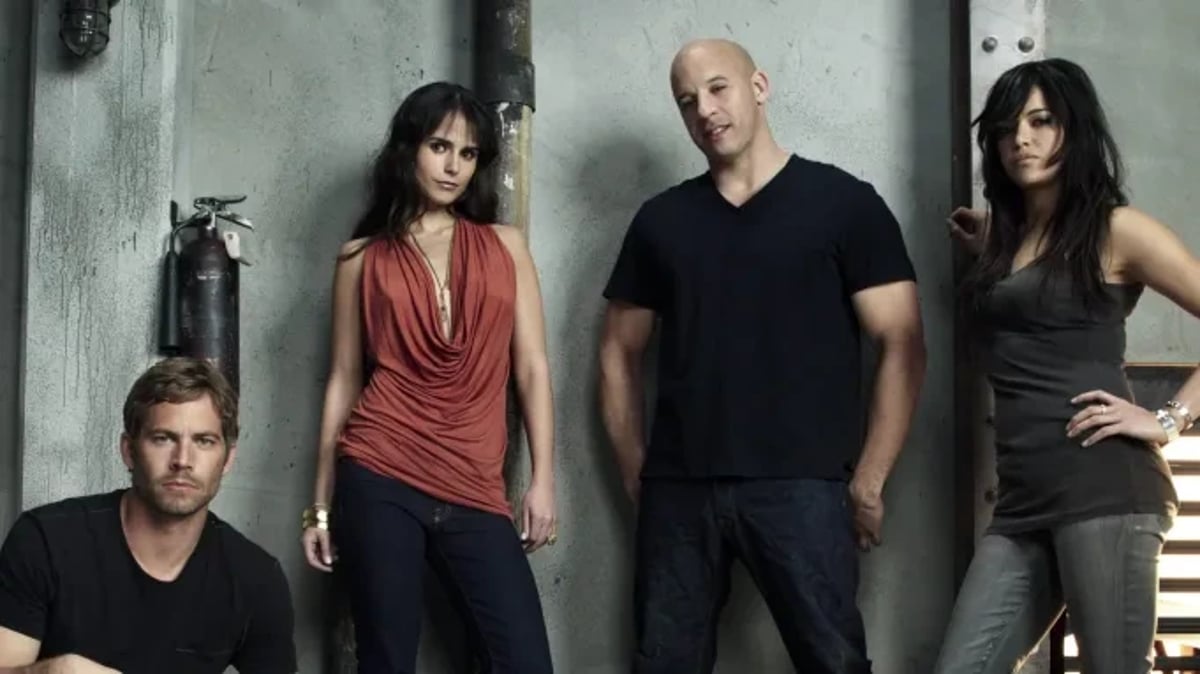
The Croisette is about to get a jolt of high-octane energy. This year, the Cannes Film Festival is reportedly celebrating the 25th anniversary of The Fast & Furious franchise, a series that first roared onto screens on June 22, 2001. While Universal Pictures, the studio behind the behemoth, has remained notably silent, and Cannes itself has been tight-lipped, industry whispers suggest a significant commemoration is in the works, culminating in a confirmed midnight screening. And yes, talent is expected to be in attendance.
It's a fascinating development, this embrace of a global blockbuster franchise by one of the world's most prestigious film festivals. For many years, the line between art-house cinema and commercial juggernauts felt like an uncrossable chasm at festivals like Cannes, where the focus often leans towards cinematic innovation and auteur-driven narratives. Yet, here we are, seeing the festival's chief, Thierry Frémaux, seemingly keen to sprinkle a little Hollywood stardust onto the proceedings, especially in a year marking his own 25th at the helm. With Park Chan-wook heading the jury this edition, the 79th festival already carries a distinctly cinephile-friendly flavor, making the blockbuster contrast all the more striking.
This isn't entirely without precedent, of course. Two years ago, Universal's chair and chief content officer Donna Langley accepted Kering's Women In Motion Award right there at the event. Universal's indie label, Focus Features, has also debuted numerous films on the Croisette, showcasing a deeper, more nuanced relationship between the studio and the festival than casual observers might assume. And let's not forget the spectacle surrounding Tom Cruise when he received his honorary Palme d'Or at the Top Gun: Maverick premiere, an event that saw actual fighter jets screaming overhead. While we're not expecting nitrous oxide-fueled sports cars to be smoking up the Croisette, the willingness to celebrate a franchise built on custom cars, impossible stunts, and a relentless commitment to family suggests a broader acknowledgment of cinema's diverse impact.
The Fast & Furious franchise is, without question, a cinematic cornerstone for Universal. Across 11 films, it has generated an astonishing $7.47 billion at the global box office. That's a figure that speaks volumes about its enduring global appeal, its ability to connect with audiences across cultures, and its sheer commercial power. Its journey from a film about Los Angeles street racers involved in heists to a sprawling saga of global crime-fighting heroes is a case study in adaptation and expansion. The narrative malleability, the evolution from grounded (though highly stylized) action to physics-defying escapades, is something filmmakers can still dissect for lessons in world-building and franchise longevity. How do you keep an audience invested for two-and-a-half decades? It's not just about bigger explosions, though there have been plenty of those. It's about building a universe, however outlandish, that viewers genuinely want to revisit.
The impact isn't just financial. The series has defined a certain era of action filmmaking, pushing boundaries with practical effects (early on) and later, with highly sophisticated, often unbelievable, CGI. When you watch the early films, one can almost see the DNA of future action directors studying the sequence choreography and editing rhythms, the way the camera moves through tight racing lanes, the close-ups of shifting gears, the kinetic energy of the street. It informed a generation's understanding of what a "cool" car movie could be, evolving it far beyond the genre's earlier iterations.
It's also crucial to remember the human element, the cast that has grown with the franchise. Vin Diesel has been a constant, not only as a star but as a fervent champion of the films, vocal on social media about the eleventh movie, which is currently still in development. His presence at Cannes, while not 100% confirmed for specific individuals yet, would be a reasonable assumption, considering his dedication. Michelle Rodriguez, another long-standing cast member, is no stranger to Cannes, having attended AmFar just last year. The untimely death of Paul Walker in 2013, a passenger in a single-vehicle collision, cast a long shadow over the series. F7, the final film featuring him, remains the franchise's highest-grossing entry, bringing in $1.5 billion worldwide. This, in itself, is a testament to the audience's emotional connection to the characters and the saga as a whole, transforming a tragic event into a moment of collective remembrance that bolstered the film's cultural weight.
The perceived "odd bedfellows" dynamic between Cannes and Fast & Furious might seem striking from a distance, but upon closer inspection, there's a compelling argument for its inclusion. Festivals, while curated for artistic merit, also need to remain relevant in a constantly shifting industry landscape. Recognizing commercially successful, culturally pervasive cinema doesn't necessarily dilute the festival's integrity; it can broaden its appeal, invite more diverse conversations, and acknowledge the complexity of the global film ecosystem. For working filmmakers, it also highlights the increasing fluidity between perceived "independent" and "studio" productions, blurring lines that were once rigidly drawn. Learning from a franchise's longevity, its ability to reinvent itself, and its sustained audience engagement can provide valuable insights, regardless of budget or genre.
This isn't just about the Fast & Furious though it takes center stage. Another significant anniversary is being observed at the festival this year: Guillermo del Toro's Pan's Labyrinth will receive a 20th-anniversary nod. The film will play in the Cannes Classics section with a screening on Tuesday, May 12, at 2:30 PM in the Debussy Theater, with the Oscar-winning filmmaker himself in attendance. Pan's Labyrinth holds a special place in Cannes history, having received one of the longest standing ovations ever at the festival upon its premiere, ultimately going on to win three Oscars. Comparing these two anniversary celebrations offers a fascinating contrast: one a beloved, critically acclaimed, and visually stunning piece of dark fantasy, the other a colossal, commercially dominant action franchise. Both, in their own ways, represent the power and reach of cinema. The Art Directors Guild Awards have previously recognized del Toro's production design collaborators, a reminder that Pan's Labyrinth endures as much for its crafted environments as for its narrative.
What does this mean for the professional filmmaker navigating today's industry? It means understanding that audience engagement, regardless of budget or formal recognition, is a powerful currency. It means that storytelling, in its many forms, can transcend perceived genre limitations and find a stage in unexpected places. The discussion isn't just about what critics deem "art," but what resonates deeply with millions, what transports them, what gives them an escape or a thrill.
For those of us who have perhaps cobbled together micro-budget shorts or poured our soul into projects that never quite caught fire, there's a lesson here. The Fast & Furious started, at least structurally, as a relatively contained action film. It then scaled up, not just in budget but in ambition, in its global scope, in its cast, and in the sheer audacity of its set pieces. It built a loyal following by delivering a consistent promise of excitement and, famously, "family." While our own indie ventures might not aim for explosions on quite the same scale, the core principles of building an audience, creating memorable characters, and understanding what makes people emotionally invest remain paramount. It's about finding your core hook and nurturing it, allowing it to adapt while retaining its essential identity. This festival acknowledgment implicitly validates that commercial success, when sustained and culturally impactful, can indeed warrant its place alongside more traditional festival darlings.
It also reminds us that the industry is constantly shifting its gaze, and what defines "prestige" today might not be what defined it a decade ago, or twenty-five years ago. The festival's embrace of such a wide array of cinematic experiences, from intimate dramas to global blockbusters and beloved genre classics, speaks to a broader, more inclusive definition of film's significance. It's a pragmatic move for Cannes, certainly, ensuring continued relevance and attracting media attention. But it's also an acknowledgment that powerful storytelling comes in many packages, and that the audience's connection is ultimately what fuels this entire elaborate, incredible machine we call cinema. To ignore that connection, regardless of how many cars go flying or how many impossible stunts are pulled off, would be to ignore a fundamental truth of the art form itself. We can look at this announcement not just as a nod to a massively successful franchise, but as a subtle shift in the conversation surrounding what truly defines cinematic achievement in the 21st century.
As filmmakers, we're often drawn to the craft, the technical prowess, the subtle nuances of cinematography, sound design, and editing. But the Fast & Furious saga, for all its grandiosity, still offers insights into these areas. How do you maintain visual coherence across such a vast array of directors and cinematographers? How do you ensure the action sequences are not just thrilling but comprehensible? How do you manage a production of that scale, coordinating intricate stunts and visual effects on a global canvas? These are questions that occupy every production, regardless of its size, just scaled up exponentially in the case of Fast & Furious.
There's also the element of leveraging celebrity, not just for box office returns, but for ongoing visibility. Vin Diesel's consistent engagement with the fanbase, even for projects "in development" like the eleventh film, serves as a study in maintaining a public profile and keeping a franchise in the cultural discourse. Michelle Rodriguez's regular presence at high-profile events demonstrates how actors become ambassadors for their work long after filming wraps. This kind of active, sustained engagement is something that independent filmmakers, often struggling for visibility, can learn from. It's about building and maintaining a connection, cultivating that audience, fostering that sense of "family" that extends beyond the screen. The Cannes celebration isn't just about revering twenty-five years of cars and explosions; it's about acknowledging a testament to strategic longevity, audience loyalty, and the complex alchemy of commercial filmmaking.
This year's Cannes, which also features a diverse Directors' Fortnight selection and the Angénieux tribute to cinematographer Akiko Ashizawa JSC, serves as a reminder that the world of cinema is vast and varied, capable of holding both the poetic introspection of a Pan's Labyrinth and the exhilarating spectacle of The Fast & Furious within its hallowed halls. It's a compelling statement, signaling an industry where different forms of cinematic excellence can coexist and even celebrate each other. For the working professional, it underscores the importance of understanding the entire spectrum of filmmaking, from the highly stylized independent feature to the globally resonant blockbuster. Each, in its own way, informs the other, pushing boundaries and redefining what is possible on screen. The question now is not if these diverse films belong, but how their shared presence enriches the entire festival experience.
---
© 2026 BlockReel DAO. All rights reserved. Licensed under CC BY-NC-ND 4.0 • No AI Training. Originally published on BlockReel DAO.