'De Gaulle: Tilting Iron' Cannes Review: Epic Biopic
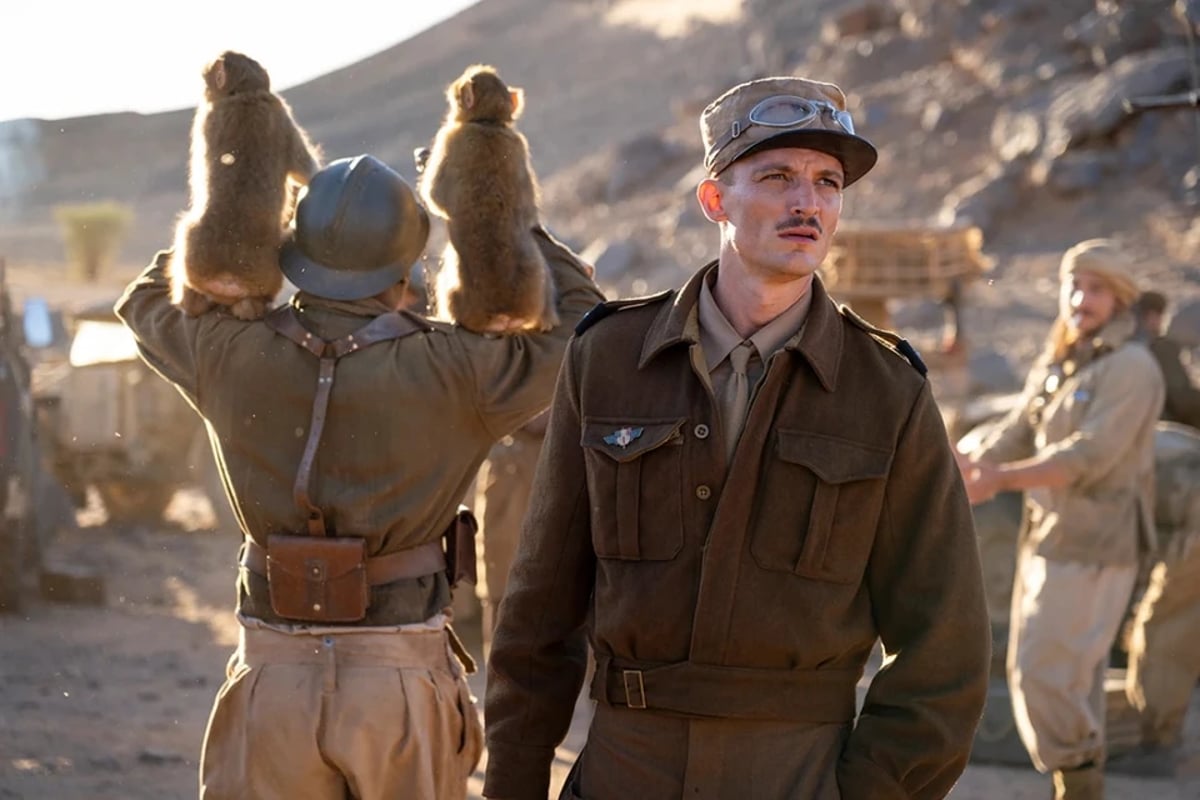
Cannes Review: Antonin Baudry's 'De Gaulle' Biopic Balances Scale and Engagement
The Cannes Film Festival, that glorious confluence of cinematic ambition and industry buzz, always delivers. And this year, nestled amongst avant-garde experiments and intimate dramas, appears Antonin Baudry's De Gaulle: Tilting Iron, a film that proudly plants its flag as a massively scaled production with the unmistakable energy of a vintage Hollywood blockbuster. This isn't some quiet character study; this is an old-fashioned epic, flaunting big-screen qualities (many of us cut our teeth dreaming of) in delicious excess, offering a traditionally entertaining biopic concerning France’s Great Man. It's a film that reminds us that sometimes, leaning into the conventional with conviction can yield profoundly engaging results.
Antonin Baudry, known for the taut thriller muscles on display in his 2018 submarine nail-biter The Wolf's Call, brings a similar focus to dramatic tension within this historical tapestry. De Gaulle: Tilting Iron centers on Charles de Gaulle’s consequential years in the early 1940s as an exiled general clinging to a romantic vision of a France that had just capitulated to Nazi Germany. The sheer scope, both historical and cinematic, positions this film as a bold statement piece, especially for a Cannes audience that often embraces the audacious.
Simon Abkarian, in the titular role, delivers a convincing performance as the patriotic De Gaulle, iconic kepi and all. The review notes his dynamic portrayal, especially in mining the heart of the general's relationship with Winston Churchill. It’s a pairing that suggests a keen eye for historical drama, and the dynamic between two such titans of history is inherently compelling, a kind of high-stakes buddy cop movie set against the backdrop of World War II.
One of the most intriguing aspects highlighted is the film's dual perspective. While the title might lead one to expect a singular focus, Tilting Iron isn’t solely a portrait of De Gaulle. Katharine McQuerrey's elegant editing is credited with marrying the "unparallel fates" of De Gaulle and Fernand Bonnier de La Chapelle, a fiery anti-Vichy monarchist and member of the French resistance. This simultaneous storytelling approach, guiding us into a dual-perspective narrative, immediately elevates the film beyond a standard historical recounting. Bonnier de La Chapelle, only 20 years old, assassinated Vichy French Admiral François Darlan (seen largely as a Nazi collaborator) in Algiers after Darlan signed a controversial deal with Eisenhower. The review points out that this young man was promptly executed by firing squad days later, and Baudry smartly braids these events into the main narrative. Florian Lesieur portrays Bonnier de La Chapelle, juxtaposing his boundless agility and fragile idealism with Abkarian's firmer, more reluctant De Gaulle. This structural choice, rather than feeling scattered, seems to enrich the narrative, allowing for a deeper exploration of patriotism and resistance across different societal strata.
The film's opening is praised for its smart introduction of Bonnier de La Chapelle, distressed and listening to the radio as a defeated France looms, immediately setting a tone of urgent desperation. Abkarian's physical resemblance to De Gaulle is noted, but it's his portrayal of firmness combined with a concealed reluctance that truly captures the imagination. De Gaulle, stubbornly insisting on his vision even when unsure, displays an unbending poise, a perennial straight face, and a mustachioed stiff upper lip that, amusingly, exudes some comic qualities. This touch of unexpected humor, particularly when he goes "toe-to-toe" with Simon Russell Beale's terrific Winston Churchill, suggests a nuanced characterization that goes beyond mere stoicism. Churchill, portrayed as both De Gaulle's closest ally and a "frisky challenger," forms a relationship so full of fondness and wit that it almost feels as if the two men accidentally found themselves in a war movie while actually making a bromance. That's a fascinating lens to apply to such weighty historical figures, injecting a human element into geopolitical machinations.
The review notes that the segments following Bonnier de La Chapelle are "admittedly more successful and sophisticated," bringing to mind the "heart-pounding essence of a Costa-Gavras political thriller." This is high praise for any narrative, particularly in a historical epic, suggesting that the film is not just about grand pronouncements but also about the gritty, personal stakes of resistance. Alongside fellow fighter Livia (played by Anamaria Vartolomei), Bonnier de La Chapelle passionately leads and participates in the counterculture and uprising, energizing the narrative whenever his point of view takes over. This structural decision to give significant screen time to an unexpected figure provides additional narrative thrust and emotional resonance, preventing the film from becoming a straightforward, dry biography.
Yet, much of the film still traces De Gaulle’s journey and his love-hate relationship with Churchill. The dynamic involves Churchill as both a fierce defender and an adversary at times, particularly when surrounded by other leading political figures. The film boasts an impressive ensemble cast to embody these historical personalities, including Niels Schneider, Karim Leklou, Loïc Corbery, Félix Kysyl, Benoît Magimel, and Mathieu Kassovitz. This deep bench of talent suggests a commitment to portraying the complexities of the era, not just through its central figures but through the wider political landscape.
Tilting Iron is unapologetically "big and loud," scored to "explosive Volker Bertelmann tunes." For those of us who have to build soundscapes from scratch on a shoestring, the idea of "explosive" Bertelmann (known for his less lyrical works, as the review points out, such as on All Quiet on the Western Front) certainly commands attention. The film delivers what one expects from a war epic: tanks, "well-orchestrated battle sequences," and connections to contemporary issues.
However, the review isn't without its nuanced criticisms. It points out a common pitfall of historical pictures, where political figures sometimes talk and act as if they know the future results of their actions. This can sometimes flatten historical complexity, making events seem predetermined rather than the result of chaotic human decision-making. Additionally, there are instances of "expositional dialogue that over-spells what we have just witnessed." A specific example given is how, after De Gaulle makes his famous June 18 appeal and refuses to surrender to the Nazis, a character superfluously sums up the speech's essence. This kind of redundancy in storytelling can be jarring for an audience that’s already invested in the narrative, a reminder that showing, not telling, remains a cardinal rule, even in epic historical drama. It's a fine line to walk when dealing with widely known historical moments, balancing the need for contextual reinforcement for some viewers with the desire to maintain narrative elegance for others.
Despite these occasional missteps, De Gaulle: Tilting Iron is lauded for delivering on its promise: a polished wartime movie that interrogates the past and sheds light on the present. The film’s thematic undercurrent, noting that "fascism is once again a threat," provides contemporary relevance, framing the historical drama not just as a retrospective but as a cautionary tale. Baudry's ability to flex his "taut thriller muscles" from The Wolf’s Call within this larger historical canvas ensures that even the more conventional parts of the film are enlivened with engaging tension, avoiding the potential for historical dry rot. The mention of "cheese and schmaltz" indicates that the film isn’t afraid of leaning into the emotional and even melodramatic aspects of grand narrative, something vintage Hollywood blockbusters often did with great success.
The article also teases a future installment, La Bataille de Gaulle: J'écris ton nom, the second part of Baudry's two-part project, set to open in France on July 3, 2026. This suggests a grand, multi-film vision, a commitment to a narrative that requires more than a single feature to fully explore. For those of us who often face the brutal reality of having to trim narratives down to their absolute bare bones, the scope and scale of a two-part historical epic are both daunting and inspiring. It speaks to a certain audacity, a belief in the inherent drama and importance of the material that warrants such a significant investment of time and resources.
Ultimately, De Gaulle: Tilting Iron seems to be a film that, for all its conventional trappings, deeply connects. It's a reminder that even in an era hungry for disruptive narratives and experimental forms, there's still immense power in a well-told story, a commanding performance, and a clear vision. The film's message about patriotism and resistance, especially in today's fractured world, feels particularly resonant. It's a large-scale project that manages to be consistently engaging, proving that sometimes, the familiar can be precisely what we need to see again, executed with skill and heart. This is cinema that aims for the broad strokes but finds its power in the human details, a balancing act many of us endlessly strive for. And in a festival as dynamic as Cannes, a film that can be both conventional and captivating is, in its own way, a triumph.
---
© 2026 BlockReel DAO. All rights reserved. Licensed under CC BY-NC-ND 4.0 • No AI Training. Originally published on BlockReel DAO.