Breillat to Direct Simenon's The German Cousin
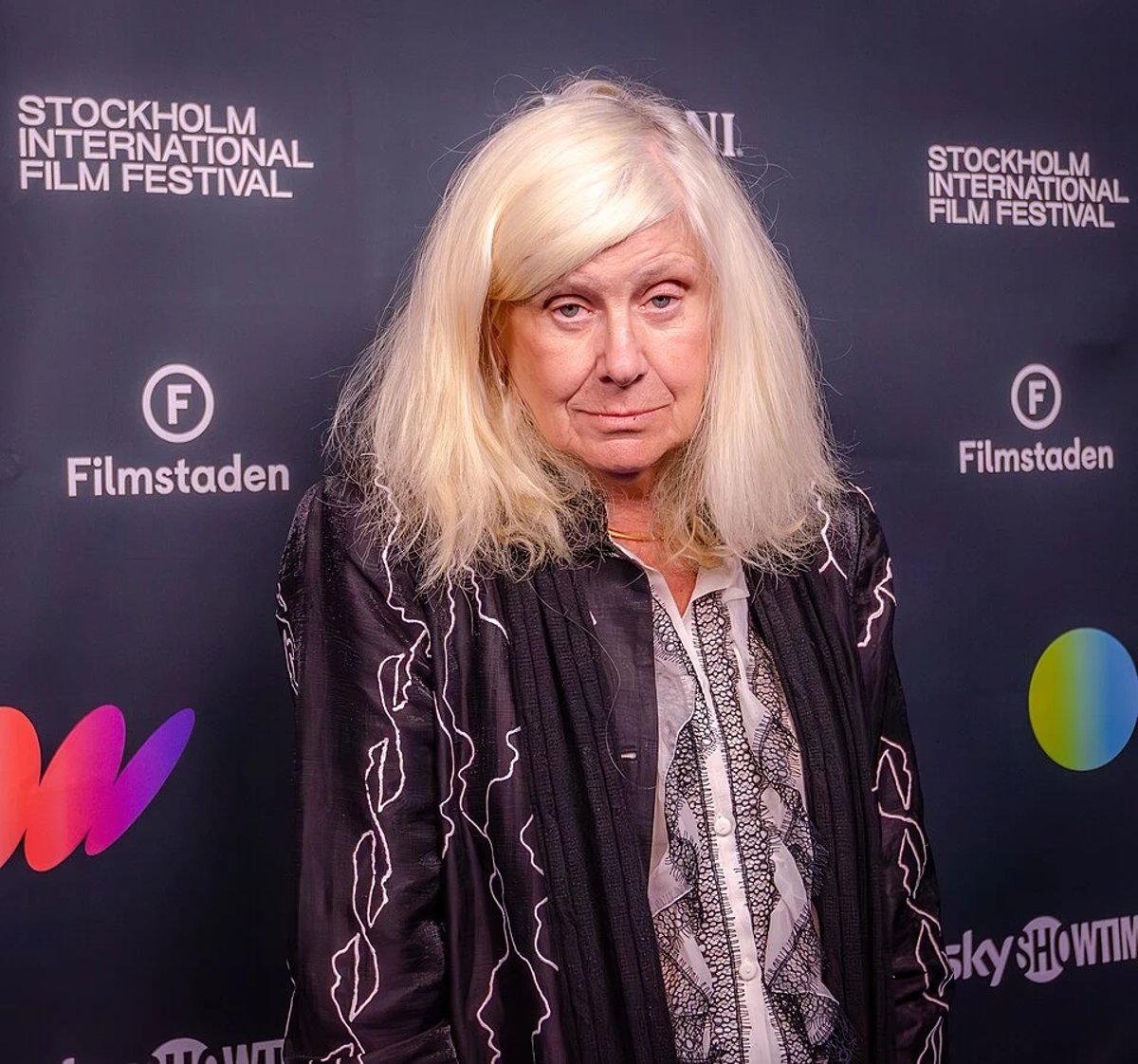
What do you do after a critically acclaimed, César and Lumière-nominated return to form? If you are Catherine Breillat, you double down on social commentary, apparently. The veteran French filmmaker, whose 2023 feature Last Summer garnered significant festival attention and industry accolades, is now developing an adaptation of Georges Simenon’s 1939 novel The Krull House, which she will both write and direct. The project, titled The German Cousin, is being discussed with potential partners at the Cannes Market by Pyramide International, with filming eyed for late 2027.
This isn’t merely another literary adaptation for Breillat; it’s a deliberate choice to tackle themes that she unequivocally states are profoundly relevant, even prophetic, for our current geopolitical climate. Simenon’s novel, written on the precipice of World War II, is characterized as a "prophetic study of race hatred and mass hysteria." Breillat herself underscores this, telling Deadline that she finds "a singular modernity, a resonance with our own era" in the text. This isn't just about bringing a classic to the screen; it's about using a historical lens to reflect contemporary anxieties.
The project reunites Breillat with her Last Summer producer, Saïd Ben Saïd of SBS Productions, a company with a formidable track record including Elle and a Cannes 2026 Competition entry, The Man I Love. This continuation of a successful collaboration suggests a shared vision for The German Cousin, a critical element when embarking on a film with potentially sensitive subject matter and a distinct authorial voice like Breillat's. For a filmmaker who has consistently challenged conventions and explored the intricacies of desire, power, and societal norms, pairing again with a producer who understands that creative ambition is paramount.
The narrative centers on the Krull family, German immigrants living in pre-WWII Europe, running a modest grocery café near a lock, which acts as a central character in itself. The family, despite having become French citizens, faces subtle and overt prejudice. Cornelius Krull, the patriarch, speaks only a German dialect and is shrouded in unspoken history. Maria manages the business with a stark religiosity, desperate to erase their origins. Joseph, the eldest son, is a medical student; Liesbeth, the younger daughter, an aspiring pianist. Anna, the self-sacrificing middle child, maintains the home. This delicate social ecosystem is abruptly disturbed by the arrival of Hans, a flamboyant German cousin. He’s presented as charming, provocative, and a master manipulator, immediately seducing Liesbeth but deeply irritating the rest of the family.
The story escalates when a young woman is found strangled and raped near the lock. The long-simmering community suspicion of the Krulls, exacerbated by their immigrant status and history, boils over. Joseph, the socially awkward academic, is immediately targeted by rumors and accusations. Signs of hatred spiral, culminating in a gathering crowd and the looming threat of tragedy.
Breillat’s fascination with this particular Simenon work hinges on more than just the plot. She articulates her approach, emphasizing that while the novel resonates with our era, she doesn’t intend to "transpose it crudely into the present day." Instead, she aims to retain its "dimension as a parable." This distinction is crucial for filmmakers navigating adaptations of historical texts for contemporary audiences. It avoids the pitfalls of anachronism or heavy-handed messaging, instead allowing the historical context to illuminate present-day parallels through inference and meticulous crafting.
Her discussions shed light on how she plans to execute this vision, particularly concerning details and production realities. Breillat notes that Simenon, much like Proust, was a "digger of details," and she deeply shares this philosophy. She states, "It is precisely the details that matter," and asserts this is one of "cinema’s privileges, particularly through the close-up." For a filmmaker, this isn't just an aesthetic preference; it's a practical guide for direction. The close-up, when used with precision, can convey volumes without needing elaborate set pieces or extensive exposition. It allows for the subtle micro-expressions and tangible textures that build character and atmosphere.
Breillat also touches on the economic realities of filmmaking, especially for projects that don't command blockbuster budgets. She explains how focusing on details provides a strategic advantage: "Details give strength and meaning to a scene. They also make it possible, in a period film, to avoid an excessive deployment of means: mastering the frame, the number of extras, the visible elements, is a way of preserving accuracy without creating artifice or giving an impression of lack. I have always lacked resources, never details. I am often my own prop master." This is a telling observation from a director who has consistently operated outside the mainstream studio system, demonstrating a pragmatic artistic ethos. It speaks to the resourceful nature often required in independent filmmaking, where restrictions can inadvertently sharpen creative focus and necessitate innovative solutions. One only needs to recall the meticulous historical reconstructions in films like Lynne Ramsay's Morvern Callar or Lucrecia Martel's Zama to appreciate how a keen eye for period-appropriate detail can define a world without extravagant means. For more on navigating directorial intent, consider the insights in articles like Director's Notes for Editorial: Communicating Vision Without Micromanaging.
The core of Breillat's attraction to The Krull House goes beyond the family drama; it’s the profound shift "toward something far more terrifying: the dissolution of the individual into the crowd." She delves into the psychology of collective hysteria, stating, "When the crowd acts “as one man,” its opinion becomes “collective opinion.” She connects this explicitly to the "phenomenon of lynching," noting its enduring presence, "whether physical or mediated." Her analysis extends to the chilling rationale often employed by mobs: "The lyncher always assumes the mask of the vigilante: the supposedly legitimate crime, in eyes blinded by anger, justifies the one he himself is about to commit." This observation is a sharp critique of the self-righteousness that fuels mob mentality, whether in a 1930s European village or a contemporary online forum.
Ultimately, Breillat views Simenon’s novel as a "parable (both distant and incisive) of our own era: that of a society driven by a thirst for collective and summary justice, at the expense of complexity, doubt, and the individual." This is a potent declaration, hinting at a film that will not shy away from uncomfortable truths about human nature and societal pathologies. Given Breillat’s filmography, which has often explored intense psychological states and the raw edges of human experience, this thematic focus is entirely consistent. Her works, from Romance to Fat Girl, have consistently probed the complexities of desire, identity, and the body with an unflinching gaze. It is precisely this kind of intellectual rigor and fearless thematic pursuit that has positioned her as a distinctive voice in European cinema.
For cinematographers and production designers, Breillat's emphasis on "details" and "mastering the frame" suggests a carefully composed and visually rich film, despite any budgetary constraints. The period setting of 1930s Europe, coupled with the psychological tension of burgeoning xenophobia and mob rule, offers immense possibilities for evocative visual storytelling. Lighting choices, set dressing, and costume design will be crucial in conveying both the historical authenticity and the simmering dread that permeates the narrative. How does one visually translate the "dissolution of the individual into the crowd" or the "mask of the vigilante" through the lens and mise-en-scène? These are the kinds of challenges that demand nuanced technical and artistic collaboration. Consider, for example, the meticulous approach to period details in films that manage to convey immense historical context without vast budgets, often through careful selection of locations and subtle performances. The "modest grocery café: Chez Krull" and the "lock" itself will undoubtedly feature prominently, becoming characters in their own right, reflecting the claustrophobia and the societal pressures building around the family.
The choice of Simenon's The Krull House as source material is also a testament to Breillat's intellectual curiosity. Simenon, often associated with his Inspector Maigret series, also penned numerous "romans durs," or "hard novels," which delved into the darker psychological undercurrents of ordinary lives, often without the comforting presence of a detective. These works are characterized by their stark realism, psychological depth, and often bleak outlook, making them fertile ground for a director like Breillat. Her previous work demonstrated a capacity for such unflinching realism, allowing her to portray complex characters and morally ambiguous situations with precision.
As the project moves from market discussions to pre-production, the creative team will face the formidable task of bringing Simenon's dense psychological drama to life. The casting, particularly for the central Krull family and the enigmatic Hans, will be paramount in conveying the nuanced dynamics of a family under siege, both from within and without. The film’s success will rest not only on Breillat’s distinctive directorial vision but also on the collective craftsmanship of the crew in translating the author’s incisive commentary on prejudice and collective madness into a compelling cinematic experience. For those interested in the broader context of production, the ongoing Cannes Market is a hub for such developments. Cannes Directors’ Fortnight 2026: Keoghan-Keough Duo, Radu Jude’s Latest Lead Diverse Selection provides an overview of other significant projects making waves there.
Breillat's decision to specifically highlight the idea of "summary justice" and the erosion of "complexity, doubt, and the individual" suggests a film that will prompt significant introspection rather than provide easy answers. It's a challenging proposition, particularly in an era often characterized by digital echo chambers and rapid-fire judgments. To evoke the slow, insidious creep of collective hatred, using a historical narrative to allegorize contemporary concerns, requires a masterful touch. Given her track record, it is a task Breillat seems uniquely positioned to undertake. It's a timely reminder that sometimes, to understand the present, we must look to the past, guided by those who remember how to frame its enduring lessons.
---
© 2026 BlockReel DAO. All rights reserved. Licensed under CC BY-NC-ND 4.0 • No AI Training. Originally published on BlockReel DAO.