Costume Breakdowns: Wardrobe Continuity & Character Arcs
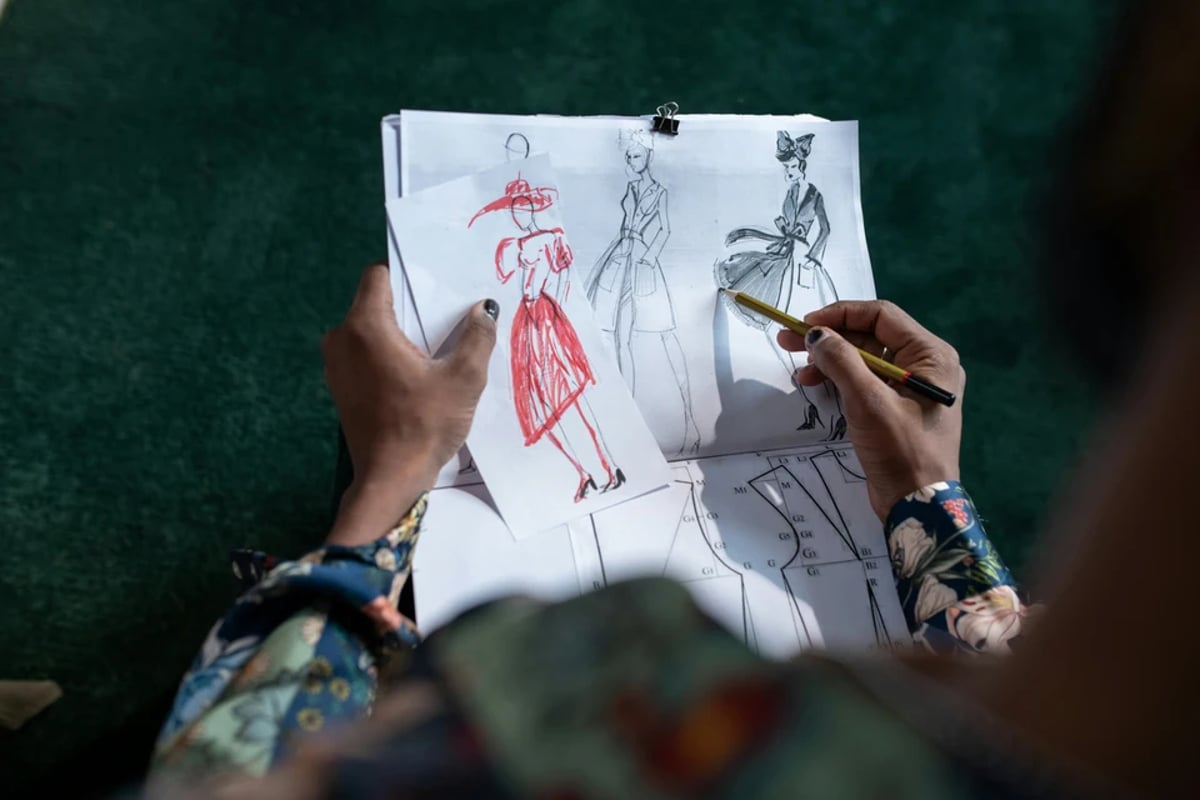
Wardrobe continuity is more than just ensuring an actor''s shirt matches from one shot to the next; it is a powerful, often subtle, tool for building character arcs and advancing narrative. A meticulous costume breakdown transforms script pages into a visual timeline, mapping a character''s journey through fabric, color, and condition. For the complete overview of the Art Department''s role in filmmaking, see our Full guide: Art Department Production Guide: Design, Continuity, and Clearances. This article delves into the precise methodologies and collaborative practices that allow costume departments to craft compelling visual stories, from initial script analysis to managing complex on-set logistics.
Executive Summary
Costume breakdowns are the bridge between script and screen for the wardrobe department. Done well, they turn every garment into a deliberate story beat; done poorly, they create continuity errors that show up in the final cut. This guide covers the full lifecycle: extracting wardrobe data from the script, mapping character arcs through look libraries and anchor pieces, locking continuity on set with standardized photos and logs, budgeting for multiples and distressing, coordinating with camera, production design, hair/makeup, stunts and VFX, and the documentation stack that holds it all together. The throughline is simple: a unique look code on every garment, a photo before every take, and a master breakdown that the AD, script supervisor and line producer all trust.
Table of Contents
- From Script to Costume Breakdown: Translating Text to Textile Data
From Script to Costume Breakdown: Translating Text to Textile Data
The foundation of effective wardrobe continuity lies in a thorough costume breakdown. This process begins long before fabric is sourced or a stitch is sewn, requiring the costume designer and their team to dissect the script not just for plot, but for every detail that impacts character appearance.
The initial pass through a script involves highlighting any line that implies wardrobe: time of day, weather, specific actions (running, falling, blood, water), time jumps, social status, occupation, or cultural signifiers. A second, more detailed pass focuses on explicit details, such as "same suit as previous scene," "wedding dress," or "mud-stained jeans," alongside implicit requirements like duplicates for stunt scenes or specific aging and distressing needs. This detailed analysis ensures no wardrobe requirement, however minor, is overlooked.
A standardized, scene-by-scene breakdown template is crucial. Typically, this involves rows representing scenes and columns for characters and specific wardrobe elements. For each character in each scene, the breakdown tracks: a unique look identifier (e.g., "A01 (Office Suit v1) Clean"), the story''s date and time, the script day (D1, D2, etc.), the state of the costume (clean, dirty, blood level, sweat, wet, burned, torn), and any specific notes regarding stunts, special effects, rigging, or the use of body or photo doubles.
Industry-standard color-coding simplifies communication across departments. While various elements are color-coded in a script breakdown, wardrobe is consistently assigned green. This visual cue is widely adopted in traditional breakdowns and integrated into modern software tools like StudioBinder and Filmustage. These color codes help to quickly identify and track key elements, ensuring that wardrobe needs are visible at a glance within a larger production schedule.
The culmination of this initial breakdown is the master wardrobe breakdown. This single document aggregates all scenes and character looks, serving as the primary source of truth for the costume department. It is indispensable for budgeting (determining builds, rentals, or retail purchases), planning for multiples, assessing impacts on the shooting schedule, and organizing laundry and maintenance. This master breakdown parallels the "master breakdown sheet" used by assistant directors and producers, ensuring alignment across the production.
💡 Pro Tip: Use unique alphanumeric look codes for every distinct costume iteration. For example, `JUL-03B-D3` could denote "Juliet, Look #3, Version B (damaged), Script Day 3." These codes should be included on tags, continuity photos, and all breakdown documents to maintain clarity, especially when scenes are shot out of order or rescheduled.
For tools, script breakdown and scheduling software are indispensable. Final Draft 13 allows for script tagging of wardrobe elements, with tags exportable to spreadsheets. Movie Magic Scheduling 6, an industry staple, enables tagging wardrobe per scene, generating breakdown sheets and day-out-of-days reports. Web-based platforms like StudioBinder offer script breakdown with green highlighting for wardrobe, generating call sheets with integrated wardrobe notes. Filmustage, with its AI-assisted breakdown capabilities, can also flag wardrobe mentions and generate master breakdown sheets. Despite these specialized tools, many professional costume teams continue to maintain parallel spreadsheet-based master costume logs using Microsoft Excel, Google Sheets, or Airtable, allowing for custom templates that track scene, script day, character, look code, individual items, state, multiples, and general notes.
A common mistake is treating the breakdown as a mere "list of clothes" rather than a visual timeline of a character''s arc. Overlooking implicit wardrobe needs, such as accounting for stunt doubles or the "wet to dry" continuity after a rain scene, can lead to significant on-set challenges. Failing to assign unique, traceable look codes can result in confusion when schedules shift, and neglecting to coordinate the breakdown with hair, makeup, and stunts early in the process can create costly last-minute adjustments.
Building Character Arcs Through Wardrobe Continuity
Wardrobe continuity extends beyond mere consistency; it is a powerful storytelling device that tracks psychological and narrative changes through costume progression. A master costume designer understands that clothes are not just decoration but essential elements in communicating character development.
Before any sourcing begins, creating a visual arc chart for each main character is a best practice. This chart maps the character''s journey across script days or major story beats, detailing changes in color palette, silhouette, formality, cleanliness or distress, and accessories. Questions are posed: How does the character''s color palette shift? When does their silhouette tighten or loosen? Does their wardrobe become more or less coordinated as their journey unfolds? These decisions are deliberate, reflecting internal transformations.
Motivated continuity is key. Wardrobe changes should never be random; they must correspond to story time progression (e.g., night to morning), emotional or psychological beats, or plot events (a promotion, an injury, a revelation). Maintaining internal logic is paramount; if a character cannot reasonably have changed clothes, the same look must be maintained, or the change explicitly shown. This deliberate approach ensures that every costume decision reinforces the narrative.
Building look libraries for each character, with clear progression, early, mid-arc, and late-arc sets, is crucial. This involves maintaining consistency in core pieces, such as a signature jacket that evolves in condition or styling, and recurring motifs like specific colors, patterns, or jewelry. This careful curation allows the audience to subconsciously track the character''s journey through their evolving appearance.
💡 Pro Tip: Identify "anchor pieces" for each character, a watch, necklace, boots, jacket, or bag that carries deep character meaning. Track its presence or absence as a deliberate story beat, such as a character removing a wedding ring after a divorce, or a new necklace appearing after a significant turning point. This subtle detail can powerfully convey character development without dialogue.
Digital tools are essential for this process. Adobe Photoshop and Illustrator (Creative Cloud) are widely used for sketching, color exploration, and building character look sheets. Procreate on iPad is popular for drawing costume sketches and annotating continuity photos. Milanote or PureRef serve as excellent moodboarding tools, allowing designers to arrange reference images, color palettes, and arc charts. These tools also facilitate the precise tracking of color palettes, defining HEX/RGB values for character-specific palettes and aligning with the cinematographers'' and production designers'' show-wide palette.
Costume designers are recognized as narrative storytellers, using fabric, color, and silhouette to communicate character, period, and theme. On film and prestige television productions, costume designers collaborate closely with the director and production designer to align wardrobe with the overarching visual language and production design palette. This ensures a cohesive aesthetic that enhances the storytelling.
Common mistakes include prioritizing "cool outfits" over story logic, leading to jarring continuity. On low-budget shoots, changing wardrobe too frequently to show "variety" can confuse time progression and character stability. Ignoring subtle transitions, jumping from one extreme look to another without intermediate stages, flattens the character arc. It is also critical to account for how wardrobe changes will read on camera under varying lighting and color grading conditions.
Filmmakers like Milena Canonero, known for her work on Barry Lyndon (1975) and The Grand Budapest Hotel (2014), meticulously design costumes that are inseparable from the characters'' psychological states and the film''s aesthetic. Similarly, Jacqueline Durran''s designs for Anna Karenina (2012) and Little Women (2019) showcase how period clothing can be adapted to reflect modern sensibilities while still conveying character depth and emotional arcs.
Practical Continuity Management On Set
Maintaining rock-solid wardrobe continuity is one of the most challenging aspects of a costume department''s work, especially given out-of-order shooting schedules, multiple units, and long production timelines. Precision and meticulous documentation are paramount.
The cornerstone of on-set continuity is comprehensive continuity photos and logs. For every look, standardized photos are taken: full-front, back, sides, and close-ups of key details such as jewelry, accessories, and distressing. These photos are meticulously logged with the look code, scene numbers, script day, and the costume''s state (clean, dirty, blood level). Copies are maintained both physically in a binder for the wardrobe supervisor and set costumer, and digitally in shared cloud folders or photo albums.
Collaboration with the script supervisor is non-negotiable. The wardrobe continuity team must synchronize their notes with the script supervisor''s log, confirming script days and scene order, and noting any continuity exceptions or director-approved cheats. The script supervisor''s lined script and detailed notes are vital for ensuring wardrobe changes align with the final blocking and shot coverage. This constant cross-referencing prevents errors that can plague post-production.
On-set wardrobe supervision involves the wardrobe supervisor and set costumers tracking look codes on the daily call sheet. They prep quick-change setups for actors and, critically, check continuity with photos before each take, especially after breaks, stunts, or weather changes. This vigilance prevents costly reshoots due to continuity errors.
For vertical dramas or streaming series with numerous short episodes shot by location groupings, wardrobe continuity presents unique challenges. Here, a master breakdown sheet must track each look across the entire season, not just scene-by-scene or episode-by-episode. This comprehensive approach is essential given the non-sequential nature of production for these formats. For the deeper protocol around photos, logs, multiples, and aging, see Wardrobe Continuity Systems: Photos, Logs, Multiples, Aging/Breakdown.
💡 Pro Tip: Design and enforce a strict continuity photo protocol. Ensure every photo is taken with the same background (e.g., a neutral wall), same distance, and same framing. Always include a shot of the actor holding a small whiteboard or slate clearly showing the character name, look code, and scene numbers. This standardization streamlines the review process and minimizes ambiguity.
On-set photo capture primarily relies on devices like iPhones, iPads, and Android phones. Apple Photos or Google Photos are used to create albums labeled by character and script day, with text notes in captions providing look codes and scene numbers. Shared cloud storage solutions like Dropbox, Google Drive, or Microsoft OneDrive store continuity folders accessible to the designer, supervisor, and AD team, often mirrored to the breakdown sheet''s structure. Scheduling software such as StudioBinder, Movie Magic Scheduling, or Yamdu integrate wardrobe requirements and look codes directly into daily call sheets.
On professional sets, it is standard for the costume designer to oversee fittings, while a dedicated wardrobe supervisor or set costumer handles the day-to-day continuity. For serialized and vertical formats, productions increasingly rely on comprehensive master breakdowns and continuity databases instead of isolated, episode-by-episode tracking.
A common mistake is relying on memory rather than documented photos and written notes. Allowing unlogged "small changes" on set, such as rolling sleeves or removing a belt, can create significant continuity errors later in the scene. Failing to account for weather variability (e.g., adding or removing coats mid-day without updating notes) or neglecting to update the continuity log when a director changes a look on the day are also frequent pitfalls.
The work of costume continuity is evident in films like Mad Max: Fury Road (2015), where Jenny Beavan''s costume designs, particularly Furiosa''s evolving attire, clearly mark her journey. The costumes are not pristine; they show wear, battle damage, and accumulated grit, all meticulously tracked to maintain a coherent visual narrative despite the film''s intense action and non-linear production.
Budgeting, Sourcing, and Managing Multiples for Continuity
Balancing creative vision with financial realities is a constant challenge for costume designers. Effective budgeting, strategic sourcing, and meticulous management of multiples are critical for maintaining continuity and realizing the character''s arc.
The costume breakdown serves as the basis for the wardrobe budget. From it, the team calculates the number of unique looks per character, the multiples required for each look (considering action, stunts, dirt, blood, or wet scenes), and the quantities needed for rental, purchase, or custom builds. The costume designer collaborates with the line producer or UPM to establish realistic budget lines for builds, purchases, rentals, labor (cutters, stitchers, dyers, agers), alterations, and repairs.
A robust multiples strategy is essential for any look involving stunts, food, blood, mud, water, or long-term wear across episodes. Such looks often require at least 3-5 duplicates. Distressing, the process of aging or damaging costumes, is planned in stages (e.g., Level 1, 2, 3 distress) to match specific story beats and maintain precise continuity. For example, a character''s shirt might start clean, become slightly soiled in one scene, and heavily bloodied in another, each requiring a distinct, pre-prepped garment.
Sourcing follows a hierarchy: first, major costume houses like Western Costume Company or Angels Costumes (London) for period, uniform, and specialty pieces. Second, retail for contemporary items, with multiples purchased early. Third, custom builds from scratch when specific designs or fits cannot be sourced, or when extensive multiples requiring precise replication are needed.
💡 Pro Tip: For retail items that are hero or workhorse looks, buy multiples immediately upon identifying them. Track SKU numbers and keep screenshots of product listings. Fast-fashion items can disappear from stores mid-shoot, making replacements impossible.
Major costume houses like Western Costume Company (Los Angeles) and Angels Costumes (London) offer vast inventories for period, contemporary, and specialty wardrobes. For wardrobe management and inventory, asset management systems built on Excel, Google Sheets, or Airtable track each piece by item ID, look code, size, source, rental agreement, and status. Larger productions might use dedicated asset systems like Scenechronize or ShotGrid to link wardrobe data to broader production information.
Distressing and aging products are specialized tools. Rit Dye, Jacquard iDye Poly, and Dharma Trading Company dyes are used for color modification and aging. Fabric paints and sprays, such as Jacquard Textile Color or Liquitex, add detail and texture. For screen-safe blood that interfaces with fabric, specialty products like Fleet Street Bloodworks, Kryolan, Mehron, and PPI Skin Illustrator "Blood" are used, with each level of application tracked for continuity. Consistent labeling is maintained with Dymo LabelWriter printers or Brother P-Touch labelers for garment bags, hangers, and boxes, along with permanent garment tags sewn into items.
Costume designers routinely develop budgets in collaboration with the line producer, itemizing costs for rental, purchase, build, and labor. Period dramas and stunt-heavy projects typically allocate substantial budgets for builds and duplicates, while contemporary dramas rely more on retail purchases and selective builds. For broader context on stretching art-side dollars without losing continuity, see Production Design on Micro-Budgets: Maximizing Value Per Dollar.
Common mistakes include underestimating the number of multiples needed for action sequences or special effects. Failing to secure enough sizes for stand-ins, doubles, and photo doubles can cause delays. Returning rentals too early, before reshoots or pickups are confirmed, can lead to costly re-rentals. Buying trendy fast-fashion items without securing multiples can also be problematic if replacements are needed.
Department Collaboration: Seamless Visual Storytelling
Wardrobe continuity thrives on collaboration with other departments. The costume department''s choices must support, not conflict with, the broader visual language and practical requirements of the camera, production design, hair, and makeup teams.
Color and texture coordination begins early in pre-production. Costume designers meet with the production designer to align on environmental colors, set dressing, and textures. Crucially, they also consult with the Director of Photography to discuss camera format, lenses, lighting, and color grading. This early collaboration ensures that fabrics and colors are tested under planned lighting (tungsten, LED, mixed) and that patterns are checked for moiré or strobing on the specific camera sensor.
Integration with hair and makeup is equally vital. The departments coordinate character aging (wardrobe distress versus makeup aging) and transformations (e.g., rehabilitation, illness, injury), ensuring wardrobe shifts align with hair and makeup changes. Sharing character arc charts allows hair and makeup artists to understand when to push or restrain their visual changes.
For scenes involving action, collaboration with stunts and VFX supervisors is paramount. Costume designers work with the stunt coordinator to design breakaway or padded garments and with the VFX supervisor for tracking markers or elements integrated into clothing. This ensures safety and facilitates post-production visual effects.
💡 Pro Tip: Create a swatch test chart. Mount fabric swatches on foam board, labeled with their look codes, and shoot camera tests using the production camera and lighting. Document which fabrics are problematic under certain setups (e.g., too reflective, color shifts under specific lights). This provides a tangible reference for all departments.
Camera tests are essential, ideally using the production camera and lenses (ARRI Alexa, RED V-RAPTOR, Sony Venice). If not available, a camera with similar sensor characteristics and log profile can be used. Applying the show''s LUT (Look-Up Table) to wardrobe test footage helps visualize how colors and contrasts will appear after color grading. Shared pre-production boards using platforms like Frame.io, Moxion, or ShotGrid facilitate sharing test stills and looks with the wider team, ensuring everyone is aligned.
Costume designers work in constant dialogue with the DP and production designer to harmonize or intentionally contrast with the production''s palette. On visually driven projects, color scripts, a practice borrowed from animation, are increasingly used to guide decisions, always grounded in practical camera workflows.
Common mistakes include ignoring how certain fabrics shine or color-shift under LED or mixed lighting, leading to unintended glare or color casts. Choosing micro-patterns can cause moiré on digital sensors, and overcomplicating patterns or contrasts can clash with production design or distract from actors'' faces. Failing to test dark costumes in low-light scenes can result in flattened, undifferentiated silhouettes. If wardrobe carries logos, branded items, or artwork, also review Clearance for Art/Props: Trademarks, Artwork, and Signage Pitfalls before locking final looks.
Documentation, Workflow, and Software Ecosystem for Costume Continuity
An organized system for documentation, workflow, and software integration is crucial for the costume department to scale effectively, from independent features to long-running series. Clear roles and a robust digital ecosystem ensure efficiency and accuracy.
Clear workflow roles define responsibilities:
Unified documentation is the backbone of this system. This includes the Master Costume Breakdown (often a spreadsheet) as the source of truth, a Look Book/Arc Bible as a visual guide for the director and producers, a Continuity Binder with photos and notes, and a detailed Inventory List for item tracking.
Digital backup and versioning are critical. Cloud storage platforms like Google Drive, Dropbox Business, or OneDrive, with their version history capabilities, are essential. A simple, consistent naming convention for documents, e.g., `ShowName_CostumeBreakdown_v01.xlsx`, prevents confusion and ensures easy retrieval.
💡 Pro Tip: Build a template kit comprising reusable breakdown and inventory spreadsheets, standard look sheet layouts, and continuity photo layouts with designated spaces for codes and notes. This streamlines prep work and ensures consistency across projects or seasons.
The software ecosystem for costume departments often combines specialized film tools with general business applications. Script and scheduling tools include Final Draft 13, Movie Magic Scheduling 6, StudioBinder, and Filmustage. For design and illustration, Adobe Photoshop/Illustrator (Creative Cloud), Procreate (iPadOS), and Clip Studio Paint are popular. Asset and data management often relies on Microsoft Excel, Google Sheets, or Airtable, with Scenechronize and ShotGrid used on larger productions for broader asset tracking. Communication and approvals leverage Slack, Microsoft Teams, or WhatsApp for daily coordination, and Frame.io or Moxion for securely sharing dailies and fitting photos with producers and studios.
Most costume departments, even on large productions, employ a hybrid approach, combining specialized film software with generic business tools. There isn''t a single, universally adopted package that replaces the need for customized spreadsheets and physical continuity binders; department heads typically shape their own hybrid systems.
Common mistakes include an over-reliance on a single tool without backups, such as storing all continuity photos on one device. Poor naming conventions, like multiple files named "Costume breakdown, NEW FINAL," lead to chaos. Failing to share updated documents with the AD and script supervisor teams can result in outdated call sheets or mis-prepped looks, causing production delays. To avoid these issues, regular sync meetings between costume, AD team, script supervisor, and line producer are essential to align on breakdown updates, script revisions, and budget impacts.
The meticulous organization and documentation practiced by costume designers like Colleen Atwood, particularly in period pieces such as Alice in Wonderland (2010) or Chicago (2002), demonstrate how detailed planning and a robust workflow are essential for creating visually stunning and narratively coherent wardrobes. Her ability to manage complex designs, often with multiple versions and elaborate detailing, underscores the importance of a well-structured costume department.
Interface & Handoff Notes
What you receive (upstream inputs)
What you deliver (downstream outputs)
Top 3 failure modes for THIS specific topic
2. Underestimating Multiples & Distressing: Not accurately anticipating the number of duplicates or stages of distressing needed for action, FX, or long-term wear results in last-minute scrambling, compromises on continuity, or expensive reshoots.
3. Lack of Cross-Departmental Communication: Operating in a silo without continuous dialogue with Production Design, DP, Hair/Makeup, and Stunts leads to conflicting visual elements, practical issues (e.g., fabrics causing moiré, costumes unsuited for stunts), and a disjointed overall aesthetic.
Browse This Cluster
- Art Department Production Guide: Design, Continuity, and Clearances
Next Steps
Ready to see how this fits into the bigger picture? Start with the complete guide.
📚 Complete Guide: Art Department Production Guide: Design, Continuity, and Clearances
---
© 2026 BlockReel DAO. All rights reserved. Licensed under CC BY-NC-ND 4.0 • No AI Training. Originally published on BlockReel DAO.