Brendan Wayne: Din Djarin's Body Double in 'The Mandalorian'
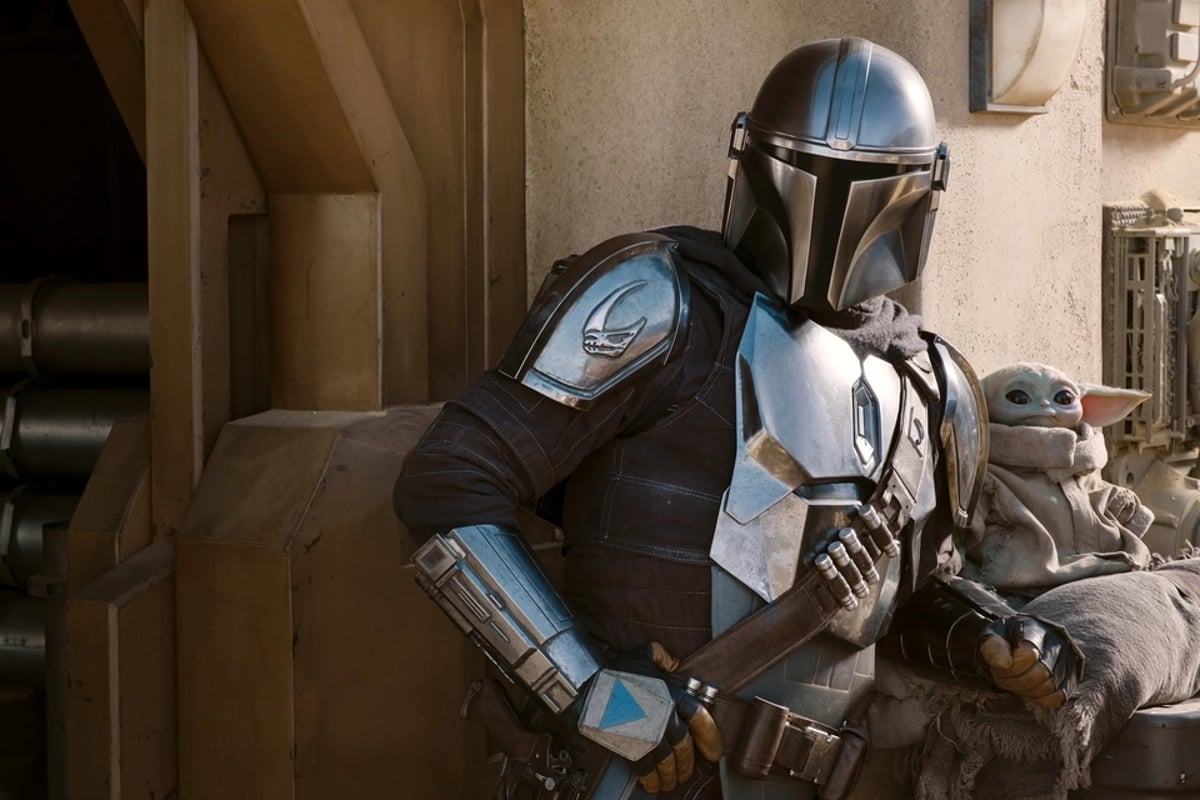
The intricacies of performance, particularly when a character is physically shrouded, often provoke a deeper consideration of what constitutes an "actor's role." In the sprawling universe of `Star Wars`, where costuming and myth-making are paramount, the physical presence of a character can be as narratively significant as the dialogue. Such is the case with Din Djarin, the titular bounty hunter of `The Mandalorian`, whose on-screen persona is a deliberate amalgamation of talent, movement, and a notable family lineage. While Pedro Pascal provides the voice and, at times, the unmasked face, a considerable portion of the character's physical embodiment belongs to Brendan Wayne, who brings a distinct sensibility to the role.
This collaboration, a seemingly effortless division of labor, offers a fascinating case study in how complex characters are constructed, especially those obscured by helmets and heavy armor. It challenges the conventional understanding of a "lead actor" and highlights the specialized craft of character performance, where physical nuance can communicate volumes without a single uttered word.
The Physicality of the Creed: Body Double as Performer
Brendan Wayne’s journey to becoming a cornerstone of Din Djarin's on-screen presence began, perhaps ironically, with a degree of critical self-assessment and practical engineering. In 2018, auditioning for an undisclosed Lucasfilm endeavor, Wayne found himself in a bulky, Boba Fett-esque costume. The director, Jon Favreau, with whom Wayne had previously collaborated on `Cowboys and Aliens`, alongside Lucasfilm Chief Creative Officer Dave Filoni, observed as Wayne interacted with a prop sci-fi rifle. It was during this seemingly mundane sequence that Wayne’s observational acuity, and a deep-seated understanding of functional movement, came to the fore.
He identified a fundamental flaw in the prop design: the rifle, as provided, was too long, destined to foul on his boot during movement. His suggestion to shorten the weapon by six inches and integrate a holster altered not just the prop but, arguably, influenced the enduring silhouette and practical lethality of the Mandalorian himself. This seemingly minor adjustment speaks volumes about the value of genuine, lived experience in the context of fantastical design. It's the kind of practical insight that can only come from an actor who understands how a weapon is meant to be handled, rather than merely displayed.
The choice of Wayne for this physically demanding role is, upon closer inspection, hardly coincidental. He is, after all, the grandson of John Wayne, a figure synonymous with a particular kind of stoic, purposeful physicality that defined a significant era of American cinema. This heritage, as Wayne himself articulates, instilled in him a "cowboy code", a way of carrying oneself, a philosophy of self-reliance tempered by communal responsibility, summarized in the maxim: "If I go up, we go up. It’s never me, it’s always we." These principles, though not overtly discussed in casting sessions, implicitly shaped Wayne’s approach and provided an unexpected resonance with the character of Din Djarin, whose arc fundamentally revolves around a strict creed and a burgeoning, reluctant sense of found family with Grogu.
One might question the extent to which such an inheritance can organically manifest in performance. However, Wayne highlights that the ingrained angles of his posture, the natural resting position of his body, directly contribute to moments where audiences perceive a resemblance to his iconic grandfather. As he notes, "I tried to stay away from the idea that I was going to ride \[my grandfather’s] coattails. I was never going to be him, but Favreau slowed me down so much that I went, ‘Oh my god, this is genetics.’ I really didn’t have to think about it." The director's guidance allowed an inherent physical language to emerge, not as imitation, but as an authentic expression of Wayne's own being, informed by generations of a particular kind of screen presence.
The Invisible Seams of Performance: Distinguishing Doubles
The production of `The Mandalorian` employs a precise division of labor. Pedro Pascal lends his voice and, in the rare moments Din Djarin's helmet is removed, his face. Brendan Wayne handles the bulk of the character's walking, talking (or, more precisely, reacting and existing within a scene), and the nuanced, deliberate movements that define the Mandalorian's non-combative presence. For the more kinetic sequences, the inevitable Stormtrooper skirmishes, the confrontations with colossal creatures, stuntman Lateef Crowder steps into the armor. This tripartite approach ensures the character’s consistent physical and emotional portrayal across a spectrum of demands, from quiet contemplation to explosive action.
For the keen observer, Wayne offers a subtle but telling clue to distinguish his physical portrayal from that of his stunt counterpart. "I have the longest neck," Wayne reveals, "so I have a little more space between my cowl to the cape. That’s how you know." He describes his own build as "long, like a straight line," contrasting it with Crowder’s "Dorito" physique, characterized by broad shoulders and pronounced trap muscles, a powerful build suited for dynamic, explosive movement. This insight underscores the meticulous attention to detail required in creating a consistent, believable character, even when multiple performers contribute to the whole. It’s a testament to the careful collaboration required to uphold the illusion.
This behind-the-scenes reality begs a question for filmmakers: How much of a character’s perceived identity is truly tied to a single actor, especially when that character is largely obscured? In `The Mandalorian`, the physical performance is not merely a placeholder but an active ingredient in the character’s development. The slow, deliberate cadence, the weight of the armor, the economy of motion, these are all choices that reside firmly within the realm of performance, regardless of whose face is (or isn't) visible. It's a reminder that acting extends far beyond facial expressions and dialogue, particularly in the realm of genre storytelling where archetypes are often defined by their physical bearing.
The Weight of the Creed: Practicalities and Purpose
The immersive quality of Din Djarin's costume is not merely aesthetic; it is intensely practical and demanding. The full Mandalorian armor weighs a substantial 62 pounds. Wayne recounts spending 13-hour days on set, often without removing the entire suit. While the top could be unlatched for quick meals, a complete undressing took approximately seven minutes, a figure that climbed another ten if the Grogu puppet was perched on his shoulder. These are not minor inconveniences; they are significant physical constraints that directly influence the actor's posture, pacing, and interaction with the environment.
Such conditions, though arduous, often lead to some of the most compelling performances. The physical limitations imposed by the suit contribute to Din Djarin’s characteristic gait, a heavy, measured stride that suggests both endurance and a constant state of readiness. It informs the subtle shifts in his weight, the turns of his head, the way he leans or pauses. These are not arbitrary movements; they are shaped by the material realities of the costume, forcing a deliberate, almost ritualistic quality to his actions. It's a pragmatic example of how constraints can, counter-intuitively, enhance artistic expression, forcing a deeper engagement with the character's physical state.
For Wayne, the demanding nature of the role was undeniably worth the effort. Despite a career that included appearances on shows like `Agents of S.H.I.E.L.D.` and `Sons of Anarchy`, `The Mandalorian` provided an unprecedented professional and personal turning point. He describes the experience as affording his family "some peace of mind." He worked seven days a week through the first season and part of the second, even continuing to bartend on weekends, a testament to the ever-present financial precarity that still often defines a working actor’s life, even on high-profile productions.
Wayne notes that his contract, while on a "small-budget" scale relative to the overall production, made "the biggest difference." It enabled him to place his three daughters in educational environments where they could "learn values and have a great education." This blunt, yet deeply personal, assessment offers a glimpse into the tangible impact of such roles beyond the glamorous facade of Hollywood. It underscores the commercial realities that underpin even the most celebrated productions and highlights that for many, even those with familial legacies, the struggle for financial stability in the arts remains a constant.
His reflection: "I’m a father of three girls, and I wanted them to give them a chance to succeed in life... It was life-changing. Even as just an actor, I got to create a character on a show who is literally defining an era of ‘Star Wars.’ If that’s not life-changing, I don’t know what you’re looking for."
This sentiment encapsulates the profound satisfaction creative professionals find in their work, especially when it intersects with personal fulfillment. To contribute to an iconic character within a globally recognized narrative, while simultaneously securing one's family’s future, represents a definitive success in an industry often characterized by fleeting triumphs and persistent uncertainty. The craft of the body double, often unrecognized, here stands as a foundational pillar in the construction of a modern cultural icon, a testament to the collaborative spirit and unsung efforts that breathe life into speculative fiction.
The detailed, deliberate choices made by individuals like Brendan Wayne, often working out of the spotlight and beneath a metaphorical, if not literal, helmet, are crucial. They serve as a reminder that filmmaking, at its most effective, is a mosaic of specialized skills and dedicated craftsmanship, a complex interplay where every contribution, no matter how seemingly minor, shapes the final, indelible image. The character of Din Djarin, stoic and unwavering, owes a significant part of his compelling presence to the physical intelligence and lived heritage that Wayne brings to the armor, proving that sometimes, the subtle nuances behind the visor are precisely what make a character truly unforgettable.
---
© 2026 BlockReel DAO. All rights reserved. Licensed under CC BY-NC-ND 4.0 • No AI Training. Originally published on BlockReel DAO.