DGA Awards 2027: 79th Ceremony Set for January 30
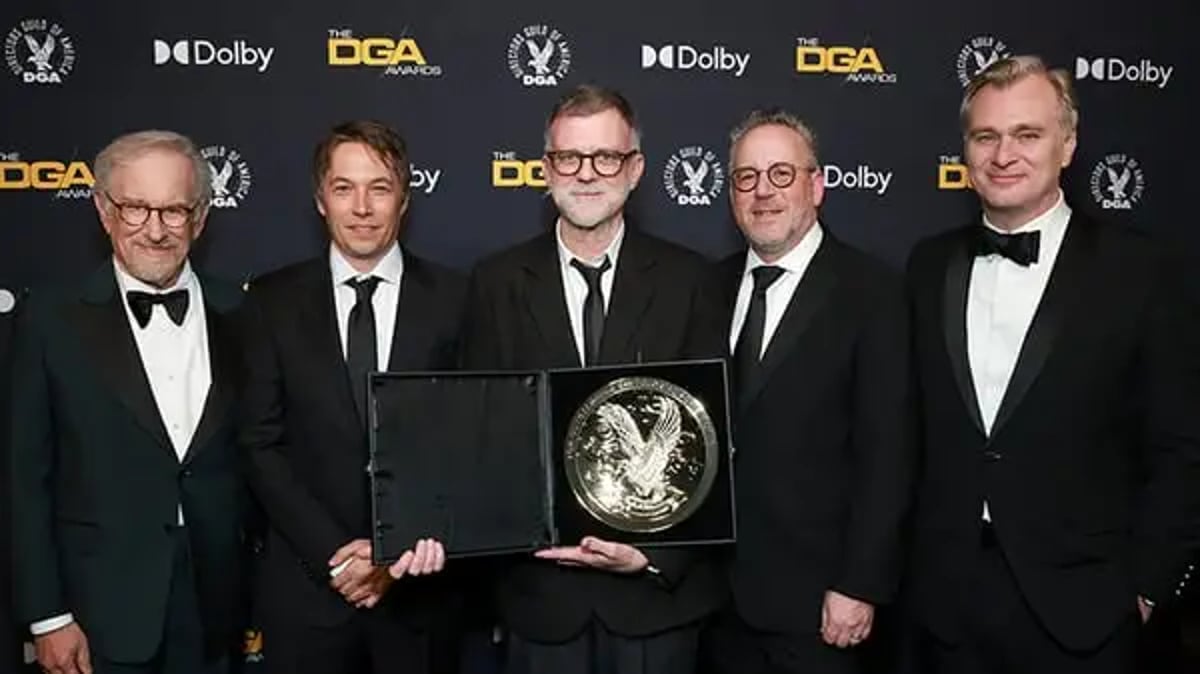
DGA Awards Sets 79th Ceremony for January 30, 2027
The annual calendar of industry accolades, a finely tuned machine dictating everything from post-production schedules to personal travel plans for many working filmmakers, has seen another key date lock into place. The Directors Guild of America has announced that its 79th annual DGA Awards ceremony will be held on Saturday, January 30, 2027. This date, positioned just nine days after the 99th Academy Awards nominations are unveiled on January 21, 2027, maintains the DGA's traditional role as a significant harbinger of the Oscar race.
For those of us who've navigated the bewildering labyrinth of the awards season for decades, the DGA Awards has always been a bellwether. It slices through the speculative clamor of early critics' awards and public buzz to offer a substantive, peer-driven assessment of directorial achievement. When the DGA speaks, particularly regarding its top feature film prize, Hollywood tends to listen. This isn't just about a trophy; it's about the industry's own acknowledging the meticulous craft of direction, recognizing the singular vision that marshals hundreds of artists and technicians toward a cohesive cinematic statement.
Consider the precision involved in scheduling these events. It's not merely slotting a banquet into an empty Saturday. This is a strategic move, designed to capitalize on the momentum of the Oscar nominations while positioning the DGA's selections as a critical preceding data point for Academy voters. The Guild's decision to announce this date now, amidst other significant awards calendar news, provides a degree of certainty that professional guilds thrive on. We've seen the Academy of Motion Picture Arts and Sciences set its 99th Oscars for Sunday, March 14, 2027, and the 100th ceremony for Sunday, March 5, 2028. SAG-AFTRA's Actor Awards are slated for February 28, 2027, and February 20, 2028, with the Producers Guild of America following suit on February 27, 2027, and February 19, 2028. Each date represents a fixed point on a complex navigational chart for studios, publicists, and, of course, the filmmakers themselves.
One might question the utility of another award show in an already saturated field. Yet, the DGA Awards distinguishes itself. Unlike many other bodies focused solely on the director, the DGA's signature medallion acknowledges the entire directorial team. This isn't just a nod to public relations; it's an inherent recognition of how films are actually made. The award honors not only the director but also the assistant directors, unit production managers, and other key crew members whose efforts are indispensable in translating a vision from script to screen. The director, as any seasoned professional knows, is the central nervous system of a production, but the body moves because of the coordinated efforts of every limb. The DGA's structural acknowledgment of this collective endeavor offers a more complete picture of the leadership required to bring a large-scale production to fruition. When we discuss directing coverage, for instance, we're not just talking about lens choices; we're also implicitly, if not explicitly, discussing the communication chain that ensures those choices are executed across the entire production team.
The DGA's track record as an Oscar predictor is, to put it mildly, formidable. Since the Guild's inception, its top feature film prize has aligned with the Academy's choice for Best Director in all but eight instances. That's a statistical anomaly that even the most cynical among us must respect. The most recent divergence occurred in 2019, when Sam Mendes took home the DGA Award for "1917," only to see Bong Joon Ho ultimately win the Oscar for "Parasite." Notably, "Parasite" also claimed Best Picture that year, hinting at the Academy's occasional willingness to broaden its recognition beyond directorial technique to encompass the film's overall cultural and artistic impact. These rare splits, however, only underline the DGA's usual prescience. It's an internal validation from the very people who understand the intricate demands of the job better than anyone else.
Last year's ceremony, the 78th DGA Awards held on February 7, 2026 and hosted by Kumail Nanjiani, saw Paul Thomas Anderson earn the top prize for outstanding directorial achievement in theatrical feature film for "One Battle After Another." Anderson subsequently secured the Best Director Oscar, with his film also taking home Best Picture (a result echoed across the craft guilds, including Michael Bauman's ASC win for the same picture). This outcome served as a potent validation of the DGA's predictive power and reinforced the idea that an informed consensus within the directorial community often reflects broader Academy sentiment.
Looking ahead to the 2026-release slate, the industry is already abuzz with anticipation over films like "Project Hail Mary," from the dynamic duo Phil Lord and Chris Miller, Denis Villeneuve's "Dune: Part Three," and Alejandro G. Iñárritu's "Digger." All three are shaping up as major directorial and awards-season challenges, from managing sprawling science fiction epics to crafting compelling narratives within demanding production frameworks. The directors navigating these projects will undoubtedly be under intense scrutiny from their peers, making the DGA nominations a fascinating insight into craft preferences.
While the DGA did not provide a date for its 2028 event, the clear pattern of early announcements speaks to an understanding of Hollywood's operational rhythm. Filmmaking, particularly at the studio level, is a long game. Schedules are established years in advance, influencing casting decisions, location scouting, post-production pipelines, and marketing strategies. The early solidification of key awards dates offers a stable framework within which these complex productions can operate, ensuring that films intended for awards consideration have clear targets for completion and release.
For BlockReel members, particularly those involved in cinematography, editing, and production design, these awards announcements are more than just celebrity galas. They are markers of industry validation, opportunities to see peer-selected work highlighted, and often, a chance to dissect the craft decisions that led to such recognition. When a director receives a DGA nod, it's not just for their name on the marquee; it's for how they orchestrated the entire symphony of creative elements that comprise a film. It's for the precision in their communication, the clarity of their blocking, the nuance of their performances, and the overall coherence of their vision. Understanding how a director achieves these things is fundamental to any specialized craft that supports the director's role. After all, the cinematographer is not just capturing images; they are translating the director's visual language into light and shadow. The editor is not just cutting scenes; they are shaping the director's rhythm and narrative flow. The DGA celebrates the master puppeteer, but in doing so, it implicitly acknowledges the artistry of every string pulled.
The specifics of nominations and venue details for the 79th DGA Awards are, naturally, to be released at a later date. This staggered release of information is standard operating procedure, building anticipation and allowing the Guild to respond to the evolving awards landscape. But the core date, January 30, 2027, is now set. For the industry, that means one less variable in a world perpetually in flux, one more fixed point in the ever-shifting sands of a film's journey from concept to critical acclaim. It serves as a reminder that despite technological evolutions and market volatilities, the fundamental craft of directing remains central to cinematic achievement. And the DGA, through its consistent recognition of that craft, continues to affirm its vital role in the ongoing narrative of filmmaking excellence.
---
© 2026 BlockReel DAO. All rights reserved. Licensed under CC BY-NC-ND 4.0 • No AI Training. Originally published on BlockReel DAO.