ECAM Forum 2026: Madrid's Auteur Cinema Launchpad
ECAM Forum Solidifies Madrid’s Role as Auteur Cinema Launchpad
Madrid's ECAM Forum, now entering its third year, has, in a relatively short span, carved out a significant niche for itself within the often-sclerotic world of film development and financing. It isn't just another industry gathering; this event, organized by the prestigious ECAM film school, has quickly become a proving ground, a sort of institutional barometer for what's next in independent, auteur-driven cinema, particularly from Spain, Europe, and Latin America. Why does one more market matter in a landscape already saturated with them? The answer, it seems, lies in its specific, targeted gravitational pull.
In just two editions, the Forum has positioned itself with the apparent precision of a seasoned sniper, hitting its mark as a key launchpad for auteur cinema and international co-production. We’ve seen this playbook before, of course, the careful cultivation of an emerging market designed to capture the attention of producers and distributors who are perpetually searching for something fresh, something that hasn't already been picked over by the bigger, more established festivals. It’s a delicate dance, fostering “emerging and mid-career auteurs” and “nimble independent producers” while simultaneously facilitating the often-Byzantine process of cross-border alliances linking Spain with Europe, Latin America and, increasingly, the Middle East. It’s a testament to the organizational acumen of ECAM itself that they’ve managed to achieve this traction so rapidly.
The event strategically runs from June 9-11, 2026, at Madrid's Matadero, creating a centralized hub for these interactions. The broader context for this success is the continued, and sometimes surprising, global ascent of Spanish cinema. What drives this? It’s not necessarily the blockbuster machine, but rather the very forces the ECAM Forum seeks to cultivate: distinctive voices, agile production models, and the willingness to look beyond traditional national boundaries for collaboration and financing. This is where the rubber meets the road, where artistic vision meets the practical realities of getting a film made.
The 2026 lineup, the initial details of which have just been announced, spans two critically important and distinct strands: Films to Come and Last Push. One looks forward, the other looks, well, to the immediate hurdles of post-production. Films to Come targets feature projects still in the development phase, expressly seeking financing, co-production partners, and that ever-elusive “international positioning.” Last Push, conversely, focuses on films already in post-production, a point where a targeted injection of funds, or simply the right industry eyes, can make the difference between a festival premiere and languishing in the edit suite.
The sheer volume of submissions speaks volumes about the Forum’s growing influence. For Films to Come, 204 projects were submitted. Last Push saw 86 entries. These numbers are hardly insignificant; they demonstrate a pull that extends “beyond Spain,” which is precisely the point of a truly international co-production market. This isn't just about local talent finding local money; it's about connecting disparate parts of the global independent film ecosystem.
What’s particularly notable about the 2026 selection is its broadened international scope. Projects not only from Spain but also from Switzerland, Costa Rica, Greece, Brazil, Argentina, France, Germany, and Palestine, among other regions, comprise the roster. This kind of international diversity signals a conscious effort to move beyond a purely national showcase, instead fostering an environment that prioritizes a "meeting point for production models, sensibilities and markets." This is crucial. In a world where financing can often dictate creative choices, the ability to pull together resources and perspectives from various countries offers a welcome antidote to creative insularity.
Furthermore, the Forum isn't just an ideas factory; it’s proving its efficacy in launching projects onto the festival circuit, a critical measure of success for any film seeking distribution and audience. Many alumni from the previous year’s Forum have already seen their projects make significant headway. Ion De Sosa's “Balearic” premiered at Locarno, Mihai Mincan's “Milk Teeth” played at Venice, and Irati Gorostidi's “Aro berria” reached San Sebastian. These are not minor festival placements; these are major international platforms that significantly elevate a film’s profile and distribution potential. For any emerging filmmaker, a slot at one of these festivals is often the difference between a project finding an audience and dissolving into the ether of unfinished or unseen work.
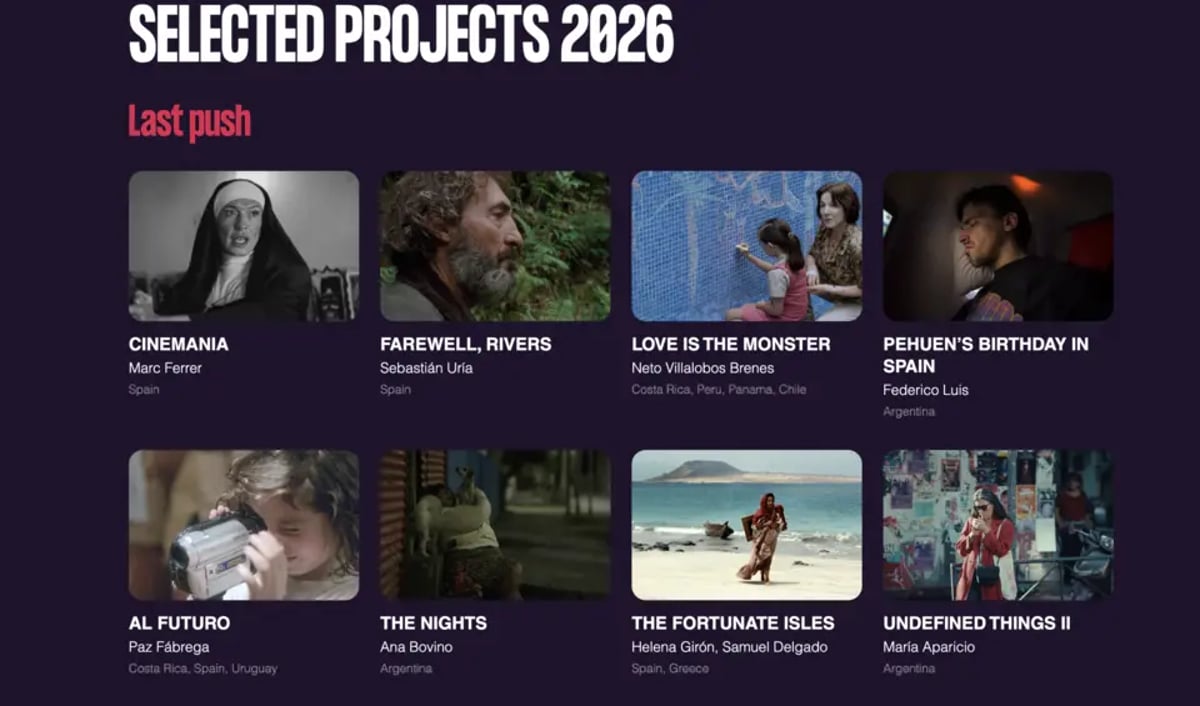
The Last Push section, in particular, has seen expansion, now featuring 10 titles. It also comes with a tangible incentive: a €15,000 (approximately $16,500) award, adjudicated by an independent jury and granted directly to the producer of the winning film. This is a clever incentive, a financial shot in the arm at a point in the production cycle when funds are often stretched thin. The selected projects in Last Push include new work from prominent Latin American filmmakers such as María Aparicio, Federico Luis, Paz Fábrega, and Neto Villalobos Brenes. The section also includes the feature debut from Swiss artists Pauline Julier and Nicolas Chapoulier, alongside upcoming Spanish projects by Marc Ferrer, Eloy Enciso, Sebastián Uría, and the collaborative duo Helena Girón and Samuel Delgado. This mix of established, respected independent voices and fresh talent suggests a curated approach aimed at both proven quality and potential discovery.
Films to Come, the development slate, gathers 15 projects. This section is a mix of internal ECAM talent pipelines and external collaborations:
Across both sections, the Forum seems to gravitate towards "a cinema of political charge and poetic drift." This isn't surprising given Spain’s robust tradition of politically engaged and aesthetically distinct filmmaking. The thematic range described is broad, incorporating “Spanish historical myths, ghosts, heists, love stories, friendship tales and a striking vein of comedy and dark humor.” This speaks to a curatorial vision that values both narrative diversity and intellectual depth.
Let’s delve into some of the projects spotlighted in the Last Push section, offering a glimpse into the types of films the Forum champions.
- “Farewell Rivers” (“Adiós, ríos”), by Sebastián Uría (Spain), produced by Gael Herrera at Tamboura Films. This Galician-language drama sounds like a poignant exploration of rural decay and human vulnerability. Set in Galicia’s Ancares mountains, it tracks the interweaving fates of characters grappling with illness, age, and agricultural abandonment, juxtaposed against the presence of a wandering she-bear. It gestures towards a slow cinema aesthetic, rooted deeply in regional identity and the harsh realities of a changing landscape.
- “The Indies” (“Les Indies”), by Pauline Julier and Nicolas Chapoulier (Switzerland-Spain), produced by Alina Film and Lastor Media. A historical environmental drama, this project is particularly intriguing given its co-production structure. Set in a war-torn Europe, it follows two French soldiers transporting a portrait of the Infanta of Spain to a young Louis XIV. The inclusion of Alejandro, a Spanish nobleman fascinated by science, colonization, and the "New World's promises," suggests a complex narrative exploring the early intersections of exploration, power, and environmental impact. The involvement of Lastor Media, producers of the acclaimed “Alcarràs,” lends it significant weight.
- “To the Future” (“Al futuro”), by Paz Fábrega (Costa Rica, Uruguay, Spain). This hybrid film, balancing fiction and documentary elements, is described as Paz Fábrega turning the camera on her own life, exploring motherhood, financial pressures, and creative imperatives. Co-producer Carla Sospedra’s description highlights its “intensely personal project” nature, with Fábrega appearing on-screen alongside her children. This kind of intimate, formally experimental filmmaking is often difficult to finance through traditional channels, making the ECAM Forum a crucial platform. The reference to Fábrega’s previous, internationally recognized slate underscores her established reputation within independent cinema.
- “Love Is The Monster” (“Amor es el monstruo”), by Neto Villalobos (Costa Rica-Peru-Panama-Chile). A multi-national co-production led by Costa Rica, this film features Paulina García as a 70-year-old grandmother confronting the end of life in a "tropical dystopia." It promises a potent blend of family crisis and social commentary, exploring the extremes people will reach for love. The co-production partners, including Liminal Estudio from Mexico, demonstrate the network of relationships the Forum aims to foster.
- “Cinemanía” by Marc Ferrer (Spain). A satirical comedy, this project sounds like a meta-commentary on the struggles of independent filmmaking itself. Following Marcos, a 40-year-old filmmaker unable to live from his craft, the ensemble cast navigates absurd scenarios involving the CIA, tourist-rental crises, drug-dealing producers, and lottery dreams. This kind of darkly comedic, ensemble piece can often resonate with festival audiences and signals a willingness to engage with genre in unexpected ways.
- “The Fortunate Isles” (“Las islas afortunadas”), by Helena Girón and Samuel Delgado (Spain-Greece). This project offers a stark historical drama set in the Canary Islands post-15th-century conquest. It centers on Fátima, an enslaved woman under the control of a blind, alcoholic marquis who monopolizes the island's freshwater. Produced by El Viaje, Asterisk\*, and La Banda Negra, the film’s themes of domination, drought, and revolt are deeply contemporary, even in a historical setting. Girón and Delgado are certainly directors to watch, given the thematic ambition here.
- “The Nights” (“Las noches”), by Ana Bovino (Argentina), produced by Natalia de la Vega at Navega Cine. Pitched as a drama-comedy biography, oscillating between documentary and fable, this film draws inspiration from Scheherazade. It follows La Pichi, a storyteller from Buenos Aires’ outskirts, as she transforms her marginalized life into a rich, cinematic narrative. Examining how personal narratives can be elevated through art, it promises a poignant and ultimately uplifting look at dignity and shared humanity.
- “Endless Prison” (“Todo es cárcel”), by Eloy Enciso (Spain). This project confronts the grim realities of Francoist concentration camps, beginning with the final days of the Spanish Civil War at Alicante’s port. Described as engaging with memory and Spanish history through exploring camp sites and prisoner diaries, it extends Enciso’s politically charged body of work. This kind of unflinching historical engagement is a hallmark of significant European cinema.
- “Pehuen’s Birthday In Spain” (“El cumpleaños de Pehuen en España”), by Federico Luis (Argentina), produced by Jerónimo Quevedo at Un Puma. This project follows Pehuén Pedre, a man approaching 35, who, after his mother leaves for Málaga and he enters a public shelter, finds himself cast in a Cannes Critics’ Week Grand Prix-winning film. His journey to San Sebastián and subsequent request for Luis to accompany him to Spain to reconnect with his mother suggests a deeply personal and psychologically complex narrative. Federico Luis’s recent Cannes 2024 Critics’ Week Grand Prix win for “Simon of the Mountain” undoubtedly raises the profile of this new endeavor.
- “Undefined Things II” (“Las cosas indefinidas II”), by María Aparicio (Argentina). This dramedy finds Eva, a filmmaker adrift in Madrid after her short screens at a French festival. Her solitary drift through an unfamiliar city takes a turn when Dante, an Argentine historian, approaches her at the Reina Sofía. The premise suggests an introspective narrative about artistic identity, displacement, and unexpected connections, all set against the backdrop of Madrid's cultural institutions.
The Films to Come section also lists projects still in early development, such as “Copy” (“El Participio Del Verbo Oir”), by Miguel Machetti (Spain), indicating a clear pipeline from nascent ideas to potential production. While details are scarce here, its inclusion underscores the Forum’s commitment to fostering new work from the very beginning.
The continued ascendance of the ECAM Forum is not merely about accumulating a list of projects or festival berths; it’s about establishing Spain, and specifically Madrid, as a vital nexus for a particular kind of filmmaking. It's a pragmatic effort to provide structured support to those working outside the studio system, offering both visibility and crucially, access to funding and collaborative networks. In an industry increasingly consolidated and risk-averse, these independent forums serve a crucial function: they are the incubators for the diverse narratives and unique voices that ultimately enrich the global cinematic landscape.
As filmmakers continue to navigate the precarious paths of independent production, these focused, highly curated events offer a glimmer of hope, a place where craft and commerce can, for a few days at least, align. The ECAM Forum’s growing “festival track record” isn't just a point of pride; it's a measurable indicator that their strategy is working, nurturing the delicate ecosystem of auteur cinema one project at a time. It also highlights the painstaking effort required to shepherd a film from a nascent idea to a finished product that resonates with audiences. For more on the editorial process of shaping these narratives, particularly during post-production, consider how Director's Notes for Editorial: Communicating Vision Without Micromanaging can impact a project’s final form.
---
© 2026 BlockReel DAO. All rights reserved. Licensed under CC BY-NC-ND 4.0 • No AI Training.