Marcia Lucas, Star Wars Oscar-Winning Editor, Dies at 80
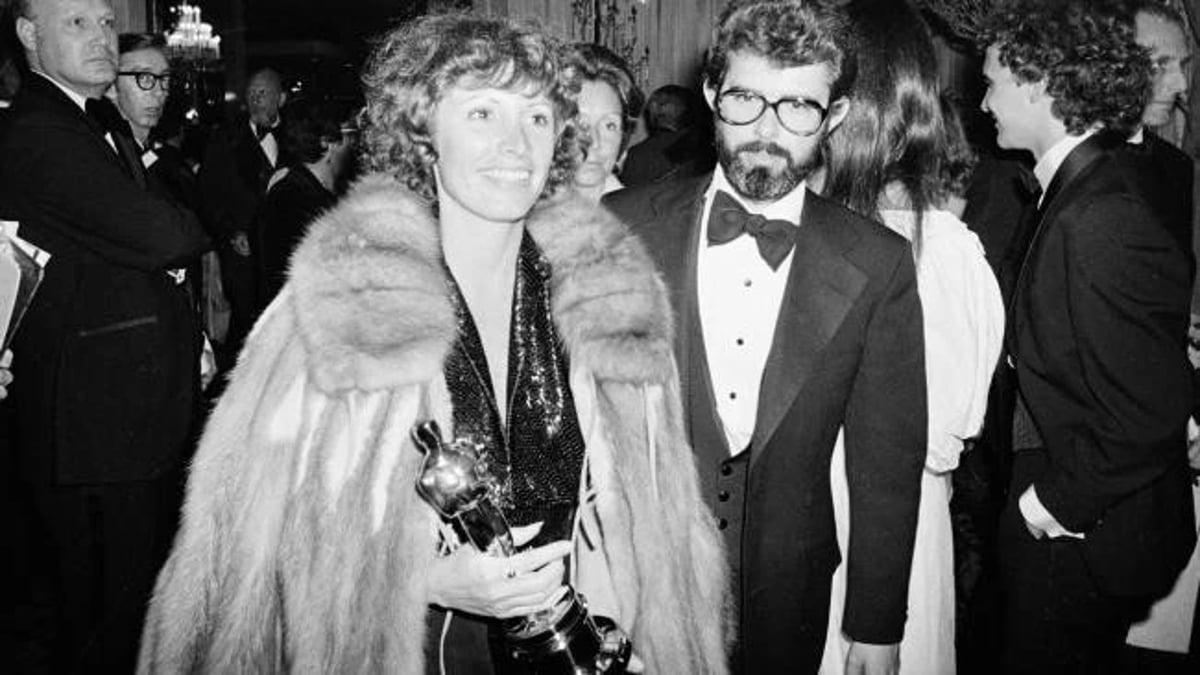
The industry bids farewell to Marcia Lucas, the Oscar-winning film editor whose contributions to cinematic storytelling, particularly on films like Star Wars and American Graffiti, shaped the very fabric of modern filmmaking. Lucas died Wednesday at 80 in Rancho Mirage, California, after a battle with cancer, her family''s attorney confirmed to Variety. Her passing marks the loss of a figure whose craft was often foundational, yet frequently behind the scenes, a testament to the editor''s unique role in shaping narrative and pace.
The family''s statement encapsulated her impact: "Marcia will be remembered as a brilliant storyteller, a trailblazer for women in film, a loving mother and grandmother, a generous host, and a loyal friend whose humor and sparkle filled every room she entered. Her influence on film is indelible, but those who knew her best will remember the way she made life feel more vivid, more beautiful, more fun, and more full of love." This eulogy speaks to more than just technical skill; it highlights the profound personal and creative force she represented.
In an industry often obsessed with the singular vision of the director or the charisma of the star, the editor is the quiet architect, the one who truly builds the narrative out of raw footage. That truth sits at the heart of our deconstruction of auteurship beyond the credits, and Marcia Lucas was undoubtedly one of those essential architects, a figure whose cuts, pacing, and structural decisions were instrumental in defining some of cinema''s most iconic moments.
Crafting Narratives: Precision and Pacing
Lucas''s journey into the editing suite began as an assistant, a role often undervalued but critical for learning the intricate rhythms of film (a path mapped out in our piece on editorial organization and assistant standards). She notably assisted Verna Fields, an undisputed master of the craft who edited pivotal films like Jaws and Paper Moon. This mentorship under a lauded female film editor is a detail worth pausing on, as it highlights a lineage of expertise and influence that often goes unacknowledged in the broader historical narratives of Hollywood.
It was this background that primed Lucas for her work on American Graffiti, George Lucas''s second feature after his directorial debut, THX 1138. For American Graffiti (1973), she collaborated with Verna Fields, earning her first Oscar nomination for Best Film Editing. Though William Reynolds ultimately took home the award for The Sting that year, the nomination itself was a clear signal of her rising prominence. To construct the sprawling, multi-narrative tapestry of American Graffiti, with its ensemble cast and interwoven storylines, required a precise hand and an intuitive grasp of emotional resonance.
Her collaborations were not limited to her then-husband''s work. Lucas also cut three pivotal Martin Scorsese films of the 1970s: Alice Doesn''t Live Here Anymore (1974), Taxi Driver (1976), and New York, New York (1977). Working across two of the era''s most distinctive directors gave her a range that few of her contemporaries could match.
The true zenith of her acclaimed career, however, arrived with Star Wars. In 1978, alongside co-editors Paul Hirsch and Richard Chew, Marcia Lucas received the Academy Award for Best Film Editing on what would become one of Hollywood''s most beloved and enduring films. This accomplishment is a stark reminder of the collaborative effort inherent in filmmaking, even as popular narratives often simplify creative credit. The editing of Star Wars was not merely about assembling shots; it was about inventing a visual language for a new kind of space fantasy, balancing epic spectacle with intimate character moments, and, crucially, making the extraordinary feel believable.
Dale Pollock, in his biography of the director, Skywalking: The Life and Films of George Lucas, characterized her as George Lucas''s "secret weapon." This characterization, while perhaps a touch reductive of her independent artistry, underscores the profound impact she had on his early, defining works. An editor of Lucas''s caliber acts as the film''s first audience, its diagnostician, and its final storyteller, often providing critical distance and perspective that the director, deeply immersed in the material, might lack.
Her contributions did not end with the first Star Wars film. Marcia Lucas was also part of the editorial team on Return of the Jedi (1983), the concluding chapter of the original trilogy. This demonstrated a sustained influence on a saga that would redefine blockbuster filmmaking and popular culture for decades to come.
The Editor''s Enduring Legacy
Marcia Lucas''s career trajectory, from guild apprentice to Oscar winner, serves as an essential case study for anyone involved in post-production. It highlights several critical aspects of the editor''s role:
- Creative Partnership: The best editing often emerges from a deep collaboration between editor and director, where the editor is not just a technician but a creative partner challenged to find the film''s optimal form.
- Narrative Sculpting: Film editing is, at its heart, narrative sculpting. It determines the pace, controls information flow, builds suspense, evokes emotion, and clarifies character motivation. Lucas''s success with complex narratives like American Graffiti and epic space operas like Star Wars attests to her mastery of this fundamental principle.
- The Invisible Art: Walter Murch famously called editing "the invisible art." When it is done well, the audience is immersed in the story, unaware of the myriad choices that have been made to guide their experience. Marcia Lucas achieved this invisibility with startling regularity, allowing the stories she shaped to shine without drawing undue attention to the mechanics of her craft.
- Impact on Audience Experience: The choices made in the edit room directly shape how an audience perceives and connects with a film. From Luke Skywalker''s wide-eyed wonder gazing at Tatooine''s binary sunset to the exhilarating trench run on the Death Star, these moments derive their power from a precise combination of image, sound, and, critically, temporal arrangement.
Her death reminds us that the foundational artists of our industry, those who meticulously assemble the pieces into a cohesive whole, are departing. And with each departure, we lose not just a person, but a living repository of craft knowledge and practical experience. This prompts reflection on how we, as an industry, preserve and transmit that wisdom.
Marcia Lucas''s legacy is not just in the films themselves, but in the enduring principle that skilled editing is non-negotiable for compelling cinema. Her work stands as a powerful argument that while tools may evolve, the human touch, the interpretive eye, and the deep understanding of storytelling remain essential.
The passing of Marcia Lucas is more than just an obituary; it is a moment for the professional filmmaking community to acknowledge and celebrate one of its quiet giants. Her work shaped not just blockbusters, but the very grammar of modern cinematic storytelling.
---
© 2026 BlockReel DAO. All rights reserved. Licensed under CC BY-NC-ND 4.0 • No AI Training. Originally published on BlockReel DAO.