Coppola EPs Garrett Brown Steadicam Documentary
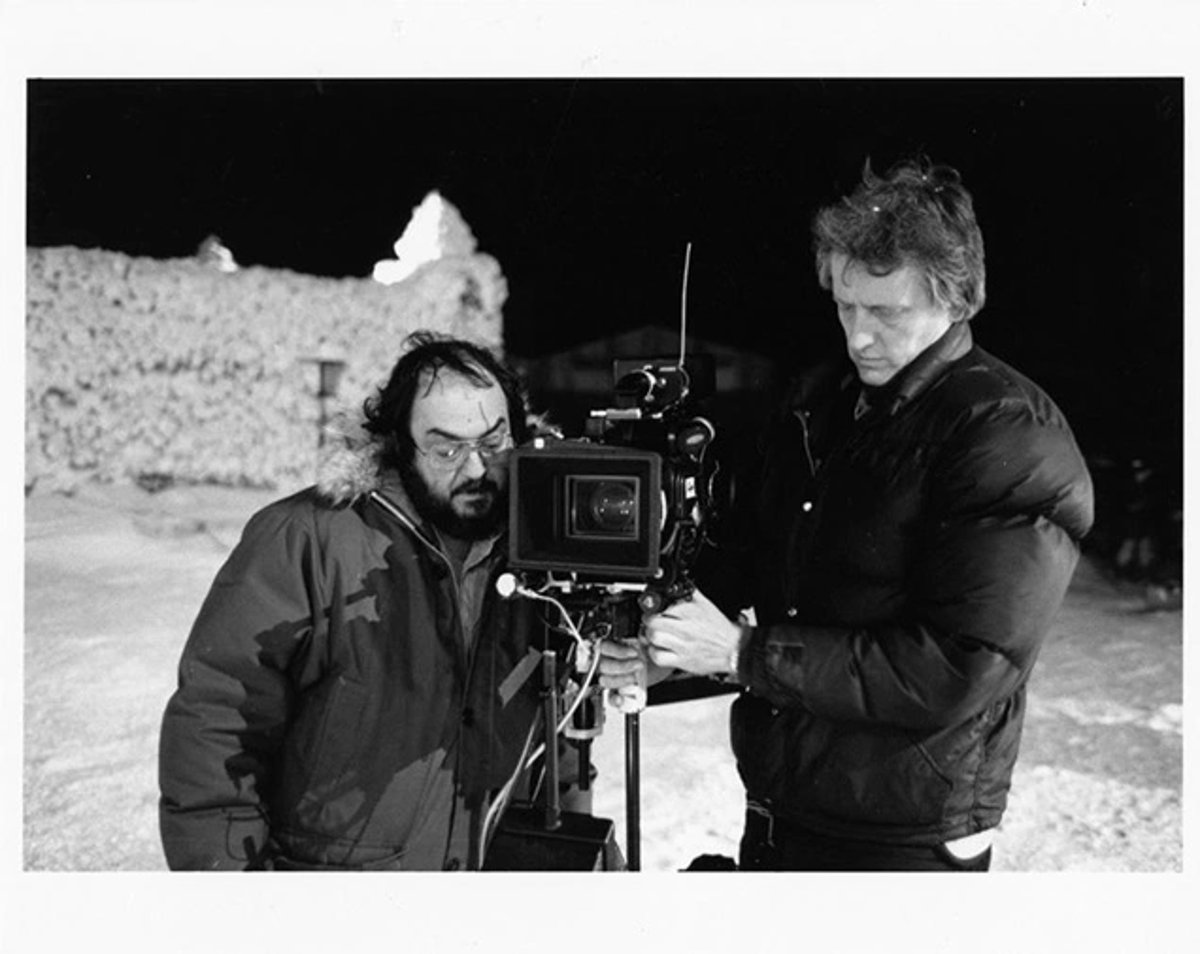
Production is underway on Thank You Mr. Brown, a feature documentary chronicling the career of Garrett Brown, the inventor of the Steadicam, the SkyCam, and the DiveCam. Deadline broke the news on July 2, 2026: Francis Ford Coppola is executive producing alongside Lauren Zarelli Renaud of C'est What Studio, with Andrew Schwartz directing for EBE Productions.
For any operator who has ever balanced a rig, or any director who has ever asked for a shot that walks a character through three rooms without a cut, this documentary is a portrait of the man who made that grammar possible.
The record, in Academy hardware
Brown holds three separate awards from the Motion Picture Academy, a rarity for any single filmmaker:
- 1978 Academy Award of Merit for the invention and development of the Steadicam
He was later inducted into the National Inventors Hall of Fame. Few figures in the history of the camera department have shaped the physical vocabulary of filmmaking on this scale.
The films he shot, not just built for
Brown did not license the Steadicam and step back. He operated it himself on many of the shots that later got taught in film school. His on-set credits include Hal Ashby's Bound for Glory (1976, the first feature shot with a Steadicam), the Philadelphia Museum of Art steps in Rocky, the hedge-maze sequence in The Shining with Stanley Kubrick, the speeder-bike chase in Return of the Jedi, and Philadelphia.
The maze work with Kubrick is the sequence most students study first, because it demonstrates the invention's core promise: the camera can follow an actor at running pace, at knee height, through a real physical space, with no dolly track and no crane, and still hold a level horizon.
The $4.50 prototype
The origin story in the film's trailer material and in Brown's past interviews is not the tidy "eureka in the bathtub" myth. He described it as a question that kept coming back: could you hand-hold a pole with a camera on one end and counterweights on a T-bar, and get a stable image out of a walking operator?
He answered the question with a trip to a local hardware store. The plumbing department built him a pole for $4.50 with a T-bar and two plumbing weights. He bolted an Akai video camera to the front of it. That was the prototype that eventually became the industrial-design object Cinema Products manufactured as the Model I Steadicam in 1976.
Why it changed the grammar
Before the Steadicam, a smooth moving shot meant one of three things: a dolly on laid track, a crane, or a handheld operator willing to accept the shake. Each had a hard ceiling. Track had to be laid, leveled, and often hidden. Cranes needed space and a swing arm. Handheld had a look that not every scene could wear.
The Steadicam's gimbal-and-arm system decoupled the camera from the operator's vertical bounce and rotational jitter, so the operator became the dolly. Distance was limited only by what the operator could physically walk. Height changes, stairs, hallways, doorways, and uneven ground stopped being blocking problems. Directors who wanted a continuous take covering a long geographic move suddenly had a tool that did not require an engineering department.
For a working breakdown of how modern productions still choreograph these shots on the day, our Camera Movement Execution guide on grips/ops choreography and rehearsal method walks through the rehearsal-first process most Steadicam ops still use, and the Definitive Guide to Camera Movement and Blocking covers where the Steadicam fits alongside dolly, crane, drone, and gimbal work today.
The doc's team
Andrew Schwartz is directing. EBE Productions' William Forbes is producing, with line producer Douglas Skinner (Name of the Game, John Henry) and Nick Ditri as producer and music supervisor. Co-producers include Kim Berrios Lin, Colin Geddes, and Katarina Gligorijevic (Name of the Game, Mad God). Filming is happening in Brown's hometown of Philadelphia, plus New York and Los Angeles.
Schwartz has known Brown personally for nearly two decades. In his statement to Deadline he described Brown as "equal parts Albert Einstein and Forrest Gump," and framed the film as a chance to pull back the curtain while Brown is still actively writing his own book.
Among the interviewees is Larry McConkey, one of the most credited Steadicam operators in the business (Django Unchained, 12 Years a Slave, Shutter Island, Carlito's Way, The Sopranos, Sleepless in Seattle). His quote in the announcement is worth sitting with: "Steadicam really was a powerful way to tell a story, and it did have merit and value beyond being a technical feat. It seemed to resonate with people and not just with filmmakers. That was a revelation for me."
That is the thesis of the documentary in one sentence. The Steadicam is not just a gear story. It is a storytelling story.
Why it matters now
The physical camera department is in the middle of another shift, this one driven by three-axis brushless gimbals, AI-assisted subject tracking, and cheaper cinema bodies. The current generation of tools, from the Ronin family through to the DJI RS 5 with AI tracking and rapid charging, are direct descendants of the mechanical stabilization problem Brown solved with plumbing weights in 1973.
Understanding where these tools came from, and understanding that the person who invented the category is still alive, still working, and still asking questions, is the reason this documentary deserves attention. It is one of the last opportunities to record that history from the source.
Thank You Mr. Brown is currently in production. Release timing has not been announced.
---
© 2026 BlockReel DAO. All rights reserved. Licensed under CC BY-NC-ND 4.0 - No AI Training.