CineD's 2025 Lab Tests: Beyond the Hype, Into the Workflow
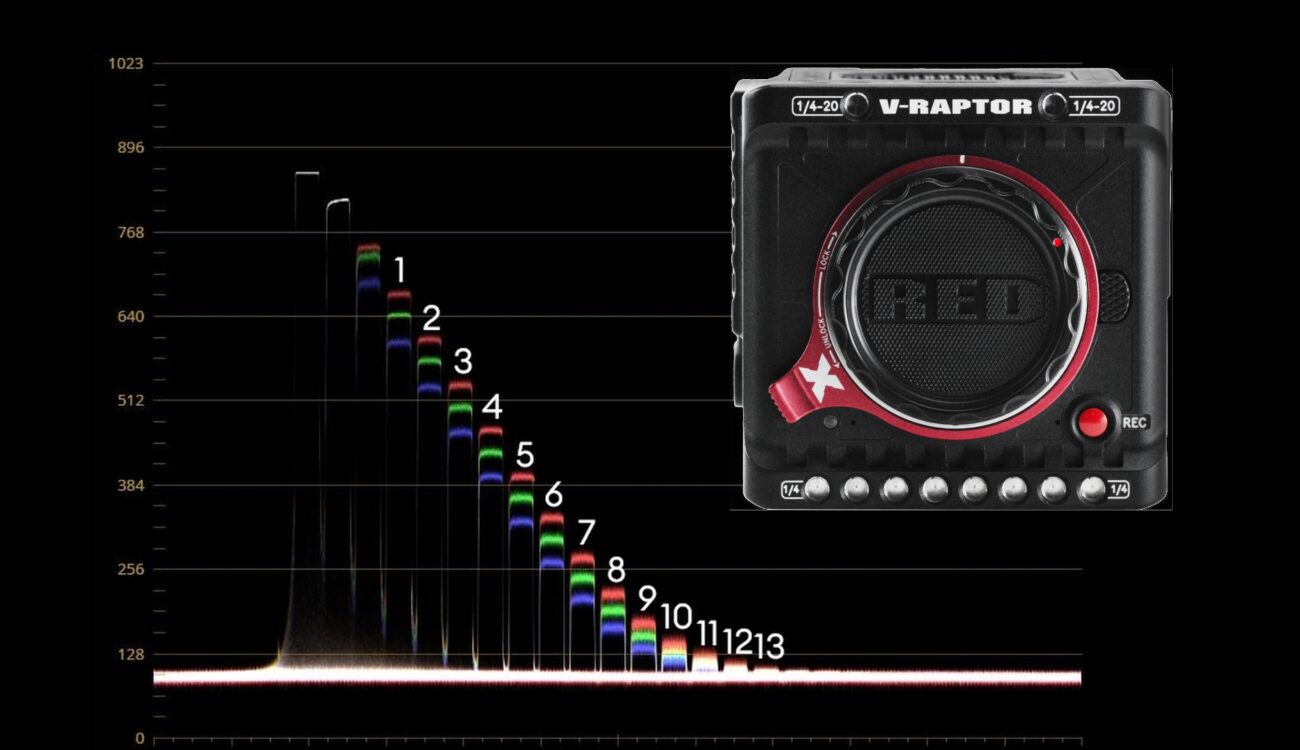
CineD's 2025 Lab Tests: Beyond the Hype, Into the Workflow
We've all been there: the shiny new camera announcement, often accompanied by glossy marketing reels and carefully curated footage that looks, let's be honest, magical. But pull that camera onto a properly lit set, under controlled conditions, and suddenly the magic sometimes... fades a bit. Dynamic range starts to clip earlier than promised. Noise floors creep up in unexpected places. That's why, every year, I eagerly await the deep dive from CineD's lab tests, and their 2025 iteration is no different. They don't just review cameras; they dissect them with methodical rigor, giving us numbers that actually matter when you're staring down a tight schedule and an even tighter budget.
This isn't about marketing fluff; it's about quantifiable performance. And for DPs who need to know exactly how far they can push an exposure or how much latitude they’ve really got in post, those numbers are gold.
The Method: Why CineD's Approach Matters
CineD's methodology isn't just about shooting charts; it's about creating a standardized, repeatable test environment that mirrors, as closely as possible, the challenges we face on set. They're not looking for the best image in ideal conditions, but rather the most robust image when conditions are less than perfect. Their dynamic range tests, for instance, go beyond simply counting stops. They differentiate between "usable" dynamic range and "total" dynamic range, which is a crucial distinction. We all know that last stop (or two) of dynamic range on a spec sheet might be technically present, but if it's buried under so much noise that it's unusable for anything beyond a VFX plate, what's the point?
Their signal-to-noise ratio (SNR) measurements are particularly insightful. They're not just giving us a number, they're showing us where the camera truly starts to fall apart when you push the ISO. And they do this across various ISOs, giving a comprehensive picture of how each camera's noise profile behaves. This kind of granular data is indispensable for DPs working in challenging environments, especially low-light scenarios. I remember being on a shoot with Bradford Young for Arrival, and while he had access to top-tier camera packages and lights, the choice of camera was always dictated by its known performance limits, not just its marketing claims. Understanding those limits from a source like CineD allows us to make informed creative compromises, not just hopeful guesses.
And importantly, they test internal codecs, which, let's be honest, is where most of us are living these days unless you're on a tentpole feature. How a camera compresses that sensor data internally is as critical as the sensor itself. Bit depth, color sampling (4:2:2 vs. 4:2:0), and compression artifacts become non-negotiable considerations when you're looking at a tight grade schedule and expecting clean keys or subtle color shifts.
Key Insights from 2025: Surprises and Confirmations
The 2025 results brought some genuinely interesting findings. For starters, the RED V-Raptor XL, as expected, continued to impress with its sheer dynamic range at base ISO, consistently hitting over 14 stops of usable range. It's a beast, no doubt, and the color science out of RED has only matured, offering DPs a massive canvas in post. But what was surprising was how well some mid-tier cameras are now competing in specific performance categories.
Take the new Blackmagic URSA Mini Pro 12K G2. While its 12K resolution still feels like overkill for many projects outside of extreme reframing or VFX work, its dynamic range performance in their 'extended video' mode is shockingly good, often nipping at the heels of cameras twice its price. This tells me that Blackmagic, with their focus on internal RAW and aggressive pricing, continues to disrupt the market by pushing sensor performance into accessible packages. For owner-operators or smaller productions, the value proposition there is immense. You're getting a significantly higher percentage of high-end performance for a fraction of the cost, even if the user experience (UX) and build quality don't quite match an ARRI.
And speaking of ARRI, the ALEXA 35 predictably dominated in low-light and noise performance. This isn't really a surprise; ARRI has been the undisputed king of clean images and incredible highlight retention for years. Their new REVEAL Color Science, paired with that gorgeous sensor, just delivers. What CineD’s tests confirm is that the ALEXA 35 really does push the boundaries of what’s possible in extreme low-light, offering usable images at ISOs that would crumble most other cameras. If you're on a set with limited lighting capabilities or aiming for a super-naturalistic look à la Roger Deakins, the latitude and cleanliness that camera provides is still unmatched. That's not just a technical advantage; it's a creative one: the ability to execute on a certain visual style without having to compromise.
But here was the kicker for me: the surprising consistency of Sony's Venice 2, especially when pushed into its dual-base ISO range. In some specific low-light scenarios, where the Venice 2's secondary native ISO hit its stride, it produced images that were astonishingly clean with excellent color separation, rivaling even the ALEXA 35 in certain metrics. This really highlights Sony’s quiet, methodical progress. They’re not always theflashiest, but the Venice 2 is an absolute workhorse that often gets overlooked in the 'RED vs. ARRI' discourse.
Then there's the ongoing saga of global shutter. The results for cameras with global shutter implementations were, while cleaner in terms of motion artifacts, still showing a slight trade-off in dynamic range compared to their rolling shutter counterparts within the same series. This confirms what many DPs suspected: designing a global shutter sensor that retains the same DR and low-light performance is a monumental engineering challenge. So, while you might avoid those dreaded jellyfish effects on whip pans or LED flicker, you might be giving up half a stop of usable dynamic range. It's a trade-off that needs careful consideration, especially if you're working with challenging lighting scenarios or require maximum latitude in post.
Informing Your Choices: Beyond the Spec Sheet
So, how do these detailed breakdowns really inform your gear acquisition and creative choices? First, they provide tangible data points to back up (or refute) anecdotal evidence. Someone might say, "Oh, Camera X is great in low light," but CineD gives you the actual SNR curves to compare against other cameras. This allows you to evaluate specific camera models not just on subjective 'feel,' but on quantifiable performance metrics.
For me, it fundamentally changes the rental conversation. Instead of just asking for "an ARRI" or "a RED," I can now specifically reference performance benchmarks. If a project has a heavy reliance on practical lights and minimal rigging (think indie drama, documentary, run-and-gun), the low-light performance data becomes paramount. I might steer towards the ALEXA 35 or a Venice 2 at its high native ISO, even over something like a RED Komodo, which might have fantastic color science but less grace in the shadows.
Conversely, if I'm shooting a VFX-heavy commercial where every pixel counts and re-framing is a given, the 14+ stops of usable dynamic range from a V-Raptor XL becomes incredibly attractive, giving VFX artists a massive amount of visual information to work with. The higher resolution isn't just a number; it’s a tool for extracting more detail and for creating more compelling visual effects. And when it comes to assessing the financial implications of gear, understanding granular performance means you're investing wisely. A camera that performs exceptionally well in specific, critical areas might be worth the higher rental cost if it saves hours in post-production or enables a creative vision that would otherwise be impossible. This brings us to a larger conversation about the true cost of high-end camera packages, and how these tests help justify those investments.
Furthermore, these tests help manage expectations with clients and producers. If a director insists on shooting a night exterior with minimal lighting on a camera known to struggle past ISO 1280, I can present data, not just opinion, to argue for supplementary lighting or a different camera choice. It moves the conversation from subjective preference to objective performance.
Implications for the Broader Market and Future Innovations
The consistent trend of improving dynamic range and noise performance across all price points is a huge win for filmmakers. The gap between what was considered "high-end" and "prosumer" just a few years ago is rapidly shrinking, particularly in terms of raw sensor output. This pressure is forcing manufacturers to innovate not just on sensor technology, but on workflow, user experience, and specialized features.
We're seeing a bifurcation: some manufacturers (ARRI, RED) are chasing ultimate image fidelity and robust, broadcast-ready tools for the top tier of production, often with proprietary ecosystems. Others (Blackmagic, Canon, Sony's broader range) are focusing on democratizing access to high-quality images, integrating advanced features like excellent internal codecs, effective autofocus, and compact form factors.
The continued debate over global shutter versus rolling shutter, as highlighted by CineD's data, is also pushing sensor design. The "perfect" global shutter with no DR penalty remains the holy grail, and progress here will undoubtedly shape future camera releases. As LED volume stages become more prevalent, the demand for global shutter will only intensify, forcing manufacturers to overcome these technical hurdles.
Ultimately, CineD’s 2025 lab tests are more than just a list of specs; they’re a benchmark for the industry and a critical resource for professionals. They demystify the marketing hype and provide the kind of nitty-gritty details that allow cinematographers to make truly informed decisions, equipping us with the knowledge to push the boundaries of what's creatively possible without getting tripped up by technical limitations. It’s about leveraging data to serve the storytelling, and for that, we need to dig deep, far beyond the initial impressions.
---
© 2025 BlockReel DAO. All rights reserved. Licensed under CC BY-NC-ND 4.0 • No AI Training. Originally published on BlockReel DAO.