Del Toro's 'Frankenstein' Dream: A Lifelong Buildup or a Beautiful Diversion?
Del Toro's 'Frankenstein' Dream: A Lifelong Buildup or a Beautiful Diversion?
Guillermo del Toro, bless his gothic heart, has finally pulled the trigger on his Frankenstein adaptation, casting Jacob Elordi, Oscar Isaac, and Mia Goth in the leading roles - and, predictably, the internet is alight. "All my life, I've been aiming towards this movie," he declared, echoing a sentiment many of us in the industry have heard from directors about their passion projects. But how many of us actually believe it? Or, more to the point, how many of us understand the labyrinthine journey, the strategic diversions, and the sheer force of will it takes to finally get your "white whale" made in Hollywood? It’s a compelling narrative, certainly, but for professionals, it begs a deeper dive into the mechanics and the creative implications.
This isn’t del Toro's first rodeo with iconic monsters or period pieces, obviously. From the melancholic monstrosities of Pan's Labyrinth to the amphibian romance of The Shape of Water, his filmography is a veritable bestiary of the sublime and the grotesque. And let’s not forget his aborted attempts, that Mountains of Madness adaptation, which still haunts conversations at every genre festival, or his prior dance with Universal’s Dark Universe, a bullet dodged by most accounts. The Frankenstein monster, Mary Shelley's wretched creation, feels like the natural, inevitable culmination of his oeuvre, doesn't it? A creature born of unnatural science, ostracized by society, yearning for connection. It’s practically the del Toro bingo card.
But let's be real: "lifelong ambition" is often shorthand for "the studio finally said yes after five iterations of a budget pitch that would make an exorcist blush." It’s an alluring narrative for press junkets, but behind the scenes, there's a decade of strategic choices, successful box office gambles (or at least critical darlings that garnered enough awards gold to justify another big swing), and likely, a fair bit of artistic compromise woven into the fabric of even the most personal projects. To paraphrase a cynical old line producer I once knew, "Hollywood doesn’t greenlight dreams; it greenlights calculated risks wrapped in a dream narrative."
The Visual Language: How Will GDT’s Style Serve Shelley?
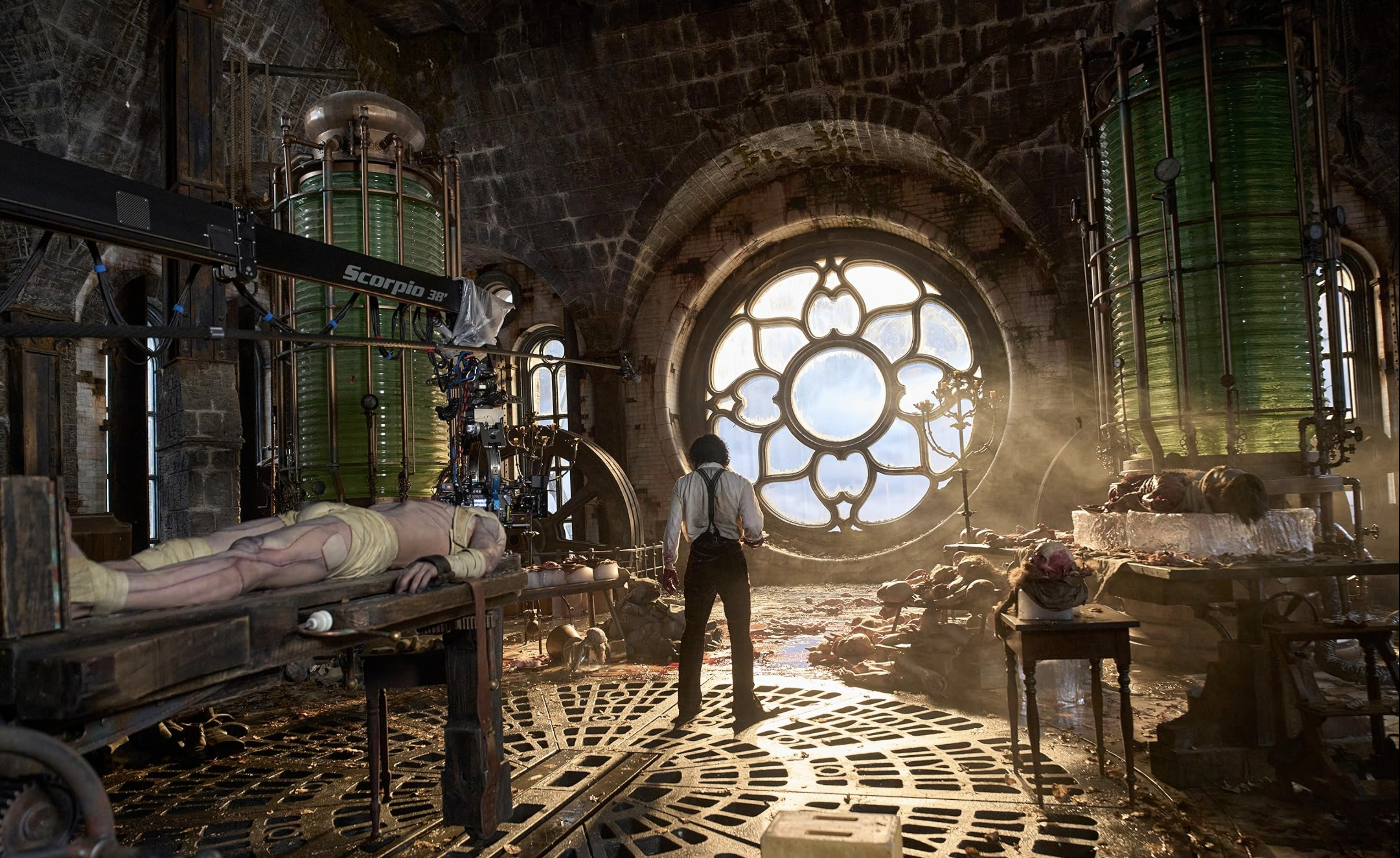
So, if this is indeed the magnum opus, the summation of his unique aesthetic, what does that actually mean for cinematographers, production designers, and VFX supervisors brought onto the project? Del Toro's visual language is unmistakable: baroque gothicism, intricate practical creature effects often enhanced with subtle CG, and a masterful command of light and shadow, leaning heavily into high-contrast chiaroscuro. Think of the deep, velvety blacks and incandescent highlights in something like Crimson Peak, shot by Dan Laustsen (who’s been his long-time collaborator, including on The Shape of Water and Nightmare Alley).
For Frankenstein, the lighting choices alone will be paramount. Shelley’s novel is rife with atmospheric descriptions, the chill of the Alps, the dreary laboratory, the oppressive claustrophobia of pursuit. Will Laustsen, or whoever steps into the DP role for this one (rumor has it Laustsen is back, which would be a relief), lean into the cool, melancholic blues and desaturated palettes we've seen in some of the more psychological horror sequences in del Toro's past work? Or will there be a richer, almost expressionistic use of color, reminiscent of the heightened reality he often crafts? Consider the meticulous set design for Nightmare Alley, which meticulously recreated a specific period, but then del Toro infused it with his own theatrical, almost operatic grandeur. That wasn't mere historical accuracy; it was interpretation.
The Creature’s portrayal is another critical piece. Boris Karloff's iconic look, designed by Jack Pierce, set the standard. But del Toro thrives on making his monsters empathetic, yearning, and often, beautiful in their own way, despite their horror. How will Jacob Elordi's portrayal, under layers of prosthetics and CGI augmentation, balance the grotesque with the sympathetic? Will del Toro push the boundaries of practical effects, as he so often prefers, keeping the digital enhancements subtle and supportive rather than overwhelming? His creature workshop, particularly with someone like Mike Hill or Spectral Motion involved, is legendary for its meticulous detail and organic feel. This isn’t a director who embraces motion capture as a first resort; it’s a tool in a larger, tactile toolbox. We can expect a deeply thought-out approach to the Creature’s physical presence, designed not just for horror, but for palpable, tragic isolation.
The Equipment & Workflow: Beyond the Aesthetic
When we talk about deep technical analysis, we have to consider what this truly means for the production. Del Toro has often shot on ARRI Alexa cameras, prized for their organic look, dynamic range, and gentle highlight rolloff qualities crucial for preserving detail in shadowy, gothic environments. Will this be an Alexa 35 shoot, leveraging its extended color gamut and improved low-light performance? Or perhaps even large format with an Alexa 65, for that expansive, dreamlike quality that elevates his fantastical worlds? The latter would significantly impact lens choices and lighting requirements, given its appetite for light.
And then there are the lenses. Del Toro often employs vintage glass or custom detuned modern lenses to achieve specific characteristics, flares, aberrations, and a softer fall-off that feels less clinically perfect than pristine modern optics. Think of the slight glow around candles or practicals, the subtle breath of a lens. If it is large format, will they be using something like the Arri Signature Primes, which are designed to be warm and expressive, or will they go for something more bespoke, perhaps rehoused vintage large-format optics that would require significant camera prep and workflow adjustments? This isn't just about pretty pictures; it's about achieving a specific emotional texture that permeates every frame.
For a director whose visual style is so meticulously rendered, the post-production workflow will also be critical. We are talking about a film likely to be delivered at 4K or 6K, with significant VFX integration, even if subtle. A RAW workflow, whether ARRI RAW or ProRes 4444 XQ, would be non-negotiable for preserving the latitude and color information needed for extensive grading and VFX compositing. The DIT on a del Toro set isn’t just ingesting cards; they're managing massive data streams, ensuring color science consistency, and providing critical on-set look development that translates directly to the final grade.
The Long Game: Del Toro's Calculated Chess Moves
It’s easy to dismiss a director’s "lifelong dream" as mere public relations. But in del Toro's case, there's a compelling argument to be made that his career has, in fact, been a deliberate construction towards this literary giant. Each project has been an opportunity to refine his technique, to tell a variation of his thematic obsessions, and crucially, to build the capital, both artistic and financial, necessary to command the resources for a Frankenstein of this scale.
Think about The Shape of Water. A relatively modest budget by Hollywood standards, yet it garnered four Oscars, including Best Picture and Best Director. That kind of critical acclaim is gold. It translates directly into more creative freedom and a bigger leash for your next project. Nightmare Alley was a darker, more cynical turn, showcasing his mastery of practical period filmmaking and human monster archetypes. These weren't just passion projects; they were calculated steps on a staircase, each one leading higher to the point where he could confidently say to a studio, "I'm ready for Frankenstein, and here’s why I’m the only one who can do it justice."
The irony, perhaps, is that the ultimate horror of Frankenstein isn't the monster itself, but the hubris of its creator. And in a way, every director tackling such an iconic piece is wrestling with a similar hubris, the belief that they can finally get it "right," or at least, add a meaningful new chapter to its cinematic legacy. Del Toro has earned the right to that hubris. He’s spent decades honing his craft, accumulating the goodwill and the technical expertise necessary to not just dream about Frankenstein, but to actually build it.
Whether it will truly be the "culmination" or simply another magnificent, albeit expensive, entry in his monstrous filmography remains to be seen. But one thing is certain: for those of us who appreciate the intricate alchemy of world-building, character design, and masterful visual storytelling, del Toro’s Frankenstein will be a masterclass in execution. And given his track record, it might just be worth the wait, no matter how many strategic detours it took to get here. Because sometimes, the journey itself is the most captivating monster of all.
---
© 2025 BlockReel DAO. All rights reserved. Licensed under CC BY-NC-ND 4.0 • No AI Training. Originally published on BlockReel DAO.