Noah Baumbach on 'Jay Kelly': The Cinematography of Vulnerability
Noah Baumbach on 'Jay Kelly': The Cinematography of Vulnerability
The quiet murmur of anticipation around Noah Baumbach’s latest feature, 'Jay Kelly', isn't just about George Clooney's casting as a fading movie star grappling with fatherhood; it’s about a discernible shift in Baumbach's visual language, a softening that belies the often acerbic wit and sharp edges we've come to expect. Thirty years after 'Kicking and Screaming' launched his career, Baumbach, co-writing here with Emily Mortimer, seems to be chasing a different kind of truth. And for cinematographers, this evolution presents a compelling case study in matching visual texture to emotional landscape.
We've long associated Baumbach with a certain aesthetic: handheld intimacy, often with prime lenses that push for a naturalistic, almost voyeuristic perspective. Think of the controlled chaos of 'Marriage Story', shot predominantly by Robbie Ryan, BSC, where character blocking and lens choice (frequently 35mm and 50mm primes) articulated a fractured relationship with stark precision. Or the precise, almost anthropological framing of 'Frances Ha' by Sam Levy, ASC, where the monochrome palette felt less like an homage and more like a deliberate stripping away, focusing on gesture and expression. With 'Jay Kelly', however, there's a different sensibility at play, one that aims for a sustained mood of introspection rather than punctuated dialogue bursts.
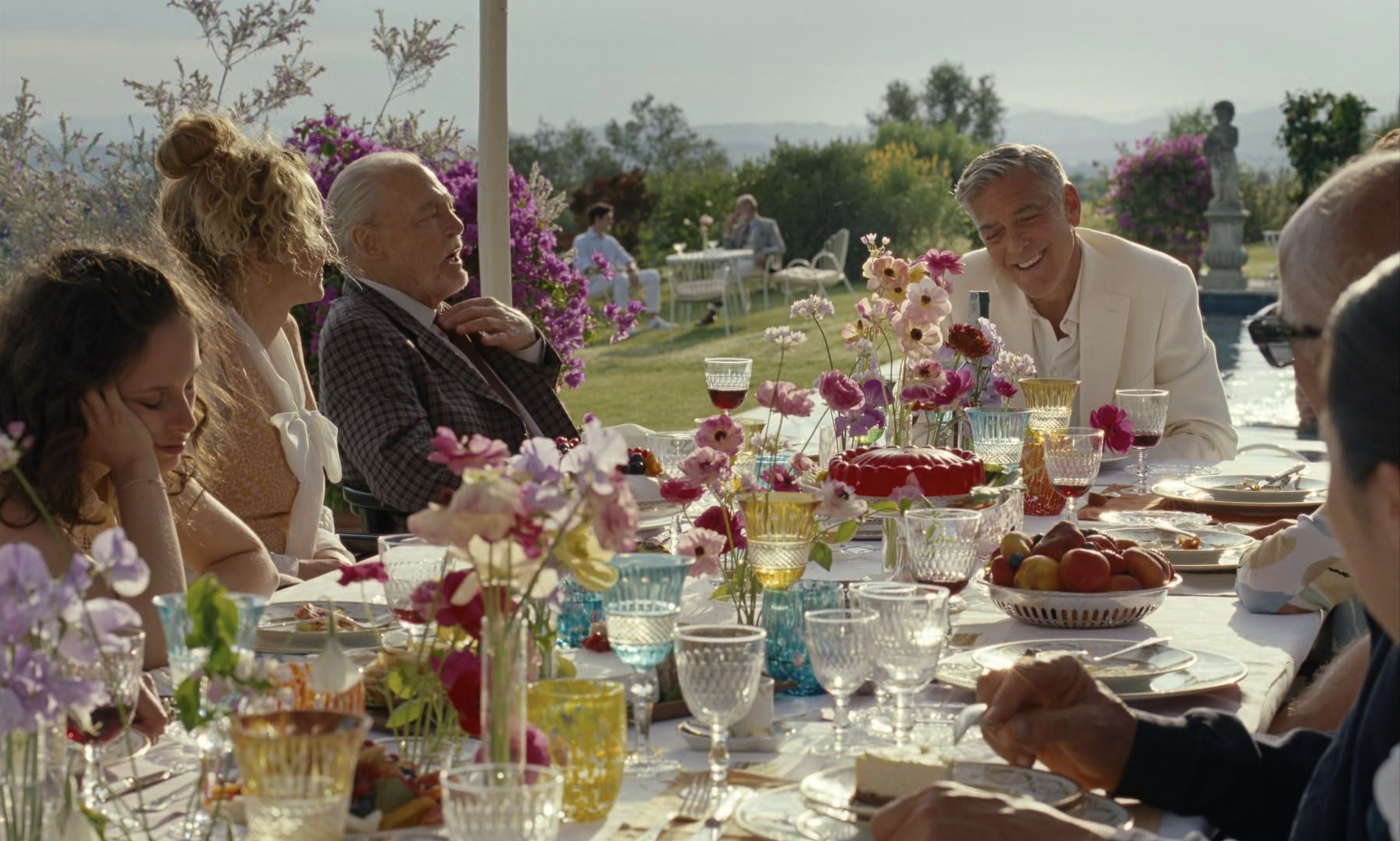
The early buzz describes 'Jay Kelly' as Baumbach's "softest" film. This isn't just a thematic observation; it translates directly into cinematography. Achieving "softness" visually in contemporary digital filmmaking requires deliberate choices, especially when working with high-resolution sensors that are inherently sharp. Baumbach and his director of photography, who remains publicly unnamed but is known to be a frequent collaborator, likely veered away from the clinical sharpness often favored in modern dramas. This could mean a few things: a conscious choice of vintage glass, or specialty filtration, or even a specific lighting philosophy that embraces diffusion and practicals over hard, sculpted light.
Consider the prevailing trend towards spherical lenses that render skin tones with a forgiving quality, often with a slight fall-off in sharpness towards the edges. Lenses like rehoused vintage Canon K35s or even detuned modern optics from manufacturers like Tribe7 or Cooke could certainly contribute to this "soft" aesthetic without sacrificing resolution entirely. The goal isn't blur, but rather a more organic rendition of reality, one that feels less observed and more deeply felt. When Roger Deakins, ASC, BSC, chooses to shoot digital, he still brings a painterly quality to his work, often sculpting light with great care to achieve precisely the right texture and mood, regardless of the camera's inherent sharpness. It's a testament to a DP's skill to intentionally not fall into the trap of purely chasing resolution.
The Cinematographer's Role in Emotional Nuance
Thematically, 'Jay Kelly' explores a fading star's reckoning with his past and a somewhat estranged adult child. This implies a significant amount of close-up work, but not necessarily tight, observational close-ups. Baumbach’s prior films often relied on the "long take, medium shot" approach, allowing performances to breathe within a psychological frame. If "softest" indeed means more emotional vulnerability, we might expect a progression towards warmer color temperatures, shallower depths of field (perhaps pushing beyond T2.8 regularly), and an embrace of flares or internal lens characteristics that some DPs spend a lifetime trying to eliminate.
The interview snippets suggest a departure from the often rapid-fire, intellectualized dialogue prevalent in films like 'The Squid and the Whale' or 'While We're Young'. This shift necessitates a different kind of framing. When conversations are less about verbal sparring and more about unspoken emotional currents, the camera becomes an active participant in revealing subtext. A slightly wider medium shot that includes the negative space around a character, or a master shot held just long enough for discomfort to settle, can communicate volumes. It's the kind of subtle articulation we see in the work of cinematographers like Bradford Young, ASC, whose work often prioritizes mood and emotional resonance over strict adherence to conventional blocking.
The choice of camera system itself also informs this. While Baumbach has previously worked extensively with ARRI ALEXA systems, known for their excellent color science and film-like highlight roll-off, the pursuit of a "softer" image could lead to exploration of other sensors. Some DPs are experimenting with larger sensor formats (like ARRI ALEXA 65 or LF, or even RED Monstro VV), not for the 8K pixel count, but for the inherent shallow depth of field and different lens characteristics afforded by their larger image circles. This allows for a more pronounced separation of subject from background, creating an ethereal quality that supports introspection.
Budgeting for the Unseen: Time and Trust
Achieving this kind of delicate nuance isn’t just about gear; it’s about time and trust. A "soft" aesthetic in cinematography often requires more precise lighting control and more takes to capture the subtle shifts in performance that such an aesthetic is designed to highlight. This has direct ramifications for production budgets. Extensive setups for nuanced lighting and slower shooting ratios mean more days on set. For an indie veteran like Baumbach, even with the backing of a major studio for this particular project, these are conversations that happen long before principal photography begins.
Consider the cost: a typical high-end prime lens rental can range from $200-$500 per day per lens, while a set of specialized vintage glass or custom detuned modern primes can easily run $1,000-$2,000 per day for the full kit. Coupled with the daily rates for ARRI ALEXA LF camera packages, which hover around $3,000-$5,000, these choices accumulate rapidly. It emphasizes that aesthetic decisions are rarely purely artistic; they are always intertwined with economic realities. This is especially true for directors who, like Baumbach, maintain a relatively consistent crew, where understanding and trust cultivate efficiency, allowing for those extra precious moments to capture a particular light or expression. The importance of establishing these workflows from pre-production cannot be overstated.
Emily Mortimer's Influence: A Different Voice in the Edit
The co-writing credit with Emily Mortimer is also significant. Baumbach often crafts characters who are acutely aware of their own foibles, sometimes to the point of self-sabotage. Mortimer, as an actress and collaborator ('Doll & Em'), brings a different, perhaps more empathetic perspective to character development. This dual authorship might be the real engine behind the film's described "softness." A script that prioritizes empathy and emotional interiority will naturally lead to visual choices that support those themes.
From a production standpoint, a co-writer with a strong voice can influence the shooting script in ways that directly impact cinematography. Are there more moments of quiet contemplation versus rapid-fire dialogue? Are characters moving through spaces in a way that suggests internal conflict versus external confrontation? These are questions that a DP and director hash out during prep, often through detailed shot lists and storyboards, but sometimes, especially with improvisational actors, discovered on set. The relationship between script and visual execution is never static. It's a continuous dialogue.
Moreover, the concept of a "soft" film could also extend to post-production. A warmer, more diffused aesthetic could be achieved not just through lensing and lighting, but through a careful grading process. Look up tables (LUTs) and color science choices play a pivotal role. The move away from ultra-contrasty, hyper-saturated looks towards something more muted, with nuanced mid-tones and softer blacks, is a deliberate choice made in collaboration with a colorist. This requires a robust pipeline from capture to final delivery, ensuring that the visual information captured on set translates accurately and beautifully into the desired final look.
The Arc of an Auteur: 30 Years In
Thirty years on from 'Kicking and Screaming', Baumbach's career trajectory offers a fascinating case study in artistic evolution. Directors often refine their signature style, but rarely do they fundamentally shift their emotional core. 'Jay Kelly' suggests such a shift. The film is less about breaking new technical ground and more about a director using his accumulated craft to explore deeper, more vulnerable emotional territory.
For seasoned cinematographers, this evolution is a reminder that our tools and techniques are always subservient to the story and the emotional truth a director seeks to convey. It's not about the newest camera or the latest trick; it's about understanding the internal landscape of a character and finding the visual language to articulate it. If Baumbach, known for his incisive dissection of neuroticism and interpersonal friction, is now embracing "softness," it speaks to a maturation of perspective that every filmmaker, regardless of their own genre, eventually reaches. It implies a comfort with vulnerability, both in subject matter and in the storytelling itself. This isn't just a stylistic choice; it's a profound statement about what stories we choose to tell and how we choose to tell them as we move through our own careers.
---
© 2025 BlockReel DAO. All rights reserved. Licensed under CC BY-NC-ND 4.0 • No AI Training. Originally published on BlockReel DAO.