Production Dialogue and ADR: The Definitive Workflow for Filmmakers
Executive Summary
Dialogue is the soul of narrative filmmaking. When it is clear, rich, and emotionally resonant, it connects the audience to the story. When it is muddy, noisy, or poorly performed, the entire production suffers. This guide is the definitive resource for any filmmaker, from the indie director on a shoestring budget to the seasoned producer on a high-end series, who is serious about achieving professional-level dialogue. We will dismantle the entire process, from pre-production planning to final mix, treating sound not as an afterthought but as a core component of cinematic storytelling. You will learn the critical differences between on-set production recording and post-production ADR (Automated Dialogue Replacement), and more importantly, how to make them work together seamlessly. This guide provides a comprehensive breakdown of the techniques, tools, and workflows that professionals use every day. We will cover microphone selection, on-set best practices, the step-by-step ADR process, dialogue editing, the impact of AI, and the practical realities of budgeting and scheduling. By the end, you will have a complete blueprint for capturing, editing, and perfecting every line of dialogue, ensuring your story is heard exactly as you intend.Table of Contents - The Twin Pillars: Production Dialogue and ADR - Pre-Production: Your First Line of Defense for Clean Dialogue - On-Set Dialogue Recording: Techniques and Best Practices - The ADR Workflow: From Spotting to Seamless Integration - Beyond Single Lines: Mastering Group ADR and Walla - The Art of the Blend: Dialogue Editing and ADR Integration - The AI Revolution: Dialogue Technology in 2024 and Beyond - Budgeting and Scheduling: The Practical Realities of Dialogue Post - Navigating the Maze: Legal, Union, and Compliance Issues - Actionable Checklists and Case Studies - Actionable Next Steps - Resources: Tools, Communities, and Further Reading
*
The Twin Pillars: Production Dialogue and ADR
At the heart of a film's soundtrack lies dialogue, the primary carrier of narrative information and emotional subtext. Every other element of the soundscape, from the subtlest ambience to the most explosive sound effect, is built around its clarity. In professional filmmaking, the management of dialogue rests on two foundational pillars: production dialogue recording and Automated Dialogue Replacement (ADR). Understanding the role and interplay of these two processes is non-negotiable for any serious filmmaker.
Production dialogue, often called location sound, is the audio captured on set during principal photography. This is the gold standard. It is the sound that is intrinsically tied to the actor's physical performance, the acoustics of the actual space, and the energy of the moment. When captured well, it is authentic and alive. The goal of the production sound team is to record this dialogue as cleanly and clearly as possible, prioritizing it above all else.
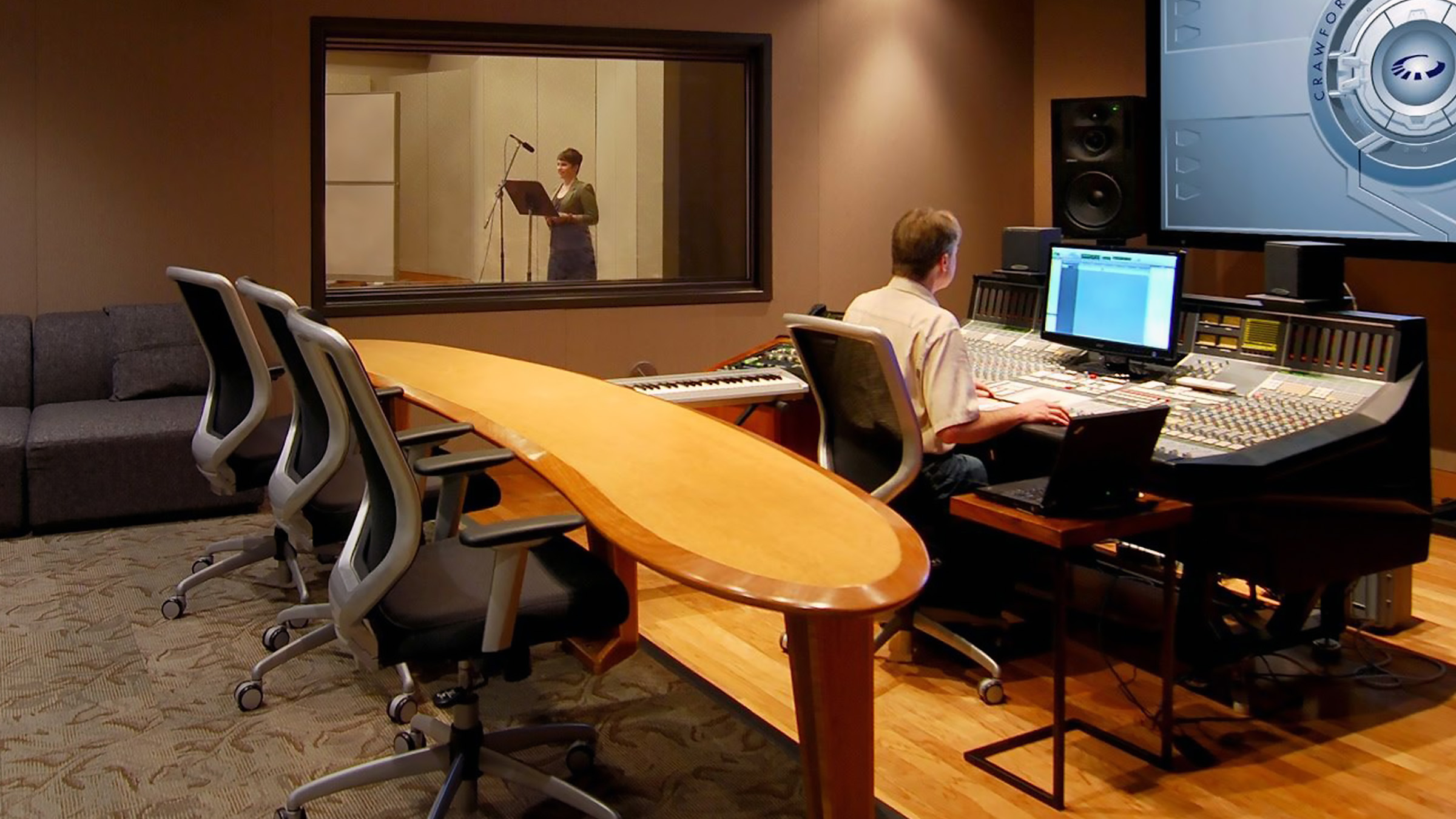
ADR, by contrast, is a post-production process. It involves re-recording dialogue in a controlled studio environment while the actor watches the footage and syncs their new performance to their on-screen lips. ADR is not a replacement for good production sound; it is a specialized tool used to solve specific problems that are unavoidable or were missed on set. These problems include:
* Technical Issues: Unusable audio due to external noise (airplanes, sirens, crew noise), microphone static, clothing rustle, or overlapping dialogue. * Performance Issues: A flubbed line, a lack of energy in the original take, or a desire to refine the emotional delivery. * Creative Changes: Rewriting lines of dialogue after the shoot to clarify story points, add exposition, or change the tone of a scene.
Beyond standard ADR, there are several related processes. Group ADR, or a "loop group," involves bringing in a group of voice actors to create the ambient chatter and specific background conversations for environments like restaurants, police stations, or parties. This is distinct from "walla," which is the generalized, unintelligible murmur of a crowd. Other processes like voice-over (VO) narration and foreign-language dubbing also fall under the umbrella of dialogue post-production but serve different narrative functions.
The entire journey of dialogue fits into a larger audio post-production pipeline. After picture lock, the dialogue editor takes the raw production audio and begins the painstaking work of cleaning, editing, and assembling the primary dialogue track. This is also when ADR is "spotted," or identified, for recording. Once the ADR is recorded, it is edited and carefully blended with the production sound. Only then are sound effects, Foley, ambiences, and music layered in. As you can see in any professional guide to the audio post-production process, every decision is made to support the intelligibility and emotional impact of the dialogue. It is, and always will be, king.
A critical, and often forgotten, component that bridges production and post is room tone. This is the sound of a location without any dialogue. It's the unique sonic fingerprint of a space, including the hum of the lights and the subtle sound of the air. Recording at least a minute of clean room tone for every single setup is mandatory. In post-production, this tone is used to smooth over edits, fill gaps, and sit underneath ADR to make it feel like it was recorded in the same space as the production dialogue. Neglecting room tone is one of the most common and costly mistakes a production can make.
---
Pre-Production: Your First Line of Defense for Clean Dialogue
The battle for clean dialogue is won or lost long before the cameras roll. While many filmmakers focus exclusively on visual elements during pre-production, savvy producers and directors know that planning for sound at this stage saves immense time, money, and creative heartache in post. Treating sound as a primary consideration, not an afterthought, is the hallmark of a professional production.
The process begins with the script breakdown. A production sound mixer or a supervising sound editor should be involved in this stage, reading the script with an ear for potential audio challenges. They will flag scenes that are high-risk for problematic dialogue: * Noisy Locations: Scenes set on busy streets, in restaurants with open kitchens, near airports, or in rooms with loud HVAC systems. * Action Sequences: Stunts, fights, or scenes with loud vehicles where capturing clean lines will be impossible. * VFX-Heavy Scenes: Dialogue spoken on a green screen stage often feels sterile and will likely need ADR to match the acoustics of the final computer-generated environment. * Wardrobe Issues: Scenes with characters wearing noisy clothing like leather jackets or jewelry.
This "red list" of scenes allows the entire team to strategize. For a scene in a noisy café, the decision might be to find a quieter, more controllable location that can be dressed to look like a busy café. The cost of a slightly more expensive location, perhaps a few hundred dollars more per day, is almost always cheaper than the thousands of dollars required for a day of ADR with a principal actor.
Location scouting must be an audio-visual process. A sound mixer should attend tech scouts armed with a portable recorder (like a Zoom H5 or Sound Devices MixPre) and headphones. They are not just listening for obvious noise, but for the acoustic character of the space. Are there hard, reflective surfaces like glass walls and tile floors that will create excessive reverb? Is there a hidden hum from a nearby electrical transformer? This information is vital. Sometimes, simple fixes like laying down sound blankets can treat a room, but other times, a location is simply an acoustic nightmare and must be avoided.
Finally, pre-production is the time to plan for post. This means scheduling ADR holds in lead actors' contracts. This is a critical step. Once a film wraps, actors immediately move on to other projects and their availability becomes scarce and expensive. Securing a contract that guarantees a day or two for ADR within a few months of the shoot is standard practice. Forgetting this can lead to a desperate, costly scramble to record an actor remotely, often in a compromised acoustic environment. Similarly, if the script calls for large crowd scenes, the need for a loop group session should be identified and budgeted for from day one. You do not want to discover you need to fill a stadium with chants and have no money left to do it.
💡 Pro Tip: Have the sound team create a "red list" of scenes during the script breakdown. These are scenes identified as high-risk for unusable production dialogue. This allows the director and AD to consciously protect those moments on set, perhaps by scheduling them at quieter times of day or by planning to shoot a "clean pass" where actors repeat key lines for audio only, without background action.
---
On-Set Dialogue Recording: Techniques and Best Practices
On the day of the shoot, the responsibility for capturing pristine dialogue falls to the production sound department, typically a three-person team: the Production Sound Mixer, the Boom Operator, and the Utility Sound Technician. Their workflow, equipment, and technique directly determine how much work, and money, will be spent in post-production. The governing philosophy on any professional set is simple: the boom microphone is primary, and everything else is secondary.
The Boom Operator is arguably the most critical role for dialogue quality. Their job is to position a high-quality shotgun microphone (the "boom mic") as close to the speaking actor as possible without entering the frame. This proximity is key. It ensures a rich, present vocal sound with a natural acoustic perspective and minimal background noise. The choice of microphone is crucial; industry-standard shotgun mics like the Sennheiser MKH 416 or MKH 8060, the Schoeps CMC6/MK41 hypercardioid, or the DPA 4017 are chosen for their directionality and clarity. The boom operator's skill lies in anticipating actor movements, avoiding shadows, and maintaining a consistent distance and angle to the talent across different takes and camera angles to ensure continuity.
Simultaneously, actors are often fitted with wireless lavalier microphones (lavs). These are small, discreet mics, like the DPA 6060, Sanken COS-11D, or Countryman B6, hidden in clothing. While essential, lavs are considered a backup or a problem-solver, not the primary source. They are prone to clothing rustle, have a less natural "in the head" sound, and do not capture the acoustic perspective of the room. Their strength lies in situations where a boom cannot get close, such as in extreme wide shots or inside a moving vehicle.
The Production Sound Mixer is the department head, orchestrating the entire operation from their sound cart. They operate a multi-channel field recorder, such as a Sound Devices 833/888/Scorpio or a Zaxcom Nova. Modern best practice is to record in a dual-system, where audio is recorded separately from the camera, and to capture multitrack polyphonic WAV files. This means the mixer records an isolated track (an "ISO") for the boom mic and for each individual lavalier microphone, plus a reference mix track. This gives the dialogue editor in post-production maximum flexibility to choose the best source for any given moment. The mixer is also responsible for managing wireless frequencies using systems from Lectrosonics, Wisycom, or Shure Axient, monitoring for noise, and communicating with the director and AD about audio issues.
The following practices are non-negotiable on a professional set: * Slating: Every take begins with a clapperboard ("slate") that provides a visual and audible sync point, along with critical metadata like scene and take number. * Sound Reports: The mixer maintains a detailed log of which microphones were used, track assignments, and any notes about problems or preferred takes. This is invaluable for the post team. * Room Tone: After the final take of a setup, the AD calls for a "quiet hold," and the sound mixer records at least 60-90 seconds of the location's ambient sound. This is mandatory. * Wild Lines: If a line was compromised by noise, the mixer may ask the director for a "wild line," where the actor repeats the dialogue off-camera immediately after the take for a clean recording.
Knowing [how to capture great location sound is a foundational skill, and it is almost always more cost-effective than relying on post-production fixes. The investment in a professional sound team and their kit, which can be valued at over $50,000, pays for itself many times over.
💡 Pro Tip: At the end of a setup, before the crew starts breaking down lights and camera, ask for a 60-second "frozen hold." The director calls "quiet," and for one minute, every single person on set, including the actors in costume, freezes in place. This provides the most authentic room tone possible, capturing the sound of the space with bodies in it and costumes on, which is far more useful than an empty room tone recorded later.
---
The ADR Workflow: From Spotting to Seamless Integration
Even with the best on-set practices, some dialogue will inevitably need to be replaced. This is where the meticulous process of Automated Dialogue Replacement begins. ADR is a powerful tool, capable of saving a scene from technical ruin or even elevating it with a refined performance. However, it is a surgical procedure that requires precision, patience, and a deep understanding of performance. The workflow can be broken down into six distinct stages.
1. Spotting: The process starts after the picture is locked. The supervising sound editor, dialogue editor, and director sit down for an ADR spotting session. They watch the film from beginning to end, taking detailed notes of every line that needs replacement. Each line is identified by its timecode, the character speaking, the reason for replacement (e.g., "airplane flyover," "unclear delivery," "new line"), and the original dialogue. This session generates a master cue list that will guide the entire ADR process.
2. Scheduling and Preparation: This is a logistical challenge. The ADR supervisor coordinates with the actors' schedules, books a qualified ADR stage, and ensures the ADR mixer/engineer has all the necessary materials. A professional ADR stage is an acoustically treated and isolated room, equipped with high-quality microphones, a large screen for picture playback, and a system for delivering cues to the actor. The engineer prepares the session in a Digital Audio Workstation (DAW), most commonly Avid Pro Tools Ultimate or Steinberg Nuendo. They import the video, the production audio guide track, and the ADR cue list.
3. The Recording Session: In the studio, the actor stands at a microphone, wearing headphones and watching the scene on a loop. They hear the original production audio to get the rhythm and emotional tone of the performance. Then, they hear a series of three audible beeps or see a visual "streamer" (a line that wipes across the screen), which cues them to speak the line in sync with their on-screen self. They deliver the line on the imaginary fourth beep. The director provides feedback on performance, while the engineer focuses on technical quality and sync. Multiple takes, often ten or more, are recorded for every single line to provide options for the editor.
4. Microphone and Performance Matching: A critical part of the engineer's job is to approximate the sound of the original production environment. This often involves using a microphone similar to the one used on set. For example, if the production sound was boomed with a Schoeps MK41, the ADR session will often use the same mic. It is also common to record with two microphones simultaneously: a studio-standard condenser like a Neumann U87 for its rich quality, and a shotgun mic like the Sennheiser MKH 50 placed at a similar distance to the actor as the boom was on set. This gives the dialogue editor choices for the best match. The director's job is to guide the actor to not just match the words, but to recreate the energy and intention of the original performance, a task that requires great skill from both parties.
5. Take Selection and Syncing: After the session, the dialogue editor receives all the recorded takes. They listen through each one, selecting the best performance that also has the tightest sync. This "select" take is then meticulously aligned to the actor's on-screen lip movements. This is a frame-by-frame, and often sub-frame, process of nudging the audio clip until the sync is imperceptible.
6. Editing and Blending: This is where the magic happens. Simply dropping the clean ADR into the mix will sound jarring and artificial. The dialogue editor must process the ADR to make it sound like it belongs in the scene. This involves using equalization (EQ) to match the frequency profile of the production sound, and adding artificial reverb and room tone to simulate the acoustics of the original location. This final step is covered in more detail in the dialogue editing section.
💡 Pro Tip: During an ADR session, have the actor perform the line in a few different ways: a standard delivery, a quieter or more intimate whisper, and a slightly more projected version. This gives the mixer more flexibility later. A line that feels right in the quiet of an ADR session might get lost once sound effects and music are added, and having a more powerful alternate take can be a lifesaver.
---
Beyond Single Lines: Mastering Group ADR and Walla
A film's world doesn't feel alive without the ambient human sounds that populate it. A quiet restaurant is eerie, a silent police station feels fake, and a courtroom without whispers and coughs is lifeless. This is the domain of Group ADR, often called a "loop group," a specialized and often overlooked corner of the sound post-production world. It is the art of creating believable, textured, and controllable background conversations and crowd sounds.
It is important to distinguish between different layers of background sound. Walla is the general, unintelligible murmur of a large crowd. It provides a bed of sound but contains no discernible words. Loop group, on the other hand, creates specific, though often background, conversations. These are the snippets of dialogue you might overhear in a coffee shop, the procedural jargon spoken by background cops, or the specific reactions of a jury.
The process is similar to principal ADR but on a larger scale. A group of 3 to 8 specialized voice actors, the loop group, gathers in a large recording studio. These actors are masters of improvisation and character work. The ADR supervisor will guide them through a scene, giving them context: "Okay, you are all doctors and nurses in a busy ER. The main characters are having a quiet, intense conversation center-screen. I need activity, but keep it hushed and procedural. Use medical terminology." The group will then perform multiple passes, improvising dialogue that fits the scene. They might do a pass of very distant, gentle activity, then a mid-ground pass with more energy, and finally a pass of specific "call-outs" or featured lines.
This layered approach gives the final mix engineer incredible control. Instead of being stuck with a single, pre-mixed "crowd" sound effect, they have separate stems for different layers of the group. They can raise the intensity for a dramatic moment or pull it back to focus on the principal dialogue.
Best practices for professional loop group sessions include: Using Specialists: Professional loop group actors know how to improvise in character, match the energy of a scene, and, crucially, know what not* to say. They avoid brand names, copyrighted phrases, and anything that could cause legal issues. * Matching the Environment: The performance must match the location. A group performing for a medieval market scene will use different language and energy than one performing for a modern office. For international productions, it is essential to record walla and group ADR in the appropriate language and accent. * Recording in Layers: The supervisor will ask for different passes based on proximity and intensity. This might include "murmur passes," "chatter passes," and "efforts" (gasps, laughs, reactions). * Clearance and Legality: Any intelligible background line is considered dialogue. If a background actor improvises a line that is defamatory or infringes on copyright, the production is liable. This is why using a professional, trained loop group is a safer bet than relying on on-set extras.
For indie films without the budget for a full loop group session, which can cost from $1,000 to over $5,000, there are workarounds. A small group of local actors or even crew members can be brought in for a mini-session. This can be augmented with high-quality sound effect libraries, such as those from BOOM Library, Pro Sound Effects, or Soundly, which offer multi-channel recordings of crowds and ambiences. However, the custom, scene-specific performance of a live loop group is unmatched for creating a truly immersive and believable world.
💡 Pro Tip: When directing a loop group, give them character motivations, not just lines. Instead of saying "talk about the weather," say "You're two co-workers gossiping about your boss, but you're trying not to be overheard." This results in a far more natural and textured performance, even if the words themselves are never fully intelligible in the final mix.
---
The Art of the Blend: Dialogue Editing and ADR Integration
The work of a dialogue editor is some of the most detailed and invisible work in all of filmmaking. If they do their job perfectly, the audience will never notice it. Their task is to take the raw ingredients, the on-set production audio and the studio-recorded ADR, and transform them into a single, seamless, and emotionally compelling dialogue track. This process is a delicate balance of technical cleanup and artistic judgment.
The workflow begins with the raw production audio. The editor organizes all the audio files, synced to the picture, and begins by assembling the primary edit. This involves listening to every take of every line, including the boom and all the lavalier ISO tracks, and selecting the best-sounding source for each syllable. The primary goal is always to use the production dialogue whenever possible. It carries the authentic performance and the genuine acoustics of the space.
The editor then meticulously cleans this production track. This involves: * Noise Reduction: Using powerful software like iZotope RX 11 or Cedar DNS to surgically remove unwanted sounds like hums, buzzes, clicks, and background noise. The key is subtlety; overuse of noise reduction can create digital artifacts and an unnatural, "underwater" sound. * Edit Smoothing: Every time the editor cuts from one audio clip to another, there is a risk of an audible pop or a shift in the background ambience. The editor uses crossfades and fills any gaps with the recorded room tone to create a continuous, uninterrupted sonic floor. * Leveling: The editor adjusts the volume of every word and phrase using clip gain, ensuring the dialogue is consistent and intelligible without relying too heavily on compression.
The real challenge begins when integrating ADR. A raw ADR recording from a dead-silent studio will stick out like a sore thumb against the background noise and reverb of a production track. The editor's job is to make it disappear. This is achieved through a multi-step process:
1. Sync and Performance Matching: First, the chosen ADR take must be perfectly synced. Beyond manual editing, tools like Synchro Arts Revoice Pro are industry standard. Its Audio Performance Transfer (APT) process can analyze the timing, pitch, and level of the original production line and apply those characteristics to the ADR performance. This is a game-changer for achieving tight sync and matching the original vocal inflection, and it is a core part of modern film ADR and dialogue editing workflows.
2. EQ Matching: The editor uses an equalizer to shape the tonal quality of the ADR to match the production audio. If the production dialogue sounds slightly muffled because it was recorded outdoors, the ADR needs to be EQ'd to have a similar profile.
3. Reverb and Ambience: This is the most crucial step. The editor must recreate the acoustic space of the original location. This is done by adding artificial reverberation. Using a convolution reverb, which uses an impulse response (a sonic snapshot) of a real space, is often the most realistic method. The editor will "worldize" the ADR by placing it in a virtual space that sounds identical to the on-set location.
4. Blending with Room Tone: Finally, the processed ADR is layered over a bed of the room tone that was recorded on set. This final layer of authentic ambience is the glue that binds the ADR to the scene, making it feel truly integrated.
This entire process is repeated for every single line of ADR in the film. It is a painstaking, time-consuming craft that demands a highly critical ear and deep technical expertise. When done correctly, the audience is simply left with clear, impactful dialogue, completely unaware of the sonic surgery that took place.
---
The AI Revolution: Dialogue Technology in 2024 and Beyond
The landscape of dialogue post-production is undergoing a dramatic transformation, driven by rapid advancements in machine learning and artificial intelligence. What was once the realm of science fiction is now becoming a standard part of the toolkit for dialogue editors and sound supervisors. These technologies are not replacing the craft, but they are providing powerful new ways to solve old problems, forcing productions to make new decisions about when and why to use traditional ADR.
The most significant impact of AI has been in the field of dialogue cleanup and restoration. For years, tools like iZotope RX have used algorithms to reduce noise. However, the latest generation of software, including RX 11, Acon Digital's Extract:Dialogue, and various tools from Cedar, use deep learning models trained on thousands of hours of audio. These AI-powered tools can deconstruct a piece of audio and isolate the human voice with astonishing precision, removing complex, variable noise like traffic, wind, or music that was previously impossible to eliminate. The result is that many lines of production dialogue that would have been automatically flagged for ADR five years ago can now be salvaged. This has a direct impact on budgets and schedules, potentially saving productions thousands of dollars and precious time with A-list actors.
Beyond cleanup, AI-assisted dialogue separation is becoming more common. These tools can take a single mono or stereo track with overlapping dialogue and separate the individual voices into distinct tracks. This can be a lifesaver in documentary or reality television, and it is finding its way into narrative workflows to rescue moments where actors spoke over one another.
The most futuristic, and controversial, development is in voice cloning and generative ADR. Emerging technologies can analyze an actor's voice and then synthesize new words or entire lines in a cloned voice that is frighteningly realistic. This is primarily used for tiny fixes, like changing a single word ("Tuesday" to "Thursday") without needing a full ADR session. However, the ethical and legal implications are enormous. Unions and actors are rightly concerned about the potential for misuse, and the use of this technology is now a major point of negotiation in actor contracts. For any production considering using synthetic voice generation, explicit, written consent from the actor is an absolute, non-negotiable requirement.
The post-2020 era has also normalized remote collaboration workflows. High-bandwidth, low-latency streaming services like Source-Connect and Audiomovers ListenTo have become industry standards. It is now common for a director in Los Angeles to run an ADR session with an actor who is on location in London, with the engineer in New York, all collaborating in real time. This provides incredible flexibility, but it also requires robust technical setups and clear communication protocols to be successful.
💡 Pro Tip: Use AI restoration tools as an assessment step before committing to ADR. Take a problematic line, duplicate it, and run it through a powerful AI dialogue isolator. Push the tool aggressively to see what the result is. If the voice is salvaged but sounds thin or has digital artifacts, you now have a clear A/B comparison to demonstrate to the director and producers why ADR is still necessary. This makes the case for the expense and justifies the session.
---
Budgeting and Scheduling: The Practical Realities of Dialogue Post
Great dialogue is not just a creative achievement; it is a product of careful financial and logistical planning. For producers and directors, understanding the time and costs associated with dialogue recording and ADR is essential for creating a realistic post-production budget and schedule. Ignoring these realities is a recipe for compromise, conflict, and a subpar final product.
The first principle is to budget for sound from the beginning. On an independent feature, a production sound mixer with a professional kit will typically cost between $400 and $900 per day. While tempting to cut, hiring an experienced mixer is one of the best investments a production can make. Every dollar saved by hiring a less experienced operator or using subpar gear will be paid back tenfold in post-production.
When it comes to post-production, the costs can vary dramatically based on the project's needs. Here is a rough breakdown:
* Dialogue Editor: A skilled dialogue editor typically charges between $40 to $100 per hour, or a flat fee for a feature film that can range from $1,000 to over $5,000. The time required depends on the quality of the production sound; a clean show will take less time than one filled with audio problems. * ADR Sessions: A professional ADR stage in a major market like Los Angeles or London can cost $150 to $400 per hour, which includes the room and a qualified engineer. An indie film might only need a half-day session, costing $400 to $1,500. A major studio feature or television series, however, may have tens or even hundreds of hours of ADR, with costs easily running into the tens or hundreds of thousands of dollars. * Loop Group: A union loop group session for a feature film can cost $1,000 to $5,000 or more, depending on the number of actors and the hours required.
The schedule is just as important as the budget. A typical timeline for a 90-minute independent feature might look like this:
1. Dialogue Edit: 1-3 weeks. This happens after picture lock.
The most significant mistake productions make is underestimating the time required for ADR scheduling. Coordinating with busy actors can take weeks or even months. This is why having ADR holds in contracts is so vital. Another common error is allowing picture changes after ADR has been recorded. If a scene is re-cut, the ADR may no longer sync, requiring a costly new recording session. For this reason, it is a golden rule to lock the picture before recording ADR unless it is for a known technical fix that will not be affected by editorial changes.
💡 Pro Tip: When building your post-production budget, create a tiered system for ADR:
---
Navigating the Maze: Legal, Union,and Compliance Issues
In the complex world of film production, the recording and use of dialogue are governed by a web of legal, contractual, and ethical considerations. Overlooking these rules can lead to legal disputes, union grievances, and significant financial penalties. A professional production must navigate this maze with care and diligence.
Union and Contractual Obligations: In most major markets, actors are represented by unions like SAG-AFTRA in the United States or Equity in the UK. These organizations have specific rules regarding ADR. Principal actors are typically paid a separate session fee for ADR work that falls outside their initial contract. Contracts should include ADR holds, specifying a period after the shoot during which the actor must make themselves available for a set number of sessions. Loop group actors are also typically union members, and their sessions are governed by specific day rates, minimums, and sometimes residual payments. It is the producer's responsibility to understand and adhere to these collective bargaining agreements.
Voice Rights and the Rise of AI: An actor's voice is a core part of their identity and is legally protected. The emergence of AI voice cloning and synthetic dialogue generation has created a new and complex legal frontier. You cannot simply use software to clone an actor's voice to generate new lines without their explicit, informed, and written consent. This consent is usually handled in a separate agreement or rider to their main contract. Unions have been actively negotiating strong protections for their members against the unauthorized digital replication of their performances. Any production using these technologies must keep meticulous records and ensure they are in full compliance with both their contractual obligations and local laws.
Content, IP, and Defamation: What is said on screen, even in the background, matters. If a loop group actor improvises a line that mentions a real brand name, uses a snippet of a copyrighted song lyric, or contains defamatory statements about a real person, the production can be held liable. Professional loop group actors are trained to avoid these pitfalls, but the ultimate responsibility lies with the production. The supervising sound editor and the post-production team must flag any potentially problematic dialogue for legal review. This is especially critical for foreign-language dubs, where translations must be carefully vetted to avoid introducing culturally inappropriate or legally problematic content.
Safety and Compliance: The recording environment itself is subject to health and safety regulations. In an ADR studio, this means ensuring safe cable runs to prevent trip hazards, maintaining proper lighting, and monitoring headphone levels to protect actors and crew from potential hearing damage during long sessions. In the wake of the COVID-19 pandemic, many facilities have also maintained enhanced ventilation and hygiene protocols, particularly for group ADR sessions.
💡 Pro Tip: Create a Post-Production Rights & Clearances Memo as part of your final deliverables package. This document should summarize all audio-related rights information, including a list of all ADR and loop group sessions (with dates and names of participants), confirmation of actor consent for any AI-assisted processes, and a log of any cleared elements (like scripted mentions of brands or songs). This memo is invaluable for the legal team, distributors, and for future reference.
---
Actionable Checklists and Case Studies
Theory is valuable, but practical application is what makes a great film. This section provides concrete checklists you can use on your own projects, along with case studies illustrating how these principles are applied in real-world scenarios.
Case Study 1: The Indie Feature Rescue
Scenario: A promising indie drama is shot on a micro-budget. Two key scenes, one in a bustling café and another on a windy city street, have dialogue that is almost completely buried by noise. The director is devastated, believing the scenes are unusable.
The Solution:
Case Study 2: The High-End Series Action Sequence
Scenario: A major streaming series has a climactic shootout in a warehouse, complete with explosions, gunfire, and actors shouting. The on-set sound is 90% noise.
The Solution:
Pre-Production Sound & ADR Checklist
On-Set Dialogue Recording Checklist
ADR Session Checklist
Dialogue Edit & Mix Checklist
*
Actionable Next Steps
Reading this guide is the first step. Taking action is what will transform your projects. Here are concrete steps you can take today to improve the dialogue in your films.
Review Your Current Script: Take the script for your next project and read it through only* for sound. Use a highlighter to mark every scene with potential audio challenges: exteriors, crowds, loud props, emotional whispers. Start the conversation with your team now.
*
Resources: Tools, Communities, and Further Reading
This guide is a comprehensive starting point, but the world of film sound is always evolving. Continuous learning is key.
Essential Software
* DAWs: Avid Pro Tools Ultimate (the film industry standard), Steinberg Nuendo (excellent built-in ADR and game audio tools), Adobe Audition, Apple Logic Pro, Reaper. * Restoration & Cleanup: iZotope RX 11 (the Swiss Army knife for audio repair), Cedar Audio (high-end, professional standard), Acon Digital Restoration Suite. * Sync & Performance Matching: Synchro Arts Revoice Pro (essential for modern ADR workflows). * Remote Collaboration: Source-Connect, Audiomovers ListenTo, SessionLinkPRO. * Sound Libraries: Soundly (subscription-based access to a massive cloud library), Pro Sound Effects, BOOM Library.Online Communities
* Gearspace.com (formerly Gearslutz): The "Post Production & Location Recording for Film and TV" forums are filled with working professionals sharing advice. * JWSOUND Group: A mailing list and forum run by veteran mixer Jeff Wexler. A treasure trove of deep industry knowledge. * Social Media Groups: Numerous Facebook groups dedicated to "Production Sound," "Post-Production," and specific DAWs are great for quick questions and community support.Further Reading & Watching
* "Dialogue Editing for Motion Pictures" by John Purcell: The definitive textbook on the subject. * "The Location Sound Bible" by Ric Viers: A practical guide to on-set recording techniques and gear. * The SoundWorks Collection: A series of short online documentaries profiling the sound design of major motion pictures. * Manufacturer Tutorials: The YouTube channels for iZotope, Synchro Arts, and Avid provide excellent, in-depth tutorials on their professional tools.---
© 2026 BlockReel DAO. All rights reserved. Licensed under CC BY-NC-ND 4.0 • No AI Training. Originally published on BlockReel DAO.