The Absurd & The Auteur: Lanthimos and Ryan Unpack the Provocative World of 'Bugonia'
The Absurd & The Auteur: Lanthimos and Ryan Unpack the Provocative World of 'Bugonia'
The industry has been abuzz about Bugonia, not just for its director's increasingly mainstream profile, but because it feels like a subtle yet significant pivot. Yorgos Lanthimos, never one to shy from an askew glance at humanity, enters the notoriously treacherous remake territory, specifically with Jang Joon-hwan's 2003 cult classic, Save the Green Planet! And for this venture, his cinematic confederate, the ever-inventive Robbie Ryan, BSC, ISC, was right there with him. What we're seeing is a fascinating exercise in balancing homage with individualistic authorship, especially when the core narrative is so inherently, wildly ludicrous.
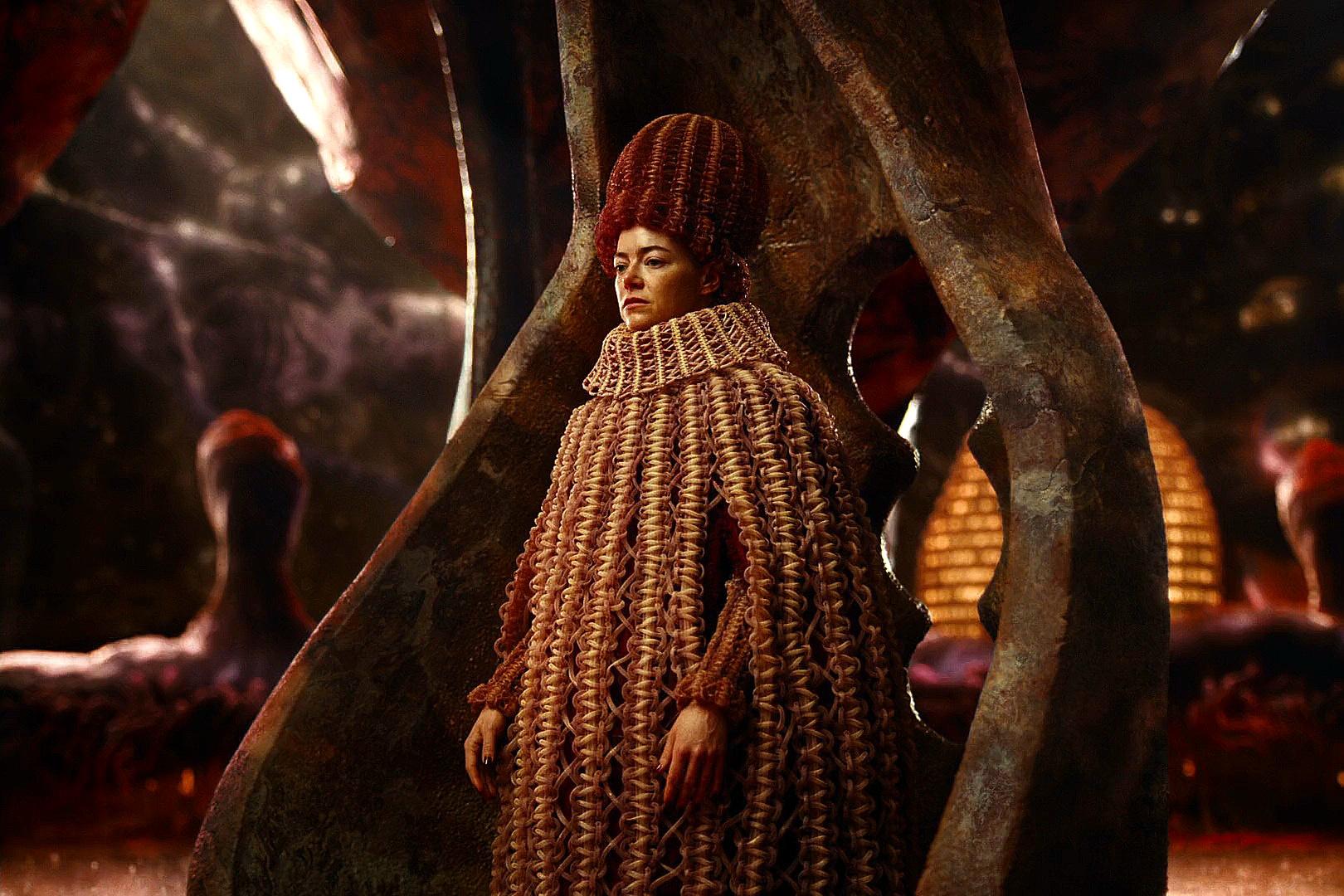
We've all been in those meetings where the phrase "tonal balance" gets thrown around like a hot potato, usually by someone who has no real idea what it entails beyond "make it funny, but also sad." Bugonia, by all accounts, appears to be an object lesson in precisely that tightrope walk. It has been described as a black comedy, a psychological thriller, and features enough conspiracy fodder to make even the most seasoned paranoids feel seen. And if you've been around the block, you know that genre-bending usually means genre-breaking, but Lanthimos seems to actively court that precarious space. The story itself: a pharmaceutical CEO, Michelle (Emma Stone), is kidnapped by two conspiracy-driven cousins, Teddy (Jesse Plemons) and Don (Aidan Delbis), who chain her to a bed in their basement, shave her head, and accuse her of being an alien sent to destroy mankind. Yes, you read that right. An alien. And while that reads like a sketch comedy premise, in Lanthimos's hands, and through Ryan's lens, it becomes something far more unsettling.
The Collaborative Alchemy: Building a World from Scratch
In a recent joint interview with Post Perspective, Lanthimos and Ryan revealed the extraordinary lengths they went to create Bugonia's claustrophobic universe. The production team, led by production designer James Price, built the entire house, including the basement, from scratch in the English countryside. This wasn't just about practical convenience; it was about creative control and chronological authenticity.
"First, we decided to build the entire house with a basement from scratch so that we'd be able to shoot a lot of the film chronologically," Lanthimos explained. "That was a big undertaking, and production designer James Price did incredible work. There was such detail, even in places that the camera would never see. You could open drawers and cupboards and there would be specific items in them that related to the characters."
This meticulous approach to production design, filling every drawer, every cupboard with character-specific items, speaks to Lanthimos's obsessive attention to world-building. When actors stepped into that space, they weren't just performing; they were inhabiting a fully realized environment. It's a technique that separates the merely competent from the genuinely transformative.
The Lens and the Lunacy: VistaVision and the Wilcam 11
Now, to the technical meat of it. Ryan shot Bugonia primarily on VistaVision using the Wilcam 11, reportedly the only quiet VistaVision camera of its kind left in the world. For those unfamiliar with the format, VistaVision runs standard 35mm film horizontally through the camera, exposing a much larger negative area per frame. The result is a higher resolution image with a particular depth and fidelity that digital often struggles to replicate.
"We mainly shot the whole film on VistaVision with the Wilcam 11, the only camera of its kind left in the world, which is the quieter camera," Ryan noted. "There are a few more VistaVision cameras. I think worldwide there are about 10 that are functioning, but they are very noisy."
The practicalities of shooting with such equipment demanded creative problem-solving. James Price had to make the doors in the house slightly bigger just to accommodate the massive camera. They used larger magazines for longer takes to minimize reloading interruptions. For car-rigged shots and crane work where the heavy VistaVision rig would be impractical (or would "blow out on every bump," as Ryan put it), they switched to a smaller 35mm camera.
The result: approximately 90% of the film was captured on the Wilcam 11, lending Bugonia a visual texture that feels both classical and immediate. For a deeper dive into the technical and creative considerations that go into selecting a camera format, consider our analysis on the subject.
The Post-Production Ecosystem: Greece, London, and the Art of Trust
The post-production workflow for Bugonia reveals the deep creative relationships that define Lanthimos's filmmaking. Editor Yorgos Mavropsaridis (affectionately known as "Blackfish"), a longtime collaborator, cut the film in Greece. Notably, he doesn't speak to Lanthimos during the shoot itself. This remarkable level of trust allows Mavropsaridis to select the best takes independently, bringing fresh eyes unclouded by on-set dynamics.
Sound designer Johnnie Burn faced a unique challenge: the VistaVision cameras, even the "quiet" Wilcam 11, were amplified by the low ceilings of the basement set. Rather than fighting this with complex post-production fixes, the approach was kept "simple and quiet," a sound design philosophy that mirrors the film's grounded approach to its outlandish premise.
The visual effects, handled by One of Us under VFX Supervisor Adam Azmy, tackled everything from "de-bearding" Jesse Plemons and making him look younger for flashback sequences to creating the climactic spaceship and alien imagery using miniatures. It's a blend of practical and digital that keeps the film anchored in a tactile reality.
Colorist Greg Fisher at Company 3 London brought the final visual layer. Ryan and Lanthimos had developed a "show LUT" during Poor Things that translated well to both Kinds of Kindness and Bugonia. "I don't like editing with really soft images," Lanthimos admitted. "Greg did a really nice LUT, with contrast and color the way we liked it."
The Emma Stone Equation: Performance in Captivity
Any discussion of a Lanthimos film involving Emma Stone necessitates a deep dive into her performance. She has become an essential part of his recent cinematic lexicon, and her portrayal of Michelle in Bugonia is no exception. With the plot involving kidnapping and escalating allegations of extraterrestrial identity, Stone's physical commitment is paramount.
Lanthimos, famously, has a way of stripping away conventional performance tics, often employing minimal takes and allowing for improvisation within extremely rigid parameters. This creates a fascinating tension, a raw edge that feels less like acting and more like captured reality. For Stone, this means bringing an unfiltered, sometimes unsettling, intensity to her roles, which the VistaVision format's fidelity would undoubtedly amplify.
The casting of relative newcomer Aidan Delbis alongside Jesse Plemons as the conspiracy-driven cousins creates an intriguing dynamic. It's a blend of seasoned professionalism and fresher energy that often characterizes Lanthimos's ensemble work, creating unpredictable on-screen chemistry that keeps both the characters and the audience perpetually off-balance.
The Nuance of the Narrative: Paranoia, Corporate Malfeasance, and the Human Condition
While the term "sci-fi adventure" might be a stretch, the heart of Bugonia's genre fusion lies in its exploration of paranoia and conspiracy. This isn't just a popcorn flick about aliens. It delves into themes of corporate malfeasance, ego, insanity, and human avarice, territory that Lanthimos has explored in various forms throughout his career.
The genius of using a kidnapping thriller as the vehicle for these broader themes is that it immediately grounds the fantastical elements in a visceral, relatable fear. The audience might not believe in aliens, but they certainly understand the terror of being held captive, or the unsettling nature of extreme delusion. This is where the black comedy truly shines. The humor, if it can be called that, arises from the sheer, unbridled insanity of the situation, juxtaposed with the very real, often painful, human struggles of the characters involved.
Ultimately, Bugonia stands as another masterclass in tonal dexterity. By leaning into the inherently bizarre premise of Save the Green Planet! and filtering it through Lanthimos's distinct bleak lens, supported by Ryan's technically assured and aesthetically intelligent cinematography, it promises to be a film that will keep audiences dissecting its choices long after the credits roll. The decision to employ VistaVision, the construction of a complete practical environment, the trust-based relationships with longtime collaborators: these aren't just stylistic whims. They're meticulously calculated approaches to translate a deeply strange narrative into a compelling cinematic experience.
---
© 2025 BlockReel DAO. All rights reserved. Licensed under CC BY-NC-ND 4.0 • No AI Training. Originally published on BlockReel DAO.