The Canary in the Cine-Mine: Del Toro's Warning on Art's Demise
The Canary in the Cine-Mine: Del Toro's Warning on Art's Demise
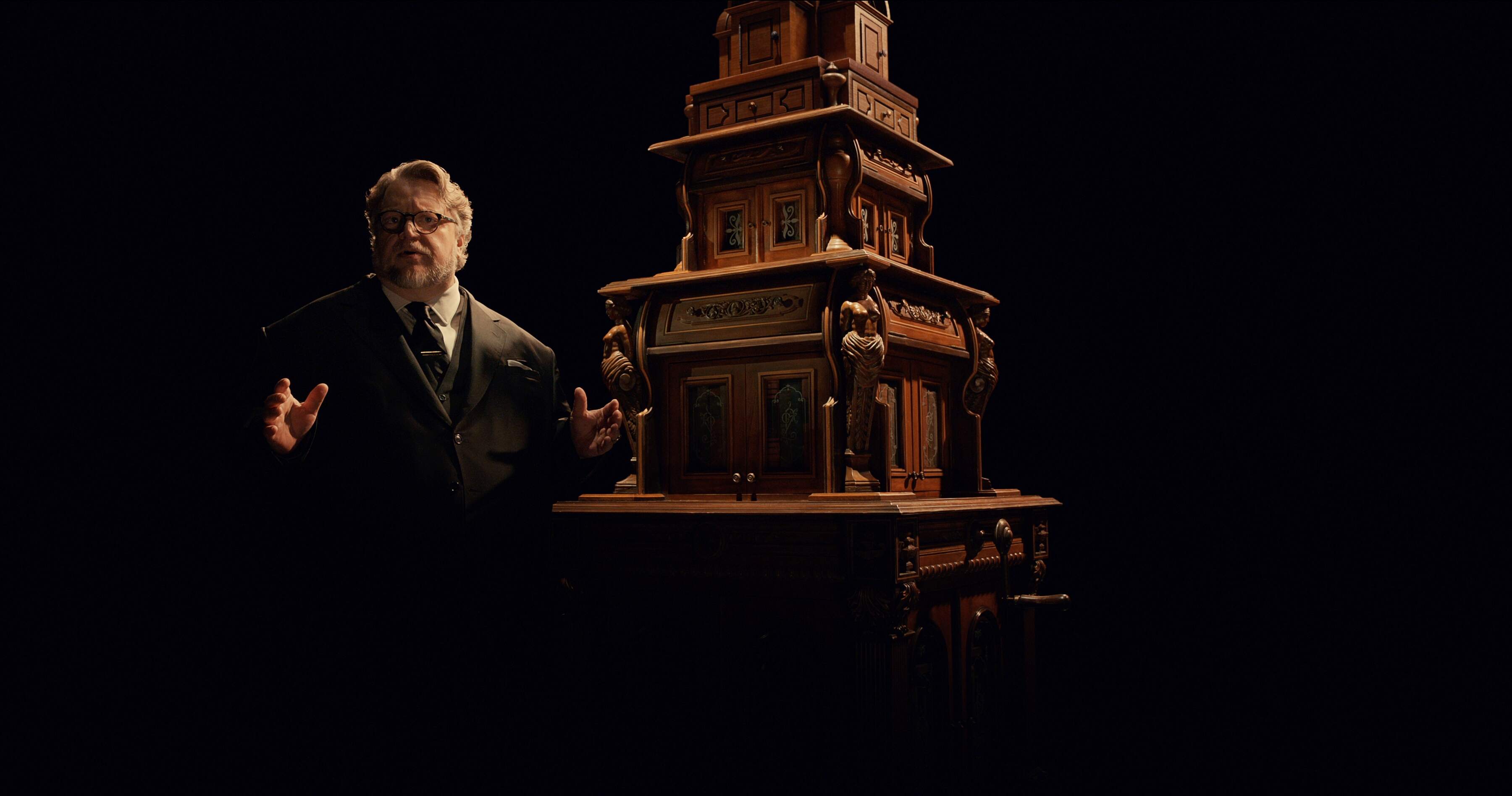
"Dismissing the importance of art is a prelude to fascism." Guillermo del Toro, always a man to choose his words with the precision of a seasoned DP blocking a master shot, dropped that particular bombshell at the Palm Springs International Film Festival. And while some in the mainstream media might have registered it as just another celebrity soundbite, those of us who spend our lives chasing light and narrative understand the chilling undercurrent of his pronouncement. It wasn’t hyperbole; it was a diagnosis, whispered from the lips of an artist who knows, perhaps better than most, the power of myth, the seductive nature of control, and the visceral human need for stories that challenge and defy.
This isn't about whether your latest festival darling will make back its equity. This isn't about the latest sensor technology pushing dynamic range another stop, or even the perpetual fight for union minimums. It's about a foundational shift, a slow creep we've all felt, from the bean counters in Burbank wondering aloud if we really need those practical effects that eat into their VFX budget, to the streaming execs demanding algorithmic predictability over artistic adventure. When the conversation around art narrows to quarterly earnings and easily digestible content units, we're not just losing creative freedom; we're chipping away at the very civic infrastructure of critical thought.
The historical precedent Del Toro alludes to isn't abstract; it's a stark, verifiable pattern. Look back at the Weimar Republic, that vibrant, experimental hotbed of artistic expression, a period that gave us everything from Fritz Lang's Metropolis to the Bauhaus movement. The flourishing of cabaret, theater, and cinema was a direct counterpoint to the political instability. Yet, as the nascent Nazi regime gained traction, what was among the first things to be targeted? "Degenerate art," of course. The book burnings, the forced exile of artists like Bertolt Brecht, the systematic dismantling of creative institutions. Why? Because authoritarianism, in its purest form, cannot tolerate narratives that deviate from its prescribed dogma. It cannot abide the messy, inconvenient truths that art often exposes.
The Nazis understood that a society saturated with independent, questioning voices, especially those operating outside official channels, is a far more difficult populace to manipulate. They preferred state-sanctioned pageantry, cinematic propaganda orchestrated by the likes of Leni Riefenstahl with her ARRI and Mitchell cameras, turning political rallies into operatic spectacles of power. It wasn't just about controlling information; it was about controlling the imagination. And that, my friends, is where we come in.
The Cinematographer as Cultural Cartographer
For us, the camera isn't just an expensive tool; it's a weapon, a microscope, a paintbrush. It's how we dissect reality, construct new ones, and force audiences to confront perspectives they might otherwise ignore. Think about someone like Roger Deakins, whose precise, often stark compositions in films like Sicario or Blade Runner 2049 don't just look pretty; they feel morally ambiguous, forcing the viewer into discomfort. His use of negative space, the long takes where characters are dwarfed by their environment, are aesthetic choices with profound thematic implications. A studio bean counter might see a slow tracking shot with minimal dialogue and ask for more cuts, more exposition. Deakins, and the filmmakers he collaborates with, understand that sometimes the silence, the atmosphere, the deliberate pacing, speaks volumes.
The fight isn't always overt censorship now; it’s often a more insidious, market-driven suppression. It’s the studio greenlighting twenty superhero films and one arthouse drama, then wondering why the drama doesn’t make Avengers-level money. It’s the constant pressure for "IP", intellectual property, over original storytelling. We’re currently in a period where, increasingly, the measure of a film's worth is its "brand recognition" or its ability to launch a "cinematic universe," not its capacity to provoke thought or engage with complex human truths.
When Del Toro speaks of dismissing art’s importance, he’s pointing to the societal validation, or lack thereof, being accorded to our work. It’s the parent who tells their child that film school is a waste of money because “you won’t make any real money.” It’s the politician who dismisses public funding for the arts as frivolous spending. On a grander scale, it’s the systematic defunding of arts education in schools, stripping future generations of the very language and critical frameworks needed to appreciate, let alone create, challenging art.
The Echoes of Ernst Lubitsch and the Power of Satire
Consider the films released during times of immense political upheaval. Charlie Chaplin's The Great Dictator, released in 1940, stood as a comedic, yet profoundly serious, indictment of Hitler and fascism, arriving before America officially entered World War II. Ernst Lubitsch’s To Be or Not to Be (1942) found humor in the face of Nazi occupation, using satire as a weapon against despair and totalitarian claims of absolute power. These filmmakers weren't just entertainers; they were cultural combatants, using the medium to rally spirit and critique the encroaching darkness. Their technical choices, the framing, the performances they elicited, were all in service of a larger, urgent message. Imagine the logistical hurdles, the funding challenges, the outright danger involved in producing such works during that era. Yet, they persevered.
This historical context highlights the connection between cultural value and political freedom. A society that values its artists, that gives them the space, the resources, and the protection to create fearlessly, is inherently a more robust, open, and free society. When we, as filmmakers, are constantly being asked to justify our aesthetic choices with market data; when every conversation about a lens choice for a particular character’s emotional arc inevitably circles back to "what's the cheapest way to get that look?"; when the emphasis is consistently on efficiency and safe predictability, we’re not just sacrificing artistic ambition, we’re ceding ground on a more fundamental level.
This isn't to say every indie film needs to be a political treatise. The range and diversity of cinematic storytelling are themselves a testament to freedom. A well-crafted romantic comedy, a poignant drama, even a genuinely terrifying horror film can, in its own way, explore shared human experiences, foster empathy, and provide an essential emotional outlet. But when the space for any non-commercially validated artistic expression shrinks, when the tools and resources become increasingly concentrated, and when the expectation is that art should only comfort, never confront, then we have a problem.
Workflow, AI, and the New Front Lines
Our craft itself is on the front lines, with the rapid ascent of AI and generative technologies. As we discuss the potential for AI in pre-visualization or even rudimentary shot composition, we must ask ourselves: what happens when the algorithms, trained on existing data, predominantly recommend the "safe" and the "proven"? What happens to genuine, disruptive originality? Will the next Roger Deakins be an AI trained on Deakins’ past work, iterating on his signature style rather than forging something entirely new?
The tools we use, from the latest ARRI ALEXA 35 to the subtle nuances of filtration choices, are extensions of our intention. The debate over shooting on film versus digital, which so often devolves into arguments about grain structure or highlight rolloff, is also, at its core, a debate about process, discipline, and the value placed on a handcrafted image. There’s a direct parallel to be drawn between the corporate pressure to streamline and automate our creative processes through AI and the broader societal pressure to devalue the messy, inefficient, deeply human act of art creation. It’s a very practical, on-set manifestation of Del Toro’s larger warning. If we surrender the nuance of our craft to algorithmic logic, then we've already begun to dismiss the unique, invaluable contribution of human artistic endeavor.
Consider the recent discussions surrounding the commodification of creativity with AI. It’s not just a technological shift; it’s an economic and philosophical one that strikes at the heart of an artist's value. We need to be vigilant, not just about our paychecks, but about the very definition of what it means to be a creative professional when an algorithm can generate a "mood board" in seconds, or spit out a hundred iterations of a "cinematic" look. The conversation cannot be solely about efficiency; it must also be about authorship, ownership, and ethical development.
And while we constantly strive for efficiency, for bringing in a project on budget with minimal reshoots, a director friend of mine recently lamented having to cut an entire scene’s complex lighting setup to save two hours on a 20-day commercial shoot because the client "didn't see the value", this mentality, incrementally and subtly, erodes our capabilities. It chips away at what we as skilled professionals can deliver. And in that chipping, the definition of "quality" shifts from artistic integrity to cost-effectiveness.
Del Toro’s urgency is not just for artists, but for audiences and the societies they inhabit. Without a vibrant, challenging artistic ecosystem, we risk losing our collective ability to question, to empathize, to imagine worlds beyond the one we are told to accept. The suppression of art isn't merely an inconvenience for creatives; it's a societal amputation, leaving us vulnerable to manipulation and impoverished in spirit. The filmmaker, then, is not just a storyteller or a technician; we are, in this increasingly precarious landscape, cultural defenders. Our cameras, our crews, our meticulously crafted images and sounds, are all instruments in that defense. This means we, as professionals, must constantly advocate for the value of our work beyond its immediate commercial return, and crucially, for the right to create with intention and integrity, especially when that intention is to challenge.
Del Toro didn't just give a speech; he held up a mirror. And what we see reflected, if we're honest, is a landscape where the importance of our craft is indeed being diminished, piece by painstaking piece, often under the guise of progress or economic necessity. To ignore this, or to dismiss it as mere artistic temperament, is to willfully blind ourselves to the very real dangers that historically follow such dismissals. This warning, coming from someone who has so masterfully woven dark fantasy with social commentary, should resonate with us like a perfectly designed sound mix: unsettling, undeniable, and impossible to ignore.
---
© 2025 BlockReel DAO. All rights reserved. Licensed under CC BY-NC-ND 4.0 • No AI Training. Originally published on BlockReel DAO.