Why *The Brutalist* Revived VistaVision for its Oscar Bid: A Deep Dive into Analog Aesthetic in the Digital Age
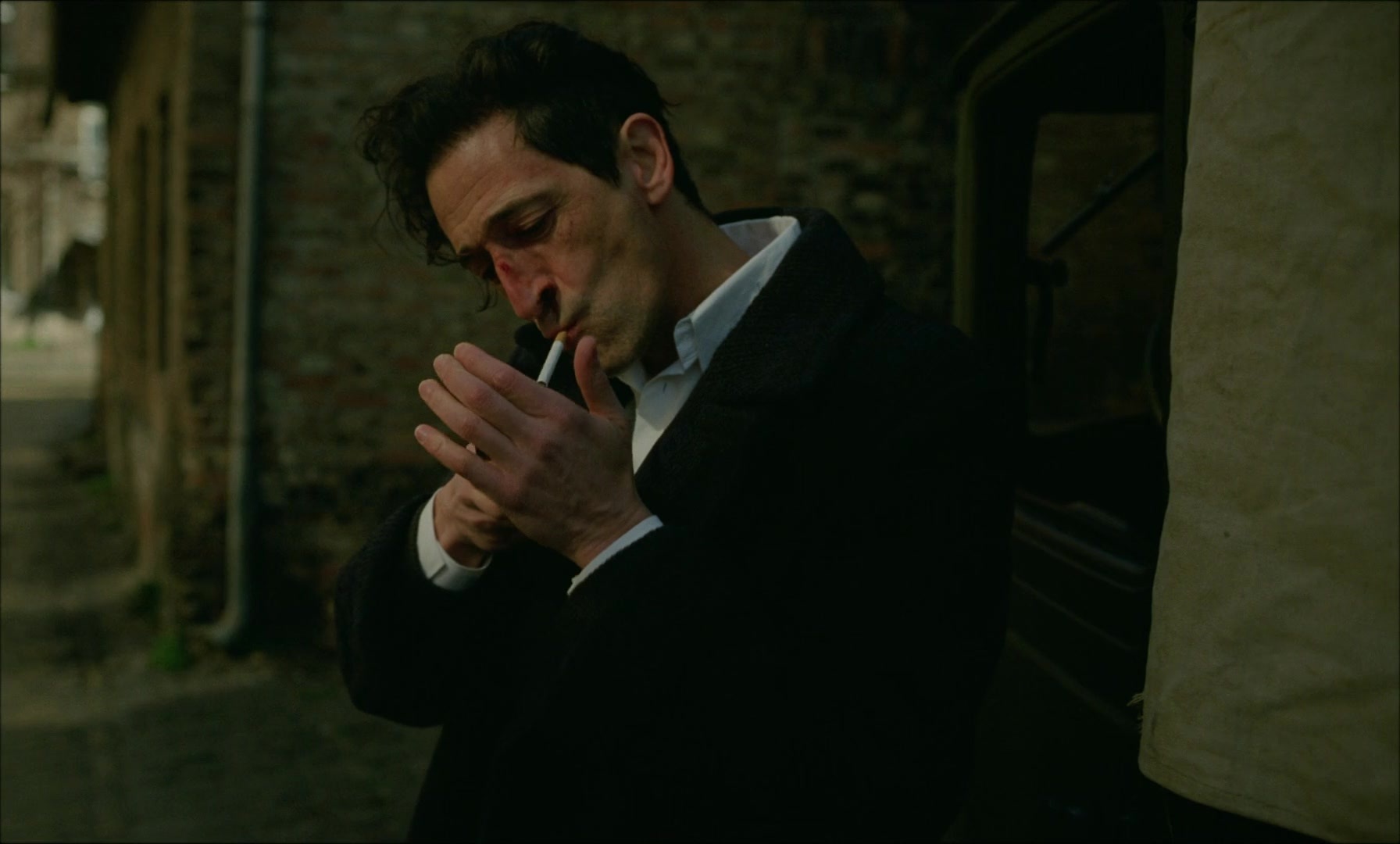
Why The Brutalist Revived VistaVision for its Oscar Bid: A Deep Dive into Analog Aesthetic in the Digital Age
The very notion of shooting a major feature, an Oscar contender no less, almost entirely on VistaVision in 2024 feels like a defiant act. A beautifully foolhardy, exhilarating, and frankly, expensive, act. But when Brady Corbet decided to dust off this largely forgotten format for The Brutalist, he wasn't just making a nostalgic gesture. He was making a statement about texture, about presence, and about the inherent politics of light that digital sometimes, for all its convenience, struggles to articulate.
I remember standing on a set years ago, talking with Darius Khondji about film stocks, and he said something that always stuck: "Film sees light differently than I do. It introduces its own interpretation, its own poetry." VistaVision, with its horizontally oriented 8-perforation 35mm negative, does more than just interpret; it excavates. It pulls details from shadows with a subtlety that sometimes feels missing from even the highest-end digital capture.
The Technical Rebellion: Deconstructing VistaVision's Resurgence
Let's cut right to it: VistaVision is a beast. Developed by Paramount in the mid-1950s, primarily as an answer to CinemaScope's anamorphic squeeze, it was designed for exhibition print quality. By running standard 35mm film horizontally through the camera, each frame occupied eight perforations, yielding a capture area far larger than standard 35mm. We're talking 37.7mm x 25.1mm, compared to the 22mm x 16mm of Super 35. That's a 2x increase in negative area. This was raw resolution in an age before anyone even thought of pixels, an inherent sharpness and fine grain structure that blew audiences away on the massive screens of the era.
But here’s the rub: VistaVision was an acquisition format, not typically an exhibition format. The original workflow involved optical reduction to a standard 4-perf 35mm anamorphic print for projection, which meant losing some of that glorious detail. However, if you project directly from the 8-perf negative, or more commonly today, scan it at high resolution, you unlock its true potential. Director Corbet and his cinematographer, Chayse Irvin, CSC, clearly understood this. They weren't chasing a "period look" per se; they were chasing a period feel, a certain richness that only comes from that much silver halide.
The implications for shooting are profound. First, the camera itself. Most VistaVision cameras, like the famed Mitchell NC and BNC models adapted for VistaVision (or Technirama, which used VistaVision negatives but anamorphic lenses), are heavy, loud, and require meticulous maintenance. These aren't the shoulder-friendly Arri LFs or Venice bodies we've grown accustomed to. Shooting with them dictates a slower pace, demands more robust support, and commands a certain respect from the entire crew. It affects blocking; it impacts movement. You're not just point-and-shooting; you're orchestrating. This, in itself, can imbue a production with a distinct energy, a contemplative rhythm that might align perfectly with The Brutalist's narrative.
Then there's the glass. Corbet and Irvin opted for vintage lenses, largely spherical, which when paired with the large negative of VistaVision, yields an incredibly shallow depth of field. This is not the "anamorphic fall-off" many DPs are chasing today; it's a different kind of creaminess, an almost painterly isolation of subjects that draws the eye with an effortless grace. And because the aspect ratio for VistaVision was typically 1.66:1 or 1.85:1, they weren't dealing with an anamorphic squeeze, which often meant using lenses designed specifically to negate barrel distortion or breathing, another element that changes the visual language. The choice of sphericals on such a large format suggests a pursuit of pure resolution and organic bokeh, letting the sheer size of the negative do the heavy lifting.
The Analog Workflow: Cost, Patience, and Control
Let's not dance around the elephant in the room: cost and workflow. Shooting on film, let alone a niche format like VistaVision, is not for the faint of heart or the light of wallet. Film stock itself is expensive, and sourcing enough fresh 8-perf 35mm negative requires foresight and relationships with manufacturers like Kodak. Then there's processing. The number of labs equipped to handle 8-perf specifically is dwindling, meaning likely fewer choices, potentially higher costs, and often longer turnaround times. This isn't your DIT pulling stills from a raw feed on set; this is a meticulous, analog process that requires immense trust in your lab and your chemistry.
The scanning process is critical. To extract the maximum fidelity from a VistaVision negative, you're looking at 8K or even 12K scans, which are not cheap or fast. Data management for these uncompressed files can be immense. Despite this, the benefit is often a color rendition and highlight rolloff that digital cameras, even with their impressive dynamic range, still strive to emulate. There's a certain "inherent softness" to film, an organic noise structure, that feels less clinical, more alive. It melts into the shadows rather than clipping to black.
This commitment to film, and particularly to VistaVision, speaks to a direct rejection of what I sometimes call "digital perfectionism." The urge to eliminate all perceived flaws, to smooth every surface, to flatten every dynamic range curve. Film embraces imperfection. It revels in grain, in the nuanced spectral response of different emulsions. It requires patience and a surrender to its own intrinsic characteristics, which then, in turn, become part of the story. You don't fight film; you collaborate with it.
I've had conversations with a fair few DPs about this - Bradford Young, for one, constantly references the "living quality" of film, the way it breathes and shifts. For a film like The Brutalist, which appears to delve into human struggle and raw emotion, that organic, slightly unpredictable nature of film can be a powerful storytelling tool. It grounds the narrative in a tangible, almost tactile reality.
The revival of film formats, even those as esoteric as VistaVision, isn't new.
The Aesthetic Imperative: Why This Film, Why Now?
So, why The Brutalist? The title itself offers a clue. Brutalism as an architectural style is characterized by raw concrete, monumental scale, and an uncompromising, almost stark honesty. It's about materiality, substance, and a certain rawness. VistaVision's image quality, with its deep blacks, rich mid-tones, and fine, organic grain, can directly translate this aesthetic to the screen. It's an image that feels hewn, solid, and unforgiving, much like the concrete structures it might be depicting.
Think about the interplay of light on rough concrete and how a large-format negative would render that. The subtle variations in texture, the way light is absorbed and reflected, would be captured with a fidelity that might elude a smaller digital sensor, even a high-resolution one. When I look at stills from films shot on 65mm or large-format film, there's a dimensionality, an almost holographic quality, that makes you feel like you could walk into the frame. VistaVision offers a similar promise.
This decision also positions The Brutalist within a broader trend. Emmanuel Lubezki's 65mm work on The Revenant, Hoyte van Hoytema's 70mm and IMAX capture for Nolan's spectacles, even Rachel Morrison's 35mm work on Mudbound; these aren't just stylistic choices. They are deliberate technical decisions made to harness the unique qualities of large-format film to deepen the narrative impact. The visual language becomes inseparable from the story. Corbet and Irvin are clearly operating from this playbook, pushing against the tide of digital ubiquity.
What's particularly interesting is the implication for color science. Film stocks have distinct color palettes, inherent biases in how they render colors. This allows for a much more organic and nuanced approach to grading, where the film's natural response guides the look rather than imposing a purely digital manipulation. The rich blues and greens, the warm skin tones of Kodak Vision3 stocks - these are not easily replicated perfectly with a LUT alone. They are baked into the emulsion. This kind of inherent color science can lend itself perfectly to films with specific tonal ambitions, often aiming for a heightened sense of realism or a particular historical feel.
The Path Forward: Inspiration or Anomaly?
Will The Brutalist's bold choice usher in a VistaVision renaissance? Unlikely, at scale. The logistical and financial hurdles are simply too high for most productions, especially given the current economic pressures on independent film. Studio pictures, with their massive budgets, might occasionally dabble, but it won't become the norm. The industry has largely standardized on Super 35 digital and, increasingly, full-frame digital.
However, films like The Brutalist serve a vital purpose: they remind us why we value certain aesthetics, why we sometimes crave the tactile, the imperfect, the grain of film. They act as a counter-narrative to the relentless march of technological "progress." They force us to consider what we might be losing in the pursuit of efficiency and convenience. A 10-camera digital array might capture every angle in 12K HDR, but does it capture soul? That's the question films like The Brutalist implicitly ask.
For DPs like us, the takeaway isn't necessarily to rush out and demand VistaVision for your next gig. It's to internalize the philosophy behind the choice. It's about asking, "What is the most emotionally resonant tool for this specific story?" Is it the hyper-realism of 8K RAW? Is it the intimate falloff of a Cooke S4 on 35mm? Or is it the monumental presence of a VistaVision negative capturing light almost as a physical presence?
Corbet and Irvin's decision on The Brutalist is a masterclass in intentionality. It's a directorial and cinematographic vision so strong that it commands the resources to bring a near-obsolete technology back to life. That conviction, transcending mere nostalgia, is what truly sets it apart. It’s a testament to the belief that the how of filmmaking can be as integral to the narrative as the what. And in a world oversaturated with visually similar content, standing out often means taking the road less traveled, even if that road is paved with 8-perf celluloid.
---
© 2025 BlockReel DAO. All rights reserved. Licensed under CC BY-NC-ND 4.0 • No AI Training. Originally published on BlockReel DAO.