Soderbergh's AI Lennon Doc Splits Cannes 2026
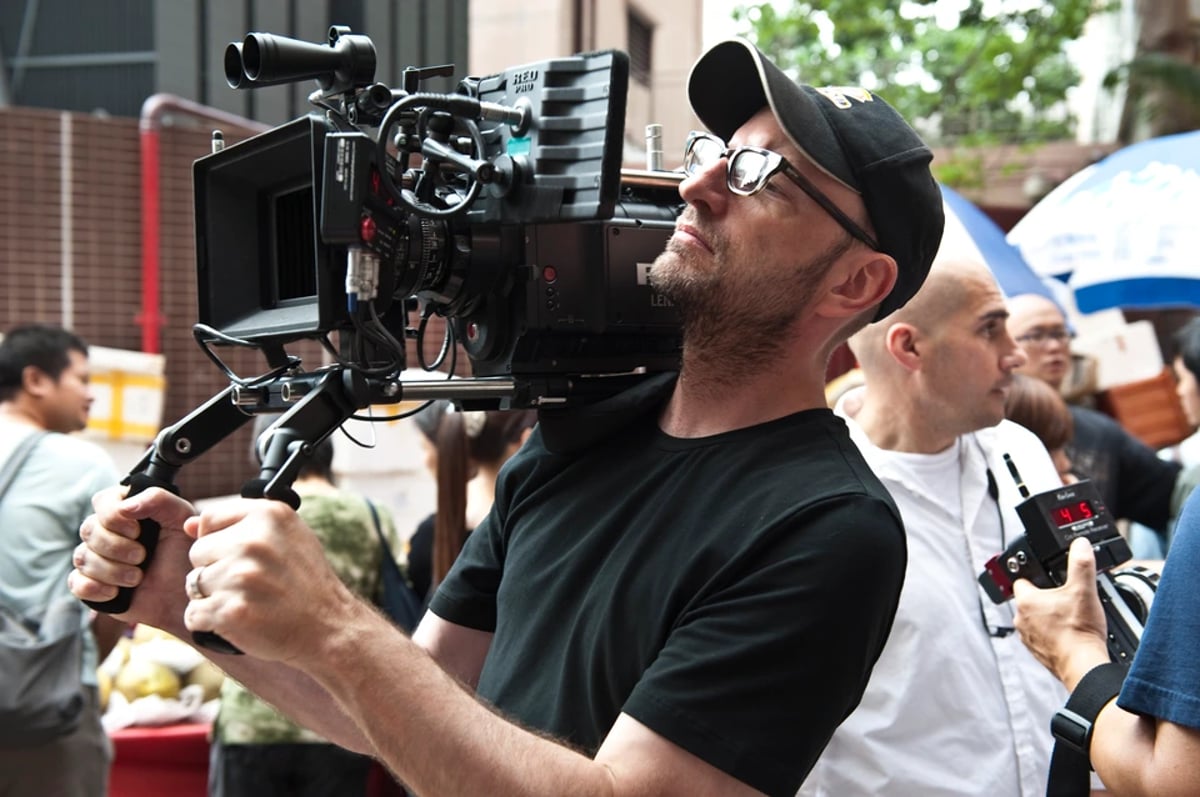
The Cannes Film Festival, ever a crucible for cinematic innovation and ideological friction, delivered a potent flashpoint this year with the premiere of Steven Soderbergh's latest documentary, John Lennon: The Last Interview. Screened as an official Special Screening, the film immediately ignited discussion, not merely for its subject matter or cinematic craft, but for its conspicuous reliance on generative video tools supplied by Meta. The film, which integrates roughly ten percent AI-generated visuals, alongside completion financing from Meta, has become an unlikely, yet predictable, lightning rod for the industry's ongoing, often contentious, debate surrounding artificial intelligence in filmmaking.
One might question the strategic timing, or perhaps the sheer audacity, of a major director unveiling a project so intrinsically tied to nascent AI technology at a festival known for its unwavering dedication to auteur theory and the craft of human artistry. But Soderbergh, a filmmaker who has never shied away from experimentation in form, budget, or distribution, seems to have anticipated the controversy. He even dubbed himself "my own whistle blower," an admission that hints at a wry understanding of the industry's often performative outrage, even as he articulates a clear ethical framework for his choices.
The documentary itself is built around a profound, almost mythic piece of audio: an unreleased radio interview recorded by John Lennon and Yoko Ono at the Dakota in New York City on December 8, 1980, mere hours before Lennon's assassination. This extraordinary primary source forms the film's narrative spine. Soderbergh, in an effort to provide visual context and depth to this potent auditory anchor, assembled archival photographs and video clips. Yet, even with this trove of historical material, gaps remained, which is where Meta's generative AI stepped in.
Crucially, Soderbergh's application of AI is not an attempt at hyperrealism or, more controversially, deepfaking. There are no AI-generated likenesses of Lennon or Ono meant to deceive the viewer into believing they are witnessing fabricated historical footage. Instead, the AI-generated material is described by Soderbergh as "surreal rather than literal." Visualize circles of light, a black rose morphing into choreography, dynamic paint-mixing diptychs, or abstract compositions of lovers in split-screen. These are visuals intended to inhabit a "dream space," as Soderbergh articulated, appearing primarily when Lennon and Ono delve into more philosophical realms in their recorded conversation. The intention, he suggests, is to create "thematically surreal images that occupy a dream space rather than a literal space." (For a wider look at how AI tools are entering professional pipelines, see our piece on AI in VFX 2026: how studios use Kling, Runway and Sora now.)
The partnership with Meta extends beyond mere tools. The tech giant also provided completion financing for John Lennon: The Last Interview. This financial underpinning, coupled with Meta's new multi-year partnership with the Festival de Cannes (a deal that notably replaced TikTok as the festival's primary tech sponsor this year), embeds Soderbergh's film firmly within a broader narrative of tech companies seeking legitimacy and integration within the established cinematic ecosystem. The optics are, shall we say, complicated. Sean Lennon publicly gave his blessing to the project and to its use of AI, telling Soderbergh his father "would've wanted to engage" with the technology, a gesture that, while perhaps intended to allay concerns, also subtly underscores the complex interplay of artistic intent, corporate sponsorship, and familial legacy at play. Soderbergh, for his part, opted for a more understated approach at the screening, a quiet acknowledgment, perhaps, of the disquiet his choices would invariably provoke.
In public statements, Soderbergh has been remarkably candid about his methodology and ethical calculus. In a conversation with Deadline, he outlined a specific philosophical test for the inclusion of every AI shot: "It has to be necessary. Is it the only way to accomplish what I want to see? Is it truly the best way to do it?" This is not the language of a director cavalierly adopting new tech; it is the language of a craftsman attempting to articulate a disciplined rationale for a controversial tool. When speaking with The Associated Press, he conceded, "I knew what was coming," acknowledging the inevitable backlash. His explicit transparency, he clarifies, is a deliberate choice: "Transparency is so important. In the world outside of the creative context, we're not aware of the extent that this is being used and used to manipulate us. I'm like my own whistle blower." This statement should resonate deeply with any filmmaker who has observed the opacity often surrounding technological shifts in the industry.
Soderbergh's framing of the AI's role is critical. He has described these AI segments as the "last stage of finishing," an intervention prompted by the existence of "images that are impossible to shoot" and, significantly, a project that had "run out of time and money" before Meta's involvement. This isn't presented as a creative choice made from a position of abundant resources, but rather as a solution to logistical and financial constraints, a common plight for even seasoned documentarians. For working cinematographers, editors, and VFX supervisors attempting to gauge the utility of generative AI in their own practices, this distinction matters profoundly. It suggests that AI, in this instance, functioned not as a primary creative engine replacing traditional VFX personnel and pipelines, but as a supplementary tool to achieve specific, otherwise unattainable, visual effects under duress. The implication here is less about a full-scale creative paradigm shift and more about a pragmatic, albeit controversial, workflow augmentation in a tight spot, a reality many independent filmmakers understand all too well.
The Cannes 2026 festival itself became a microcosm of the industry's bifurcated stance on generative AI, presenting, as it were, "two voices." Soderbergh's film, and his careful articulation of its ethical boundaries, landed squarely between two more emphatic pronouncements made during the same week. Guillermo del Toro, appearing at a 20th-anniversary Cannes Classics screening of Pan's Labyrinth, took aim at AI defenders with the blunt rebuke that art "can't be done with a fucking app." This direct, impassioned rejection represents a significant segment of the filmmaking community, particularly those who champion human craftsmanship and artistic integrity above all else. His stance echoes a sentiment prevalent among those who view AI as an existential threat to creative labor and authorship (you might even hear similar concerns about human provenance echoed in discussions around initiatives like Cannes Film Market introduces human provenance in film AI disclosure).
Conversely, Peter Jackson, upon accepting his Honorary Palme d'Or from Elijah Wood, took a more open view, speaking publicly about the possibilities AI might offer filmmakers. These two distinct positions, delivered from such prominent industry figures, underscore the lack of consensus and the raw emotional investment in the AI debate. Soderbergh's film, positioned between these poles, becomes less about a definitive answer and more about an ongoing, public experiment in the application of these tools.
What, then, are the takeaways for practicing filmmakers grappling with the creeping, often bewildering, presence of AI in our industry?
- Intentionality over novelty: Soderbergh's insistence on an "ethical test" for each AI shot speaks to a crucial point: the tool must serve the narrative and aesthetic, not merely exist for its own sake. The "because we can" mentality rarely yields compelling cinema. Every choice, whether the lens, the edit, or the generated visual, must be rigorously justified by the story's demands.
The deployment of these generative tools in John Lennon: The Last Interview at Cannes 2026 is less a definitive answer to the question of AI's place in cinema and more an opening salvo in a protracted, complex discussion. It forces a confrontation with the uncomfortable truth that technological evolution rarely waits for collective approval. Like the embrace of digital cinematography or the shift to non-linear editing, AI's integration will unfold piece by piece, film by film, accompanied by a chorus of celebration, skepticism, and outright condemnation. Soderbergh, in his characteristic fashion, has thrown a high-profile, critically-watched experiment into the mix, forcing the industry to look directly at the emergent future, however discomfiting it may be. The questions posed by his choices extend beyond the technical execution; they delve into the very definition of authorship, the economics of production, and the evolving relationship between creator, tool, and audience. And for that, if nothing else, we should be paying very close attention.
---
© 2026 BlockReel DAO. All rights reserved. Licensed under CC BY-NC-ND 4.0 • No AI Training.