Spielberg: AI Has No Substitute for the Soul
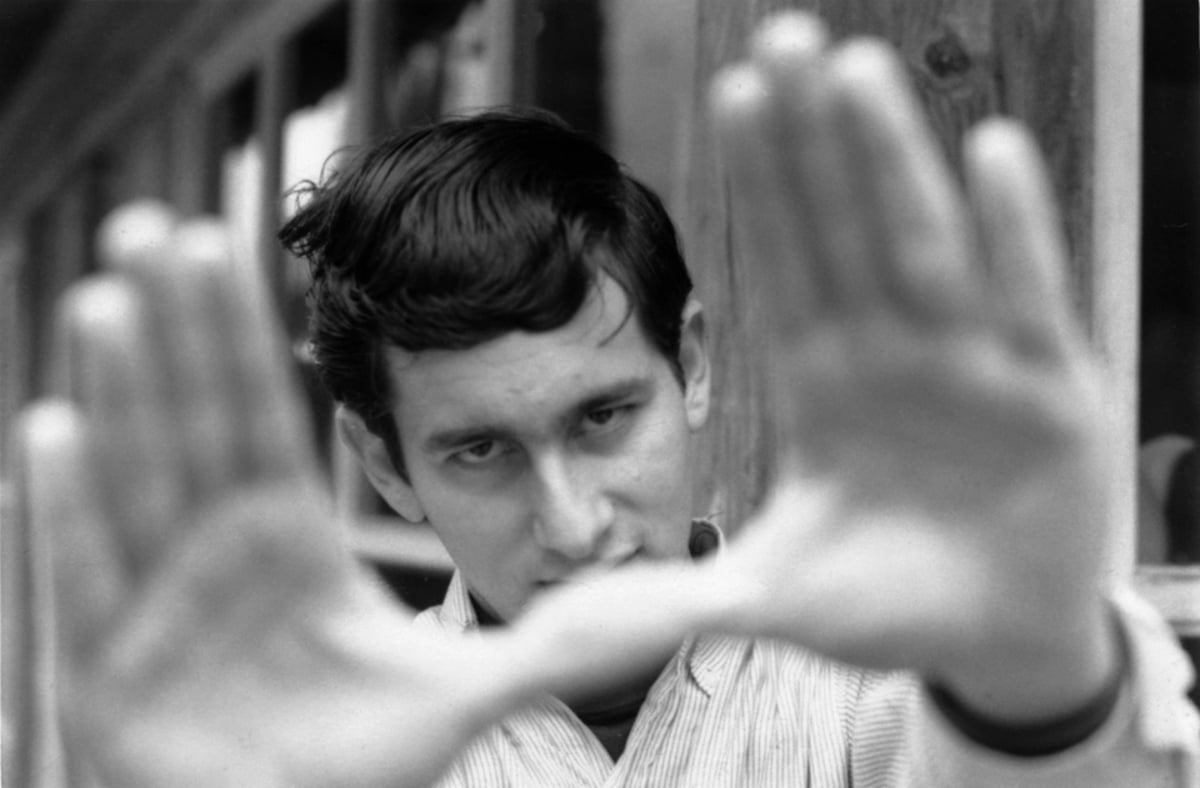
After all the pronouncements from tech evangelists, venture capitalists, and the increasingly breathless trade press, isn't it curious how frequently the discourse around artificial intelligence in filmmaking circles loops back to a rather fundamental question: what, precisely, are we for? Steven Spielberg, in a recent appearance on Michelle Obama and Craig Robinson’s “IMO” podcast, offered a characteristically direct answer, drawing a definitive line on AI's role in the creative process. While acknowledging AI’s potential for practical applications, the “Jaws” director articulated a sentiment that resonates with many seasoned practitioners: the moment AI attempts to lay claim to an "empty chair at a writer's table," or dictate creative choices, is the moment he considers it anathema.
Spielberg’s stance, as reported by Variety, is not a wholesale dismissal of AI as a technology. He envisions a utility for AI in areas like solving medical issues, and even in filmmaking, he concedes it could “save us a lot of legwork” by automating tasks such as location scouting. This pragmatic view aligns with the industry's perennial quest for efficiency. Who among us hasn't yearned for a smarter way to manage the myriad logistical headaches that plague every production? The countless hours spent poring over satellite maps, cross-referencing permits, and negotiating access could theoretically be streamlined, allowing human energy to be redirected toward more overtly creative endeavors. This much, it seems, is digestible.
However, the "where I draw the line" moment for Spielberg arrives squarely when AI presumes to inhabit the sacred space of creative authorship. “Don’t tell me how to write my dialogue for this character. Don’t tell me where the camera has to go. And also don’t tell me what the set should look like, unless AI is simply a tool in a large tool chest of the production designer,” he stated. This isn't merely a preference; it’s a categorical refusal to cede fundamental creative agency. It speaks to a deeply ingrained understanding of the filmmaker’s craft, a craft built on intuition, lived experience, and an ineffable connection to story and character that, to date, remains stubbornly resistant to algorithmic simulation.
The legendary director’s assertion that there is "no substitute for the soul", that genuine sentience is not an algorithm to be invented, cuts to the heart of a debate that has intensified with every new iteration of generative AI. We've seen, firsthand, the rapid advancements in text-to-image and text-to-video models; the ability of these systems to conjure visually compelling "outputs" can, at first glance, appear indistinguishable from human-created content. Yet, as Spielberg implicitly argues, there's a profound difference between replication and origination, between synthesizing existing data and manifesting new meaning through a uniquely human lens.
Consider the role of a director in guiding a performance, or a cinematographer in blocking a scene. These are not merely technical exercises, nor are they reducible to a series of logical inputs and outputs. They are acts of interpretation, of empathy, of a sometimes-subconscious calibration of elements to evoke a precise emotional or intellectual response. Could an AI generate dialogue that sounds plausible? Certainly. Could it suggest camera placements that adhere to established cinematic grammar? Undoubtedly. But could it imbue those choices with the depth of human understanding, the nuanced subtext, or the idiosyncratic vision that often defines truly memorable filmmaking? Spielberg, it seems, is not convinced.
His comments echo those made by Leonardo DiCaprio, who similarly emphasized the irreplaceable human element in art. As DiCaprio reportedly told Time magazine, "I think anything that is going to be authentically thought of as art has to come from the human being." He further articulated a sense that AI-generated creative works, while potentially "brilliant" in their technical execution, lack "anchoring" and "humanity." DiCaprio offered the example of AI-generated musical mashups, clever and entertaining, yes, but ultimately ephemeral, dissolving "into the ether of other internet junk" without the enduring resonance of human-originated art.
This distinction between technical brilliance and authentic artistry is crucial for those working in the industry. For decades, filmmakers have harnessed increasingly sophisticated tools to tell their stories, from the title sequences of Saul Bass to the digital compositing of ILM. Each technological leap presented both opportunities and challenges, and each required a discerning eye to ensure the tool served the vision, rather than dictating it. The advent of AI is no different, though its implications seem more profound due to its capacity to simulate, rather than merely assist, creative functions.
If AI is merely a "tool in a large tool chest," as Spielberg suggests for the production designer, then its application can be understood within familiar paradigms. A production designer uses software to visualize sets, a composer uses digital instruments to mock up scores, and an editor uses NLEs to shape narrative flow. These are extensions of human creativity, not replacements for it. The fear, then, is not the tool itself, but the potential abdication of creative responsibility to an algorithmic process.
One could point to the historical anxiety surrounding new technologies, from the initial skepticism about sound in cinema to the hand-wringing over digital cameras replacing film. Yet, in many of those instances, the debate centered on how new tools would alter craft, not whether the craft itself could be performed by a non-human entity. The current AI discussion moves beyond mere workflow optimization into the very definition of creative authorship.
This brings us to a more critical question: what happens if the industry, under commercial pressures, begins to "use AI as the final word on anything creative"? What becomes of the unique voice, the personal style, the artistic fingerprint that distinguishes directorial oeuvres, cinematographic visions, and narrative structures? While there might be immediate cost efficiencies or speed benefits, the long-term ramifications for the diversity and depth of cinematic expression are considerable.
Consider the profound impact of a cinematographer like Darius Khondji, whose nuanced approach to lighting and camera work in projects like "Se7en" (1995) or "Amour" (2012) is rooted in his personal aesthetic and deep understanding of human emotion. Or the meticulous sound design of a Walter Murch, whose ability to craft auditory landscapes for films from "Apocalypse Now" (1979) to "The English Patient" (1996) is entirely dependent on his artistic judgment. Could an AI replicate these textures, these moods, these intentionalities without possessing the lived experience from which they derive? Spielberg's "soul" argument suggests not.
The conversation naturally segues into the economic realities. The proposition that AI could eliminate "empty chairs at a writer's table" is a direct reference to labor displacement, a concern that has animated recent industry negotiations. If AI can generate scripts, storyboards, or even first-pass edits, the economic model of filmmaking could shift dramatically, affecting countless creative professionals. This isn't some abstract philosophical debate for many; it's a very real threat to livelihoods.
As the industry grapples with the integration of AI, the cautious, human-centric approach advocated by figures like Spielberg and DiCaprio offers a necessary counterpoint to the relentless pursuit of technological novelty. The promise of "efficiency" and "automation" must be weighed against the potential erosion of the very essence of what makes cinema a compelling and enduring art form. The question is not whether we can deploy AI in these creative capacities, the technology is clearly advancing, but whether we should. And, perhaps more importantly, what we might lose in the bargain.
The implications for storytelling are profound. If narratives and character arcs are increasingly generated by algorithms trained on existing data, does originality become simply a sophisticated recombination of the familiar? Does the unexpected, the truly novel idea, the product of a human mind grappling with new experiences and insights, become an outlier? This is not to say that all human creativity is revolutionary, but rather that the capacity for genuine artistic surprise and innovation stems from a source that AI, by its current definition, cannot access.
The ongoing discussions, such as those at the Cannes Film Market regarding requirements for human provenance in film AI disclosure, reflect a growing recognition that transparency and ethical guidelines are essential. The industry needs frameworks to distinguish between human-authored and AI-generated content, not merely for intellectual property concerns, but for the fundamental integrity of the art itself.
Ultimately, Spielberg’s comments serve as a valuable reminder: for all the breakthroughs in computing power and machine learning, the most powerful instrument in filmmaking remains the human mind, heart, and spirit. As we navigate this new frontier, discerning where the tool ends and the soul begins will be the defining challenge for filmmakers and audiences alike. The line, as Spielberg so succinctly put it, must be drawn.
---
© 2026 BlockReel DAO. All rights reserved. Licensed under CC BY-NC-ND 4.0 • No AI Training. Originally published on BlockReel DAO.