'The Odyssey' in 4DX: Does Nolan's Epic Survive the Shakes?
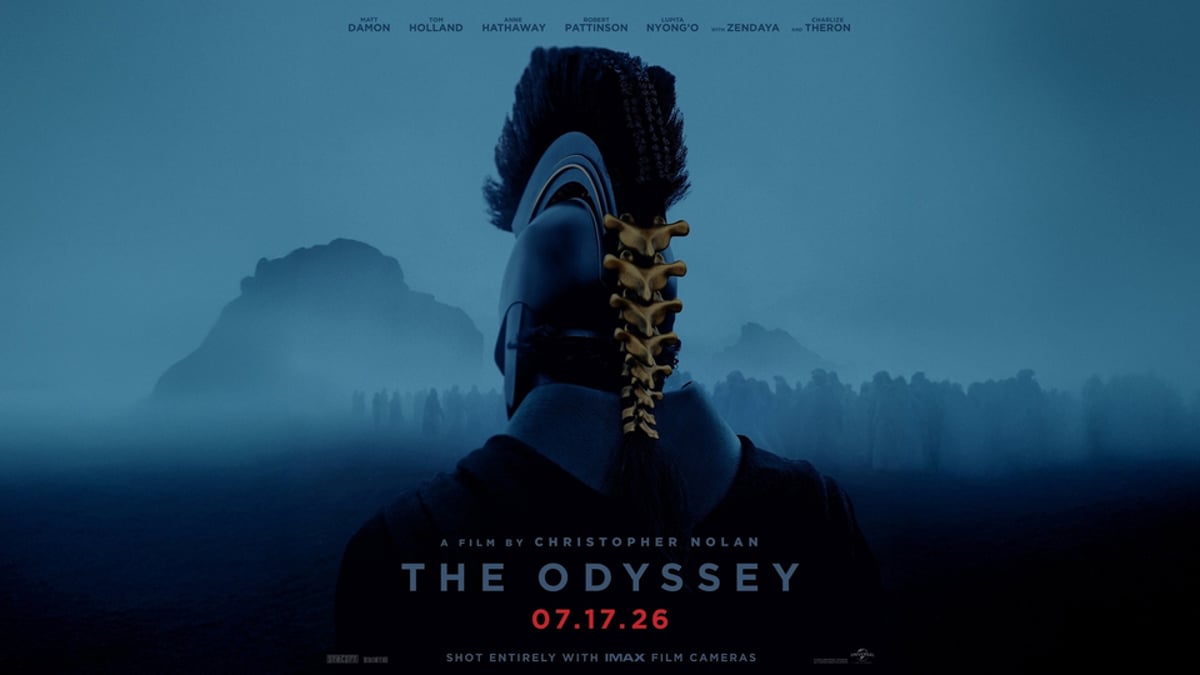
We've all been there: the fervent discussions in post-production houses, the trade-offs in the color suite, the endless debates over how best to present a film. Christopher Nolan's “The Odyssey” has certainly ignited its share of these conversations, primarily regarding its presentation in 70mm and IMAX (we covered the final trailer and July 17th release). These formats are championed for their sheer scale, their ability to render breathtaking vistas, promising unadulterated cinematic grandeur. But what happens when the pursuit of "immersion" veers into an entirely different sensory dominion, one that involves jostling seats, water jets, and even air currents?
The burgeoning 4DX phenomenon, with its nearly 800 global theatrical installations, purports to deliver a "fully immersive cinematic experience that makes you feel like you’re in the movie." The question, for those of us tasked with the myriad decisions that shape a film's exhibition and, by extension, its audience reception, is whether this kinetic augmentation truly serves the narrative or merely distracts from it. Is it an evolution of storytelling or an expensive amusement park ride appended to an otherwise meticulously crafted piece of cinema?
For “The Odyssey,” a three-hour epic already lauded for its visual scope, the application of 4DX certainly garners attention. Variety recently dispatched three of its writers, Pat Saperstein, Matt Minton, and Tanya Fedak, to brave a 4DX screening at Regal’s L.A. Live cinemas and report from the trenches. Their collective experience, documented in “Shaken, Soaked and Seasick: What It’s Like to Survive ‘The Odyssey’ in 4DX,” offers a granular, if somewhat disorienting, glimpse into this exhibition format. It's a useful data point for filmmakers contemplating how their work might translate, or perhaps transmogrify, within such a dynamic environment.
One of the immediately apparent aspects of 4DX is its aggressive pre-show. Prior to even the main feature, the audience is subjected to a "trailer for 4DX," a kind of self-referential sensory onslaught where seats "heaved and jiggled," water "spritzed," and patrons were "shaken and stirred." This pre-conditioning, presumably designed to set expectations, immediately poses a question for anyone involved in a film's final presentation: how does such a prologue impact the audience's headspace before the first frame of your carefully constructed introduction? If the goal is seamless immersion, a jarring, almost disorienting warm-up acts as a constant reminder that you are, in fact, strapped into a kinetic viewing apparatus. The subsequent trailers, including one for a Navy enlistment pitch, were described as "particularly jarring," suggesting a lack of finesse in the system's application, at least in its indiscriminate deployment.
Pat Saperstein's account of the actual film viewing focused primarily on the explicit sensory additions: the shaking seats, water sprays, and wind effects. The breeze, for instance, sometimes felt "like the person sitting behind me was ruffling my hair," an odd sensory overlay that immediately pulls one out of the world of ancient Greece and into the slightly cramped confines of a cinema seat. While the shaking was deemed appropriate during scenes of "roiling seas and inevitable shipwrecks," fostering empathy for Odysseus's beleaguered crew, Saperstein raised a crucial point: "Just because you CAN shake the seats doesn’t mean you SHOULD every time there’s movement in the frame." This speaks to the often-overlooked challenge with any new technology, the temptation to over-use it, to simply demonstrate its capabilities rather than integrating it meaningfully into the storytelling.
The water effects, while initially dreaded as a "Sea World-esque splash zone," turned out to be a "light spritzing" that was "fairly refreshing." Refreshing, perhaps, but how does "refreshing" translate to the grim realities of an epic journey? More tellingly, Saperstein admits to activating the "turn water off" button midway through, preferring to enjoy Nolan's filmmaking "with fewer distractions." This individual agency, the ability to selectively disengage from the "immersive" elements, underscores the fundamental tension at play: is the enhancement truly enhancing, or is it a barrier to entry, something the viewer must actively filter out to connect with the work? The implication for filmmakers is clear: if your audience is actively working against the exhibition format to absorb the narrative, the format itself may be counterproductive.
Matt Minton's experience offers an even more visceral critique, albeit one rooted in personal comfort. Minton, who "can handle pretty much any roller coaster," found the sustained physical demands of a three-hour 4DX presentation overwhelming, describing growing "nauseous about halfway through" and ultimately deciding that his "stomach couldn’t handle" the experience. This candid admission highlights a physiological reality that often gets sidelined in the pursuit of spectacle: not everyone is physically equipped for a prolonged, kinetic exhibition. For a medium that aims for broad accessibility, introducing such a significant physical barrier could inadvertently alienate a portion of the audience, regardless of the film's artistic merit. It compels us to consider the audience's resilience, not just their attention span.
Minton also raised the financial aspect, noting the "price tag compared to my beloved AMC A-List," which offers Imax and Dolby screenings at "no extra cost" and enhances the film with "better sound." This perfectly encapsulates the commercial calculus at play. Is the additional sensory input worth the premium, especially when other formats offer arguably more foundational enhancements like superior audio? His recommendation to experience the film once before a 4DX viewing so as to avoid trying to "parse through the very dense plot while trying not to get knocked out of your seat" is telling. It implies that for a narrative as complex as "The Odyssey," the 4DX experience may not be the optimal first viewing, effectively relegating it to a secondary, novelty experience rather than a primary mode of cinematic absorption.
Tanya Fedak, described as a "frequent 4DX filmgoer," offers the most positive assessment, framing her experience almost as a spiritual journey alongside the characters. She claims, "You’re not just immersed in the film, you’re living in it." This perspective highlights the potential, however niche, for 4DX to foster a different kind of audience engagement. Her specific examples, "battling with Odysseus’ men," "dodging strikes from the Laestrygonians," "breathing in actual smoke during the Battle of Troy," and "getting hit in the back in the same spots soldiers were pierced with arrows", suggest a kind of physical mirroring that, for some, deepens the connection. The detail about a mozzarella stick being "sent to the floor" due to an unexpected jolt, however, adds a touch of unintentional comedy to her "Odyssey-esque journey." It's a reminder that even the most "immersed" viewer is still, fundamentally, in a movie theater, attempting to eat overpriced snacks.
The concept of "actual smoke" in the theater during the Battle of Troy brings another layer to the discussion of sensory enhancement. While Saperstein wished for "the smell of pigs, or ripening cheese," the inclusion of olfactory or atmospheric effects like smoke adds another dimension to the environmental manipulation. For filmmakers, this opens up a new set of considerations for the exhibition pathway. How would these environmental cues be coded into the film's exhibition files? Who would be responsible for their creative deployment, and how would that translate across potentially hundreds of different theater installations?
Fedak’s most compelling point revolves around the communal experience. She observed "subtle frightened gasps (and even shrieks of terror) during action-packed moments" and a collective "sighs of relief." This shared, heightened reaction, culminating in the entire theater "erupting into applause" when Odysseus returned home, speaks to the unique social dynamic 4DX can cultivate. In an era where individual streaming dominates, the communal theatrical event remains a powerful draw. If 4DX can amplify that shared emotional journey, even with its inherent distractions, it presents a compelling case for its utility in an exhibitor's toolkit. Yet, one has to ask, would the applause have been less enthusiastic in a traditional Imax engagement? Or is the kinetic input a necessary accelerant for such communal catharsis?
For those of us on the creative side, particularly cinematographers and editors, the advent of exhibition formats like 4DX forces a reconsideration of the viewing contract. We meticulously craft every frame, every cut, every sound cue to guide the audience’s attention and emotional response. When a system introduces its own independent sensory stimuli, how does that impact our authorial intent?
Consider the art of visual storytelling. A cinematographer of Roger Deakins's stature (see our take in Deakins Was Right: How Filmmakers Can Master AI, Not Fear It) uses camera movement, lighting, and composition to direct the eye, to evoke a feeling. When a seat is shaking independently of that visual language, does it reinforce or disrupt the intended meaning? Editing, too, relies on rhythm and pacing, the juxtaposition of shots to build tension or create a specific emotional beat. If the audience is actively trying not to "get knocked out of their seat" during a crucial narrative moment, has the experiential format actually undermined the craft?
The historical precedent for such augmented viewing experiences isn't new. Remember the early days of "Smell-O-Vision" or "Percepto" in the mid-20th century, largely remembered as curiosities rather than cinematic staples. These were experiments in pushing the boundaries of sensory engagement, often meeting with mixed success. 4DX, with its more sophisticated mechanical execution, appears to be gaining more traction, yet the fundamental question persists: when does sensory overload become a barrier rather than a bridge to immersion?
One could argue that for certain genres, action, horror, perhaps even animation, the 4DX experience aligns more naturally with the inherent demands of the narrative. A film designed from its inception with these kinetic elements in mind might fare better. But for an epic, visually dense narrative like "The Odyssey," originally conceived for the expansive canvas of 70mm and Imax, layering on independent physical stimuli might be akin to asking a symphony orchestra to perform in a hurricane simulator. The individual instruments may play beautifully, but the external forces dictate the overall experience.
Ultimately, the takeaway for filmmakers and industry veterans is complex. 4DX is clearly not a "one size fits all" solution. Its very nature dictates that it will appeal to a segment of the audience seeking a heightened, almost gamified, cinematic event. For other viewers, and perhaps for films prioritizing nuanced storytelling and quiet contemplation, its intrusive nature might prove detrimental. It seems to exist in a space that, consciously or not, asks the audience to choose between engagement with the film's narrative or engagement with the exhibition technology. And for those of us who believe the film should always come first, that choice is a telling one. A useful tool, perhaps, but one that demands a sober assessment of its true narrative contribution rather than simply its capacity for spectacle.
---
© 2026 BlockReel DAO. All rights reserved. Licensed under CC BY-NC-ND 4.0 • No AI Training. Originally published on BlockReel DAO.