Hidari: Kawamura's Stop-Motion Reeves Epic
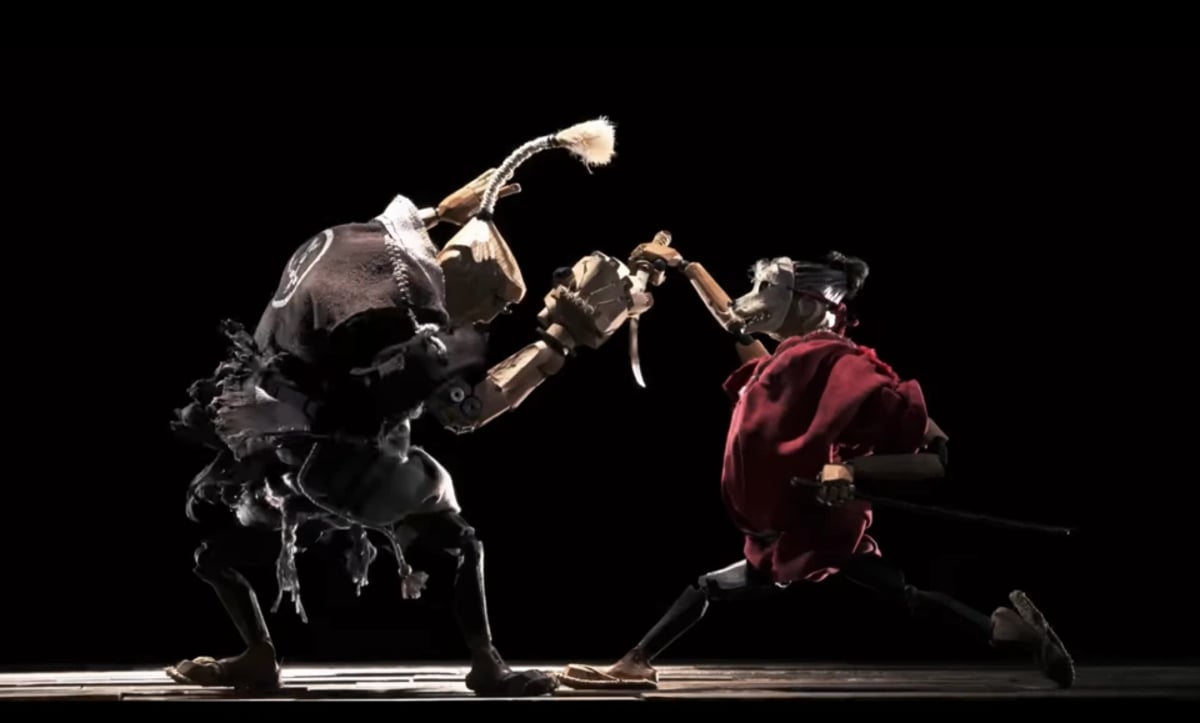
Stop-motion is a beast. Anyone who’s been within a hundred yards of a puppet stage knows the meticulous, often agonizing, craft it demands. Yet, there’s an undeniable magic to it, a texture, a physicality that even the most cutting-edge CG struggles to replicate. Japanese filmmaker Masashi Kawamura, largely known for his work in music videos and commercials, is now diving headfirst into this demanding medium, transforming his viral 2023 stop-motion short, Hidari, into a full-length feature. And he’s doing it with Keanu Reeves.
Kawamura’s journey to this ambitious project began with a proof-of-concept short that, unexpectedly, led to a collaboration with one of Hollywood’s most recognizable voices. The narrative, centered on a protagonist who channels grief into vengeance, struck a chord. As Kawamura recounts, the story carries a distinct John Wick sensibility, a grim determination that resonated enough for Reeves to board the project as the voice of the lead character, Jingoro.
This isn't a typical development story. No deep-pocketed studio greenlighted a known IP. Kawamura and his producer, Noriko Matsumoto of dwarf studios, went the direct route. They approached Reeves’ team after completing a five-minute proof-of-concept. The actor was intrigued. This speaks volumes about the raw power of a well-executed visual pitch, especially for an original script in a niche medium. As Kawamura admits, "Nobody really knows me as a director, and this is my first-time feature film. It’s an original script and doesn’t have any IP attached to it, so I knew there were going to be a lot of challenges. We couldn’t pitch the concept with the script or concept boards, we really had to have something that gets people excited.” That "something" translated into a YouTube short that has since garnered five million views. That’s five million pairs of eyes witnessing the potential, making it far easier to bypass the usual gauntlet of script readers and concept art reviews. It’s a testament to the power of showing, not just telling, especially in a visual medium like stop-motion.
The narrative itself is rooted in a fascinating blend of historical legend and high-octane action. Hidari draws inspiration from Jingoro Hidari, a legendary Edo-era craftsman. The story follows Jingoro after he loses everything: his father figure, his fiancée, and even his right arm, all due to betrayal amidst the secrets of Edo Castle’s reconstruction. Gripped by despair, Jingoro masterfully repurposes his exceptional carpentry skills and a series of lethal mechanical prosthetic arms to pursue justice. His loyal companion, the "Sleeping Cat," accompanies him on this path of revenge and self-discovery.
Kawamura describes a unique aesthetic: “There’s fantasies, chainsaws, crazy wooden robots appearing and it’s kind of like a fictional period drama.” The challenge, he notes, is to keep the narrative relatively simple when the visual complexity is so high. The decision to lean into an "action path" is a pragmatic one for a medium where every single frame is painstakingly crafted. When your character is utilizing chainsaw arms and battling wooden robots, the complexity of the action choreography alone is a major undertaking. This strategic simplification of narrative beats allows the intricate visual craft to truly shine without overwhelming the audience with too much plot.
For Kawamura, whose background primarily lies in live-action and CG, this marks his initial venture into stop-motion. He’d "always looked for an opportunity" to work within the medium. The allure is palpable for many filmmakers who appreciate tangible artistry. "I loved watching stop-motion in my youth, and I felt the magic is the fact that you’re shooting real objects and you’re not replicating them through programming. It’s really these inanimate objects using cinema magic. The texture, the material, that kind of tactile presence is what I really wanted to make as part of the story," he explains. This echoes the sentiments of many seasoned cinematographers and production designers who prioritize practical effects and tangible elements to ground their work, understanding that the human eye often perceives a subtle, intangible truth in the physical world that digital renderings, despite their perfection, sometimes lack.
From a production design perspective, the choice of material was critical. Kawamura explored water, fire, metal, leather, and eventually settled on wood. This was not merely an aesthetic preference but a conscious decision steeped in cultural significance. Wood, he points out, has "strong roots in Japanese culture and history." This choice then informed the character's genesis, linking the medium directly to the story's core: "I thought if we could do some wooden puppet work, it would be something visually and aesthetically unique and interesting.”
The mythical figure of Jingoro Hidari provides multiple layers of intrigue. The historical ambiguity surrounding whether he even existed, coupled with the widespread attribution of sculptures spanning centuries, paints a picture of a legendary craftsman whose work was said to come alive, a perfect metaphor for stop-motion itself. "It felt perfect because he was a sculptor and his work was said to come alive because it looked so real," Kawamura notes. "That’s the kind of myth around him and I knew that if I could tell the story of a sculptor through a wooden puppet that looks like it’s one of his own creations, then that would be a very interesting and extra layer to the film itself." One of Hidari’s most famous sculptures, the “Sleeping Cat” from the Tōshōgū Shrine, is incorporated directly into the film, further intertwining the legend with the emerging narrative.
The involvement of Matsumoto from dwarf studios is also key. Her studio has built a reputation for collaborating with global streamers, exemplified by their Netflix series Rilakkuma. Her latest short film, Bottle George, was shortlisted for the 2025 Oscars, underscoring her studio's standing in the animation world. Hidari is also produced by Whatever and TECARAT, with Questry Co.’s Tomonobu Ibe as a financing partner.
Kawamura’s own diverse career, from commercials and music videos to creating Lady Gaga clones and designing exposition pavilions, showcases a versatile creative. His projects have earned international acclaim, including a Cristal at the Annecy International Animation Film Festival and an International Emmy Award nomination. This breadth of experience across various visual media undoubtedly lends itself to tackling the multidisciplinary demands of a stop-motion feature.
The practicalities of stop-motion on this scale are immense. Every movement, every expression, every object must be physically manipulated and photographed frame by frame. The "tactile presence" Kawamura champions is a double-edged sword: it imbues the final product with unparalleled realism but demands an almost inhuman degree of patience and prevision from the crew. The sheer number of human hours involved in manufacturing puppets, building sets, animating, and then lighting each individual frame means that meticulous planning is not just advisable, but absolutely mandatory. Production designers and art directors would need to create multiple versions of every puppet and prop to account for wear and tear, and for simultaneous shots, a common strategy in stop-motion to accelerate the glacial pace of production. The challenges here extend beyond just artistic vision to logistical nightmares, managing delicate materials and intricate mechanisms for an extended production schedule. Crew wellness and safety in these highly detail-oriented, repetitive environments are also paramount, often impacting scheduling and budgeting.
Currently, Kawamura and Matsumoto are navigating conversations with various international partners to bring Hidari into full production. The presence of Keanu Reeves, Kawamura says, has been instrumental in these discussions, providing significant leverage. Reeves isn’t just a name providing a voice; he's invested creatively. "He’s super focused," Kawamura states. "I was just a fanboy but now I’m almost working as a partner with him. I’ve learned so much from him and continue to learn from him as we go." This collaborative energy, where a marquee talent actively engages with the craft and vision, often fuels the demanding process of animation and offers a compelling narrative for potential financiers.
This project is not just a film; it’s a masterclass in proving concept and leveraging talent. It demonstrates that an original, niche idea, when executed with precision and passion, can attract significant attention and collaboration, even from the most sought-after names in the industry. It's a reminder that truly innovative work often begins with a singular, compelling vision, rather than a pre-existing formula. For those of us who appreciate the painstaking artistry of stop-motion, and the raw ingenuity it requires, Hidari promises a tactile vengeance, carved from wood and brought to life, one frame at a time. It highlights how a director's notes for editorial must be exceptionally precise when working with such an intricate, frame-by-frame workflow. Beyond that, the commitment to craft required to manage tone, keeping performance, camera, and edit consistent will be immense.
---
© 2026 BlockReel DAO. All rights reserved. Licensed under CC BY-NC-ND 4.0 • No AI Training. Originally published on BlockReel DAO.