Toy Story 5 Hits $1 Billion: Lilypad, Franchise Playbook | BlockReel
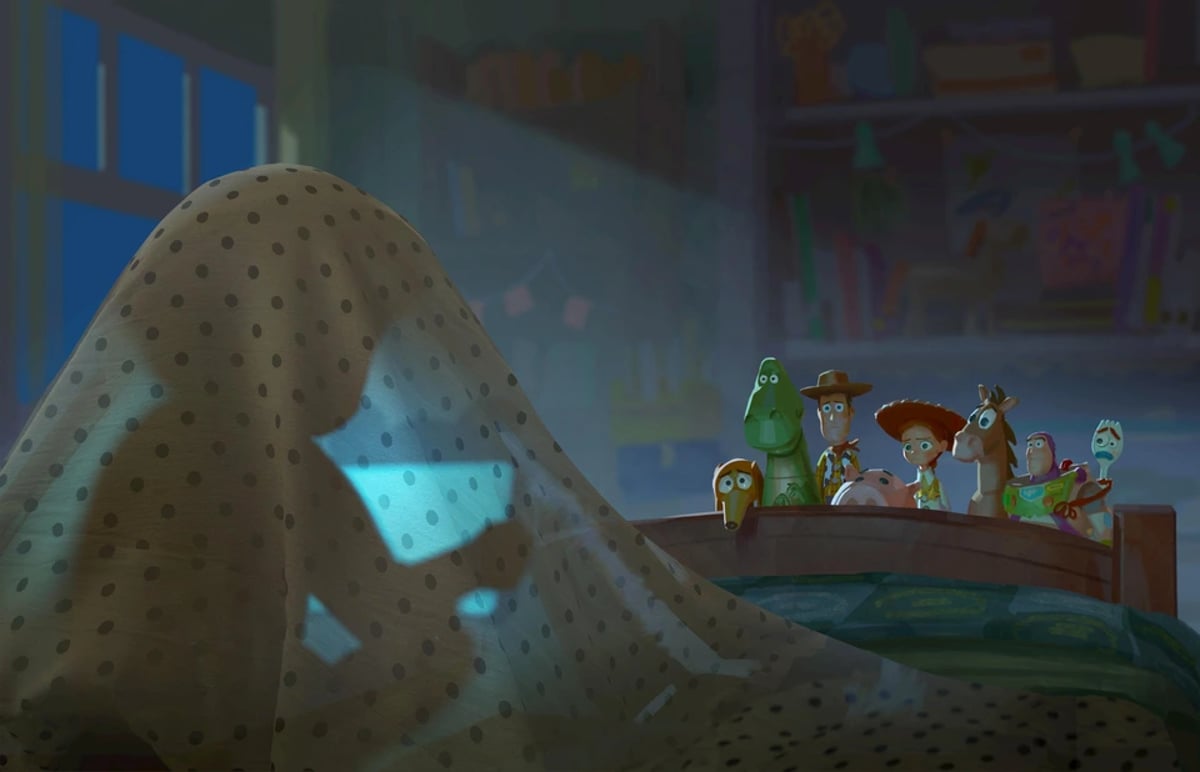
One billion dollars. A number that, for studios and exhibitors alike, often feels like a mythical beast, a benchmark for undisputed commercial triumph. Yet, for Disney and Pixar's Toy Story 5, that figure has now been decisively crossed, placing it squarely as the highest-grossing film of the year thus far. It is a win, certainly, but one that comes with its own interesting subtext, particularly given the very narrative threads this latest installment reportedly weaves.
Is it simply the enduring power of a beloved franchise that propels a film to such dizzying heights, or is there something more resonant in Toy Story 5's approach? The film, per reports, directly confronts the contemporary conundrum of childhood, a world increasingly mediated by screens and digital distractions. Woody, Buzz Lightyear, and Jessie, characters who defined tactile play for generations, now apparently grapple with an owner, Bonnie, captivated by a "kiddie smart tablet known as Lilypad." This isn't merely a plot device; it is a direct reflection of a cultural shift many of us in the industry have observed, often with a sense of melancholic recognition for the toys of our own youth.
The numbers themselves are staggering: $448 million domestically, $573 million internationally, culminating in a global haul of $1.022 billion. Toy Story 5 joins The Super Mario Galaxy Movie ($1.001 billion) and Michael ($1.001 billion) as the third film of the year to hit this vaunted milestone. And the year is far from over, with The Odyssey (already at $639.6 million after just two weekends) and the much-anticipated Spider-Man: Brand New Day looming on the horizon. This trajectory suggests that 2026 is poised to produce the most billion-dollar blockbusters since 2019, harkening back to an era where Avengers: Endgame, The Lion King, and Aladdin routinely conquered the box office.
For Pixar, and by extension Disney, this success is certainly a balm, particularly following reports of recent layoffs impacting the animation studio. One might cynically observe that while original endeavors like this spring's Hoppers (which, despite a strong opening, lacked staying power) struggle to replicate the financial triumphs of previous Pixar originals, the proven commodity of a cherished sequel like Toy Story 5 delivers exactly what the balance sheets demand. This dynamic is not new, of course, but it perpetually highlights the industry's delicate dance between creative risk and commercial imperative. Visual writing that converts emotion into playable action lines often finds its ultimate test in how well it translates to a broad audience, and a familiar, well-executed franchise often provides a safer bet.
Andrew Stanton, a Pixar veteran at the helm of this fifth installment, navigates the returning ensemble of Tom Hanks as Woody, Tim Allen as Buzz Lightyear, and Joan Cusack as Jessie. This consistent voice casting, alongside a narrative that acknowledges the changing landscape of children's entertainment, seems to have resonated. The film opened in mid-June with a muscular $160 million, marking not only the year's biggest debut but also the best in the franchise's history. Combine favorable reviews, strong word-of-mouth, and the intrinsic goodwill built over three decades, and the film effectively became the default choice for family audiences throughout the summer. Coordinated promotional tie-ins with consumer brands and streaming platforms extended its cultural footprint well past opening weekend, a reminder that theatrical wins at this scale are engineered months in advance, not stumbled into.
The irony, perhaps, is that a film about the potential obsolescence of physical toys in a tech-driven world becomes a monument to the enduring power of storytelling itself. We, as practitioners, often strive for that timeless quality, that resonant chord that transcends fleeting fads. Toy Story, in its initial inception, humanized plastic figures. Now, Toy Story 5 apparently humanizes the experience of those figures being slowly set aside, not for other toys, but for a glowing screen. This is a subtle, yet profound, shift in the franchise's thematic focus, moving beyond existential dread (as seen with Woody in Toy Story 4 contemplating his purpose) to a broader commentary on modern childhood.
That kind of thematic evolution rarely happens by accident. It is the product of a development culture willing to interrogate its own premises. Pixar's internal review process, dissected in our look at what filmmakers can learn from the Pixar Brain Trust, is built precisely to catch a fifth sequel drifting into self-parody and to push it toward something the culture actually needs to hear. The Lilypad thread reads like a note that survived several passes through that room.
The film's performance also outpaces its predecessors, with Toy Story 5 soon to become the highest-grossing installment within the franchise, eclipsing Toy Story 4 ($1.073 billion) and Toy Story 3 ($1.067 billion), both of which also cleared the billion-dollar threshold. This is a credit not just to the quality of the individual film, but to the meticulous world-building and character development that has sustained the series for over 30 years. It's hard to build such a lasting connection; it takes consistent attention to detail and an understanding of what makes characters endure. The development process, often a labyrinthine journey, ultimately pays off when audiences invest decades into a story world.
From a production standpoint, the success of Toy Story 5 reinforces a few critical lessons.
- Franchise Strength: While every studio executive dreams of the next original hit, the reliable performance of an established franchise with a loyal audience cannot be overstated. It provides a foundational revenue stream, allowing for other, potentially riskier, creative endeavors to be pursued (or, in this case, perhaps offset some of the fiscal disappointments of said originals).
This year's box office performance, with multiple films clearing the billion-dollar mark, offers a glimmer of hope that the theatrical experience, while irrevocably altered by streaming and the pandemic, still holds considerable sway. After a period marked by significantly fewer billion-dollar films (only one in 2021, three in 2022, two in 2023, three in 2024, and three in 2025), 2026 appears to be a resurgence. However, it's also a resurgence driven heavily by the colossal tentpoles and established IP.
The Toy Story series, perhaps more than any other, has consistently explored complex, existential themes through the lens of children's playthings. From the fear of being replaced, to the search for purpose, to the agony of farewell, these films have always reached beyond their seemingly simple premise. Now, by tackling the encroachment of technology into the sacred space of childhood play, Toy Story 5 continues this tradition, inviting audiences to reflect on what it means to grow up, and what is truly valuable in a child's fragmented attention. One wonders, in those studio development meetings, how much internal debate there was about directly addressing the "Lilypad." The safe bet would have been to avoid such a topic, but, clearly, the creative team pressed forward, and the box office has validated that decision. It proves that even within the confines of established IP, there is room for relevant, challenging narrative, if you're brave enough to make it.
---
© 2026 BlockReel DAO. All rights reserved. Licensed under CC BY-NC-ND 4.0 • No AI Training.