UK Drama Pressed to Hire Disability Access Coordinators
In an industry perpetually grappling with its own pronouncements of progress, the latest challenge to UK television drama comes not from a regulatory body, but from within the talent representation sphere. Casarotto Ramsay & Associates, one of the few major UK agencies with a dedicated disability access team, is directly pressing heads of production across the nation's TV drama independent companies and broadcasters. The message is blunt: stop citing "excuses" and integrate disabled access coordinators into every crew list.
This isn't merely a polite suggestion; it's a direct intervention from Julie Fernandez and Sara Johnson, who have spearheaded Casarotto's disability access initiative for two-and-a-half years. Their frustration, it seems, has reached a critical mass, driven by what they perceive as glacially slow adoption rates for access coordinators despite the undeniable imperative for inclusivity.
The agency's efforts are grounded in a tangible need. Fernandez and Johnson actively train and upskill access coordinators, preparing them to navigate the complexities of TV shoots and address access issues for both disabled crew and actors. Why, then, does Casarotto's research suggest fewer than 20% of TV productions have worked with these specialists to date? One might wonder if the industry's rhetoric around diversity truly aligns with its operational realities.
The one-page briefing distributed by Casarotto's team underscores the urgency, leading with the stark declaration, "Disabled freelancers are in crisis, and we need your help." It points directly to the prevailing economic climate, noting, "The downturn in commissioning is taking hold." But the critical follow-up, "Access coordinators need more productions to bring them on board. Despite great work, disability targets are still unmet," suggests a deeper, more systemic resistance than mere budget constraints.
Johnson, a former Fox commissioner, directly refutes the notion that reduced commissioning or slashed budgets serve as justifiable reasons for bypassing access coordinators. She argues the situation feels "Orwellian," with inclusive rhetoric sharply at odds with on-the-ground hiring. Her observations suggest that even prior to any recent economic contraction, the uptake of access coordinators across all genres remained remarkably low. This brings into question the genuine commitment to fostering an inclusive environment, rather than merely paying lip service to it.
The proposed financial hurdle often cited, for instance, appears far less imposing under scrutiny. Casarotto's briefing and internal cost estimates indicate that hiring an access coordinator for three days costs approximately £1,500 ($2,032), representing roughly 0.3% of an average show's budget according to Casarotto's internal calculations. When considering the comprehensive costs of developing, producing, and marketing a television drama (a line item often dwarfed by other production insurance and compliance overheads), this figure seems almost negligible. Could this be a case where a perceived burden outweighs the actual monetary outlay, or are other, less tangible resistances at play?
Johnson's call to "put access coordinators in every crew list" is not just about compliance; it's about authentic integration. Fernandez and Johnson note that many of those who benefit from Casarotto's trained access coordinators are individuals who are neurodivergent or live with non-visible disabilities. This broadens the scope of "access" beyond the visibly physical, encompassing a spectrum of needs that often go unacknowledged in conventional production planning.
This push from Casarotto adds another layer to the ongoing discourse surrounding diversity and inclusion within the industry. It resonates with the sentiments expressed by figures like Jack Thorne, whose scathing MacTaggart address years prior laid bare the industry's failures towards disabled people. Thorne, co-creator of Adolescence and a prominent advocate, continues his work through the TV Access Project (a coalition that includes the BBC, Channel 4, ITV, Sky, Disney+ UK, Paramount, Prime Video, BritBox International, and UKTV), campaigning for improved access for disabled talent. That these campaigns remain critical years later suggests a persistent inertia within the broader production ecosystem.
The core tension here lies between industry talk and industry walk. For years, statements from broadcasters and production companies have championed diversity, yet the practical implementation of support structures often lags behind. Is it a lack of awareness, a misunderstanding of the benefits, or simply a reluctance to modify established, albeit exclusionary, workflows?
Consider the intricate dance of a film set, where the demands are relentless, schedules are tight, and improvisation is often the order of the day. Introducing a new role, even one designed to streamline and improve accessibility, requires a shift in mindset. It necessitates re-evaluating long-held assumptions about how a crew operates and how talent is supported. The argument for an access coordinator isn't just about charity; it's about efficiency and unlocking a wider pool of talent capable of contributing to the final product.
Looking at the craft, a cinematographer might consider how an access coordinator facilitates a disabled actor's movement through a complex set, ensuring lighting and camera angles accommodate their needs without compromising the visual narrative. An editor might appreciate how such coordination during production translates to fewer reshoots or creative workarounds in post. These are not peripheral concerns; they are fundamental to maintaining production quality and integrity while upholding ethical commitments. The same logic that has normalized intimacy coordinators and consent workflows on set applies directly here: a specialist role that protects performers and accelerates the day rather than slowing it.
One might draw a parallel to the gradual, and often hard-won, acceptance of other specialized roles on set. The unit publicist, the intimacy coordinator, even the data wrangler, each at their inception was perhaps viewed with a degree of skepticism or seen as an "added cost." Yet, as the industry evolved and recognized the value these roles brought, whether in managing public image, ensuring performer comfort, or safeguarding precious digital assets, they became enshrined as essential. The question now is whether the access coordinator will follow a similar trajectory, much as union and guild compliance roles have become non-negotiable line items.
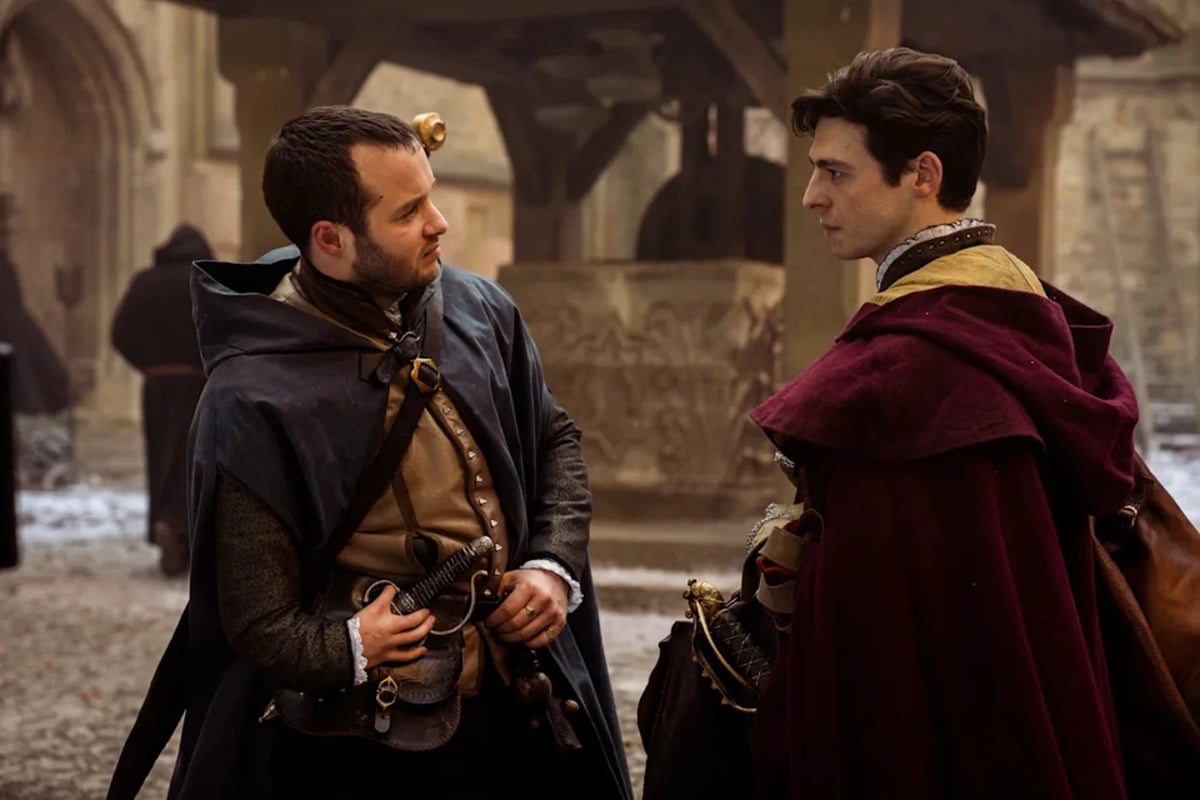
The evidence for the value of access coordinators is already emerging. Casarotto's trained specialists have contributed to productions where access-coordinator work has been reported, including the Disney+ series Shardlake and the BBC's Silent Witness, alongside upcoming titles such as The Rapture, which are reported to be integrating access-coordinator support. These are not niche projects; they are mainstream productions backed by major platforms and broadcasters, indicating that the integration of access coordination is not only feasible but actively happening. Shardlake, featuring Arthur Hughes and Anthony Boyle, serves as a tangible example of productions that have successfully incorporated such expertise.
The underrepresentation of disabled people in the UK TV industry is not a new revelation. Research from the Creative Diversity Network, ScreenSkills, and the 1 in 4 Coalition consistently highlights these disparities, both on screen and behind the camera. Improvements, as the Casarotto team noted, have been "slow and incremental." This isn't just about bringing disabled talent to the screen; it's about ensuring disabled professionals have equitable opportunities behind the camera, in the writers' room, and in every department from pre-production through post.
The move by Casarotto Ramsay & Associates is a critical one. By targeting the heads of production directly, they are circumventing layers of bureaucracy and delivering their message to those with the power to enact change. This isn't about shaming; it's about accountability. When an agency representing top-tier talent like Steve McQueen and Stephen Frears throws its weight behind such an initiative, it signals a significant shift in the internal pressure points of the industry.
The industry often prides itself on innovation and forward-thinking, yet its adoption of inclusive practices sometimes feels like a perpetual cycle of belated adjustments. One might recall early debates around diversity in writers' rooms or the demand for broader representation in casting. Each step, while eventually embraced, often required a sustained push from advocates and a willingness among decision-makers to challenge the status quo. The current pressure mirrors parallel labor flashpoints, including the UK Equity AI strike threat and SAG's protective clauses, where specialist representation forces structural change.
Ultimately, the argument for access coordinators isn't simply about adhering to a quota or ticking a box. It's about recognizing that talent is not limited by physical or neurological differences. It's about creating an environment where every individual, regardless of their access needs, can contribute their skills and perspective to the filmmaking process. Failure to do so isn't just an ethical misstep; it's a strategic oversight that limits creative potential and ignores a significant segment of the population, both on screen and behind it.
The coming months will reveal the efficacy of Casarotto's direct appeal. Will production heads internalize the message and actively integrate access coordinators, or will the "excuses" persist? The industry's response to this challenge will be a telling indicator of its true commitment to an equitable and accessible future. BlockReel DAO will continue to monitor these developments, understanding that true craft flourishes in environments that champion talent from all walks of life.
---
© 2026 BlockReel DAO. All rights reserved. Licensed under CC BY-NC-ND 4.0 • No AI Training. Originally published on BlockReel DAO.