'Wonder Man' VFX: Forced Perspective Miniatures Return
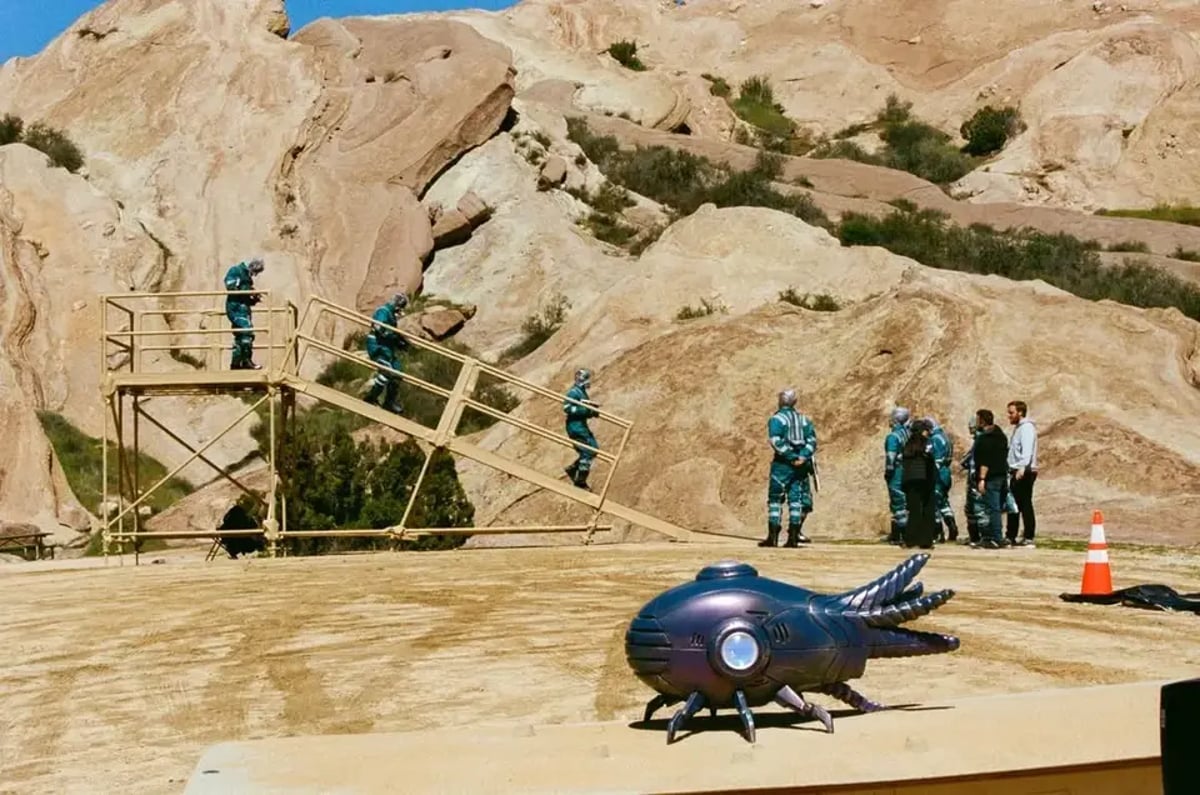
It’s always a rush to see production teams lean into classic techniques, especially for a series like Wonder Man where visual storytelling can often skew heavily into the digital realm. What stands out is that the show's approach to its "show-within-a-show" sequence, depicting the original Wonder Man series Simon treasured as a child, is a masterclass in controlled nostalgia. It didn't just tell us about old-school effects; it showed them, incorporating practical methods that digital natives might consider arcane.
Visual effects supervisor John Haley, in an interview with befores & afters, outlined how they approached the sequences portraying this fictional, vintage Wonder Man production. Rather than defaulting to modern CGI for everything, the team consciously embraced what he called a "fun old-school way," specifically employing forced perspective miniature effects and shooting miniatures directly. This isn't just a stylistic choice; it's a testament to the enduring power and unique aesthetic that physical effects can bring, even in a contemporary, VFX-heavy landscape.
Consider this: in an era dominated by sprawling digital environments and hyper-realistic synthetic characters, the deliberate decision to utilize miniatures and forced perspective stands out. It's a nod to the lineage of cinematic illusion, the kind of craft that built the foundational visual language of sci-fi and fantasy cinema. Practical effects like these carry an inherent weight, a tangible quality that's often difficult to fully replicate digitally. The interplay of real light on real physical objects, the subtle imperfections, and the meticulous hand-craftsmanship, these elements contribute to a specific type of visual authenticity.
The Instagram post from @therealbriangay offered a glimpse behind the curtain at this process. It detailed the meticulous setup of a miniature spaceship on a sandy board, strategically placed to obscure a platform and ramp positioned approximately 30 yards in the background. The goal? To create the illusion that aliens emerging from the ship and firing at Wonder Man are on the same scale, a classic forced perspective trick. This wasn't some haphazard setup. It required precise alignment, careful attention to lighting, and coordination amongst the art department and camera crew. The ingenuity lies in making two disparate elements, a small model and a distant set piece, appear to occupy the same physical space and interact credibly. This isn't just about saving render time, though that's a welcome byproduct; it's about achieving a specific visual texture that tells the audience, even subconsciously, that they’re watching a period piece of a period piece, if you will.
This reliance on "old-school effects techniques" isn't merely a stylistic affectation for the Wonder Man backstory. It serves a narrative purpose, grounding Simon's childhood memories in a tangible, believable past. It's a technique that carries with it decades of film history, conjuring the spirit of master illusionists like Georges Méliès, but also harking back to the matte paintings and miniature work that were staples of studios for generations. Think about the incredible worlds built by teams for films like Blade Runner or Star Wars, where miniature cityscapes and starships were painstakingly crafted and filmed. That’s the heritage that forced perspective and miniatures carry, and it's what they impart, subtly, to Wonder Man's fictional past.
Beyond the meta-narrative of the show-within-a-show, Haley also touched on the broader involvement of visual effects in the series. He discussed "ion fluctuation moments" involving the character Simon, such as the destruction of a kitchen island and an incident on a sound stage. These are the kinds of effects where the digital toolkit really shines, allowing for dynamic, complex destruction and energy manifestations that would be impractical, if not impossible, to achieve physically. Then there's the "head punch scene," which is a daydream sequence, initially conceived differently. These larger, often more spectacular effects demonstrate the complementary nature of modern VFX, capable of realizing visions that simply can't exist in front of the lens.
What’s particularly noteworthy, and perhaps something of an anomaly in contemporary production pipelines, is that Base FX served as the sole vendor for the series. This consolidated approach deviates from the common practice of parcelling out VFX work to multiple studios, each handling different sequences or assets. A single vendor often fosters a more cohesive visual language across the entire production, reducing potential discrepancies in style, pipeline, or aesthetic interpretation that can arise when numerous companies contribute. It suggests a streamlined communication flow and a unified creative vision for the show's effects work. For filmmakers trying to maintain a consistent look, especially across a season of television, having a single shop manage the breadth of effects can simplify coordination and execution.
This blending of practical and digital, and the deliberate application of each to serve specific narrative and aesthetic goals, isn’t just interesting from a technical standpoint. It offers genuine insights into alternative filmmaking approaches, especially when considering the subtle ways that effects contribute to a story's texture. When done well, invisible effects are often the most effective, blurring the line between what's real and what's orchestrated. The choice to shoot miniature effects for Wonder Man's anachronistic sequence exemplifies this pursuit of verisimilitude, making the fictional past feel genuinely lived-in and authentic to its era. It's a reminder that sometimes the most cutting-edge solution is actually the one that's been around for decades, reapplied with thoughtfulness and precision.
One question that comes up frequently in discussions about visual effects is the balance between practical and digital. Is one inherently superior? Absolutely not. But each has its strengths, its limitations, and critically, its own unique fingerprint on the final image. When you're trying to evoke a specific era of filmmaking, like Wonder Man is doing, tapping into the tactile nature of miniatures and the optical trickery of forced perspective can be incredibly potent. It's not just an homage; it's a direct connection to how those films felt to watch. When Stan Winston created his incredible animatronics, they felt there. That's the power of the tangible.
Forced perspective, in particular, is a technique that transcends simple trickery. It plays directly with the audience's perception, subtly manipulating spatial relationships without drawing attention to itself. It requires not just technical skill in composition and camera work, but also an understanding of how the human eye interprets depth and scale. The placement of that miniature spaceship "roughly 30 yards" from the background plateau isn't arbitrary; it's a meticulously calculated distance designed to collapse perceived depth into a single, convincing plane when viewed through the camera's lens. This isn't something a render farm can solely manage; it demands on-set, real-time problem-solving and an almost intuitive understanding of optical laws.
We see a lot of discourse around the "cost" of VFX, both in terms of budget and creative integrity. Projects like Wonder Man demonstrate that embracing a diverse toolkit, including practical solutions, can offer creative dividends that go beyond mere cost-effectiveness. It adds layers of authenticity and a tangible quality that CG can sometimes struggle to replicate, especially for quick, evocative moments. The laser blasts and effects in that "old-school version" of Wonder Man wouldn't have the same charmingly retro feel if they were pure digital constructs; the practical approach infuses them with a charmingly archaic quality that speaks to the fictional era it's meant to represent. The slight jitter of a physical model, the way light spills across a hand-painted surface, the subtle imperfections, these are the details that build character and historical context.
The challenge, of course, is integrating these diverse elements without friction. Whether it's a digital ion fluctuation effect or a forced-perspective miniature, the audience shouldn't be pulled out of the experience. It's the art of the invisible effect that truly elevates a sequence. When executed with precision and intention, the "old-school" and the "new-school" don't clash; they complement each other, building a richer, more believable world for the audience. The work by John Haley and the team at Base FX in Wonder Man illustrates this beautifully, proving that sometimes, the best way forward is to glance back at the techniques that laid the groundwork for everything we do today. Productions weighing similar choices can study how implementing practical VFX on constrained budgets opens new avenues for creative problem-solving, and how VFX integration for independent films maps the same hybrid mindset onto smaller productions.
---
© 2026 BlockReel DAO. All rights reserved. Licensed under CC BY-NC-ND 4.0 • No AI Training. Originally published on BlockReel DAO.