ZEISS CinCraft LensCore: Ray-Traced Lens Plugin for Nuke Compositing
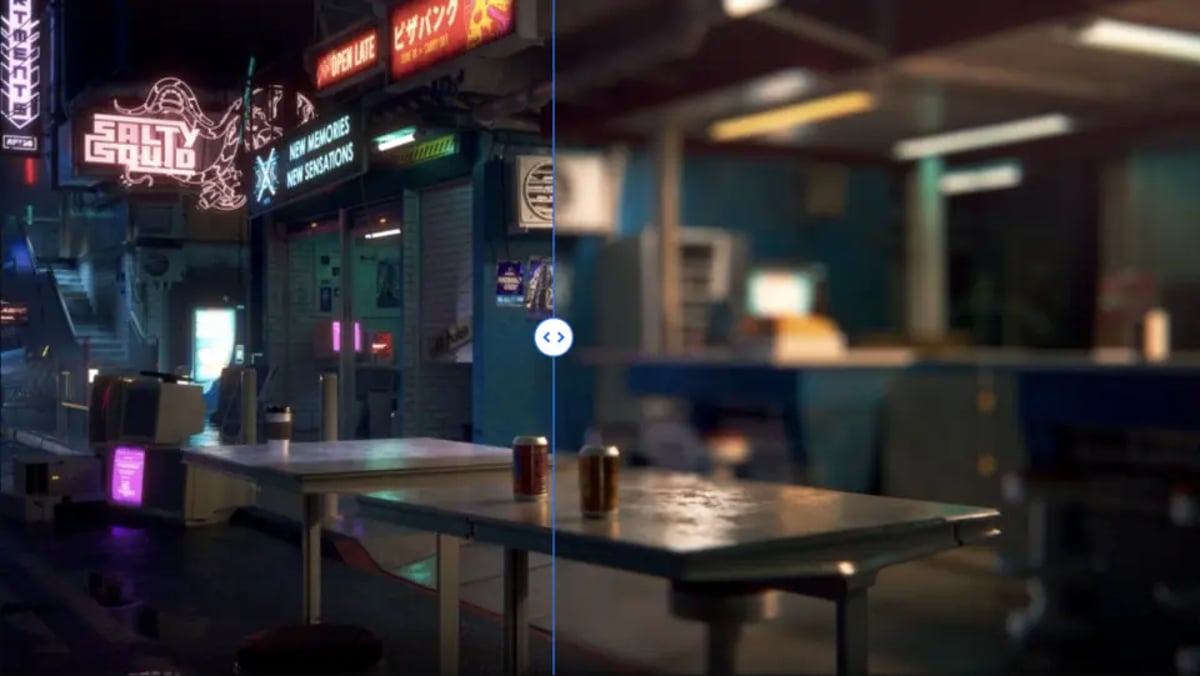
The pursuit of photorealism in visual effects often hinges on the minutiae, particularly how light interacts with and passes through optical systems. Generic defocus and blur filters in compositing software have long served as approximations, but for discerning visual effects supervisors and cinematographers, these tools often fall short of replicating the complex, idiosyncratic characteristics of high-end cinema lenses. ZEISS has now formally released CinCraft LensCore, a GPU-accelerated, ray-traced Nuke plugin designed to bridge this fidelity gap. This launch follows a technical preview at FMX 2025, a closed beta program, and a hands-on demonstration at NAB 2026.
LensCore positions itself not as another filter, but as a physically modeled optical engine within a 2D compositing environment. The premise is straightforward: rather than faking lens artifacts, the plugin computes them based on ray-traced simulations of specific lenses. This approach aims to bring a new level of authenticity to digital composites, ensuring that CG elements integrate more convincingly with live-action plates, replicating the nuances of real glass. For those working on complex VFX sequences at the highest level, tools like this represent a meaningful step forward in fidelity.
A Ray-Traced Lens Engine, Not a Defocus Filter
The distinction ZEISS makes with CinCraft LensCore is critical for post-production professionals. This is not simply a more advanced defocus algorithm or a collection of bokeh textures. At its foundation, LensCore employs a GPU-accelerated, ray-traced rendering engine specifically engineered for The Foundry Nuke. ZEISS emphasizes that this is a physical simulation: each pixel and every frame is processed through a virtual lens model. This model's behavior is derived from parameterized real optical values, meaning it considers factors like focus, T-stop, focal length, and focus distance, and aims to maintain physically coherent lens characteristics as these parameters dynamically shift.
For compositors, this translates into a more accurate representation of optical phenomena. Common lens traits such as vignetting, geometric distortion, the nuanced falloff of focus, and the distinct shapes of out-of-focus highlights are generated directly from the lens model. This differs significantly from traditional methods, which often rely on approximations or stylization sliders to mimic these effects. Historically, achieving this level of optical accuracy in 2D compositing workflows often necessitated either intricate 3D setups or laborious manual matching to on-set plate photography. LensCore seeks to streamline this process, offering a physically grounded starting point for lens emulation.
A Virtual Shelf of Cinema Lenses
A core component of CinCraft LensCore is its digital lens library. This "virtual shelf" includes detailed profiles of real ZEISS cinema lenses, building on the optical heritage seen in their Aatma Prime T1.5 cine lens line and Panoptes 65 large-format lenses, and also supports user-generated custom presets. The proposition from ZEISS is that a shot can instantly acquire a complete digital lens look by applying a single profile. This includes the bespoke bokeh, defocus, distortion patterns, vignetting, and other optical effects characteristic of a specific physical lens. The workflow allows artists to rapidly compare different lens looks and, crucially, apply a consistent lens profile across an entire sequence. This consistency is vital in maintaining the photographic integrity of a film, especially when integrating visual effects.
Egor Nikitin, Head of Digital Cinematography at ZEISS, articulated the ambition behind this feature: to imbue compositing with the same lexicon and precision found in on-set lens selections. Nikitin noted, "from the way light falls off at the edges of the frame to the nuance of out-of-focus highlights," the tool aims to replicate the full spectrum of lens characteristics. The underlying principle is logical: if a Director of Photography (DP) has specified a particular lens for a scene, or if there's a need to match an existing lens for a computer-generated element, a post-production artist should ideally be able to load that precise profile. On-set lens metadata tools like the ARRI and SmallHD Monitor Overlay already capture this data live, and LensCore extends that precision into the compositing suite.
Building Lenses That Do Not Exist
Beyond replicating existing lenses, CinCraft LensCore also ventures into the realm of speculative optics. While the current articulation focuses on the digital shelf of actual ZEISS lenses, the underlying ray-tracing engine inherently possesses the capability to simulate hypothetical lens designs. This functionality, while not explicitly detailed in the immediate launch information as a user-facing tool for creating any "non-existent" lens, is a logical extension of a ray-traced optical simulation. If the system can accurately parameterize and render known lens designs, it can also process parameters for theoretical or experimental optical configurations.
For VFX artists and supervisors, this could open avenues for creative exploration that extend beyond practical optical limitations. Imagine a scenario where a production requires a unique, highly stylized lens look not achievable with current physical glass, or where a certain aesthetic is desired that blends characteristics from multiple historical or contemporary lenses. A robust parametric ray-tracing engine could, in theory, generate these bespoke optical signatures. This pushes the boundaries of visual storytelling, allowing for greater control over the subtle photographic qualities of digital imagery.
It moves the discussion from simply cloning imperfections to actively designing optical signatures for specific creative intent. A film may require a lens aesthetic that suggests a particular era or mood that no single existing lens can deliver. If LensCore's underlying engine can be manipulated at a deeper level to define custom optical recipes, this could become a significant creative asset.
The Inpaint Feature and Other Workflow Details
While specific details about the "inpaint feature" were not elaborated upon in the provided source material, its mention alongside "other workflow details" suggests additional tools aimed at refining the integration of lens effects within Nuke. Inpainting typically refers to the process of reconstructing missing or corrupted parts of an image. In the context of a lens simulation plugin, this could imply functionalities that automatically or semi-automatically address artifacts introduced by the lens effect, or intelligently fill in data where the simulation might create gaps or need augmentation.
Given that LensCore is a Nuke plugin, its workflow integration is designed to leverage Nuke's node-based compositing environment. Compositors can expect to insert LensCore nodes into their script, allowing them to apply lens simulations to rendered CG layers, live-action plates, or combinations thereof. For facilities managing complex handoffs between departments, understanding how to structure VFX pull lists and turnover packages for post-production becomes even more critical when incorporating lens-specific data into the pipeline.
The ability to maintain a physically coherent representation of cinematic lenses is particularly valuable in complex VFX shots. For instance, when dealing with digital matte paintings or set extensions, applying the identical lens characteristics to the added elements as were used on the principal photography can significantly improve the illusion of a contiguous reality. This extends to integrating complex particle systems, digital doubles, or creature effects. By ensuring the optical qualities, like the specific bokeh generated by a lens at wide apertures, or the subtle chromatic aberration at its edges, are consistent across all elements, the final composite achieves a higher degree of visual fidelity.
How It Fits into the CinCraft Ecosystem
CinCraft LensCore is presented as an integral part of ZEISS's broader CinCraft ecosystem. The mention of its place within this framework implies a strategic vision to provide a suite of tools that address various aspects of digital cinematography and post-production. While LensCore specifically targets lens simulation in compositing, the overarching CinCraft branding suggests a push towards a more comprehensive approach to digital lens data and its application throughout the cinematography pipeline.
This ecosystem approach is critical for high-end feature film and episodic television production. A common challenge in VFX workflow is the fragmentation of data: lens data on set might be recorded in one format, used by the 3D team in another, and then inconsistently applied in 2D compositing. By positioning LensCore within a wider CinCraft ecosystem, ZEISS is likely aiming for greater interoperability and consistency across different stages of production. This aligns with the broader industry push for end-to-end color pipeline planning, where creative decisions made on set are preserved through to final delivery.
The ultimate goal for such an ecosystem is to empower a tighter collaboration between cinematography and post-production. A cinematographer's creative decisions regarding lens choice on set can be accurately translated and preserved throughout the VFX pipeline, minimizing discrepancies and ensuring the director's visual intent is faithfully realized. This type of integration becomes increasingly vital as techniques like virtual production and advanced previs become more prevalent, where lens characteristics may be simulated and locked in early in the process.
Pricing and Availability
CinCraft LensCore launched commercially on June 1, 2026, and is available globally through the CinCraft webshop. ZEISS has indicated that the plugin will be offered with multiple license tiers. However, specific public pricing details were not made available at the time of the announcement. This tiered licensing model suggests flexibility for different scales of production and individual artists, though the absence of immediate pricing means potential users will need to consult the CinCraft webshop for current rates.
The rollout has been methodical, progressing from a conceptual preview of its "Virtual Lens Technology" at FMX 2025 to a closed beta that ran through February of the following year. The commercial launch was confirmed at FMX 2026, following another hands-on preview at NAB 2026. This extended development and preview period suggests a commitment from ZEISS to robust testing and refinement before public release, a common practice for complex software tools entering a professional effects pipeline.
For post-production facilities and freelance compositors, the investment in such a specialized tool will weigh its technical capabilities against its cost-effectiveness in real-world scenarios. The value proposition for CinCraft LensCore will likely be measured by its ability to reduce iteration times, increase photorealism, and provide a workflow that is demonstrably more efficient than existing solutions for mimicking complex optical effects. As with any niche professional software, the cost often reflects the precision, research, and development behind the underlying technology.
The professional post-production landscape continues to demand increasingly sophisticated tools that can replicate the nuances of real-world optics. ZEISS CinCraft LensCore signifies a notable step forward in bringing ray-traced, physically accurate lens simulations directly into the Nuke workflow. By offering a digital library of their cinema lenses and the promise of precise optical behavior, ZEISS aims to provide compositors with a powerful instrument for achieving greater photorealism and creative control in visual effects.
---
© 2026 BlockReel DAO. All rights reserved. Licensed under CC BY-NC-ND 4.0 • No AI Training. Originally published on BlockReel DAO.