Craft & Creators First: Emmy-Winner Mark Hensley Joins BlockReel DAO
Mark Hensley joins BlockReel DAO as Founding Advisor and Head of Industry Partnerships, bringing rare dual fluency in Hollywood craft and indie grit.
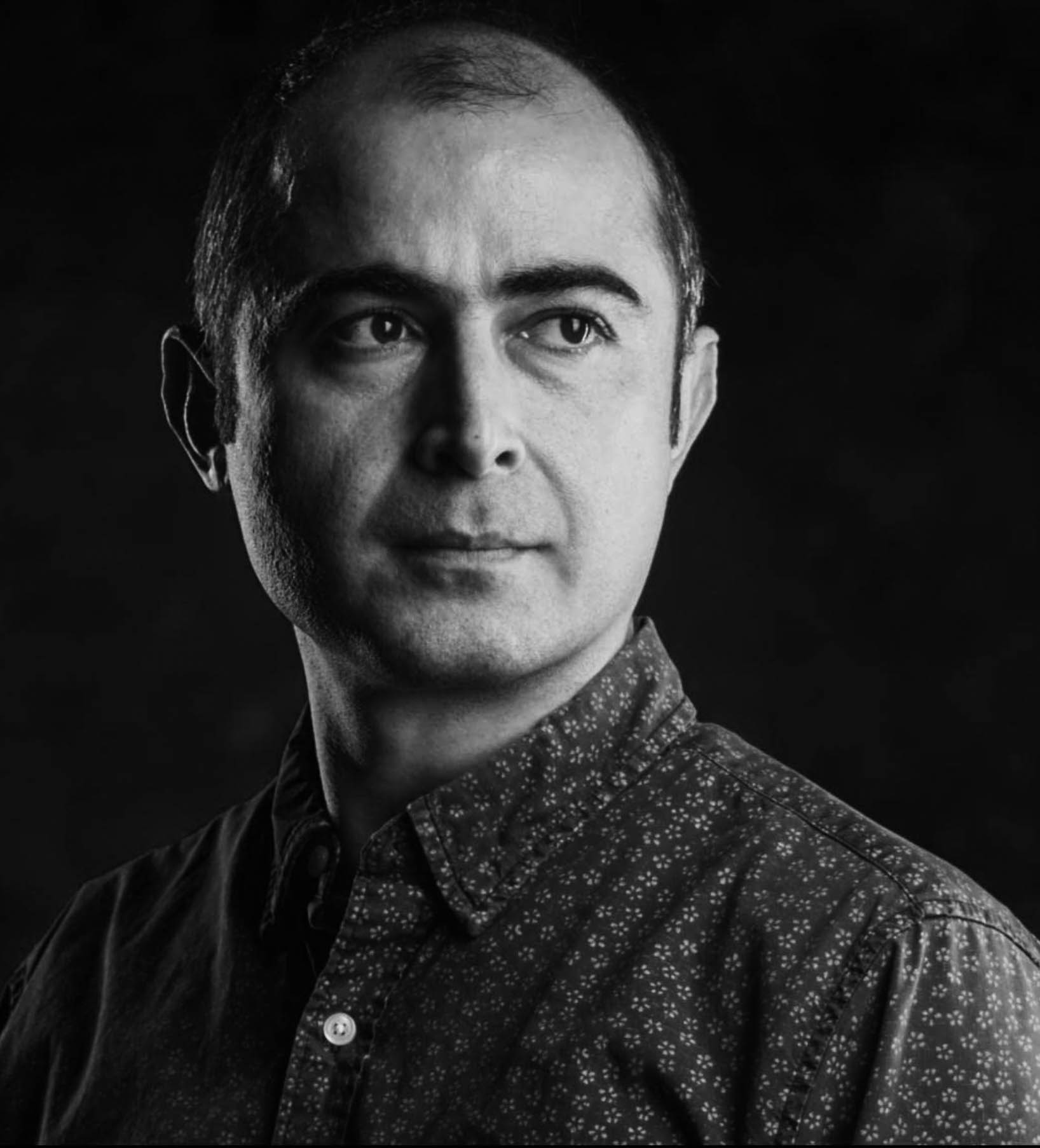
Cinematographer & Essayist
Osman Arslan is a filmmaker and the founder of BlockReel DAO. He studied filmmaking at the School of Visual Arts in New York City and holds degrees in Journalism and Business Management. His essays explore the intersection of emerging technology and filmmaking craft, offering insights from over a decade of hands-on experience in independent film production. As Editor-in-Chief, Osman oversees all editorial content and provides final approval for articles published on BlockReel DAO.
Mark Hensley joins BlockReel DAO as Founding Advisor and Head of Industry Partnerships, bringing rare dual fluency in Hollywood craft and indie grit.
BlockReel DAO ships 15+ live products on Solana with 310+ filmmakers, $0 CAC, and a $200/month burn rate. A full ecosystem update from the founder.
Emmy-winning sound mixer Mark Hensley spent 1,500 hours color grading and shot scene-by-scene over 18 months to make Clown N Out look like a $500K film on a $4K budget. His guerrilla filmmaking blueprint for micro-budget creators.
We should, perhaps, begin in a hallway. Not just any hallway, but the cramped, perpetually shadowed corridor of a 1960s Hong Kong apartment building, a space so precisely rendered in Wong Kar-wai’s *In the Mood for Love* that one can almost feel the humid air cling to the skin. It is here that Mr...
There is a moment in Andrei Tarkovsky’s *Stalker* that contains the whole of his cinematic theology. In the dilapidated, moss-covered room at the heart of the Zone, it begins to rain indoors. Water drips from a ceiling that isn’t leaking, pooling on a floor already submerged, a quiet, impossible ...
The light that falls into the kitchen of 23, quai du Commerce is a flat, indifferent god. It is a Northern European light, a pale wash of grey and blue that moves with agonizing slowness across the linoleum floor, mapping the passage of a day, a life, a sentence. We watch as it illuminates the ba...
A car moves along a country road. Inside, a family: man, woman, child. Then, a shuddering impact we never fully see, a brutal punctuation of metal on tree. The screen goes black. When light returns, it is the clinical light of a hospital room, filtered through a blue lens. Julie de Courcy (Juliet...
The crispness of the bill is the first thing you notice. A counterfeit 500-franc note passes from one hand to another in the opening moments of Robert Bresson’s *L’Argent* (1983), and the camera observes not the faces of the transactors but the transaction itself. It isolates the gesture, transfo...
The water off the coast of Miami is a placid turquoise, a baptismal font for a boy drowning in silence. As Juan (Mahershala Ali) holds a young Chiron (Alex Hibbert) afloat in Barry Jenkins’s *Moonlight* (2016), the camera bobs with them, an intimate third party in this fragile moment of surrogate...
The first time we see Star she is scavenging for food in a dumpster, but the image that endures from Andrea Arnold’s *American Honey* is not of poverty, but of expanse. It is her face pressed against the glass of a passenger van, the vast, sun-bleached plains of the American Midwest sliding past ...
To watch Agnès Varda’s *Cléo from 5 to 7* is to enter a state of heightened, nervous perception. As the pop singer Cléo Victoire (Corinne Marchand) drifts through Paris, awaiting the results of a biopsy, we are not merely her observers; we become her accomplices in anxiety. The camera, a handheld...
A pair of glowing red eyes materializes from the absolute black of a jungle night. They are not animal, not quite human. They belong to a ghost monkey, a prodigal son returned not to a home but to a memory of one, his form transmuted by time and transgression. He sits at the dinner table with his...
The brown hills surrounding Tehran are bone-dry, baked by an unforgiving sun. A man, Mr. Badii, drives a Range Rover through their winding, unpaved roads. He circles, again and again, a landscape that offers no destination, only variations on a theme of dust and desolation. Abbas Kiarostami’s camera observes him, sometimes from within the car, sometimes from a godlike distance, but always with a profound patience. We cut from Badii’s impassive face to the faces of the men he tries to enlist for a strange task; we cut from the car’s Sisyphean journey to the gaping, shallow grave he has dug for himself. This is cross-cutting, the bedrock technique of cinematic dynamism, yet in Kiarostami’s hands, it produces not acceleration, but a deepening stasis. It is not a syntax of action, but a poetry of attrition.