Emmy Winner Made a Feature for $10K, No Crew

Executive Summary
Mark Hensley spent 1,500 hours color grading a $4,000 noir thriller that audiences assumed cost six figures. This deep dive case study breaks down exactly how he did it, from gear choices and SAG agreements to the 12-month guerrilla production model that made iteration his quality multiplier. More importantly, it examines the hidden ROI of his approach: cross-departmental fluency built across 12 short films that transformed a platinum-record engineer and Emmy-winning sound mixer into a genuine creative author.
Table of Contents
- The Pivot: From Frustrated Producer to Auteur Director
Start Here: Which Filmmaker Are You?
Path A: "I have time but no money." Hensley's exact model. You ARE the crew. Read every section, especially Production and Color Grade.
Path B: "I have some budget and a small crew." Focus on the Production Model and 10 Rules. Adapt the iteration principle to compressed weekend shoots. The editorial caveats throughout will help you calibrate.
Path C: "I already know post-production." Skip to Distribution and Cinematography. Your edge is speed and technical fluency, not time.
---
When Emmy-winning sound mixer Mark Hensley spent 1,500 hours color grading his $4K noir thriller, most filmmakers would call that insane. But when festival audiences assumed Clown N Out in Valley Village cost six figures, that obsessive attention to post-production proved exactly why micro-budget filmmakers need to stop thinking like Hollywood and start thinking like craftspeople.
Now streaming on BlockReel alongside Prime Video and Apple TV, Hensley's feature debut isn't just a film. It's a case study in what's possible when you trade speed for time, perfection for feeling, and traditional production for strategic patience. For filmmakers tired of platforms taking 50% of their revenue while offering zero creative support, Hensley's journey offers something more valuable than inspiration: a replicable process worth studying.
"Whether you spend 150 grand or four grand, you are not gonna be competing with a $30 million movie," Hensley told me from his home in Corfu, Greece, where he's already leveraging Clown N Out to secure his next project (a Greek romantic comedy with a couple whose TikTok sketches have generated over 2 million streams). "But that's not the goal. This film is a step towards more in the future. It's about being taken seriously with what you're doing."
That strategy is already working. Three weeks after our conversation, he'll be approaching Greek production companies with Clown N Out as his calling card. And when BlockReel's filmmaker community reaches critical mass, he's offered to return for a live Q&A to help indie creators learn from his process. Because unlike the predatory distributors he's encountered in the industry (including stories of contracts as long as 17 years), Hensley understands that the future of independent film isn't about gatekeepers. It's about builders.
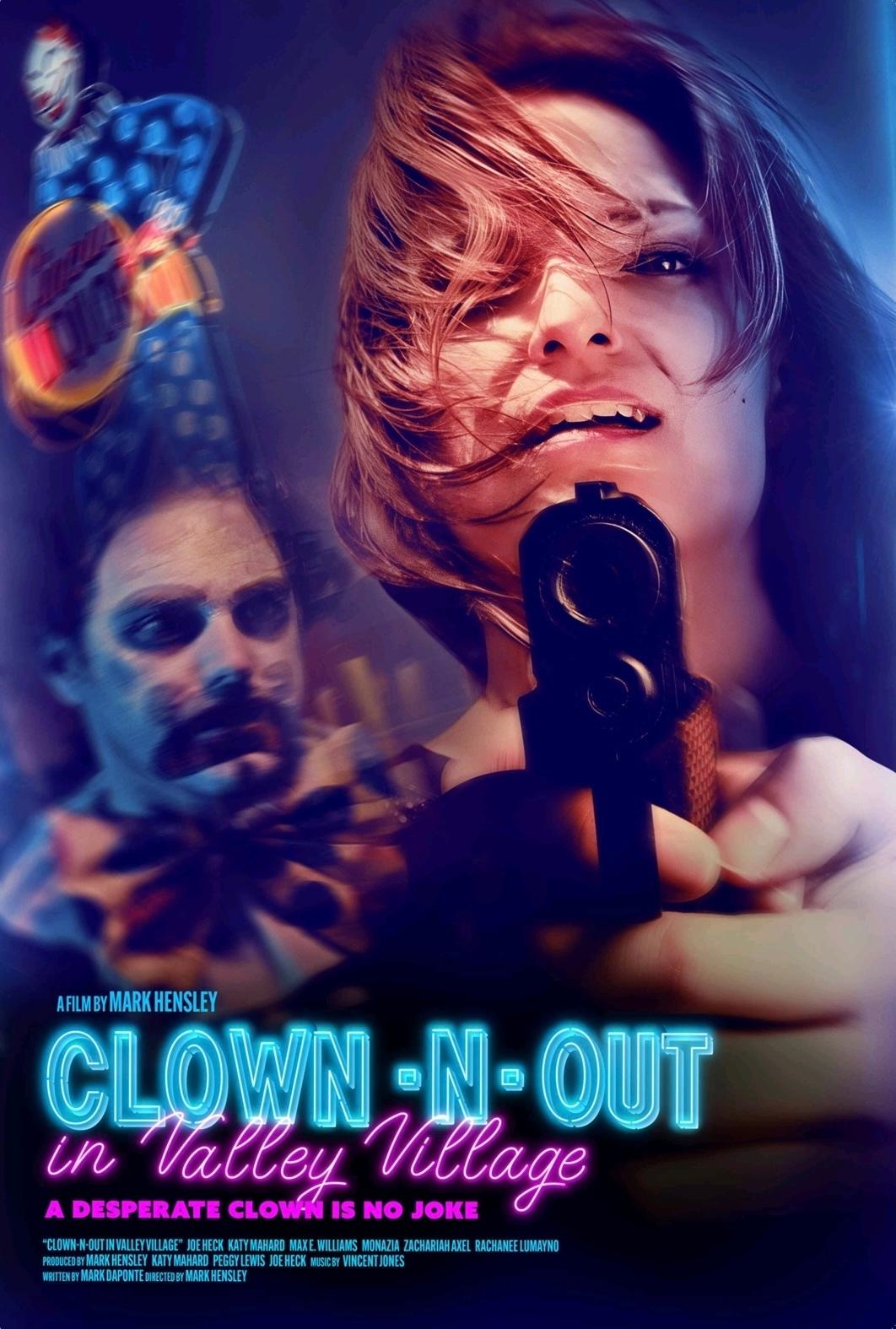
Watch Clown N Out in Valley Village now on BlockReel →
> Want to join the conversation? Mark has offered to do a live Q&A with the BlockReel community. Sign up for our newsletter to be the first to know when it's scheduled (and future filmmaker sessions like it).
---
The Pivot: From Frustrated Producer to Auteur Director
Hensley didn't wake up one day and decide to direct a feature. He earned it through 12 short films over four and a half years, each one a stepping stone toward understanding what he needed to know. His path to filmmaking was anything but linear. Born in Streator, Illinois, Hensley moved to the Netherlands at age six with his family, developed a passion for music as a teenager, and returned to the US at twenty-three to study at the College for Recording Arts in San Francisco. He interned at the legendary Plant Studios in Sausalito, earned a platinum record for engineering the 4 Non Blondes hit "What's Up," and eventually transitioned into audio post-production for film and TV after relocating to Vancouver (where he met his wife Peggy). His work as a re-recording mixer earned eight Canadian Sound Award nominations and three wins before he moved to Los Angeles in 2008, where he collected three CAS Award nominations, three Emmy nominations, and an Emmy win for Genius: Picasso (2018). That technical mastery was never in question. It was frustration that gave him vision.
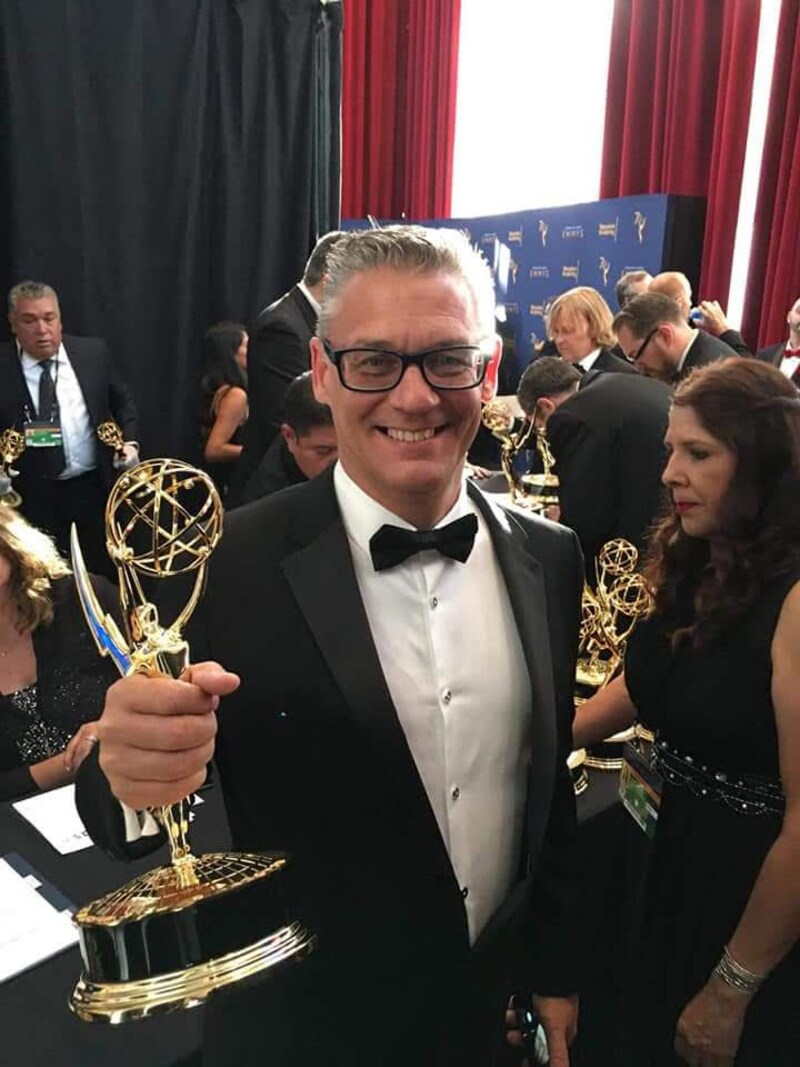
"I made 12 short films before I made my feature because they were all stepping stones, part of the big picture of meeting people, building up my own circle so I could make a feature," he explained. This wasn't film school theory. This was systematic skill acquisition, the same approach he'd used in music production for 30 years: watching professionals in mixing rooms, understanding why they made specific choices.
The turning point came after a 2016 short film he produced (written by Peggy) got shelved because he wasn't happy with the final product. Most people would have moved on. Hensley decided he needed complete control. Not because he was a control freak, but because he finally understood something fundamental: technical expertise means nothing if you can't see the whole vision through from script to final grade.
"My goal as I move forward, the number one thing I would like to be able to have is a proper colorist to do my future projects," he admitted. "Because oh my God, I spent so much time going back and fixing things. I probably spent about 1,500 hours coloring it. I'm not kidding."
That's not a typo. 1,500 hours. On a $4,000 film. Because Hensley understood what most micro-budget filmmakers miss: the studio isn't gonna make a good record for you. The amount of time you can spend getting things right is what's gonna make a good record for you.
---
The Writing Process: Facebook to Final Draft (Via Table Reads in an LA Apartment)
When Hensley decided to make his feature, he did what any smart no-budget filmmaker would do: he posted on Facebook writers groups. "I'm doing a no budget feature. I need something written for low budget. We have no money, but you'll get a credit."
He got a couple of offers. The script he chose had a strong concept, but it came with baggage: 200 pages of dialogue, misogynistic undertones that "wouldn't play now," and a lead female character who was supposed to wear lingerie for the entire film "like 1980s frat boy movies."
So Hensley, his wife Peggy (a writer), and his two lead actors (Joe Heck and Katy Mahard) did extensive rewrites. Multiple table reads. Location changes. Dialogue overhauls. They cut the script down to shootable length. They added the entire desert sequence. They removed romantic subplot tropes that would have felt cliche. If you're approaching your own screenwriting rewrites, Hensley's iterative table-read process is worth studying.
💡 Pro Tip: Finding scripts through social media is viable but carries risk (credit disputes, ownership ambiguity). If you go this route, get the rights in writing before you shoot a single frame. A simple option agreement costs nothing but protects everyone.
And then, the night before shooting the climactic desert scene, they changed the entire ending.
"The original ending was completely different," Hensley revealed. "It was supposed to be this drawn-out Mexican standoff between the three of them. And we all just looked at each other and said, no, this needs to hit harder."
They got rid of nearly all the dialogue. Made the resolution quick, visceral, and unexpected, because in real life, these moments do not play out like movie tropes.
"My big thing for the film was staying away from typical tropes," he explained. "I wanted every scene to defy what you think is coming. Characters don't behave the way genre conventions tell you they should. There are no drawn-out standoffs, no predictable romantic arcs. The ending will surprise you, and I'd rather let the film do that work."
This flexibility (this willingness to kill your darlings right up until the cameras roll) became Hensley's secret weapon. And it was only possible because of how he structured production.
---
Production: The 12-Month Guerrilla Shoot That Changed Everything
Here's where Hensley's approach diverges radically from conventional wisdom. Instead of blocking out 6 to 10 shooting days and grinding through a shot list with an exhausted crew, he shot scene by scene over 12 months, whenever actors were available.
"I learned this from my short film," he said. "I didn't want to wrangle a crew on that type of schedule because I wasn't paying anyone. So I can't expect people to keep showing up for free. If people want to come help, great. But I'm not putting the expectation on them."
The Production Model: Time as the Ultimate Resource
The Schedule:
The Gear Stack:
| Category | Equipment | Why It Matters |
|---|---|---|
| Camera | Panasonic S1H | Full-frame, dual-ISO cinema body in mirrorless form |
| Recorder | Blackmagic Video Assist | Unlocks BRAW 3:1 recording from the S1H |
| Codec | Blackmagic RAW 3:1 | Near-lossless RAW with manageable file sizes, massive color grade latitude |
| Lenses | Sirui Venus series | Affordable cinema-quality glass with character |
| Filters | Glimmerglass 1 | Softens digital harshness, adds filmic halation to highlights |
| Lighting | Single LED panel + cube lights | Noir aesthetic justified minimal setup |
| Post | DaVinci Resolve | Industry-standard color and edit (free version available) |
- $4K film production budget (actual production costs)
For anyone trying to build a realistic micro-budget, Hensley's distinction between production budget and accumulated gear investment is critical. The $4K covered actual shoot costs. The $10K represents years of strategic equipment purchases across a dozen short films.
SAG Micro Budget Agreement: How Hensley Got Professional Actors for $4K
One detail that makes this production model viable at a professional level: all actors worked under a SAG low-budget agreement. SAG-AFTRA offers several tiers of agreements designed for independent productions at various budget levels, each allowing deferred or reduced pay for SAG actors (significantly lowering or eliminating upfront talent costs). These agreements give actors union protections while making professional casts accessible to indie filmmakers who would otherwise be priced out.
The specific tier and its requirements (budget thresholds, exhibition restrictions, and content limitations) vary, so filmmakers should review the current agreements directly with SAG-AFTRA. For a comprehensive breakdown of union agreements and compliance across SAG, IATSE, and other guilds, see the Union & Guild Production Guide.
In Hensley's case, this type of agreement legitimized his $4K production, gave his actors union protections, and eliminated the upfront talent cost that kills most micro-budget projects before they start.
The Freedom This Created:
After each shoot, Hensley would take footage home, edit it together, and show the actors. "I told them, if there's things you don't like or if you think a performance wasn't as good as it could be, let me know because we will reshoot things we don't like."
They did this on multiple occasions. That iconic shot of the clown by the fireplace with Kat's leg and face in the foreground (inspired by The Graduate poster). They reshot it because what Hensley had in his head didn't match what he captured.
"Even though it's just one simple shot, it is important," he said. "So we reshot it and it looked cool."
This iterative approach also allowed for location flexibility. The phone booth scene (one of the film's most visually striking moments with that overhead orange light) wasn't in the original script. Hensley found the location while getting his tires changed, ordered a phone receiver on Amazon, and rewrote the scene to happen there instead of in the apartment.
"I was constantly looking for ways to get the script out of the apartment," he explained. "In the original script, it nearly all takes place in one location. I wanted it to not feel like an indie film shot in one apartment."
💡 Pro Tip: This iterative production model works when you ARE the crew and your actors have flexible schedules. If you have 5 collaborators volunteering weekends, a compressed 10-day shoot may be more respectful of their time. The lesson is not "shoot for 12 months." The lesson is: if you control the timeline, iteration becomes your quality multiplier.
The Hidden ROI: Cross-Departmental Fluency and Creative Authorship
Hensley did not arrive at this feature cold. Twelve shorts over 4.5 years built progressive fluency across writing, cinematography, lighting, editing, color, and sound. By the time he shot Clown N Out, he was not learning from scratch. He was operating at scale with skills refined project by project. That cumulative knowledge is the foundation of genuine creative authorship.
You can hire top talent at every position, but if you are the conductor of the orchestra, you will be the bottleneck wherever your understanding is superficial. A director who has personally wrestled with color grading, sound mixing, and editorial pacing makes fundamentally different (and better informed) decisions than one who has only ever delegated. You can evaluate a colorist's work because you have graded footage yourself. You can give a DP meaningful direction because you have wrestled with exposure and composition. You can push back on an editor's cut because you understand pacing from the inside. Every creative choice comes from understanding, not guesswork.
This is not about doing everything yourself forever. Hensley himself says his number one goal for future projects is to hire a proper colorist. The point is to build the knowledge base first, so that when you do hire specialists, you are an informed collaborator and true author of the work, not a passive observer hoping it turns out right.
---
Cinematography: Feeling Over Perfection, Noir as Strategy
Hensley cites Ridley Scott's Blade Runner and classic noir films like The Third Man and Citizen Kane as major visual influences on the look of Clown N Out. But one of his biggest cinematography breakthroughs came from an unexpected source: the ending of The Fabelmans, when Spielberg's young alter-ego meets director John Ford.
"John Ford tells him, 'Look at those pictures. What do you see? Camera up, camera down. When you look straight on, it's boring.' That was a huge eye-opener for me. It taught me to focus on where the actual camera is angle-wise, because just a slight angle change makes all the difference."
MASTER STUDY: John Ford's signature use of low angles and dramatic framing wasn't stylistic flourish; it was visual storytelling. In films like The Searchers (1956) and Stagecoach (1939), Ford used camera placement to establish power dynamics, emotional weight, and mythic scale. Hensley internalized this principle: the angle IS the story.
The Noir Aesthetic as Micro-Budget Hack
Hensley made a strategic decision early on: shoot film noir. Not just because he loved the genre, but because noir aesthetics justified minimal lighting setups and allowed him to work guerrilla-style without permits.
"When we were shooting the scene where the hitman is walking up, that was lit with like a single LED panel way in the distance and another little cube light over the head of the bum sitting on the floor," he explained. "I could get away with minimal lighting because of the noir approach."
Composition Tricks That Sold the Budget Illusion
- Extreme angles: The hitman scene shot from the floor, gun pointing down at the camera
"I'm not scared of doing stuff that might be extreme," Hensley said. "Like literally being on the floor with the hitman pointing the gun down. But it just looks cool."
The Philosophy: Vibe Over Technical Perfection
"You shouldn't always focus so much on the perfection of something," Hensley insisted. "To me it's all about what's the feeling, what's the vibe you get. It's not always the most perfect, and that's okay."
💡 Pro Tip: This philosophy works specifically in noir, where shadows hide limitations and atmosphere forgives technical imperfection. If you are shooting a bright comedy or period drama, "feeling over perfection" still applies to performance direction, but your lighting needs to be more controlled. Genre choice dictates how much latitude you have.
This extended to his approach to shot lists. While he obsessed mentally about what he needed, he refused to write detailed camera movements in advance. This mirrors the philosophy behind strong director-DP alignment, where the visual language emerges from understanding theme rather than rigid pre-planning.
"The minute you show up on set, especially on micro-budget where you don't know the actual location, everything changes. Everything is out the window," he said. "I'd read an article about Roger Deakins where he said you have to be willing to throw all your planning out the window the day you show up on set."
MASTER STUDY: Roger Deakins, one of cinema's most celebrated cinematographers (Blade Runner 2049, 1917, No Country for Old Men), has spoken in ASC interviews about the tension between preparation and adaptability. His approach is not to abandon planning but to hold plans loosely enough that the reality of a location or a performance can redirect the visual strategy. Hensley's "mental shot list" approach echoes this principle, though it is worth noting that Deakins himself does extensive pre-visualization. The transferable lesson is not "skip planning" but "stay adaptable."
💡 Pro Tip: Mental shot lists are one filmmaker's preference, not universal advice. Many accomplished DPs (Deakins included) do extensive pre-visualization. The principle underneath is sound: stay adaptable. But for filmmakers who are not yet instinctive about composition, written shot lists remain valuable training tools.
The lesson? Know what you need. Know what would be a bonus. Focus ruthlessly on the former.
---
The Color Grade: 1,500 Hours of Obsession
Here's where Hensley's Emmy-winning technical background became both blessing and curse. For anyone building their own color grading foundation, Hensley's experience is both inspiring and cautionary.
"Colorist is the hardest thing there is of the entire process, from filming to finishing," he said flatly. "Coloring is by far the hardest."
The Scale:
"The way it was shot, I was doing a lot of changing and fixing in post," Hensley admitted. "A lot of times I had actors that were underlit. So I had to fix that. And as I was doing it, I was learning more and more. And so as I got further, I'm like, 'Now this looks really good. Now I've gotta go back and make the rest of it match.'"
The Strategic Advantage of Post-Production Mastery
"My goal isn't to go out and just shoot stuff because I know I can fix it in post," he clarified. "But I do know that when I've shot something and I look at it and go, 'Wow, I love the take, but there's this part that's still a problem,' I know it can be fixed. That's huge when you're limited with budget, time, or resources."
This is the unfair advantage of technical mastery. Not that you use it as a crutch, but that it expands your decision-making space.
For BlockReel filmmakers, his advice was direct: "The number one thing I'd want for future projects is a proper colorist." And here is the key insight: a professional colorist would not need 1,500 hours. The bulk of that time was Hensley learning the craft from scratch while grading. A skilled colorist with established workflows and muscle memory could grade a feature like this in a fraction of that time. The investment Hensley made was in education as much as in the film itself.
💡 Pro Tip: In Hensley's case, he was learning DaVinci Resolve while grading. If you already have Resolve skills or can hire even a junior colorist ($500 to $1,000 for a feature), this compresses dramatically. The takeaway is not "spend 1,500 hours." It is: post-production mastery is the micro-budget filmmaker's unfair advantage, however you acquire it. And those hours are not wasted even if you hire a colorist next time. They are hours building the technical fluency that makes you a better, more informed director.
---
Sound and Post: The Emmy Winner's Edge
Hensley's Emmy win for re-recording mixing on Genius: Picasso (2018) fundamentally shaped how he approached Clown N Out. Understanding the divide between sound editing and sound mixing is essential context for appreciating what Hensley brought to his own feature.
"I spent 30 years in music production and post-production sound, sitting in mixing rooms watching professionals make decisions," he explained. "I'd watch someone do something and ask, 'Why did you do that?' And they'd explain. That's how I learned, by watching the pros and understanding their reasoning."
He applied the same philosophy to editing Clown N Out: edit as you shoot, review with actors, reshoot anything that doesn't work, and never prioritize schedule over quality.
---
Directing: When to Kill Your Darlings (And When to Fight for Them)
After Kat's character throws up, there's a long dialogue scene where she sits on the stairs and Joe is in the kitchen. As they talk, Joe walks into the living room, sits on the edge of the couch, then moves closer to Kat, choreography that mirrors their emotional journey from strangers to reluctant allies.
Hensley had planned this meticulously. But when they arrived on set, his actors had blocked it differently.
"They're like, 'We spent a lot of time blocking this out together,'' Hensley recalled. "And I just said, 'No. This is not how we need to do this.'"
They argued. It was a "bone of contention." But Hensley held his ground.
"I said, and I hate to use this line ever, but I said, 'It's my film. I'm the director. Trust me.' Because what they didn't understand is that otherwise that entire living room scene would've been in the same location the whole time."
This kind of directorial conviction, the ability to align blocking with theme, is what separates filmmakers who merely capture performances from those who shape them.
"Everything was fine in the end," Hensley laughed. "They're really good friends now."
---
The Distribution Nightmare
After finishing Clown N Out, Hensley started the festival circuit. The response was strong. Audiences assumed it cost 50 to 100 times its actual budget.
Then came the distributors.
The Aggregator Problem
"Unless your distributor is gonna promise you even a limited theater run, there's no point having a distributor unless they're gonna pay for marketing," Hensley said. It's a frustration shared across independent film: aggregators and distributors take significant cuts (sometimes 50% or more before platform fees), yet rarely provide the theatrical exposure or marketing spend that would justify their share.
Hensley isn't anti-distributor. His own film is available on Apple TV and other platforms through aggregation services, and he understands the operational costs involved. But the math has to make sense for creators.
The broader industry pattern is troubling. Stories circulate of contracts as long as 17 years, with language that essentially signs away all creative control. The recent controversy around actress Jennifer Esposito and Quiver Distribution illustrated another common problem: distributors acquire rights, then fail to market films while preventing creators from reclaiming them.
The core question for independent filmmakers isn't whether to use distributors, it's whether the deal actually serves the film.
Why Creator-First Platforms Matter
When I explained BlockReel's approach (decentralized ownership, 80/20 revenue split favoring creators, filmmaker-focused curation, community over algorithms), Hensley immediately understood the value proposition.
"That makes total sense," he said. "Because ultimately what filmmakers need isn't just a place to host their film. They need transparency, fair splits, and a community of people who actually give a shit about craft."
---
The Deep Dive: 10 Rules for Micro-Budget Filmmakers
1. Time Is Your Real Budget. Shoot scene by scene over months. Edit as you go. Reshoot what doesn't work. In Hensley's case, 12 months of patient iteration produced results that fooled audiences into thinking the budget was 100x higher. Caveat: this assumes you are the bottleneck. If collaborators are donating their time, being organized and shooting efficiently respects their commitment more than stretching across 12 months.
2. Teach Yourself Everything (But Know When to Hand Off). Learn enough to make informed decisions across every department. This is not about doing everything yourself forever. It is about building the cross-departmental fluency that transforms you from a delegator into a genuine author of your work. Hensley himself plans to hire a proper colorist for future projects, but those 1,500 hours mean he will brief that colorist as an informed collaborator, not a passive observer.
3. Build Through Stepping Stones. Make shorts before your feature. Each one should teach you something specific: one project for lighting, one for composition, one for sound, one for pacing. Hensley made 12 over 4.5 years. By the time he reached his feature, the accumulated fluency across writing, cinematography, editing, color, and sound converged at scale. The feature was not where he learned. It was where everything he had already learned paid off.
4. Feeling Over Perfection, Always. Emotional authenticity with imperfect lighting is art. In Hensley's noir, shadows and atmosphere forgave technical imperfection. But this latitude is genre-dependent. If you are shooting a bright comedy or period drama, "feeling over perfection" still applies to performance direction, but your lighting and production design need to be more controlled.
5. Genre as Strategy. Choose a genre that works with your limitations, not against them. Noir justified minimal lighting and guerrilla shooting. Horror similarly thrives on low budgets (atmosphere and tension cost nothing). Mumblecore uses naturalistic settings. Found footage turns the camera itself into a narrative device. The strategic question is: which genre lets your constraints become creative assets?
6. Rewrite Until the Night Before. Strong pre-production planning makes this kind of flexibility possible. Hensley changed the entire ending the night before shooting the climactic desert scene, and it made the film better. Caveat: if you are working with material from an outside writer, get the rights in writing before you shoot a single frame. A simple option agreement costs nothing but protects everyone.
7. Mental Shot Lists, Not Written Ones. Know what you need. Be ready to throw it all out when you see the actual location. This is one filmmaker's preference, not universal advice. Many accomplished DPs (Deakins included) do extensive pre-visualization. The principle underneath is sound: stay adaptable. But for filmmakers who are not yet instinctive about composition, written shot lists remain valuable training tools.
8. Post-Production Is Where Micro-Budgets Win. You can't out-spend Hollywood on set. But you can out-time them in post. For Hensley, this was the decisive advantage. And the hours invested in post are not just hours making the current film better. They are hours building the technical fluency (in color, editing, sound, and pacing) that makes you a more informed director on every project that follows. This connects directly to the authorship thesis: the deeper your post-production understanding, the better your on-set decisions become.
9. Distribution Is About Ownership, Not Access. Platforms that prioritize creator ownership aren't just nice; they're economically rational. Hensley's experience with aggregators and distributors taking 50%+ while providing minimal marketing reinforces the case for creator-first distribution models.
10. The Film Is a Portfolio Piece, Not a Lottery Ticket. Put your hopes on what doors it will open. Hensley is not waiting for Clown N Out to generate passive income. He is actively using it as a calling card to pitch Greek production companies on his next project (a romantic comedy). Three weeks after our conversation, he was walking into meetings with a finished feature as proof of concept. That is the real return on a $4K investment.
---
What's Next for Mark Hensley
Hensley has already created two short videos documenting his guerrilla filmmaking process for other creators, a sign of how seriously he takes paying it forward. Beyond that, he is actively developing two new projects:
1. The Greek Rom-Com with the Corfu couple (actively pitching Greek production companies)
"I love helping filmmakers," he said. "That's why I made those shorts about my process. Because I want people to know: if I can do this, you can too. You just have to be willing to put in the time."
> Don't miss Mark's upcoming Q&A. We're scheduling live filmmaker sessions where you can ask questions directly. Subscribe to the BlockReel newsletter so you never miss one.
---
The Takeaway
Mark Hensley's journey from 12 shorts to a feature debut streaming on three platforms isn't a fairy tale. It's a case study: trade speed for time, trade perfection for feeling, trade gatekeepers for community, trade hope for strategy.
If you're a filmmaker reading this and thinking, "I could never make a feature for $4K," you're right. You can't. Not unless you're willing to put in the time, the effort, and the patience it takes to learn and master every aspect of your craft.
But if you're willing to do that, Mark Hensley just showed you it's possible.
---
Connect with Mark Hensley
Want to see more of Mark's work or reach out directly? Find him here:
- 🌐 markhensley.tv — Portfolio, reel, and project updates
---
© 2026 BlockReel DAO. All rights reserved. Licensed under CC BY-NC-ND 4.0 • No AI Training.