Anamorphic Lenses Are Back: Why DPs Choose Scope
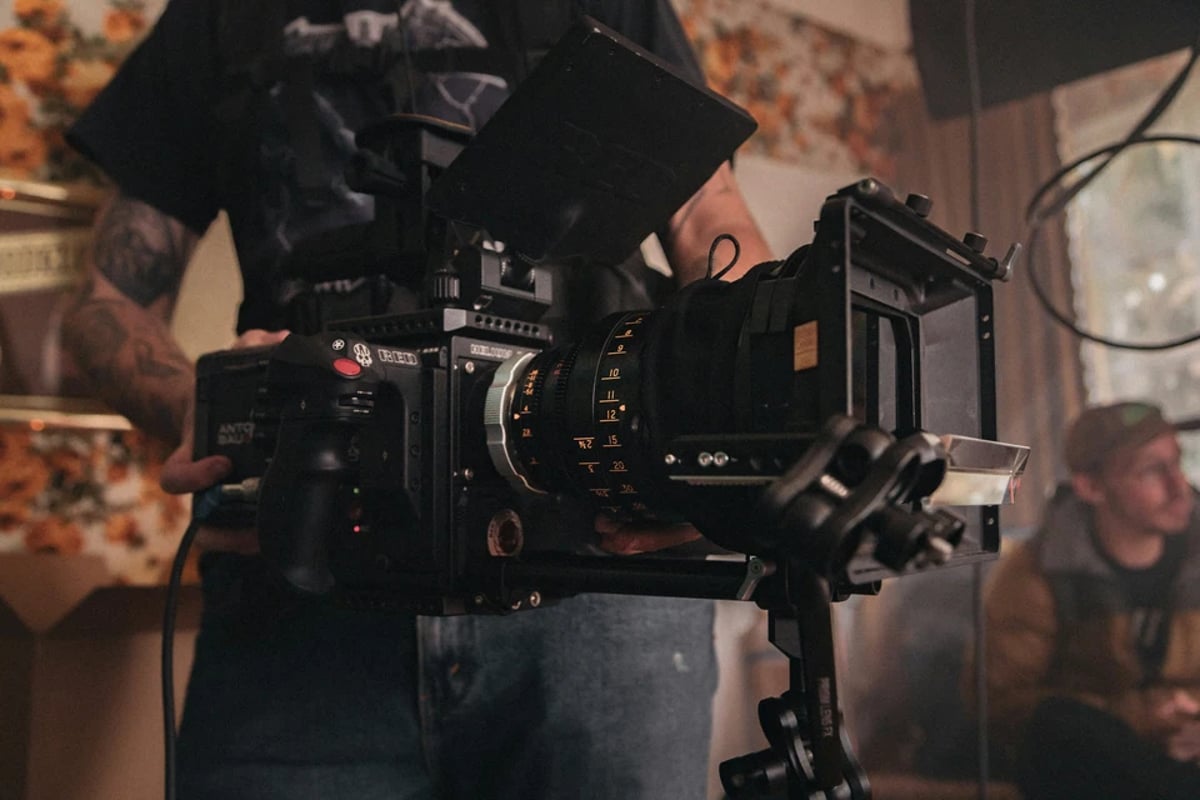
The industry's cyclical nature often brings methods and aesthetics back into vogue, but few have returned with the renewed embrace we're currently seeing for anamorphic lenses. For decades, anamorphic was the gold standard for widescreen cinema, defining the look of countless classic films. Then, for a period, it seemed to cede ground to spherical optics, especially with the rise of digital acquisition. But anamorphic is back, and it's not just nostalgia driving its resurgence. This isn't about chasing a "vintage" look for its own sake; it's about a conscious artistic choice that actively shapes visual storytelling.
My years as a camera assistant (and frankly, the countless hours breaking down optical paths and negotiating backfocus) instilled in me a deep appreciation for the physics and artistry behind different lens systems. And what we're seeing now with anamorphic isn't simply a return to an old format. It's a re-evaluation of its unique characteristics and how they can serve modern narratives, often in conjunction with contemporary digital sensors.
Back in the day, anamorphic was largely a practical solution for achieving a wide aspect ratio (typically 2.39:1) on standard 35mm film stock, which inherently had a 4:3 or 1.33:1 gate. The anamorphic element would squeeze the image horizontally onto the film and then unsqueeze it during projection. This optical trick created that distinctive widescreen grandeur without wasting film real estate. But this optical compression and decompression came with a specific set of visual characteristics that became integral to the "cinematic" look of the era.
So, why the renewed interest today, when digital sensors are often wider than film gates and offers like Open Gate give us ample creative freedom? It comes down to those inherent characteristics that anamorphic lenses impart that spherical glass does not. It's less about the aspect ratio (which can be achieved with spherical lenses and cropping) and more about the optical peculiarities that define the anamorphic image.
The Signature Anamorphic Aesthetic
Understanding the appeal means breaking down these distinct visual traits. These aren't defects; they're features, harnessed by DPs to evoke specific moods and textures:
* Distinctive Lens Flares: This is perhaps the most immediately recognizable anamorphic attribute: those elongated, horizontal streaks of light. Unlike spherical flares that are typically circular or polygonal, anamorphic flares stretch across the frame. They can be subtle streaks or bold, vibrant lines, often blue or amber. These aren't just aesthetic embellishments; they serve as narrative tools. A striking blue streak can emphasize a streetlight in a dark alley, draw attention to a character's gaze, or simply add visual dynamism to a frame, creating a sense of energy or intrusion. Think of how often these flares become part of the composition, rather than just extraneous phenomena. * Unique Bokeh (Oval Out-of-Focus Elements): Another hallmark is the oval shape of out-of-focus highlights. Spherical lenses produce circular bokeh. Anamorphic lenses, due to their cylindrical elements, compress the out-of-focus areas vertically when unsqueezed, transforming circles into stretched ovals. This creates a more painterly, dreamy background blur that can profoundly impact depth perception and subject separation. This isn't a minor detail; it’s a subtle yet powerful effect that guides the viewer's eye and imbues the image with a particular softness or romanticism. * Organic Fall-Off and Depth of Field: Anamorphic lenses generally exhibit a shallower depth of field compared to spherical lenses at the same T-stop, particularly in the vertical plane. This, combined with their wider horizontal field of view for a given focal length (because of the squeezing), creates a unique sense of dimensional space. The background falls away more dramatically, isolating subjects and drawing focus, which can be incredibly effective for portraiture within a wider landscape. There's an almost three-dimensional pop to subjects in focus, making for a truly immersive viewing experience. * Subtle Barrel Distortion and Edge Characteristics: While modern anamorphic designs have minimized extreme distortion, older or purposefully designed anamorphic lenses can exhibit a subtle barrel distortion that slightly bends vertical lines at the edges of the frame. This isn't always desirable, but when used intentionally (or embraced as part of a lived-in aesthetic), it can add a certain analog charm or sense of heightened reality. Edges can also exhibit more swirly or softer characteristics than the clinical sharpness of some spherical lenses. This isn't about imperfection; it's about character. Like a fine chef choosing a specific ingredient for its unique flavor, cinematographers choose specific lenses for their unique optical "taste."
Beyond the "Look": Practical Considerations and Creative Intent
The resurgence isn't just about the eye-catching flares or oval bokeh. It's also about how these optical qualities influence the entire filmmaking process, from blocking and framing to lighting and visual pacing. When a DP opts for anamorphic, they're committing to an aesthetic that fundamentally alters how they approach composition.
* Compositional Discipline: Shooting anamorphic demands a different kind of compositional discipline. The inherent widescreen aspect ratio forces filmmakers to think horizontally. It encourages wider shots that encompass more of the environment, lending itself well to ensemble scenes or showing characters in relation to their surroundings. This isn't a limitation; it's a creative constraint that can lead to more intentional and often more expansive visual storytelling. You're forced to consider the entire frame and fill it meaningfully. * Character and Environment: Many cinematographers choose anamorphic when they want to convey a sense of grandeur, isolation, or epic scale. It naturally lends itself to stories that explore sweeping landscapes, or for dramas where the environment plays a significant role in defining the characters. The ability to place a character small within a wide frame, yet still draw attention to them with selective focus and beautiful bokeh, is a powerful tool. * The Digital Workflow Integration: While anamorphic was born in the film era, its integration with digital cameras has been smoother than some might expect. Modern digital sensors (especially those with higher resolutions and larger physical sizes like 4K or 6K full-frame) provide ample resolution for desqueezing and post-production manipulation. New anamorphic lens sets are also designed with digital acquisition in mind, often offering improved sharpness, less egregious distortion, and better consistency across focal lengths, while still retaining those coveted anamorphic characteristics. This melding of classic optics with cutting-edge sensors offers a truly unique palette. * Cost and Complexity: It's also important to acknowledge that anamorphic is not always the easiest or cheapest route. Anamorphic primes and zooms are typically more expensive, heavier, and slower (less light transmission, often T2.8 or T4 as the widest stop) than their spherical counterparts. Focusing can be more challenging due to the optical design, and often requires more experienced 1st ACs. Lighting also requires extra consideration, as the unique flaring characteristics mean sources must be placed very intentionally if they are to be in-frame or close to it. But for many, these trade-offs are well worth it for the distinct aesthetic payoff. I've been on sets where the entire lighting plan revolved around either embracing or meticulously avoiding those flares. It's a commitment.
Evolution and Accessibility
The resurgence has also been fueled by manufacturers responding to demand. We're seeing more anamorphic lens options now than in years past, from high-end cine primes from manufacturers like ARRI, Cooke, and Hawk, to more accessible options from companies like Atlas Lens Co., Laowa, Sirui, and Vazen. This diverse range means that anamorphic is no longer solely the domain of mega-budget studio pictures. Independent filmmakers and those with more modest resources are finding ways to incorporate this aesthetic into their work. This democratization of anamorphic optics is a significant factor in its broad appeal. For a full primer on formats, squeeze ratios, sensor pairing, and on-set workflow, see our Anamorphic Filmmaking: The Definitive Guide for Serious Filmmakers. Pairing that with our Lens Selection Mastery: A Complete Guide for Cinematographers will help you decide where anamorphic actually serves the story (and where spherical is the smarter call).
Furthermore, post-production tools have become incredibly adept at handling anamorphic footage. Desqueezing is now a standard, simple process in most NLEs and grading software. The myth that anamorphic is overly complex or time-consuming in post has largely been dispelled, making it a more viable choice for a wider range of productions.
The Enduring Appeal
Ultimately, the resurgence of anamorphic lenses speaks to a deeper desire in filmmaking: the pursuit of a distinct, handcrafted visual language. In an era where digital acquisition can sometimes lead to a perception of visual uniformity (though this is often a product of approach, not the medium itself), anamorphic stands out. It offers a tangible, optically inherent character that is difficult to replicate through digital manipulation alone.
It's a lens choice that communicates a clear artistic intention from the outset. When a DP and director choose anamorphic, they're not just picking an aspect ratio; they're embracing a suite of optical traits that will profoundly shape the viewer's experience. From the sweeping horizontal compositions to the ethereal out-of-focus elements and the energetic lens flares, anamorphic lenses provide a sophisticated visual vocabulary that continues to resonate with audiences and filmmakers alike. It’s an embrace of optical character, a nuanced approach to visual storytelling that prioritizes artistry over clinical perfection. And that, in my book, is always worth the extra effort.
For those deep in the weeds of picture quality, understanding how these optical characteristics translate onto different sensors and how best to manage them during acquisition and post is paramount. It’s a delicate balance of art and science, making sure the squeeze looks just right, and the beautiful aberrations aren’t mistaken for errors. Speaking of error monitoring, I often think back to the rigorous technical checks needed to ensure consistent image quality. For more on that, you might find this article on QC for Picture: Dead Pixels, Banding, Cadence, and Artifact Hunting useful in how different aspects of image integrity are maintained. The intentional 'artifacts' of anamorphic are a world apart from technical errors, but both require a keen eye.
The decision to shoot anamorphic is a deeply creative one, impacting everything from the mood of a scene to the way a set is lit. It’s a commitment to a particular vision, and one that is once again proving its enduring value in the evolving toolkit of professional cinematography. The aesthetic distinctiveness of anamorphic, once a practical necessity, has been resurrected as a powerful artistic choice, and it's a testament to the fact that sometimes, the old ways, when thoughtfully applied, can still provide the freshest perspective.
---
© 2026 BlockReel DAO. All rights reserved. Licensed under CC BY-NC-ND 4.0 • No AI Training. Originally published on BlockReel DAO.