Blackmagic Camera 10.2: PYXIS 6K PDAF & Cloud
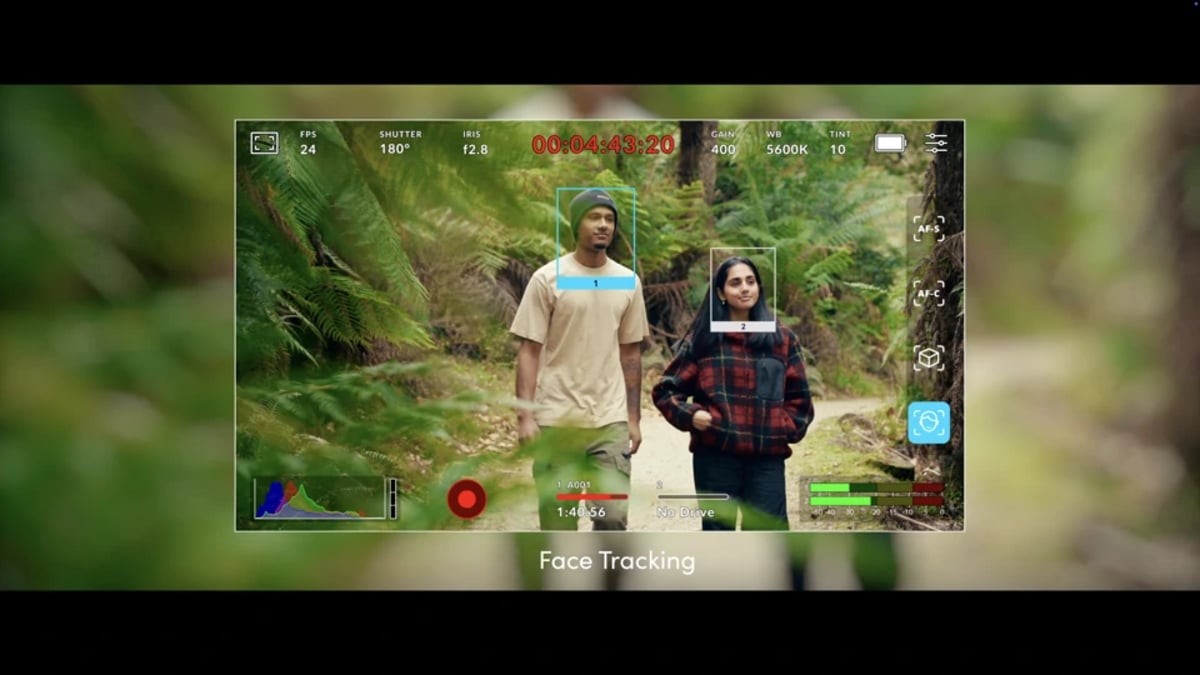
Remember relying on focus rollers and marked lenses for every shot? Or the days when pulling focus often came down to pure instinct and a deep breath? We’ve all been there. While I'm still a firm believer that critical focus is a craft mastered through years of dedicated practice, modern productions sometimes demand speed and precision that only advanced automation can provide. That's why Blackmagic Design’s formal release of phase detect autofocus (PDAF) for the PYXIS 6K, via the Blackmagic Camera 10.2 update, marks a notable evolution for their camera line. It moves this capability from beta testing to a stable, public feature, a crucial step for any professional tool.
This update isn't just about autofocus; it also integrates Blackmagic Cloud stream routing into the PYXIS 6K. For productions that need to push live feeds efficiently, this could streamline workflows significantly.
Phase Detect Autofocus: Stepping Up Stability
Blackmagic Design has been steadily integrating PDAF into its cameras, and the PYXIS 6K was always slated to receive it. The anticipation wasn't unfounded. Phase detect autofocus works by using specialized pixels on the imaging sensor itself (or a separate sensor, in some DSLR designs) to calculate object distance. This direct measurement is inherently faster and more accurate than contrast detection, which relies on maximizing image contrast and often "hunts" back and forth to find the sharpest point.
For cinematographers coming from systems like Sony's alpha series or Canon's Dual Pixel AF, the promise of reliable PDAF on a Blackmagic body has been a significant point of discussion. The PYXIS 6K, sharing the same full-frame 6K Bayer sensor as the Cinema Camera 6K, was a natural candidate. Blackmagic initially introduced PDAF to the PYXIS 6K in a test build (v10.0.3) back in March. This typical development cycle (beta testing, feedback, refinement) underscores a practical approach to feature deployment, allowing power users to kick the tires before a wider release.
What does this mean in practical terms on set?
The Blackmagic Design announcement via X (formerly Twitter) explicitly states: "Blackmagic Camera 10.2 Update! Adds phase detect autofocus and support for Blackmagic Cloud stream routing to Blackmagic PYXIS 6K." This isn't just a rehash of older beta features; it's a confirmed, stable release.
Blackmagic Camera 10.2 Update! Adds phase detect autofocus and support for Blackmagic Cloud stream routing to Blackmagic PYXIS 6K. Download now from https://t.co/A0FjDhbW63 pic.twitter.com/avi0FodBeY
— Blackmagic Design (@Blackmagic_News) June 3, 2026
For years, Blackmagic cameras were largely seen as manual focus workhorses, celebrated for their image quality and RAW capabilities but often overlooked for their AF performance. This commitment to reliable PDAF changes that perception, opening up the PYXIS 6K to a broader range of professional applications where reliable autofocus is a benefit, not a compromise. It allows the operator to concentrate on framing and performance rather than constantly riding the focus ring.
However, it's crucial to understand that even the most advanced PDAF systems aren't a stand-in for a skilled focus puller, especially with complex camera movement or nuanced story-driven focus shifts. It's an assistive tool, not a replacement for human craft. For certain setups (e.g., highly controlled studio environments with precise marks, or using vintage glass that lacks electronic communication), manual focus remains the undisputed champion. But for a rapidly expanding array of shoots, particularly those on tighter budgets or with smaller crews, enhanced AF capabilities are undeniably valuable.
Blackmagic Cloud Stream Routing: Connectivity on Set
Beyond autofocus, the Blackmagic Camera 10.2 update introduces Blackmagic Cloud stream routing to the PYXIS 6K. This feature taps into the increasing demand for real-time collaboration and remote workflow on film sets and in live production.
Blackmagic Cloud is an ecosystem designed to connect different parts of a production workflow, especially in post-production with DaVinci Resolve. By integrating stream routing directly into the PYXIS 6K, Blackmagic is extending this connectivity to the production phase itself.
What does this mean for filmmakers?
This functionality speaks volumes about the evolving nature of production. The "digital darkroom" approach is slowly giving way to more interconnected workflows. The pandemic accelerated the adoption of remote collaboration tools, but technologies like Blackmagic Cloud aim to make these efficiencies standard practice, not just a contingency. Productions are increasingly global, and tools that facilitate high-quality, low-latency communication are crucial.
This stream routing is particularly impactful for specific types of filmmaking:
The elegance of this approach lies in its integration within the Blackmagic ecosystem. While third-party solutions for live streaming and remote monitoring exist, having these capabilities built directly into the camera firmware means a more streamlined, cohesive user experience, potentially with fewer points of failure.
The Broader Context: Camera Development Cycles
This 10.2 update for the PYXIS 6K reflects a broader trend in camera development: the continuous refinement and addition of capabilities through firmware rather than solely through new hardware releases. It’s a customer-friendly model that extends the lifespan and utility of existing equipment. For professionals who are constantly investing significant capital in gear, knowing that a camera can evolve over time through software updates is a considerable advantage. Just as RED V-RAPTOR Firmware 2.2 brought engineering refinements to that system, these Blackmagic updates prove that a camera's capabilities aren't static.
Blackmagic has a track record of iterative improvements. They often release a capable hardware platform and then steadily enhance its performance and feature set through software. This approach benefits users by allowing them to buy into an ecosystem that continuously improves, rather than feeling pressured to upgrade to entirely new hardware solely for software-based features.
The PYXIS 6K itself is a testament to this, using the established sensor technology of the Cinema Camera 6K but packaging it into a more modular box camera form factor (a strategy that paid off when the PYXIS 12K secured Netflix-approved status). Adding production-ready PDAF and integrated cloud routing enhances its versatility, making it a stronger contender in scenarios requiring both high image quality and advanced operational flexibility.
The inclusion of PDAF on the PYXIS 6K also bridges a gap for cinematographers who may be crossing over from other systems that have had advanced autofocus for years. While a purist might argue against relying on autofocus, the practical realities of many shoots dictate efficiency. Being able to quickly acquire focus on a run-and-gun setup or maintain focus during complex camera moves can be the difference between getting the shot and missing it entirely.
Ultimately, the Blackmagic Camera 10.2 update isn't just about two new features; it's about Blackmagic Design continuing to refine its professional camera offerings, proving that sophisticated capabilities can be delivered through strategic software development. For working filmmakers, these kinds of updates mean more reliable tools, more streamlined workflows, and ultimately, more time to focus on the creative vision. This is the kind of practical upgrade that genuinely impacts how we work on set.
---
© 2026 BlockReel DAO. All rights reserved. Licensed under CC BY-NC-ND 4.0 • No AI Training.