RED V-RAPTOR Firmware 2.2: Faster Boots, Tally Sync, ND
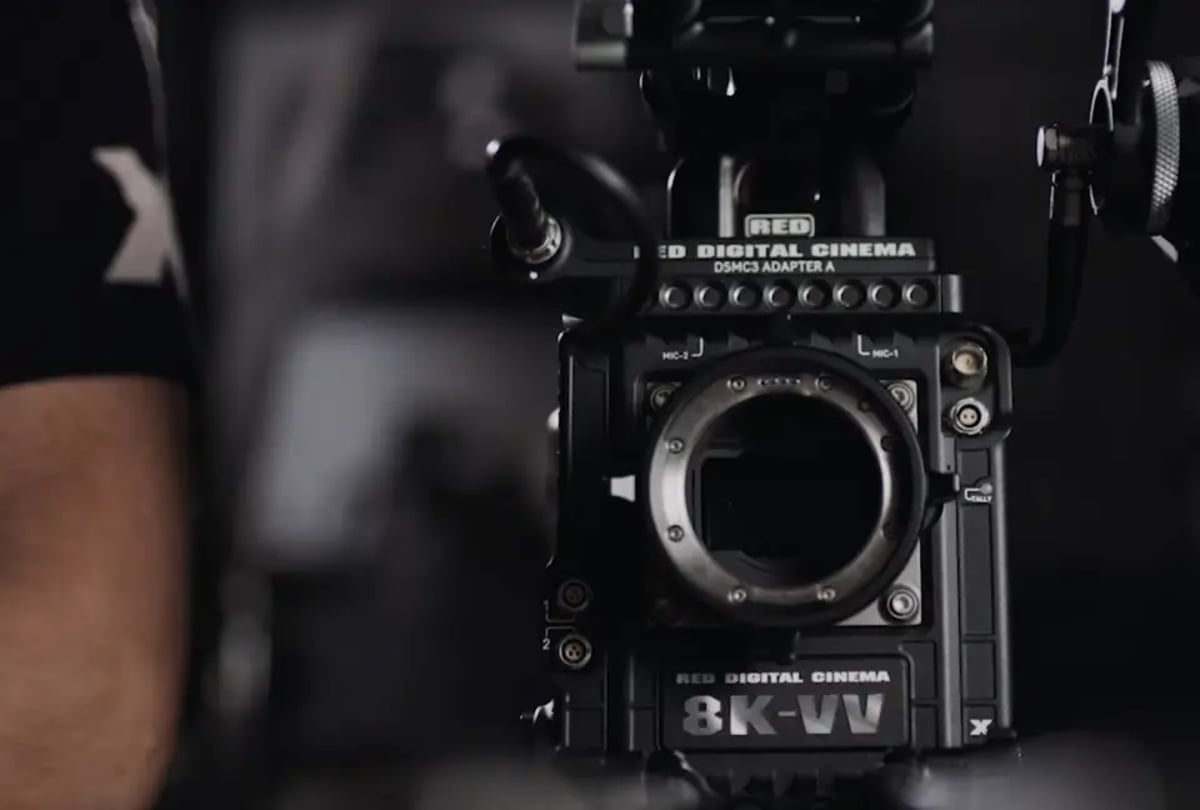
On-set, every minute matters. Time spent waiting for a camera to boot up, or wrestling with an external controller for a basic function, is time not capturing images. That's why minor-sounding updates can often have significant real-world implications. RED's Firmware 2.2 for the V-RAPTOR platform (including V-RAPTOR XE) introduces a suite of engineering refinements that target critical aspects of production across cinema, broadcast, and virtual production environments.
It's not about adding flashy new features for their own sake, but rather optimizing the core functionality and addressing workflow friction points. As outlined in the latest RED TECH episode featuring Cleigh Reed, this update focuses on power efficiency, monitoring and control, broadcast integration, expanded virtual production capabilities, and refined calibration tools.
Powering Up: Efficiency and Speed
One of the most immediate benefits of Firmware 2.2 is its impact on power and performance. RED states the update delivers "significant engineering refinements," including a reduced power draw of up to 5 watts. For DPs and camera assistants managing complex power setups, especially in remote locations or on Steadicam/gimbal rigs where every gram and Watt is scrutinized, a 5-watt reduction isn't trivial. Over a full shooting day, that translates to either longer run times from existing batteries or the ability to potentially swap to lighter battery packs. It’s a subtle but meaningful gain in operational efficiency.
Equally critical, and often overlooked until you’re in the heat of a production, are boot times. Firmware 2.2 promises 8 to 10 seconds faster boot times. Anyone who's been on a set waiting for a camera to come online after a battery swap or a system restart understands the value of those saved seconds. When a spontaneous moment needs to be captured, or when a quick technical check needs to happen between shots, those moments add up. This improvement directly addresses a common operational bottleneck, ensuring the camera is ready to record when the crew is ready to shoot.
Monitoring and Control: Streamlined Ergonomics
Ergonomics and intuitive control are paramount for camera operators and DPs. Firmware 2.2 brings improvements that aim to streamline how users interact with the V-RAPTOR. A key update is the ability to achieve smooth ND control directly via the DSMC3 touchscreen. Previously, complex ND adjustments might have required external controllers, adding another piece of equipment to manage and integrate. Bringing this control directly onto the camera's primary interface simplifies operation, particularly when speed is of the essence or when working with minimal crew. It's a small change that can significantly reduce fumbling and allow the operator to stay focused on the image.
Beyond ND, the update also includes improved focus peaking. While focus peaking has been a staple for years, continuous refinement is always welcome. Sharper, more accurate, or less distracting peaking can help operators achieve critical focus more effectively, especially with extremely shallow depth-of-field or in challenging lighting conditions. Furthermore, the ability to assign custom camera functions to monitor buttons is a practical addition. This level of customization allows operators to tailor the camera (and attached monitor) to their specific shooting style and the demands of the current production, putting frequently used functions literally at their fingertips without navigating through menus.
Broadcast Integration: Syncing with Live Production
The V-RAPTOR's capabilities extend beyond traditional cinema, increasingly finding a home in broadcast and live event production. Firmware 2.2 leans into this with a major addition: automatic record start/stop functionality triggered by external tally commands from video switchers. This is a significant step forward for integrating the V-RAPTOR cleanly into multi-camera live environments.
In broadcast workflows, precise synchronization and automated control are essential. Manually triggering record on multiple cameras can lead to missed cues or off-sync footage. By responding to tally commands, the V-RAPTOR can now function as a true component of a live production ecosystem, ensuring that recording starts and stops in perfect sync with the switcher's commands. This not only streamlines post-production (reduces the need for extensive sync work) but also minimizes potential human error on set, making the V-RAPTOR a more dependable option for live broadcast applications.
Virtual Production: Enhanced Phantom Track
Virtual production (VP) environments, particularly LED volumes, demand incredibly precise synchronization and dynamic control over camera metadata. RED's Phantom Track feature has been updated in Firmware 2.2 to include discrete shutter speeds and variable timing for the two tracks.
In simplest terms, Phantom Track allows for the capture of two distinct images (one for the main production and one for tracking data) from a single camera pass. The ability to now set discrete shutter speeds for these two tracks provides greater flexibility for managing motion blur, flicker, and exposure differences between the primary image and the tracking data requirement. Furthermore, variable timing for the two tracks allows for more flexible frame remapping. This is crucial for optimizing workflows in LED volumes, where the timing and presentation of virtual elements need to be perfectly aligned with the physical camera's perspective and movement. These refinements help to reduce artifacts, improve the accuracy of virtual camera movements, and provide VP supervisors with more granular control over the data fed into the real-time engine. Teams ramping up on LED stage techniques can get a wider view of the workflow in our overview of the Masterwork Films and MZed green screen virtual production course.
RED Connect and Calibration: Workflow Foundations
Beyond the headline features, Firmware 2.2 also brings improvements to foundational aspects of the RED workflow. The update deepens RED Connect integration for live R3D workflows. RED Connect facilitates the real-time streaming of raw R3D data, which is invaluable for certain live broadcast, virtual production, and real-time visualization scenarios. Enhanced integration suggests more stable performance, broader compatibility, or additional control options for those pushing the boundaries of live raw capture and processing. In a world where real-time analysis and immediate feedback are becoming more common, strengthening this pipeline is a strategic move.
Finally, the addition of built-in test patterns offers a practical, on-set calibration tool. DPs and DITs regularly need to verify display calibration, check for dead pixels, or ensure proper signal paths. Having standard test patterns (like color bars, resolution charts, or gray ramps) accessible directly from the camera eliminates the need for external pattern generators or fiddly setup procedures. This makes on-set quality control and display verification significantly easier and more consistent, ensuring what you see on your monitor accurately reflects what the camera is capturing. It's a small detail, but it speaks to a deeper understanding of the day-to-day challenges faced by camera teams. For more on ensuring consistent display quality, one might consider solutions like the ASUS ProArt Display OLED PA32USD: A 31.5-Inch 4K QD-OLED Aimed at Broadcast and High-End Post-Production.
The Sum of the Parts
What stands out about Firmware 2.2 isn't a single, monolithic feature, but rather a collection of targeted enhancements that collectively improve the V-RAPTOR platform's usability, efficiency, and integration into diverse production pipelines. From reduced power consumption and faster boot times for basic operation, to sophisticated tools for broadcast and virtual production, these updates address genuine needs expressed by working professionals. For filmmakers obsessed with detail and efficiency, these iterative refinements often matter more than entirely new product lines, a point we made when looking at how to choose your first cinema camera in 2026. They make the tools we already rely on work better, faster, and more reliably, which, in the relentless pace of production, is a critical advantage.
---
© 2026 BlockReel DAO. All rights reserved. Licensed under CC BY-NC-ND 4.0 • No AI Training. Originally published on BlockReel DAO.