Canon NAB 2026 Firmware: USB Control for C400, C80, C50
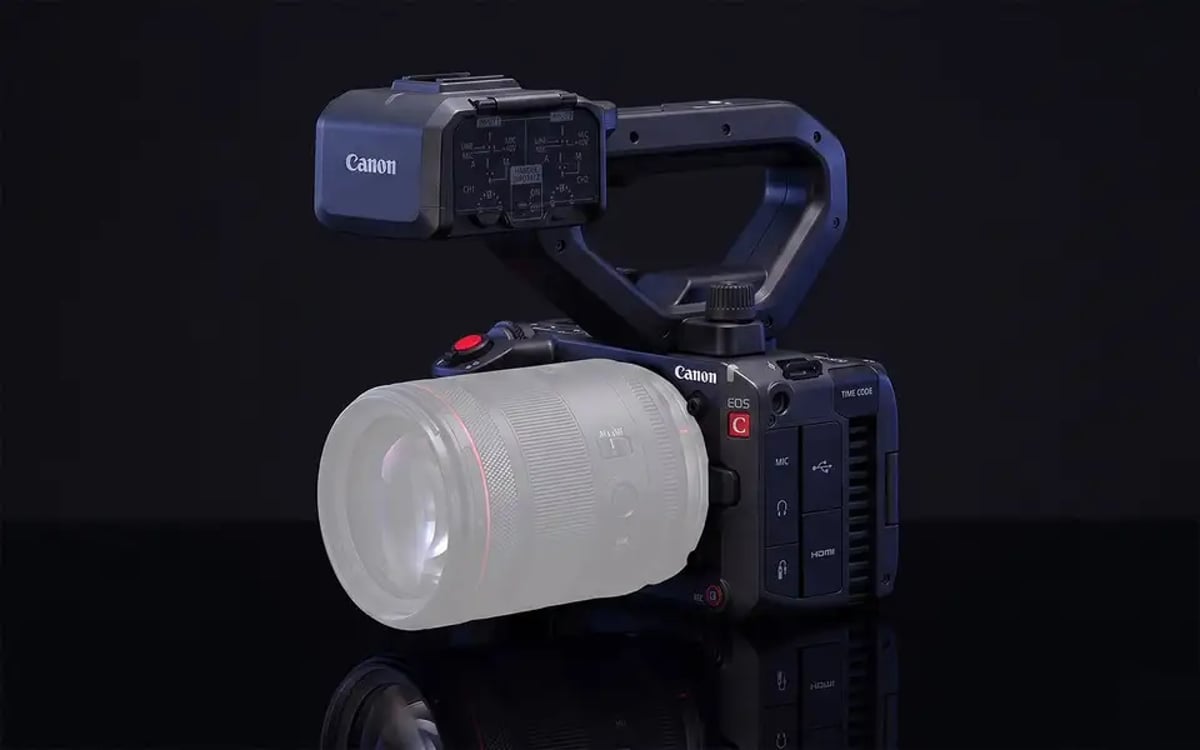
You know that feeling when a new camera drops and half the features feel beta, or a crucial piece of integration is just... missing? It is the reality of modern camera development. But there is also the satisfaction of seeing manufacturers actively addressing those gaps, refining the tools we use daily. Canon's NAB 2026 firmware suite, announced April 15, 2026 for the EOS C400, C80, C70, C50, and R5C cinema cameras, falls squarely into that second category. The updates push practical, workflow-centric enhancements that could make a tangible difference on set once they ship in summer 2026.
Let's cut right to it: the headline feature for the C400, C80, and C50 is a new USB control protocol. For anyone integrating these cameras into more complex setups, whether that is a gimbal rig, a DIT cart, or a broadcast studio, this is a significant improvement. Historically, controlling cinema cameras remotely often involved proprietary protocols, clunky serial cables, or Wi-Fi solutions that could be flaky under pressure. The move towards robust USB-based connectivity for critical camera functions is frankly overdue but very welcome. Trade press coverage at Newsshooter and Canon's own newsroom framed this primarily as a gimbal control play, which tracks with the rise of high-end stabilizers like the DJI RS 5 on professional sets.
Specifically, the new firmware allows USB to pass control data between the camera and compatible external devices for these operations:
- REC Start/Stop
This is not just about convenience; it is about control and efficiency. Imagine a shoot where your camera is mounted in an inaccessible position (a crane, a car mount, or a confined space) and you need to dial in exposure on the fly, or quickly trigger a shot. Relying solely on a video village monitor for framing, while another operator fumbles with camera-side controls, is a recipe for missed moments and frustration. With control over iris, shutter, and ISO over USB, an AC or DIT can now make precise adjustments from a connected controller, streamlining workflow and reducing miscommunication. Of course, this hinges on third-party manufacturers updating their gimbals and controllers to support the new protocol, but Canon's initiative here provides the foundation.
Specifics: Diving Into Each Camera's Updates
While USB control is the marquee shared improvement, each camera model also receives tailored adjustments worth noting. Canon has not published firmware version numbers yet; final version strings will appear when the downloads go live on Canon's support site in summer 2026.
#### Canon EOS C400 (Summer 2026)
The C400 is the only camera in the suite to receive Auto Exposure Ramping Compensation. This feature uses lens metadata to automatically adjust gain in real time, preventing the brightness loss that happens during zooms on lenses where iris ramping occurs. For live broadcast, sports, wildlife, and event coverage, this is the kind of quiet workflow upgrade that pays dividends every time the operator pushes in. Canon is positioning the feature alongside the newly announced CINE-SERVO 40-1200mm T5.0-10.8 lens, which uses the same metadata pipeline.
The C400 also receives the shared USB control protocol, the SRT auto-reconnection feature, and the updated level indicator color.
#### Canon EOS C80 (Summer 2026)
The C80 receives the shared improvements: USB control protocol for REC Start/Stop, Iris, Shutter, ISO, and Focus, SRT auto-reconnection, and the level indicator color change. Together, these enhancements make the C80 noticeably more useful in gimbal-mounted and multi-camera live workflows than it was at launch.
#### Canon EOS C50 (Summer 2026)
The C50 sees the most extensive list of updates, indicating Canon's commitment to refining its more compact, hybrid-capable cinema offering. Beyond the shared USB control protocol, SRT auto-reconnection, and level indicator color change, the C50 also gains the ability to apply and adjust View Assist during playback. This might seem minor, but if you are reviewing footage on set with a client or director who prefers a specific display LUT applied, being able to toggle that View Assist during review without diving through menus is a useful quality-of-life improvement. For DPs meticulous about their look, it helps keep on-set reviews consistent with the intended grade.
#### Canon EOS C70 and EOS R5C
Canon confirmed that the C70 and R5C are also part of the NAB 2026 firmware suite, primarily for lens compatibility updates tied to the new CINE-SERVO 40-1200mm. Detailed feature lists for these two bodies have not been published yet, and notably the new USB control protocol was announced only for the C400, C80, and C50.
The Bigger Picture: Workflow and Integration
These kinds of firmware updates, while not flashy "new camera" announcements, are the backbone of professional production. They directly address workflow friction points seen on countless sets. When you are dealing with tight schedules and even tighter budgets, anything that streamlines the interaction between crew and gear, or improves the reliability of data transfer and remote command, is invaluable.
The emphasis on USB-based control speaks to a broader industry trend towards more universal, high-bandwidth interfaces. Proprietary control protocols are clunky and expensive to integrate. Standardized connections simplify the ecosystem of devices that can talk to your camera, potentially opening up new avenues for custom controllers, specialized DIT tools, and easier integration with existing monitoring infrastructure. We have already seen monitor makers leaning into this, like SmallHD adding deeper Canon camera support to PageOS.
The SRT improvements across all three cameras also highlight the growing importance of efficient and reliable IP-based workflows. Whether it is for remote dailies viewing, live broadcasting, or delivering feeds to a distributed team, stable SRT streaming is becoming a must-have. Losing a feed during a critical shoot because of a network blip is disruptive; having the camera attempt automatic reconnection means one less fire to put out for the technical crew.
Canon is not alone in this push. Sony recently announced major firmware updates for the VENICE 2, BURANO, FX6, and FR7, and RED rolled V-RAPTOR firmware 2.2 with comparable workflow refinements. The whole tier is leveling up at once, which is good news for anyone shopping bodies right now (our 2026 cinema camera buying guide walks through how to weigh these factors).
In years on set, often the most frustrating issues are not about image quality, but about the minute operational glitches: a remote stop/start not working, a metadata field being incorrect, or a stream dropping at the wrong moment. These are the kinds of issues that can quickly snowball into significant delays. A manufacturer that actively listens and pushes out updates to fix these silent killers of production efficiency earns serious credibility. This is not about groundbreaking new sensors; it is about making the existing tools more controllable and more reliable in the demanding environment of a film set. For professionals running these Canon Cinema EOS bodies, summer 2026 cannot come soon enough.
---
© 2026 BlockReel DAO. All rights reserved. Licensed under CC BY-NC-ND 4.0 • No AI Training.