How HBO Costume Designers Turn Fabric Into Story
The subtle artistry of costume design often functions as an unsung hero, quietly underpinning character and narrative without overtly demanding attention. Yet, for an industry audience, examining the deliberate choices behind a garment reveals layers of storytelling as intricate as any camera movement or lighting scheme. Recently, at HBO’s Sketch-to-Screen panel, a cohort of seasoned costume designers peeled back the curtain, discussing the meticulous process of translating script to fabric, often navigating unforeseen challenges and legal roadblocks. Their insights underscore that, much like a well-composed frame, effective costume design is born from deep intention and a thorough understanding of a project's visual language. For a practical companion read, see our breakdown of costume design as character arc.
The Queen of Hearts: Kathleen Felix-Hager's Card Dress in 'Hacks'
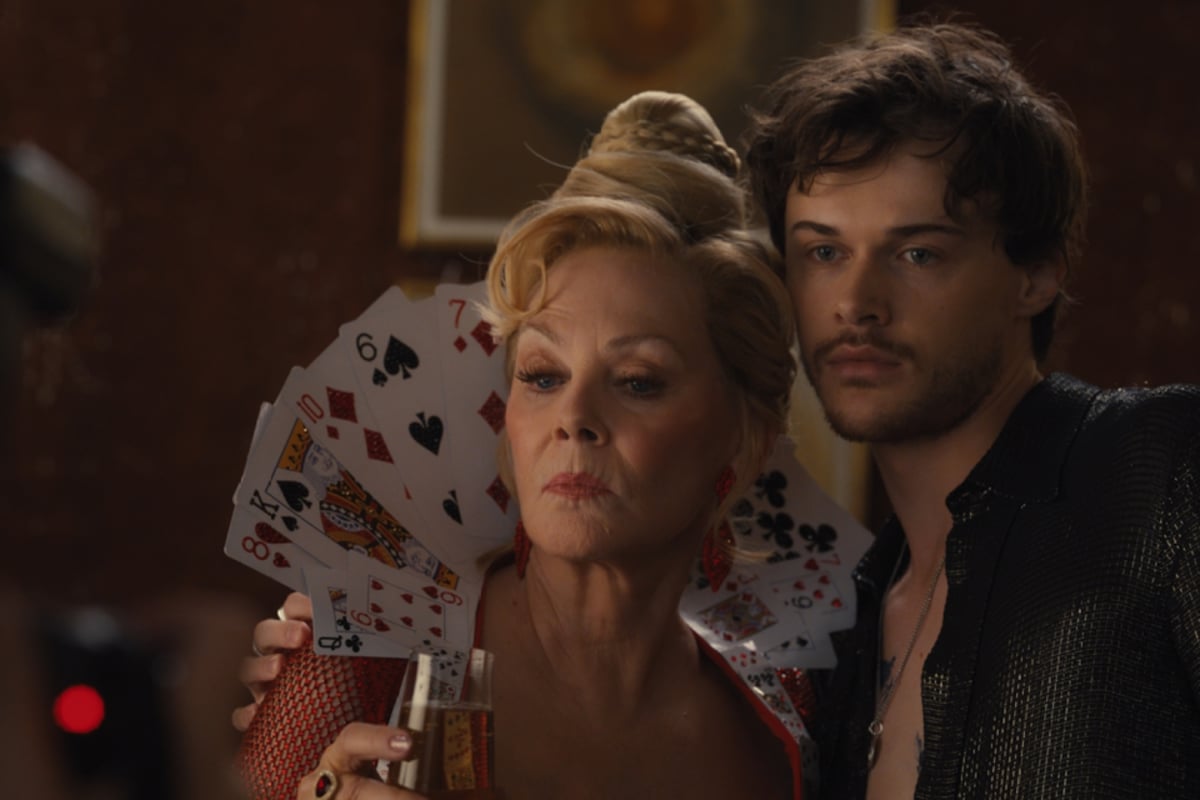
It’s rare for a single line in a script to ignite such a clear visual mandate, but for “Hacks” costume designer Kathleen Felix-Hager, the instruction was unmistakable: “Deborah shows up in a dress made of playing cards.” This directive, for Episode 3 of the show’s final season, presented a unique opportunity for direct, literal expression of character through attire. The image of the "Queen of Hearts," a figure of both regal authority and a touch of theatricality, immediately sprang to mind.
Felix-Hager capitalized on the early prep phase, engaging in detailed conversations with showrunners Lucia Aniello, Paul W. Downs, and Jen Statsky. This collaborative ideation is crucial, ensuring the costume not only reflects the script but also resonates with the overall directorial vision. The decision to craft a "Queen of Hearts"-inspired red dress was a culmination of these discussions, blending symbolic imagery with the narrative requirement.
The execution, handled by Rory Cunningham, Head of Workroom, speaks volumes about the hands-on craft involved in high-level costume fabrication. Rather than an abstract interpretation, the dress was constructed from actual playing cards, hand-stitched onto a three-piece ensemble comprising a corseted strapless gown, a bolero jacket, and a hook-on skirt. This tactile, almost sculptural approach, transforming everyday objects into couture, elevates the garment beyond mere costume to a piece of visual art that directly communicates Deborah's audacious character and her readiness to command attention. The integration of literal playing cards isn't just a gimmick; it's a bold material statement that mirrors the character’s larger-than-life persona and her calculated, yet flamboyant, approach to her public image.
Legal Labyrinths and Creative Constraints: Tom Broecker's 'The Comeback' Challenge
The path from script to screen is rarely without its obstacles, and these often force designers into ingenious creative detours. Tom Broecker, costume designer for "The Comeback," faced such a challenge when Valerie Cherish (Lisa Kudrow) was slated to play Roxie Hart in "Chicago" for the Season 3 opener. The initial brief implied a direct replication of the iconic Broadway costume. However, the legal landscape of intellectual property rights swiftly introduced a roadblock: copyright restrictions prevented the use of the copyrighted Broadway outfit.
Broecker's strategy highlights the invaluable nature of industry connections and problem-solving under pressure. His familiarity with a stage manager from the long-running "Chicago" production proved instrumental. This direct line to the source allowed for a collaborative brainstorming process, exploring alternatives within the show's aesthetic. Despite continuous hurdles, Broecker pursued an adaptation. He revisited the original 1975 designs by Patricia Zipprodt, creator of the initial "Chicago" costumes for Bob Fosse, and commissioned a version for Lisa Kudrow.
The subsequent legal adjustments, mandating further alterations to avoid infringement, pushed Broecker to refine the design beyond a mere imitation. This pressure ultimately enhanced the costume. As he explained, "We added more sparkle and that was better for the camera." This anecdote perfectly illustrates how production realities, particularly legal constraints, often become catalysts for creative enhancement. The "more sparkle" wasn't merely decorative; it was a pragmatic choice that optimized the garment for the demands of the camera, creating a more visually impactful, rather than simply accurate, costume. This iterative process of refinement, driven by necessity, often yields results superior to initial concepts, demonstrating true mastery of the craft.
Multiples of Meaning: Natasha Newman-Thomas's 'Euphoria' Wedding Dress
Sometimes, the narrative demands for a costume extend beyond a single, pristine appearance. For "Euphoria" costume designer Natasha Newman-Thomas, the bloody climax of Cassie (Sydney Sweeney) and Nate's (Jacob Elordi) wedding in Episode 3 necessitated a practical approach to design and fabrication. With Nate’s beating and dismemberment, the wedding dress was destined to be drenched in prop blood. Newman-Thomas realized a single, intricately designed dress would not suffice for the various takes and potential retakes involving special effects.
The logistical challenge was clear: "Cassie was supposed to get really covered in blood...We knew we had to make eight of the dresses." This isn't just about quantity; it's about maintaining consistency across multiple identical garments while working within budgetary parameters (the same discipline covered in our guide to wardrobe continuity systems for multiples and aging/breakdown). Her solution reveals a keen understanding of both production efficiency and character continuity. Instead of commissioning eight identical, complex dresses, Newman-Thomas ingeniously conceptualized a variation that maintained Cassie’s character while being more cost-effective to multiply.
She designed a longer version with a significant train for the initial ceremony sequences, followed by a shorter, less elaborate variation for the subsequent bloody scenes. This allowed for eight cheaper versions of the shorter dress to be produced. This strategic alteration demonstrates a pragmatic approach to costume design, where the demands of the narrative (a pristine wedding followed by carnage) and the constraints of the budget directly influence the design choices. The shift in length was not arbitrary; it served the dual purpose of accommodating the action and streamlining production, proving that necessity can, indeed, be the mother of sartorial invention.
Weaving Personal Histories: Millar's 'Half Man' and Ó Ríordáin's 'A Knight of the Seven Kingdoms'
The most resonant costumes often carry personal echoes or historical depth, subtly enriching the story for those who discern their layers. In the six-part limited series "Half Man," costume designer Millar faced a recurring motif: Niall (Jamie Bell) repeatedly preparing for his wedding to Alby, only to be interrupted by Ruben (Richard Gadd). For Niall's traditional Scottish wedding attire, Millar sought to embed a personal connection to the show's creator, Richard Gadd.
Her choice of the Gunn Tartan plaid (Gadd's clan) for Niall's kilt is a profound example of how costume can imbue a character with heritage and a hidden layer of authenticity. This Easter egg for the keen observer solidifies the character's background while honoring creative collaboration. Conversely, Ruben's unvarying head-to-toe black attire in these same scenes serves as a stark visual counterpoint. Millar notes how this contrast "cuts the atmosphere" and effectively demonstrates "how costume can change a tone, can change a mood, can help really help tell and sell a story." The costumes, in this instance, become a silent dialogue, highlighting the opposing forces within the narrative.
Similarly, Lorna Ó Ríordáin, costume designer for "A Knight of the Seven Kingdoms," integrated historical and familial nods into her work. When Egg's true identity as Prince Aegon V Targaryen is revealed, Ó Ríordáin subtly incorporated elements of the Scottish kilt. "I have a little nod to the Scottish kilt to show this is a clan family, and how deep it runs." This choice connects to the notion of entrenched lineage, a significant theme in the fantasy genre.
Ó Ríordáin's focus on texture for Egg’s full Targaryen house outfit further illustrates how material choices can build a world. Referencing the Targaryens' potential volcanic origins, she ensured "everything was considered as being of that surface and had a very harsh aspect to it." The description of "a shot of red and this molten lava design running through all of the costumes" paints a vivid picture of how material and color can evoke an entire environment, tying characters inextricably to their origins and destinies. This level of textural detail, often a gaffer's concern in lighting, is equally critical for the costume designer in defining the way light will interact with the fabric, shaping perceived depth and weight.
Visual Abundance and Hidden Meanings: 'The Gilded Age' and 'Task'
In productions that revel in visual extravagance, the costume designer becomes a key architect of the immersive experience. For "The Gilded Age," Kasha Walicka-Maimone was tasked with expanding on New York’s opulent style. Her approach to Bertha’s lavish looks involved drawing from period-specific colors and inspiration from 19th-century painters. This deep dive into art history ensures that the costumes aren't just period-appropriate but also carry an artistic weight, connecting to the visual language of the era's most iconic artists.
Walicka-Maimone's decision to use a greenish-yellow fabric found in contemporary stores for a day outfit, combined with organic draping, indicates a blend of historical research and practical sourcing. The fact that her team often creates up to 5,000 pieces per season underlines the enormous scale of these productions. Her attraction to the organic draping and its resonance "with the abstraction and bold gestures of the period" underscores a designer's eye for how fabric movement and form contribute to the overall visual storytelling, transforming a simple dress into a statement about the era's evolving aesthetic sensibilities.
In contrast to visual abundance, Meghan Kasperlik’s work for "Task" involved crafting subtle, almost clandestine, details. For the motorcycle gang featured in the show, Kasperlik custom-made all the rings, each one imbued with specific meaning. Jayson (Sam Keeley), the biker gang leader, wore a ring engraved with "DH", a nod to the "Dark Hearts." As Kasperlik clarified, "He wore that as his wedding ring, because even though he was married to a woman, he’s married to the club first." This tiny, almost imperceptible detail becomes a powerful narrative shorthand, revealing Jayson's true allegiances and the hierarchical structure of his world without a single line of dialogue. These types of intricate costume choices, much like specific lighting cues, offer profound insights into character and world-building for the discerning viewer.
These examples from the Sketch-to-Screen panel demonstrate that costume design, when executed with precision and intention, is far more than mere clothing. It is a critical layer of visual storytelling, capable of conveying character, advancing plot, and enriching the cinematic world. From addressing legal challenges to incorporating personal histories and pragmatic production solutions, these designers illustrate the complex craft of translating intangible narrative into tangible fabric, often under immense pressure.
---
© 2026 BlockReel DAO. All rights reserved. Licensed under CC BY-NC-ND 4.0 • No AI Training. Originally published on BlockReel DAO.