FCC May Ban Existing DJI Drone Sales: What It Means
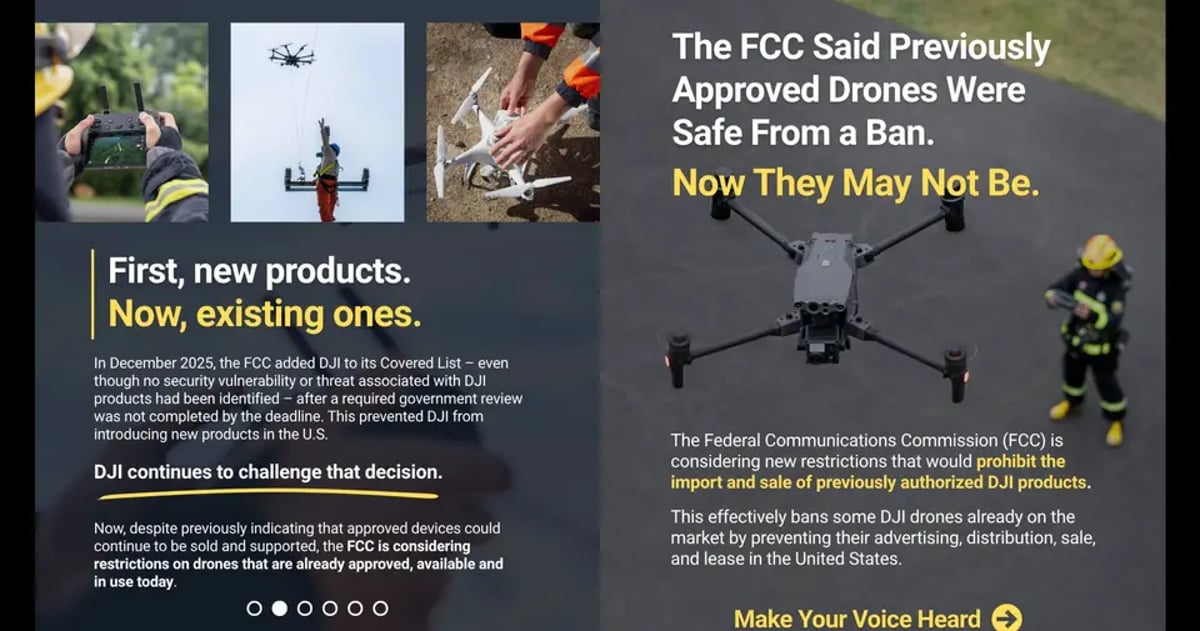
Is the aerial cinematography toolkit about to shrink, or at least become significantly more complicated to maintain? The Federal Communications Commission (FCC) is currently considering new restrictions that could cast a long shadow over DJI drones already operational within the U.S. market, extending well beyond mere future product releases. This isn't just about what's coming next; it’s about what’s already in the air, a prospect that should give any working professional pause.
For years, DJI has been, for better or worse, the ubiquitous name in aerial platforms, from the prosumer models that democratized aerial shots to the more specialized units seen on professional sets. The proposal arrives as a Public Notice from the FCC's Public Safety and Homeland Security Bureau and its Office of Engineering and Technology, filed under PS Docket No. 26-189, seeking comment on prohibiting the continued importation and marketing of foreign-made drones and drone components already on the Commission's Covered List. The background matters here. DJI was added to that Covered List in December 2025, which blocked new DJI products from receiving FCC equipment authorization while leaving already-cleared products free to be imported and sold. This new notice asks whether that carve-out should go away. The proposal is framed around "military-grade" drones, a term that, in typical regulatory fashion, might possess an elastic definition. The concern, however, lies in the potential for these restrictions to ensnare a much broader range of civilian technologies. We are talking about critical tools that have become integral to various industries, including our own. Thermal imaging, LiDAR, docking stations, and even agricultural spraying systems are specifically cited by DJI as falling under this potential regulatory umbrella. Think about that for a moment: the very tools relied upon by first responders, farmers, inspectors, and businesses are being swept into a conversation ostensibly about military applications. Where does that leave the production sector, which frequently leverages these same technologies for everything from scouting to complex visual effects plates?
If these restrictions progress, the implications could be far-reaching, transforming current operational certainties into a labyrinth of logistical challenges. The source material indicates a scenario where future sales of certified and currently available products could effectively cease. This is not simply about new models failing to arrive; it suggests that products already cleared for the U.S. market might no longer be imported or sold. Perhaps even more critically for those of us on long-term productions or with established gear libraries, covered replacement components could become harder, if not impossible, to obtain. Imagine a critical part failing on a Matrice 400 during a remote shoot, only to discover that the necessary replacement is now contraband. That's not just a minor inconvenience; it's a potential production halt, a budgetary black hole, and a scheduling nightmare.
The FCC’s consideration of these restrictions, as DJI notes, would permit individuals to continue using products they already own. This provision, while superficially reassuring, offers little solace when the longevity and maintainability of those assets are called into question. What good is continued ownership if repair is impossible, or if the ecosystem of accessories and upgrades dries up? The professional film world operates on continuity and reliability. A drone, like any camera or lens, is an investment with an expected operational lifespan. To truncate that lifespan through regulatory fiat, especially for products already purchased and integrated into workflows, feels like moving the goalposts mid-game.
DJI's own response points to thermal imaging and LiDAR payloads, agricultural spraying platforms, and docking stations as the categories most exposed, and it names the Matrice 400 and DJI Dock 2 as the kind of tools operators should speak up about, and enterprise systems of that class are exactly what sit in the higher end of the aerial market. These are not recreational toys; they are sophisticated pieces of equipment that enable complex aerial cinematography, surveying, and other data capture crucial to modern filmmaking. The Matrice series, in particular, has found its way onto countless sets, providing stable platforms for high-end cameras and specialized payloads. For a cinematographer relying on such a system for a demanding aerial sequence, the prospect of an abrupt halt to sales, support, or spare parts could compel a complete re-evaluation of their current equipment strategy. Are we to suddenly re-tool our aerial departments, or simply accept the risk of owning increasingly unsupportable technology?
This situation presents a stark reminder of the often-unseen regulatory pressures that can shape the tools and techniques available to filmmakers. We often focus on the artistic and technical advancements, the new camera sensors, the revolutionary lenses, or even the evolving methodologies of lighting and sound. Yet, external factors, such as trade disputes, political maneuvering, and regulatory oversight, can just as profoundly influence the practical realities of production. It's a testament to the interconnectedness of our industry that a government body's deliberations, seemingly far removed from a film set, can directly threaten the viability of a core piece of equipment.
One might reflect on similar historical moments where geopolitical considerations impacted technological access. For instance, the evolution of certain film stocks or specialized equipment has, at various times, been influenced by broader economic or political climates, leading to shifts in what was readily available or economically feasible for filmmakers. While perhaps not as dramatic as, say, the constraints faced by Soviet-era filmmakers, the current situation with DJI drones represents a contemporary echo of how external forces can dictate the terms of artistic and technical practice. The free flow of technology, which we often take for granted, is never truly guaranteed.
The current landscape of aerial cinematography is heavily reliant on commercially available drone technology. While bespoke solutions exist for the highest-end feature films, the vast majority of productions, from independent features to commercials and documentaries, utilize off-the-shelf platforms that offer a balance of capability, cost, and ease of operation. DJI, by virtue of its market dominance, has become a de facto standard for many. The potential disruption to this ecosystem forces a hard look at diversification, risk assessment, and perhaps, a greater engagement with the regulatory process itself.
Indeed, DJI is actively urging those who rely on these tools to voice their concerns to the FCC. They are encouraging professionals to articulate how these potential restrictions would affect their work, their costs, and their communities. This is not merely a corporate plea; it's a call to action for anyone whose livelihood depends on the unhindered access and operability of these aerial platforms. From the independent documentarian capturing stunning natural landscapes to the commercial director requiring precise product shots from above, the impact could ripple through countless projects. A sudden increase in operational risk or a forced pivot to less capable or more expensive alternatives will inevitably affect budgets, timelines, and ultimately, creative ambition.
Consider the practical implications on a mid-sized production that has budgeted for specific aerial sequences using existing DJI gear. If the possibility of repair or replacement components becomes tenuous, what are the options?
None of these are appealing prospects, particularly in an industry already characterized by tight margins and demanding schedules. The conversation often revolves around the latest sensor technology or the advent of virtual production, but sometimes the most profound changes come from external, non-technical vectors. This FCC consideration serves as a stark reminder that the tools we rely on are not static; their availability and support are subject to a complex interplay of market forces, geopolitical tensions, and regulatory decisions.
For professionals who have meticulously built their aerial cinematography kits around DJI products, the prospect of these restrictions looms large. It’s not simply a question of brand loyalty; it’s a matter of established workflows, skilled operators, and significant financial investment. The technical capabilities of these drones, from their flight stability to their integrated camera systems, have opened up new possibilities for visual storytelling. To suddenly have that toolkit destabilized, not by a technological obsolescence cycle, but by regulatory intervention, demands careful attention.
This situation also highlights the broader issue of supply chain vulnerability and the concentration of critical technology in a single source. While diversification is always a sensible strategy, the sheer breadth of DJI's product line and its integration across various price points and professional applications made it an almost unavoidable choice for many. Perhaps this incident will prompt a more proactive engagement from industry bodies and individual practitioners in monitoring such regulatory developments.
The comment window closes on September 2, 2026. Filings go through the FCC's Electronic Comment Filing System at fcc.gov/ecfs under PS Docket No. 26-189, and anyone who flies commercially can file one. This suggests a relatively rapid timeline for a decision that could have significant, long-term ramifications for filmmakers and other professionals who have integrated DJI drones into their operations. It’s a moment to consider how such decisions, seemingly technical or geopolitical in nature, can directly impact the daily realities and creative freedoms of those working in the visual arts. The next time we see an exquisite aerial shot, it might be worth remembering the complex, often fraught, journey of the technology that made it possible.
If you are building an aerial plan for a project this year, three pieces of reading are worth the time. Our earlier breakdown of what DJI's FCC listing means for drone cinematography covers how the December 2025 decision reshaped the market and what alternatives exist. On the paperwork side, production insurance for 2026 walks through drone coverage, certificates of insurance, and where carriers draw lines on aerial work. And if a grounded aerial unit forces you to re-block a sequence, the camera movement execution guide covers how to rebuild a shot with grip gear instead of an airframe. Scheduling around airspace and permits also sits inside location scouting and management.
Sources
---
© 2026 BlockReel DAO. All rights reserved. Licensed under CC BY-NC-ND 4.0 • No AI Training.