Ingmar Bergman: Filmmaking Techniques, Persona & Cries and Whispers
> This guide contains affiliate links. BlockReel may earn a small commission on qualifying purchases at no extra cost to you. All commissions go directly toward funding our DAO Film Festival and supporting independent filmmakers.
The image burns. Not metaphorically, but literally. A carbon arc lamp sputters, the film strip catches, and the celluloid melts into a bubbling, abstract horror. This is the rupture at the heart of Persona (1966), a self-inflicted wound on the cinematic body that announces the terms of engagement. Before this moment, and after it, we are held captive by the human face, rendered with an intensity that feels less like portraiture and more like a geological survey. In the features of Liv Ullmann and Bibi Andersson, Ingmar Bergman finds his essential terrain: a country of doubt, mirroring, and psychic dissolution. The camera does not simply observe; it interrogates. It pushes past performance into the terrifying quiet of a consciousness laid bare.
What does it mean to look this closely? For the filmmaker, it is an act of radical stripping-down, removing the comforts of setting and plot to isolate the human variable. For the viewer, it is an exercise in sustained, almost unbearable intimacy. The film's fragmented narrative, where the identities of a nurse and her mute patient seem to bleed into one another, is not a puzzle to be solved but a condition to be experienced. It is a cinematic nervous breakdown, a questioning of whether any self is truly coherent or if we are all just a collage of projections and anxieties, held together by the thinnest of membranes. This is the Bergman that haunts the medium: not just the philosopher of God's silence, but the anatomist of the soul's terrifying fragility.
The Arc
Born Ernst Ingmar Bergman in Uppsala, Sweden, in 1918, the filmmaker's aesthetic was forged long before his first feature. His father was a Lutheran minister, a biographical detail that has perhaps been over-determined by critics but whose presence is undeniable in the work's constant wrestling with faith, ritual, and judgment. More concretely, Bergman's early and lifelong career in the theater provided the foundational grammar for his cinema. It taught him the power of the proscenium, the discipline of the ensemble, and the raw potential of the spoken word in a confined space. His acknowledged artistic forebears, the playwright August Strindberg and the pioneering silent filmmaker Victor Sjöström, chart the two poles of his sensibility: Strindberg's claustrophobic psychodrama and Sjöström's elemental, mythic connection to Swedish weather, terrain, and the human face. One gave him the chamber play, the other the close-up.
Though he began directing films in the mid-1940s, his international coronation arrived with an astonishing one-two punch in a single year. 1957 saw the release of both The Seventh Seal and Wild Strawberries, a pair of films that established the Bergman brand for a global art-house audience. They remain a remarkable study in contrast. The Seventh Seal is a stark, medieval morality play, a historical pageant that feels chillingly contemporary in its grappling with plague, fanaticism, and existential dread. Its central allegory, of a knight playing chess with a personified Death, became an instant, indelible icon of art cinema, a symbol for an entire generation's anxieties. It is a work of grand, theatrical gesture.
Wild Strawberries, released the same year, turns that focus inward. Where the former film stages a debate with God on an open plain, the latter conducts a quiet, painful inventory of a single man's soul. Professor Isak Borg's road trip to receive an honorary degree becomes a journey through the haunted corridors of his own memory. Bergman uses the structure of dream, flashback, and waking reverie not as exposition but as the film's primary engine. The narrative is deliberately fragmented, mirroring the way memory itself functions, with past humiliations and lost loves asserting themselves with the force of present-tense events. Watching it, one gets the sense of a filmmaker discovering the unique capacity of the camera to map interior states, to make the architecture of a life's regrets as tangible as the road ahead. Together, these two films announced the arrival of a major artist concerned with nothing less than the ultimate questions of how to live and how to die.
If the 1950s established his themes, the 1960s saw a radicalization of his form. Working with a consistent troupe of collaborators, most notably the cinematographer Sven Nykvist, Bergman began to strip his aesthetic down to its most potent elements. This is the era of the "chamber film," and its apex is arguably Persona. The film perfects a visual strategy centered on the psychological close-up, often holding on actors' faces in compositions that defy traditional rules of coverage and eyeline. The space is austere, the drama concentrated between two individuals until the very fabric of their identities begins to fray. The narrative fragmentation seen in Wild Strawberries becomes the film's explicit subject, questioning the stability of the self and the medium of cinema itself. It's a move that aligns Bergman not just with European modernists like Antonioni, who explored alienation in the cityscape, but also with a more self-reflexive tradition that sees the apparatus of filmmaking as part of the story.
This formal austerity evolved into a new kind of sensory expressionism in the 1970s. With Cries and Whispers (1972), Bergman and Nykvist famously drenched the interiors in a deep, suffocating red. The color functions not as decoration but as a palpable presence, the physical manifestation of the "loneliness, vulnerability, and torment" that Britannica identifies as his core concern. The film's intensity is almost unbearable, a depiction of familial cruelty and bodily decay that refuses to look away. It is the chamber-drama model pushed to a fever pitch, where every whisper and rustle of fabric in the sound design contributes to the suffocating atmosphere. This work, along with his other films of the period, cemented a critical reading of Bergman as a purveyor of bleak, Northern European despair.
Yet that reading is incomplete. A corrective view, supported by his background in theater and the sheer variety of his output, sees him also as a master craftsman of performance and a filmmaker capable of great warmth. This side finds its fullest expression in the sprawling family epic Fanny and Alexander (1982). Originally a five-hour television miniseries, it is a work of Dickensian scope and generosity, a summation of his career-long obsessions with family, memory, magic, and the theater. The austere minimalism of Persona gives way to a crowded, detailed world of communal ritual and childhood wonder, before plunging into the familiar darkness of dogmatic cruelty. It feels like a grand synthesis, acknowledging the darkness while ultimately making a case for the saving grace of imagination, family, and art.
Bergman formally retired from cinema after Fanny and Alexander, but he never stopped working, returning to the theater and writing. He would direct one final feature, Saraband, for television in 2004 at the age of 86, a stark coda that revisited the characters from his earlier masterpiece Scenes from a Marriage. His death in 2007 on the remote island of Fårö, his home and frequent filming location, marked the end of an era. Honored with the Academy's Irving G. Thalberg Memorial Award in 1971 and numerous other international prizes, his place in the canon is secure. But his work remains alive, not as a series of museum pieces, but as a vital, often painful, and profoundly human interrogation of the stories we tell ourselves to survive.
Signature Techniques
Ingmar Bergman's body of work, stretching from the mid-1940s to the early 2000s, presents not so much a single style as a series of evolving, rigorous investigations into the capacity of cinematic form to represent the human interior. His techniques were refined over decades of parallel work in theater, a dual practice that informs the deliberate, often contained nature of his filmmaking. While his thematic preoccupations with faith, mortality, and psychological torment are well-documented, it is his specific formal strategies that provide the enduring grammar for his inquiries. These are not flourishes, but the very architecture of his thought.
The Face as Primary Geography
Long before the term became a critical commonplace, Bergman established the human face as a primary cinematic environment. In his films, the close-up is not an accent or a point of punctuation within a scene; it is the scene itself. This is achieved through a combination of duration, austere composition, and a lighting philosophy, developed over a legendary collaboration with cinematographer Sven Nykvist, a working relationship worth studying alongside our lens selection guide for cinematographers, that treated skin as a textured, expressive surface. The goal was not glamour but revelation. Watching the prolonged, often front-on shots of Bibi Andersson and Liv Ullmann in Persona (1966), one is struck by how the frame denies the viewer any environmental distraction. The background is suppressed, reduced to a minimal plane of light or shadow, forcing our attention onto the minute shifts in an actor's eyes, the tension in their jaw, the almost imperceptible quiver of a lip.
What does this sustained proximity accomplish? It collapses the distinction between a character's external presentation and their internal state. Unlike the graphic close-ups of a Sergio Leone, which often function as iconic punctuation, the Bergman close-up is an investigative tool. In Cries and Whispers (1972), the camera's unflinching observation of Harriet Andersson's dying Agnes doesn't just document her physical suffering; it attempts to access the subjective experience of that suffering. The space around the actor is stripped away, leaving only the raw material of performance and physicality. This forces a unique form of engagement. We are not merely watching a character; we are confined with them in a moment of intense vulnerability, a technique that makes their psychological state palpable, almost topographical. The face becomes the primary geography of human experience.
Fractured Time: Memory and Dream as Structure
Bergman frequently rejected linear, cause-and-effect plotting in favor of narrative forms that mirrored the associative, often chaotic, logic of the human mind. The briefing's identification of his "fragmented narrative" style points to a core structural principle: for Bergman, the psyche is the primary setting, and it does not operate chronologically. His films are often built around the very act of remembering, dreaming, or psychological disintegration.
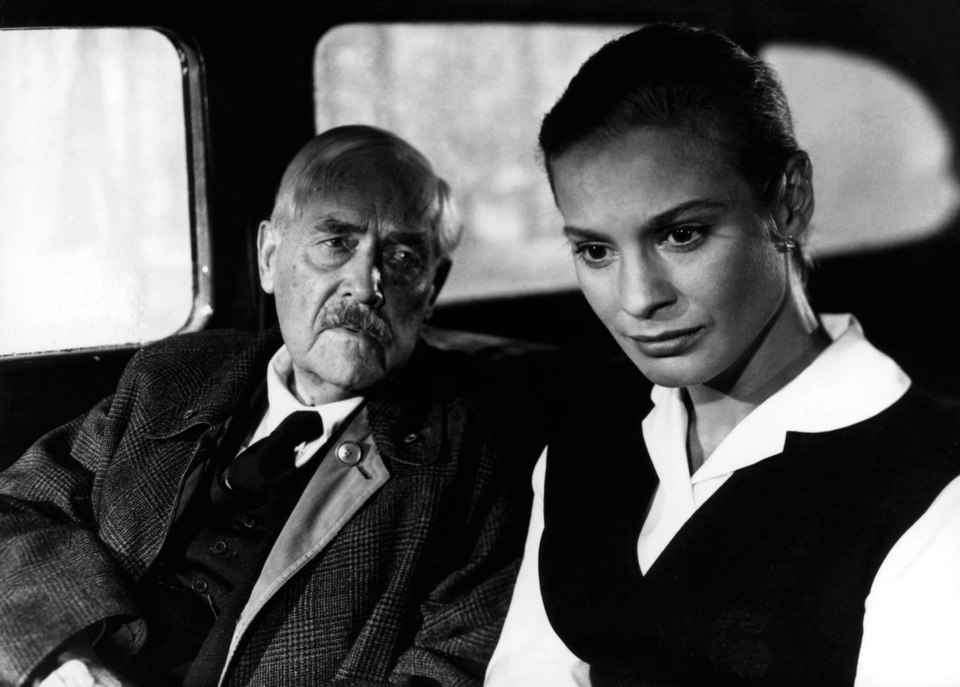
Wild Strawberries (1957) stands as a foundational text for this method. The film's narrative is a road trip, but its structure is an excavation of memory. Professor Isak Borg's journey is punctuated by dreams and waking recollections that are not presented as conventional flashbacks. They are instead involuntary, triggered by a location, a sound, or a passing thought, and they bleed into the present with a disquieting fluidity. Bergman and his editor, Ulla Ryghe, often use dissolves and carefully matched compositions to move between past and present, suggesting that for Borg, these memories are not distant events but coexistent realities. This approach treats memory not as exposition but as a dynamic, often painful, force actively shaping the present moment.
This fragmentation becomes even more radical in Persona. The film's famous midpoint rupture, where the celluloid appears to burn and tear, is a self-conscious declaration of the unreliability of the cinematic apparatus itself. But the narrative fragmentation runs deeper. The identities of the mute actress and her nurse begin to merge, their faces literally superimposed, their stories exchanged. On this reading, the film's structure isn't just telling a story about psychological transference; it is performing it. The narrative breaks down as the psyches of its protagonists do, challenging the viewer to locate a stable reality that the film insists does not exist.
Theatrical Containment
Bergman's extensive career as a theater director is not a biographical footnote; it is fundamental to his cinematic craft. He frequently utilizes the principle of theatrical containment, confining his characters to a limited number of intense, psychologically charged spaces. This is not the claustrophobia of a thriller, but the focused pressure of a chamber play. By limiting the physical world of the film, he forces the drama inward.
Cries and Whispers is perhaps the ultimate expression of this technique. The overwhelming majority of the film unfolds within the rooms of a single manor house. The sisters and their dying sibling are trapped not only by grief and familial duty but by the very architecture of their lives. The camera rarely offers a view of the outside world, creating a hermetic environment where resentments and anxieties have nowhere to go but into one another. Bergman's blocking within these spaces is precise and meaningful. Characters are arranged in compositions that articulate their shifting alliances and emotional distances, often framed by doorways or mirrors that suggest psychological division and entrapment.
This method, inherited from inspirations like the playwright August Strindberg, turns the set into an active participant in the drama. The crimson walls and carpets of Cries and Whispers are not merely a design choice; they are a visual correlative for the film's themes of blood, pain, and what Bergman called the interior of the soul. Even in the more expansive Fanny and Alexander (1982), the narrative is structured as a series of distinct, contained worlds: the warmth and clutter of the Ekdahl family home, the austere prison of the Bishop's house, the magical labyrinth of Isak's shop. Each space operates under its own set of rules, its own emotional temperature, functioning like a different stage in a vast, multi-act play.
Symbolic Confrontation
Alongside his intense psychological realism, Bergman practiced a form of heightened, symbolic filmmaking that bordered on moral allegory. In these works, characters often feel less like naturalistic individuals and more like archetypes wrestling with metaphysical questions. The most iconic example remains The Seventh Seal (1957), a film that established his international reputation. The story of a knight returning from the Crusades to a plague-ridden Sweden is staged as a series of philosophical debates and symbolic encounters.
The central conceit, a chess game between the knight Antonius Blok (Max von Sydow) and the personification of Death, is a masterstroke of theatrical confrontation translated to cinema. It externalizes an internal crisis of faith, turning a philosophical problem into a tangible, dramatic event. The imagery throughout the film operates on this symbolic register: the flagellants scourging themselves, the young family representing a fragile holy innocence, the final "Dance of Death" silhouetted against the horizon. This is a mode of filmmaking far removed from the psychological intimacy of Persona. It draws on a medieval and expressionist tradition, closer to the morality plays of the past or the stark allegories of Carl Theodor Dreyer's The Passion of Joan of Arc (1928) than to modern realism.
This allegorical impulse never entirely vanished from his work. It resurfaces in the stark, God-is-silent regions of the "faith trilogy" in the early 1960s and in the dream sequences that haunt many of his later films. It demonstrates a crucial versatility. Bergman understood that some questions, about mortality, the silence of God, the nature of evil, could not be adequately explored through psychological realism alone. They required a different, more mythic language.
Case Study: Persona (1966)
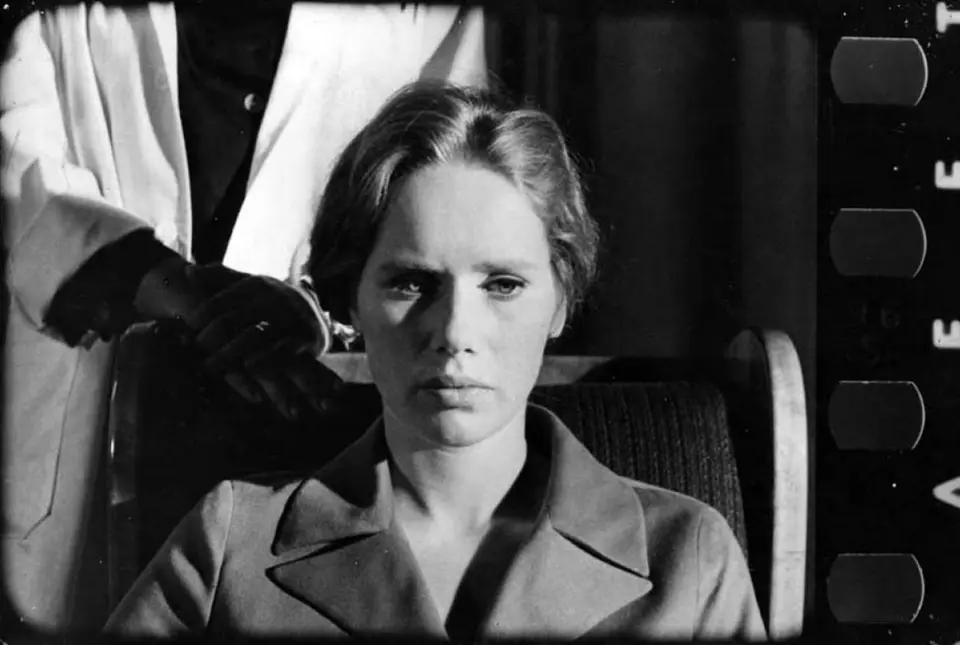
Ingmar Bergman's Persona (1966) stands as a pivotal work in his filmography, often cited for its radical formal experimentation and profound psychological inquiry. The film marked a significant departure, even for a director recognized for his versatile camerawork and fragmented narratives. What filmmakers can study in Persona is not merely its thematic depth, but the audacious manner in which Bergman deconstructed conventional cinematic language to serve a deeply interior, almost psychoanalytic, exploration of identity.
One of the most striking aspects of Persona is its deliberate destabilization of narrative and character. The film opens with a jarring montage of abstract images, including a flickering projector lamp, an erect penis, and a spider, immediately signaling a break from traditional storytelling. This prologue functions less as an establishing sequence and more as a cinematic overture, preparing the viewer for a non-linear, associative experience. This fragmented approach, a hallmark of Bergman's style as noted by Britannica, is pushed to an extreme here, challenging the audience to engage with the film on a more visceral and intellectual level than a strictly linear narrative would allow.
The core of Persona revolves around two women: Alma, a nurse, and Elisabet Vogler, an actress who has inexplicably gone mute. Their identities begin to blur, a phenomenon often discussed in critical readings of the film. This blurring is not merely a plot point but is deeply embedded in the film's visual and structural fabric. Bergman employs prolonged close-ups, particularly on the faces of Liv Ullmann and Bibi Andersson, stripping away external context to focus intensely on their expressions and reactions. This technique, which creates a stripped dramatic space, forces an intimacy that is almost uncomfortable, drawing the viewer into the characters' internal states. The camera often frames their faces in such proximity that their individual features seem to merge, visually reinforcing the psychological transference occurring between them.
The single most teachable sequence in Persona is Alma's beach monologue, roughly forty minutes in, when the nurse describes an anonymous sexual encounter to the silent Elisabet. The scene runs a little over six minutes and is built from a handful of static setups: a wide two-shot of the women on a stone terrace, a medium of Alma from Elisabet's eyeline, a matching medium of Elisabet listening, and a slow push toward Alma's face as the confession intensifies. Bergman and Nykvist withhold the close-up until Alma is deep inside the memory, so the shot change carries the same weight as a cut to violence in a different kind of film. There is no music. The only sounds are wind, distant surf, and Bibi Andersson's voice, which starts conversational, thickens, and finally cracks. What a director can steal from the sequence is the discipline of the reveal: a shot size held in reserve until the actor has earned it, a silence that lets the words do their own damage, and an eyeline pattern that turns the listener into the emotional register the audience reads instead of the speaker. The camera never cuts to what Alma is describing. The description is the event, and the refusal to visualize it is the moral position of the scene. Compare this construction to how the director staged the Christmas dinner in Fanny and Alexander to see the two poles of Bergman's method inside a single career: maximal ensemble choreography on one end, single-voice interior monologue on the other.
The film's setting, largely confined to a remote island cottage, contributes to its austere chamber-drama intensity. This minimalist environment amplifies the psychological tension between Alma and Elisabet, allowing their internal conflicts to play out with an almost suffocating intimacy. Every gesture, every subtle shift in expression, becomes magnified. This approach to setting, where the external world is largely excluded, forces a concentration on the interpersonal dynamics and the inner lives of the characters, aligning with Britannica's observation of Bergman's focus on human loneliness and torment. The sparseness of the visual environment in Persona demonstrates how a constrained physical space can paradoxically expand the psychological interior of a film.
Persona doesn't just explore identity; it interrogates the very act of performance and representation. Elisabet, the actress, has chosen silence, perhaps as a rejection of performance, while Alma, the nurse, finds herself increasingly performing Elisabet's life. This meta-narrative layer, though not explicitly detailed in the provided sources, is a common critical reading that underscores Bergman's interest in the nature of art and reality. The film's enduring power lies in its refusal to provide easy answers, instead offering a complex, often unsettling, meditation on the self. For filmmakers, Persona serves as a masterclass in using radical form to explore radical ideas, proving that sometimes, the most effective way to communicate a profound truth is to dismantle the expected.
Case Study: Cries and Whispers (1972)
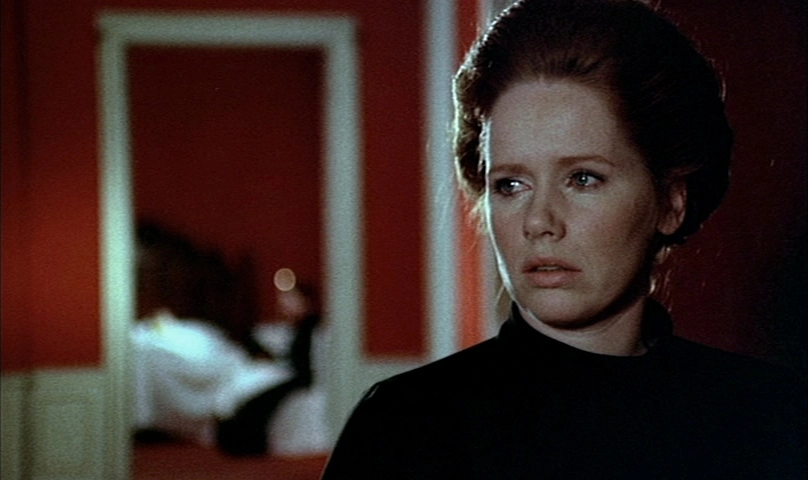
Cries and Whispers (1972) exemplifies Ingmar Bergman's mastery in translating internal psychological states into a vivid, almost tactile, cinematic experience. While Persona explored identity through formal deconstruction, Cries and Whispers digs into themes of suffering, faith, and familial bonds through a heightened aesthetic, particularly its striking use of color and an unwavering focus on emotional intensity. This film offers filmmakers a profound lesson in how visual design can serve as a direct conduit to the characters' inner worlds and the overarching thematic concerns. Directors working through similar palette-first decisions can study our color grading workflow guide for a modern implementation of the same principle.
The most immediately apparent and widely discussed visual signature of Cries and Whispers is its pervasive use of the color red. From the deep crimson walls of the manor house to the characters' dresses and even the occasional bloodstains, red saturates the frame. This is not merely a decorative choice; it functions as a powerful emotional and symbolic code. Red, in this context, evokes passion, pain, blood, and the visceral reality of suffering. It creates an atmosphere of intense, almost suffocating, emotionality, aligning with Britannica's description of Bergman's bleak depiction of human loneliness, vulnerability, and torment. For filmmakers, Cries and Whispers demonstrates how a singular, dominant color palette can be employed not just for mood, but as an active narrative element, shaping the audience's emotional response and reinforcing thematic content. The decision to commit so thoroughly to this color scheme required a precise understanding of its psychological impact and how it would interact with the narrative of three sisters grappling with illness and mortality.
Beyond color, the film's austere chamber-drama intensity is palpable. Confined largely within the walls of the family estate, the narrative unfolds with a claustrophobic focus on the intricate and often fraught relationships between the sisters Agnes, Karin, and Maria, and their maid Anna. This enclosed setting, reminiscent of a stage play, allows for an intense concentration on character interaction and psychological nuance. The camera often lingers on faces, capturing the subtle shifts in emotion, the unspoken resentments, and the fleeting moments of connection. This approach, where the dramatic space is meticulously controlled and stripped of extraneous detail, forces the audience to confront the raw emotional interior of the characters. It is a mark of Bergman's theatrical background that he could translate such intimate, stage-like intensity so effectively to the screen. Directors approaching similar chamber material should also study our directing actors guide alongside this film.
The film's narrative structure, while not as overtly fragmented as Persona, still employs memory as a crucial engine. Flashbacks punctuate the present-day suffering of Agnes, revealing past traumas and the complex history of the family. These excursions into the past are not linear exposition but rather subjective recollections, often imbued with the emotional weight of the present. This use of memory, a recurring element in Bergman's work, particularly in films like Wild Strawberries (1957), allows for a deeper understanding of the characters' motivations and their entrenched patterns of behavior. It demonstrates how memory can be utilized not just to fill in backstory, but to actively shape the emotional texture and thematic resonance of a film.
Cries and Whispers also explores the recurring Bergmanian themes of faith and the silence of God. As Agnes succumbs to illness, her sisters grapple with their own beliefs and the apparent absence of divine comfort. The film does not offer easy answers but rather presents a stark, unflinching portrayal of human beings confronting existential questions in the face of immense suffering. This thematic depth, coupled with the film's visual and emotional intensity, creates a powerful and often disturbing experience.
For working filmmakers, Cries and Whispers is a masterclass in aesthetic control and emotional precision. It shows how a bold, consistent visual strategy, combined with an intimate dramatic space and a keen psychological focus, can elevate a story of personal suffering into a universal meditation on the human condition. The film challenges one to consider how every element of production design, from color to spatial arrangement, can be imbued with meaning, transforming the cinematic frame into a canvas for profound emotional and philosophical inquiry.
Collaborators
A filmmaker's signature is rarely a solo performance. While Ingmar Bergman's authorial voice is one of the most distinct in cinema, its articulation depended on a recurring company of collaborators who understood his psychological and aesthetic preoccupations. This core group, both behind and in front of the camera, formed a repertory ensemble that allowed for a remarkable consistency of vision across decades.
The most significant of these partnerships was with cinematographer Sven Nykvist. Beginning with The Virgin Spring (1960) and continuing for over two dozen features, Nykvist developed a visual language for Bergman's interior worlds. His cinematography for Cries and Whispers (1972) saturated the film's manor house in crimson, creating a visual correlative for the story's internal suffering and what Bergman himself described as the color of the soul. In Persona (1966), Nykvist's stark, high-contrast black-and-white photography rendered the human face as terrain to be explored, using hard light to carve out features and soft, naturalistic sources to suggest moments of vulnerability.
On the other side of the camera, a core group of actors gave physical and emotional form to Bergman's themes. Max von Sydow, in his iconic role as the knight Antonius Block in The Seventh Seal (1957), gave Bergman a figure of stoic, questioning faith, his face a mask of existential dread set against a plague-ridden countryside. The dyad of Liv Ullmann and Bibi Andersson powered many of Bergman's most intense psychological dramas. In Persona, Liv Ullmann's performance as the mute actress Elisabet Vogler is a masterclass in withholding, communicating immense psychic weight almost entirely through her eyes and the subtle tension in her face. In the same film, Bibi Andersson's portrayal of Nurse Alma provides the kinetic, verbal energy, a torrent of confession and anxiety that stands in stark contrast to Ullmann's formidable silence.
This exploration of psychological fragmentation was sharpened in the edit. Ulla Ryghe, who edited Persona and other key films of the 1960s, helped construct Bergman's most radical narrative experiments. Her cutting in Persona is an act of deliberate fracture, most famously in the sequence where the film appears to burn and break, shattering the diegesis and forcing the viewer to confront the medium itself. This was not invisible editing; it was editing as a philosophical statement. Editors curious about how Bergman's stripped rhythm reads on the timeline can pair this study with our film editing workflow guide.
The sonic world was often defined by its austerity, but composer Erik Nordgren's contributions to the earlier films were crucial. Nordgren's score for The Seventh Seal uses stark, period-inflected instrumentation to ground the film's medieval allegory, avoiding romanticism in favor of a sound that feels as severe as the narrative. His work provided an essential texture, a sonic atmosphere that complemented the visual and thematic rigor without overwhelming it.
Critical Reception and Counter-Readings
Ingmar Bergman's arrival on the world stage with The Seventh Seal and Wild Strawberries (1957) coincided with the rise of the art-house cinema and the auteur theory. Critics at publications like Cahiers du Cinéma and their American counterparts saw in Bergman a director whose every frame was imbued with personal philosophy. Andrew Sarris, in his influential book The American Cinema, placed Bergman in his "Pantheon" of the greatest directors, cementing a view of him as a profound artist wrestling with the ultimate questions of God, death, and human isolation. For decades, the dominant critical reading, exemplified by the thoughtful reviews of Roger Ebert, centered on this perception of Bergman as a cinematic high priest, a filmmaker whose work demanded to be read as theological and existential allegory.
This very solemnity, however, provoked a significant backlash. Pauline Kael, a critical voice often diametrically opposed to Sarris, was frequently skeptical of what she saw as Bergman's high-art pretensions. In her review of Cries and Whispers, while acknowledging its power, she also pointed to its exquisitely composed suffering, a quality that for some viewers tipped into a kind of aestheticized torment. This skepticism was famously crystallized in Manny Farber's 1962 essay "White Elephant Art vs. Termite Art." Though not aimed solely at Bergman, Farber's critique of self-important, "masterpiece"-driven filmmaking provided a perfect framework for questioning the Bergman canon. Was this profound art, or was it "white elephant" art, too preoccupied with its own significance? A comparable debate haunts the reputation we trace in our Stanley Kubrick master study.
A more academic counter-reading emerged from formalist and structuralist film studies. Critics like David Bordwell shifted the conversation away from thematic interpretation ("What does it mean?") and toward stylistic analysis ("How does it work?"). In books like Narration in the Fiction Film, Bordwell examines Bergman's staging and narrative construction not as mere vessels for philosophical ideas, but as complex formal systems in their own right. On this reading, the blocking in a chamber drama like Autumn Sonata (1978) isn't just about mother-daughter conflict; it's a precise visual schematic of shifting power dynamics, articulated through screen position, eyeline, and depth of field. This approach reframed Bergman not as a brooding philosopher who happened to use a camera, but as a master craftsman of cinematic form.
Feminist film theory posed another crucial set of questions. While Bergman was often praised as a great "director of women," scholars following the work of theorists like Laura Mulvey began to interrogate the nature of his focus on the female psyche. Joan Mellen, in Women and Their Sexuality in the New Film (1973), and subsequent generations of critics have asked whether Bergman's intense focus on female consciousness grants his characters true agency or simply traps them within an aesthetic of beautiful anguish. One way to see films like Persona and Cries and Whispers is not as explorations of female identity, but as projections of a male artist's anxieties onto exquisitely rendered female subjects. This reading doesn't necessarily diminish the films' power, but it fundamentally reorients our understanding of their perspective and politics.
What Working Filmmakers Should Steal
The Face as Primary Geography The Bergman close-up is an institution. It is inseparable from his method with performers, a subject we cover in our directing actors masterclass. The mechanic involves using slightly longer focal lengths (a 50mm or 75mm on a 35mm camera) to compress space and isolate the subject from their environment. This is often combined with a simple, soft key light, frequently motivated by a window or a single practical, that reveals the micro-textures of skin and the subtlest shifts in expression. In the confessional scenes of Persona, the camera holds on Bibi Andersson's or Liv Ullmann's face for extended, uncomfortable durations. The shot is not about conveying information; it is the event itself, forcing the audience to scan the human face for meaning as if it were a map.
Blocking for Psychological Revelation Bergman consistently used staging to create visual diagrams of emotional relationships, a discipline covered in depth in our guide to camera movement and blocking. The technique involves placing actors in deep space, often with one character in sharp focus in the foreground and another soft in the background, to visualize their alienation or a power imbalance. He also made extensive use of the profile shot, denying the audience full emotional access and suggesting a character's interiority is closed off. In the memory sequences of Wild Strawberries, Professor Borg is often a foreground observer of his own past, with figures from his youth positioned at a stark distance, visually articulating his separation from the events he is reliving.
The Austere Sonic Field For long stretches of his most intense films, Bergman and his sound designers strip away non-diegetic music entirely, a decision that puts enormous pressure on production dialogue capture (see our production dialogue and ADR workflow). This creates a sense of raw, uncomfortable presence where every diegetic sound becomes magnified. A ticking clock, the wind against a windowpane, the rustle of a dress, or a strained breath carries enormous dramatic weight. Much of Cries and Whispers unfolds with only the ambient sounds of the house and the sisters' pained breathing or quiet weeping. This forces the audience to lean in, making them active listeners and heightening the claustrophobic tension far more effectively than a conventional score.
Narrative Fracture as Subject While Godard's jump cuts were a playful jolt, Bergman's breaks in cinematic reality are a source of existential horror. The mechanic is to deliberately rupture the film's diegesis to comment on the instability of identity and the artificiality of the medium. The canonical example remains the moment in Persona where the image of a face appears to bubble and tear, the celluloid itself seeming to burn in the projector gate. This is followed by a jarring montage of early cinema fragments, including a shot of a nail being driven into a hand. The technique reminds the viewer that they are watching a constructed artifact, mirroring the characters' own dissolving sense of self.
The Ritualized Ensemble Scene Bergman often contains his most complex group dynamics within the formal structure of a shared ritual. A family meal, a holiday gathering, or a theatrical performance becomes a stage for relationships to be tested and revealed. The long, celebratory Christmas dinner that opens the theatrical version of Fanny and Alexander (1982) is a masterwork of this technique. It serves to introduce the entire Ekdahl family, establishing their web of affections, rivalries, and latent tensions through a series of overlapping conversations, private glances, and public toasts, all before the narrative turns toward darkness.
Color as Emotional Architecture In his color films, Bergman often committed to a severely restricted palette (a discipline our color grading masterclass traces from set through the DI), using a single dominant color to define the emotional space of the narrative. This goes beyond simple color grading; it is a holistic approach involving production design, costuming, and lighting. The overwhelming reds of the interiors in Cries and Whispers are the most famous example. Working with Sven Nykvist, Bergman used the color not for realism but as a metaphor, stating he imagined it as a representation of the soul's interior. The characters are trapped in a world of raw emotion, blood, and membranous tissue made manifest.
The Monologue as Action In Bergman's hands, a monologue is not static exposition but a dramatic event. The technique involves holding on the speaker, often in an unbroken take, while the actor builds an entire narrative arc through vocal performance, rhythm, and subtle physical shifts. The camera's unwavering gaze transforms the act of speaking into a high-stakes action. Alma's sexually explicit story told to a silent Elisabet on the beach in Persona is a prime example. The scene functions as a violation, a confession, and a transfer of identity, all delivered while the camera refuses to cut away. Bergman treats the actor's voice as an instrument capable of doing work that action cinema hands to fists and firearms.
Further Study
If you are coming to Bergman fresh, resist the urge to start with Persona. The film rewards viewers who already know how he handles conventional dramatic form. A more forgiving viewing order:
1. Wild Strawberries (1957). The most accessible entry. A road picture that quietly teaches you how Bergman moves between memory, dream, and present tense.
Sources and Further Reading
Critical Texts and Scholarship
- Wood, Robin. Ingmar Bergman: New Edition. Wayne State University Press, 2013. The definitive critical study, revised and expanded from Wood's pioneering 1969 monograph.
Research References
1. Ingmar Bergman Foundation (ingmarbergman.se), the official archive maintained by the Bergman Estate on Fårö.
© 2026 BlockReel DAO. Master Studies series. Licensed under CC BY-NC-ND 4.0.