Widow's Bay VFX: Zero VFX's Invisible Work Explained
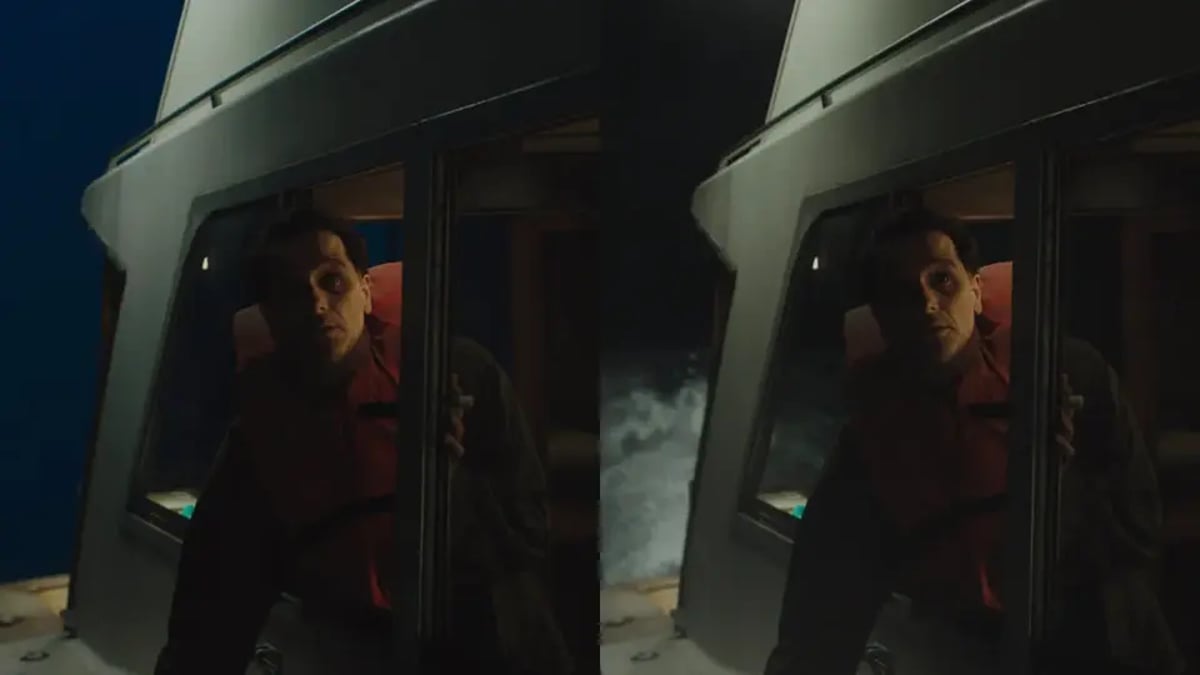
Spectacle grabs headlines, but a large share of modern television VFX is engineered to disappear. On Apple TV+'s Widow's Bay, that invisible layer is the show. In a July 20, 2026 befores & afters podcast hosted by Ian Failes, production visual effects supervisor Brian Drewes of Zero VFX walked through the season one workload: island environment builds from plate photography, a full-blown storm sequence, several at-sea shots, and a set of character and elemental gags involving bonfires, birds and a "Boogeyman." A companion Zero VFX shot breakdown reel covers the same territory frame by frame.
The label "invisible VFX" is deceptive. Shots audiences read as captured in-camera are typically the most expensive to finish, because every deviation from photographic reality reads as a mistake rather than a stylistic choice. That is the standard the Widow's Bay team held itself to.
Crafting the Environment
The bulk of the show's digital work centered on environment creation and manipulation. Season one required stitching plate photography together with digital extensions to sell a distinct island geography that does not exist in one physical location. This is more than set extension; it is world-building at the level of atmospheric perspective, wind direction on foliage, and light continuity between plates shot hours or days apart.
For filmmakers watching this kind of work, the technical challenge is less about rendering photoreal assets and more about matching the on-set camera. Lens distortion, depth of field falloff, chromatic aberration and sensor grain all need to be reproduced in the digital pass. A consistent color science pipeline, from ACES on set through the show LUT and DI, prevents the jarring shifts that immediately break the illusion. Zero VFX's approach on the series parallels the toolset our team documented in On-Set Scanning for VFX: Photogrammetry, LiDAR, and Actor Capture and in Plates and Clean Plates: When to Shoot Them and How to Label Them.
The 2D-versus-3D decision is driven by camera movement more than any other factor. Static or minimal-parallax shots lend themselves to 2.5D projections onto simple geometry. Anything with significant translation, or shots that need actors interacting with topography that was not there on the day, pushes into full CG environments. Drewes' team clearly mixes both, a workflow we explored in Beyond Green Screens: How Filmmakers Are Blending Reality and CGI to Create Unforgettable Worlds.
Pro tip. When a shoot will hand off heavy environment work, the DP and VFX supervisor collaborate in prep. High-resolution panorama stills, dense photogrammetry captures of the actual location, LiDAR sweeps of the built portions of the set, and 32-bit HDRI spheres taken at the same time of day as principal photography are the reference package that lets vendors match perspective, light and texture without guesswork. Missing that data on the day almost always shows up as extra rotomation or relighting cost in post.
Orchestrating Elemental Effects
The season's storm sequence and its at-sea shots are the biggest tell for how deep the elemental work goes. Simulating severe weather and heavy water is one of the most compute-intensive assignments in visual effects because both are volumetric, chaotic and physically coupled to everything around them.
A believable storm is not rain plus lightning. It is wind behaviour that pushes trees and rigging in the same direction, rain interacting with hair, wardrobe and skin, splashes with correct droplet scale for the shot, humid air scattering key lighting, and lightning that both fires interactive lights on the plate and casts secondary bounce onto surrounding geometry. At-sea shots add the vessel-water interaction problem: wakes, spray, chop scale that reads at the right sea state, and vessel motion synced to camera. This kind of work is why productions increasingly plan practical water tanks and real spray rigs alongside CG water, since a hero simulation for a full sequence can eat weeks of farm time. The pipeline pressure and creative payoff here echo the survey we published in VFX & Animation in 2026: Navigating Industry Volatility and Growth Prospects.
The failure mode is the "CG look": simulations that are too smooth, too symmetrical, or missing the sub-second chaos that real water and weather have at every scale. Turbulence, micro-noise on droplets, and correct motion blur on high-velocity spray are the details that keep the shot from tipping.
Bonfires, Birds, and Boogeymen
Beyond the environment and elemental buckets, the podcast highlights three smaller categories that carry disproportionate atmospheric weight.
- Bonfires. CG fire remains one of the harder problems in the pipeline. It is self-illuminating, has fluid-dynamic behaviour that resists cheating, produces smoke that competes with the flame for the same volume, and casts flickering light onto everything nearby. On a series like Widow's Bay the practical fire is often shot for reference and interactive light, then augmented, extended or replaced when the plate cannot deliver the shape, scale or safety envelope the shot needs. Heat distortion, ember behaviour and correct bounce light on skin are the tells.
- Birds. Flocks give a scene environmental context and mood. Some plates capture practical birds, but hero flight paths, specific compositions, and shots that need dozens or hundreds of birds are almost always CG. Boids-style flocking, plausible feather dynamics, and lighting that matches the sky dome on the plate are the integration checklist.
- Boogeyman. Creature work, even when the creature is partially obscured, requires the full modelling, rigging, texturing, animation and lighting pass. On a show whose supernatural conceit is meant to feel grounded, contact is the whole game: footfalls that displace practical materials, shadows that fall on the correct surfaces, and reflections in wet asphalt or glass. That level of interaction turns a "creature shot" into an environment shot with a character in it.
These shots may be small in count relative to the environment work, but they are what audiences remember, which is why they carry outsized supervision cost.
The Invisible Effects Workflow
The reliance on invisible work throughout Widow's Bay points to a disciplined workflow, characteristic of high-end streaming drama:
1. Early planning. VFX supervisors like Drewes are involved from pre-production, walking scripts with the director, DP and production designer to flag every shot that will need digital intervention. This drives concrete on-set decisions about green screen coverage, tracking markers, lighting reference, and clean plates. The prep discipline we cover in Production Meetings That Work: Agenda Templates by Phase applies here almost verbatim.
Walter Murch's line about the best cut being the one the audience does not notice applies here without alteration. Every ripple, every shadow, every interaction on Widow's Bay is engineered to sit under the audience's attention rather than on top of it. As viewer visual literacy climbs, the bar for this kind of unobtrusive, high-fidelity craftsmanship keeps rising, and shows that meet it, quietly, are the ones that keep audiences inside the story.
Further listening. The full Drewes conversation is on the befores & afters podcast episode for July 20, 2026; Zero VFX's season one breakdown reel is the fastest visual companion.
---
© 2026 BlockReel DAO. All rights reserved. Licensed under CC BY-NC-ND 4.0 • No AI Training.