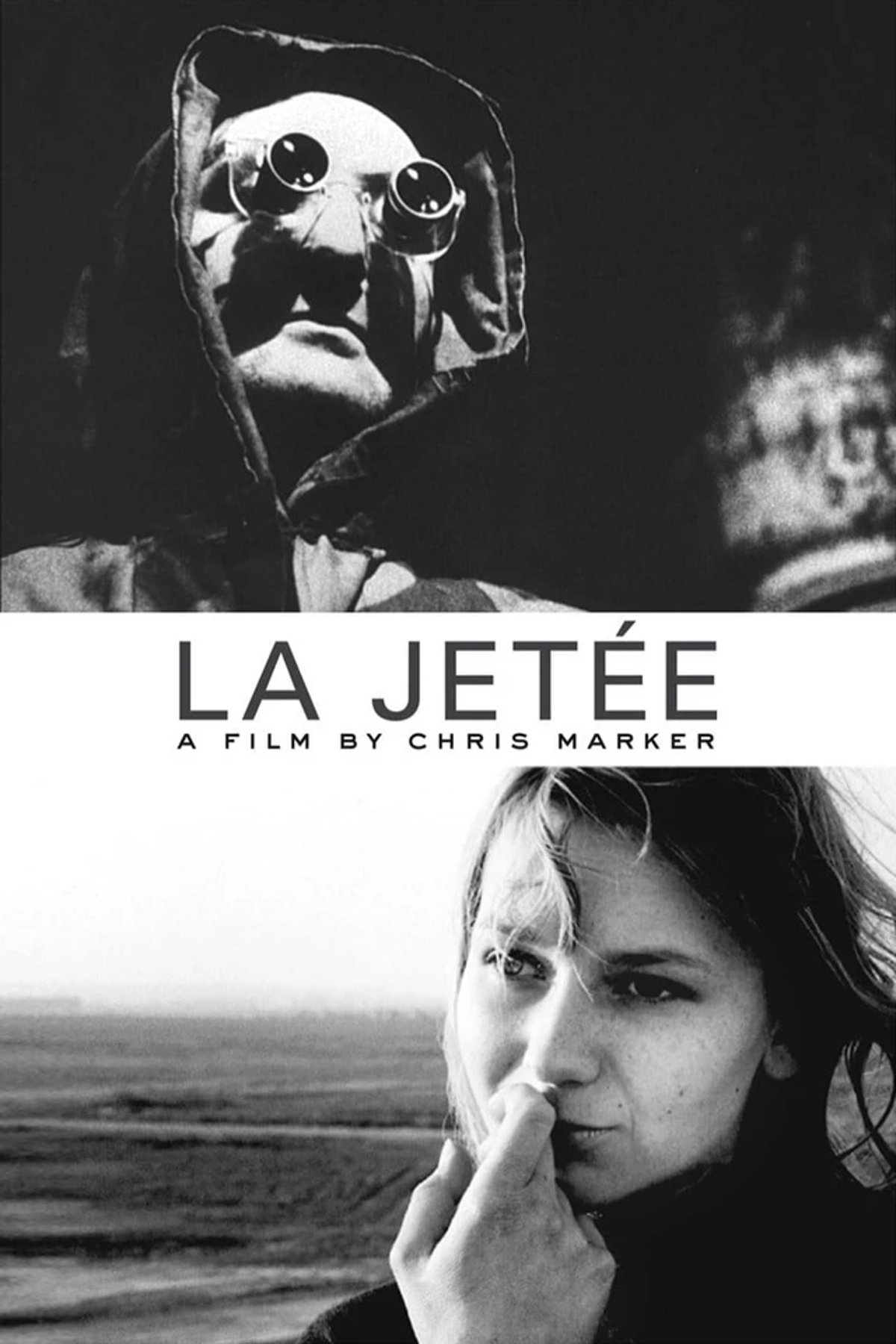
La Jetée (1962) Film Study: How Still Photos Built a Time-Travel Film
> This study contains affiliate links. BlockReel may earn a small commission on qualifying purchases at no extra cost to you. All commissions go directly toward funding our DAO Film Festival and supporting independent filmmakers.
A face, held in darkness. Another, a child’s, on a pier. Then ruins, rubble, and the faces of survivors, their expressions captured with the unblinking finality of a portrait sitting. The images don't move. They arrive, they hold, they are replaced. A voice speaks over them, calm and declarative, narrating a story of time, of a man sent back to a moment before the world ended, a moment fixed in his mind. The experience of watching is not one of flow but of percussion. Each new still photograph is a beat, a pulse in a story that unfolds between the frames, in the black spaces where the mind must connect one frozen instant to the next. The soundtrack fills these gaps with whispers, heartbeats, and the ethereal strains of liturgical choirs, creating a sense of life where the image offers only its absence.
We are not watching a film of events happening; we are examining the evidence of things that have already happened. The high-contrast black-and-white photography, shot on 35mm film, gives each frame the texture of a historical document or a memory worn smooth by repetition. Pans and zooms across the surface of these photographs create a phantom sense of movement, a ghost of cinematic language. It’s the visual equivalent of a person trying to recall a scene, their mind’s eye scanning a static mental picture for a detail they missed. This formal strategy is not a gimmick. It is a deep argument about the substance of memory itself. Our pasts don’t exist as continuous reels of footage; they survive as a collection of snapshots, moments seared into our consciousness, which we then attempt to arrange into a coherent narrative. The film’s structure mirrors this fragile, imperfect process of reconstruction. By building a time-travel paradox from still images, Chris Marker’s La Jetée (1962) transforms the photomontage into a meditation on the very mechanics of seeing and remembering, where the act of looking can conjure a ghost and the past is a prison made of photographs.
Why This Film Still Gets Studied
The enduring power of La Jetée lies in its radical and successful solution to a fundamental problem of cinematic language: how to build a world, a character, and a devastating emotional arc with almost none of the tools considered essential to the medium. It proves that cinema’s core is not the moving image, but the controlled succession of images over time. For a filmmaker today, its lessons are not historical curiosities but urgent, practical principles of narrative economy and psychological effect.
The film’s primary transferable lesson is its masterclass in using sound to animate a static world. The collaboration between Marker, sound professional Antoine Bonfanti, and composer Trevor Duncan produces a sonic architecture that does far more than supplement the visuals. The soundscape generates the film’s kinesis, the same way a carefully built ambience bed can carry a scene that has no camera movement at all. The narrator’s voice (provided by Jean Négroni) is not merely an expository device; it functions as the story’s central consciousness, its tone shifting from detached reportage to intimate confession. This voice guides the viewer’s attention across the still frames, directing the gaze and imbuing neutral expressions with terror or longing. Beneath the narration, a complex bed of sound effects, the whispers of the scientists, the thump of a heartbeat, the ambient noise of a garden, creates an illusion of spatial depth and off-screen action. The sound design builds the three-dimensional world that the two-dimensional photographs can only imply.
Its editing, credited to Jean Ravel, offers another potent lesson in temporal manipulation. The montage is built on rhythm, not continuity. A rapid succession of stills creates anxiety and disorientation, mimicking the chaos of a collapsing society or a fractured psyche. Conversely, holding on a single image for an uncomfortable duration forces contemplation, turning a photograph into an object of intense scrutiny. The duration of each shot is the primary tool for controlling the viewer’s emotional state. Dissolves between images suggest the fluid, associative logic of dreams, while hard cuts function like the abrupt recall of a specific, painful memory. This is editing as a form of temporal sculpture, shaping not just the narrative but the viewer’s very perception of time, a logic pushed further in the elliptical cutting of Kieślowski and Weerasethakul.
Perhaps the most studied choice is the film’s single, shocking moment of live-action footage: the woman (Hélène Châtelain) waking, her eyes opening and blinking directly at the camera. Its power is derived entirely from the extreme formal constraint established over the preceding minutes. After being conditioned to see only still frames, the audience experiences this brief flicker of movement as a rupture, a miracle. It’s the instant the remembered past becomes breathtakingly present, the photograph coming to life. The scene demonstrates a powerful principle of audience manipulation: the impact of breaking a formal pattern is exponentially greater than the impact of the action itself. For a filmmaker, it’s a lesson in the power of withholding. By denying the audience the basic pleasure of motion, Marker makes its eventual arrival a deep emotional and philosophical event, the ultimate confirmation that the man’s obsession is rooted in something real.
How It Got Made
The aesthetic of La Jetée is a direct consequence of its material constraints. The film was produced by Anatole Dauman’s Argos Films, a company known for supporting ambitious and unconventional work, with participation from the French public broadcaster RTF. This context situated the project within the world of the art-house “ciné-roman” or essay film, rather than commercial genre production. Marker, credited as both writer and director, conceived of a science-fiction narrative that could be executed with the resources of a documentarian. The result is a film where necessity did not just influence but fundamentally defined the form, an argument any filmmaker working through a micro-budget production plan should sit with.
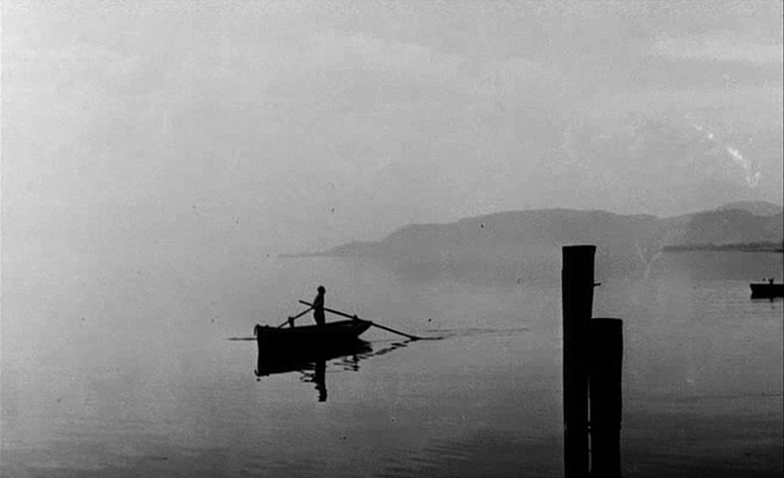
The central production reality was the decision to construct the film almost entirely from still photographs. These images were not an arbitrary stylistic flourish but the very bedrock of the production method. Marker, along with Jean-César Chiabaut, shot the film’s scenes as a series of black-and-white stills, reportedly using a Pentax 24x36 camera. A widely circulated anecdote suggests the production could only afford to rent an Arriflex motion-picture camera for a single afternoon, which accounts for the one brief moving shot. While this story isn't definitively verified in primary sources, it captures the spirit of extreme economy that shaped the project. This limitation forced Marker to invent a cinematic language devoid of conventional coverage, blocking, and performance in motion.
The filmmaking process happened not on set, but in post-production. The still photographs were taken to a lab (Laboratoires Franay Tirages Cinematographiques in Paris) and re-photographed on an optical printer. This key step is what gives La Jetée its phantom cinematic quality. The pans, tilts, and zooms seen in the film are not camera movements from the original shoot; they are artificial movements created by the printer’s camera moving across the surface of the static original photograph. This technique transforms the act of watching into an exploration of a fixed surface, mirroring the protagonist’s attempts to scan his own memories for new information. The film’s 1.66:1 aspect ratio provided a canvas for these compositions, and the final work was printed to 35mm film.
With the visuals locked into this rigid structure, the mono sound mix became the primary carrier of narrative momentum and emotional texture. The sparse, haunting score from Trevor Duncan, supplemented by Russian liturgical music, creates a sense of timeless dread and spiritual longing. The sound work by Antoine Bonfanti layers whispers, heartbeats, and ambient tones to build a psychological space that feels immersive and alive. Jean Négroni’s narration bridges the gaps between the images, providing the story’s connective tissue. The film wasn't shot so much as it was assembled, piece by piece, from a collection of still images and a carefully constructed sonic world. The constraints of its creation did not compromise its vision; they were the very tools that made its unique and deep vision possible.
The Craft Breakdown
Directing the Gaze, Not the Body (Direction)
No other science-fiction film of its era, or arguably since, entrusts its world-building so completely to the viewer’s imagination. Chris Marker’s primary directorial act in La Jetée is not the conventional blocking of actors in three-dimensional space but the sequencing of two-dimensional planes. He directs the audience’s gaze. The film’s form as a “photo-roman,” built almost entirely from still photographs, forces a radical reallocation of directorial responsibility. Where another director stages a scene for coverage, Marker stages a single, definitive photograph for contemplation. The result is a film where the most significant action happens not on screen, but in the cognitive space between one frozen image and the next.
The direction replaces the physical movement of characters with the conceptual movement of ideas. When the protagonist is sent back in time, we do not see the journey; we see a sequence of static, disconnected images (faces, architecture, a bedroom) that the narrator tells us constitute a memory. Marker’s direction is an exercise in curated absence. By withholding motion, he compels the viewer to animate the film mentally, to connect the dots, to fill the space between the frames with presumed action and emotion. This is a deep insight into human perception: the mind abhors a vacuum and will construct a narrative flow from the barest of sequential prompts. The blocking is not of bodies, but of attention, an inversion of the choreography and rehearsal method most productions build their days around. A long hold on a single photograph functions like a dramatic pause in a monologue, while a rapid succession of images mimics the frantic energy of a chase or the fragmented recall of a traumatic event. The entire film is a transfer of labor from the camera to the viewer’s eye, a choice that turns a potential budgetary constraint into a governing aesthetic principle.
Photography as Fossilization (Cinematography)
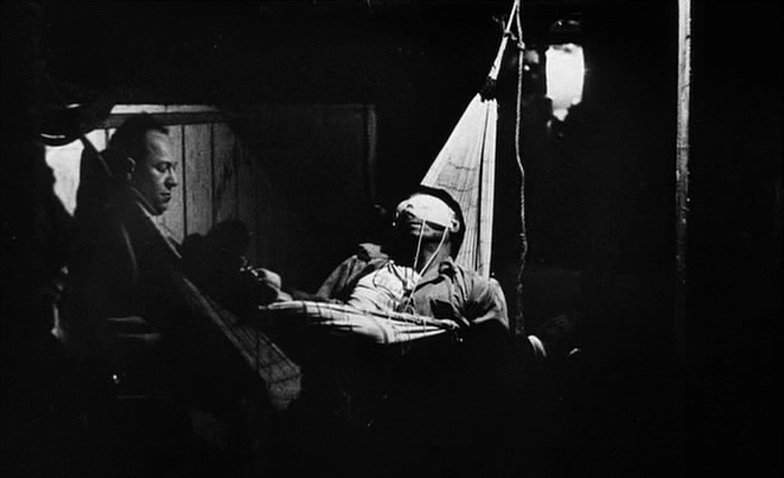
The cinematography of La Jetée, credited to Marker and Jean-César Chiabaut, does not capture life in motion. It embalms it. Each frame, shot on a Pentax still camera, is a deliberate act of freezing time, transforming a moment into an artifact ready for future excavation. The film’s black-and-white 35mm presentation lends a stark, archival gravity to the images, positioning them as evidence from a forgotten history, even when depicting a speculative future. The photography is not about creating the illusion of reality but about presenting reality as a collection of discrete, immutable records. This choice makes the protagonist’s journey feel less like time travel and more like archaeology, a digging through the fossil bed of his own memory.
The visual texture is one of high contrast and deliberate composition. Faces are often isolated against dark or neutral backgrounds, their expressions captured and held for forensic inspection by the audience. The lighting, whether in the subterranean labs of the future or the sunlit parks of the past, prioritizes clarity and form over naturalism, closer to portrait practice than to conventional three-point coverage. Each photograph is composed to be an icon, a singular, potent image that can withstand a long duration on screen. The spherical lenses and the 1.66:1 aspect ratio provide a classical, almost restrained container for this radical approach, a reminder that lens and format choice sets the frame long before anything is staged inside it.
This strategy of photographic stillness makes the film’s single instance of live-action footage one of the most effective reveals in cinema. The brief shot of Hélène Châtelain blinking, reportedly captured with a 35mm Arriflex, is a moment of deep shock and release. After twenty minutes of static ghosts, the return of motion feels miraculous, a gasp of air in a vacuum. The woman is no longer just an image to be remembered; she is alive, present, and real. The power of that single shot is a direct consequence of the photographic discipline that precedes it. It demonstrates that the most effective way to communicate the value of something, in this case the living, breathing present, is to first establish its absolute absence.
The Illusion of Time from Stillness (Editing)
The montage in La Jetée is the film’s engine, its circulatory system, and its nervous system. The editing, credited to Jean Ravel, does not assemble shots to create spatial continuity. It arranges still images to manufacture the very experience of time. Through the careful manipulation of duration, rhythm, and transition, the edit builds a temporal world from static fragments. The primary tools are not the match cut or cutting on action, but the length of a hold, the speed of a dissolve, and the shock of a hard cut. A slow fade from one image to another suggests a gentle passage of memory, while a rapid-fire sequence of stills creates the sensation of a frantic, overwhelming flood of information.
Ravel’s montage mimics the grammar of a moving picture. A series of photographs, each slightly reframed, creates the illusion of a camera pan or tilt. An optical zoom into a detail of a photograph simulates a push-in. Yet the artifice is never hidden. The viewer is always aware that they are watching a construction, a deliberate assembly of fixed moments. This awareness is central to the film's thesis. It suggests that our own memory functions not like a continuous recording, but like a curated slideshow of significant images, edited for emotional impact. The cutting makes a claim that time itself, as we perceive it, is a montage.
The relationship between sound and image is where the editing’s temporal manipulation becomes most complex. The narrator’s voice often arrives before or lingers after the image it describes, a constant use of J-cuts and L-cuts that unmoors the viewer in time. The sound provides the continuity that the images deny, pulling the audience through the static frames. One could argue whether the rhythm of the cuts follows a purely intuitive, emotional logic or a more structured, almost mathematical pattern. Without production notes, it's impossible to be certain. What is certain is that the editing provides a masterclass in creating cinematic propulsion without a single moving actor, proving that the perception of movement is a function of rhythm, not just of photographed motion.
Sound as the Film's True Movement (Sound Design & Music)
In a film composed almost entirely of still images, the mono soundscape becomes the primary carrier of narrative momentum, emotional texture, and physical space. The work done with sound recordist Antoine Bonfanti does not merely supplement the visuals; it often replaces the information that would normally be conveyed by a moving picture. The world of La Jetée is built from whispers, heartbeats, echoing footsteps, and the ominous hum of machinery. These elements, layered into the sound bed, create a rich and immersive off-screen reality that gives depth and life to the static frames. The sound design is what populates the world, suggesting the presence of crowds in a museum, the rustle of wind in the trees, and the chilling sterility of the underground laboratory.
The narration by Jean Négroni is the film’s spine, and the handling of the recorded voice carries weight that the images refuse to take on. Its delivery is measured, melancholic, and omniscient, establishing a tone that is both deeply personal and historically detached. It is the voice of a survivor recounting a myth. The narration functions as the film's internal monologue, but also as its objective record, blurring the line between subjective experience and factual account. This constant voiceover, combined with the still images, creates an experience akin to looking through a family album while a relative tells you the story behind each picture.
The score, featuring music by Trevor Duncan alongside liturgical pieces, provides the emotional surges that the static images deliberately withhold. The swell of the choir as the protagonist finally reaches the idyllic past is not just musical accompaniment; it is the emotional event itself. The music does the work that a sweeping crane shot or a tearful embrace would do in a conventional film. It elevates the still photographs from mere records into moments of transcendent feeling. The entire sound mix, from the faintest sound effect to the narrator’s voice to the powerful score, is what moves. It is the current that carries the viewer through this archipelago of frozen moments.
Performance as a Held Moment (Acting)
!Image Hélène Chatelain in La Jetée (1962)
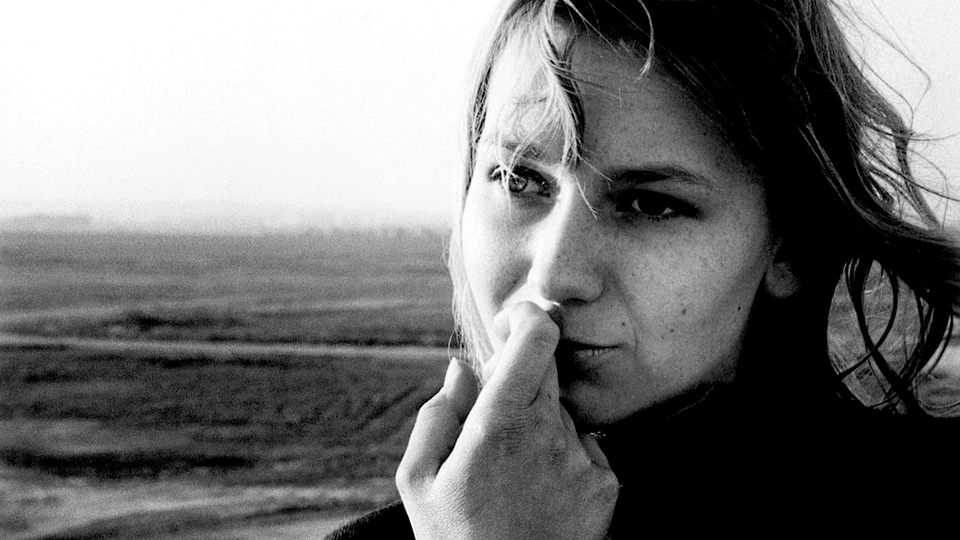
The performances of Hélène Châtelain and Davos Hanich in La Jetée are a complete inversion of traditional screen acting. Their craft is not expressed through a continuous flow of gesture, dialogue, and reaction, but through the ability to embody a single, perfect, photographable instant. Their work is one of portraiture. An actor in a conventional film builds a character over thousands of frames; here, they must convey a world of meaning in one. The power of the protagonist’s obsession is built entirely on the repetition of a few key images of Châtelain’s face, her expression poised between a smile and a look of gentle concern. Her performance exists in the subtle, almost imperceptible variations between these few chosen photographs.
Hanich, as the man, is often a vessel for the viewer’s projection. His face, seen in moments of intense concentration or passive observation, becomes a screen onto which we project the agony and longing described by the narrator. The absence of movement forces an incredible focus on the actors’ eyes. The entire emotional arc of the film can be read in the exchange of gazes between the two leads across different photographs, a silent dialogue conducted across time. This makes a powerful claim about our own empathetic abilities: we are wired to find meaning in a human face, and a still photograph grants us the time to study it, to imagine the thoughts behind the eyes, to build a universe of interiority from a single look.
The one moment of filmed motion, when Châtelain’s eyes open, is a shattering culmination of this technique. It is the instant the portrait comes to life. Her performance for the preceding twenty minutes is what gives this simple action its devastating power. She has been an object of memory, a beautiful fossil. In that one second of movement, she becomes a person. It is a proof to an acting style predicated on stillness, where the slightest flicker of life can feel like a resurrection.
Scene Study: The Awakening
The sequence in which the unnamed woman (Hélène Châtelain) awakens is arguably the most discussed in La Jetée. For a film built entirely from the grammar of the still photograph, this lone concession to conventional cinematic motion serves as its formal and emotional apex. The scene is not a scene in the traditional sense of coverage and performance, but a carefully curated succession of still portraits, optically printed and rhythmically cut by editor Jean Ravel, that culminates in a single, filmed, moving shot.
The sequence builds from a series of still images of the woman asleep in bed. The photography, credited to Marker and Jean-César Chiabaut, frames her in intimate close-up. The lighting is soft, directional, suggesting a single, motivated source like a bedside lamp or morning sun, casting gentle shadows that model her face. The compositions are still, but the editing is not. Ravel employs slow dissolves between the photographs, creating a sense of languid time passing. Each new image is a slight variation on the last: a subtle shift in head position, a change in the fall of her hair. The effect is a temporal smear, a representation of a sleeping consciousness where discrete moments blur into a continuous state. The viewer is placed in the position of the protagonist, the time traveler, gazing at this icon of memory, this fixed point in his past. The stillness of the images reinforces her status as a memory-object, a perfect, unchanging component of a recurring dream.
The sound design, a collaboration between narrator Jean Négroni’s voice, Trevor Duncan’s score, and Antoine Bonfanti’s sound work, is spare. The narration guides the viewer, but it is the ambient sound bed and the gentle musical cues that create the scene’s atmosphere of deep peace. The mono mix focuses the auditory experience, preventing spatial distraction and concentrating the viewer’s attention as tightly as the camera’s. The soundscape is the temporal fluid in which these frozen moments of memory are suspended.
Then, the rupture. The film holds on one particular still of the woman, her eyes closed. The score may swell, the narration may pause, but the primary event is visual. The image ceases to be an image. She blinks. Her eyes open, her mouth moves slightly. For a few seconds, the photomontage gives way to a motion picture, reportedly captured on an Arriflex 35mm camera. The effect is an ontological shock. After nearly twenty minutes of being conditioned to the film's static visual language, the audience experiences motion not as a cinematic default but as a miracle. It is the return of the real. The woman is no longer just a photograph, an artifact of memory to be endlessly revisited; she is alive, present, and looking back.
This single moving shot accomplishes what pages of dialogue or a dozen conventionally filmed scenes could not. It confirms the woman's vitality and, in doing so, validates the protagonist’s desperate quest. Her living gaze breaks the fourth wall of memory, momentarily collapsing the distance between the observer and the observed. The power of the moment comes from its singularity. By withholding the basic unit of its medium for so long, La Jetée transforms the simple act of a character blinking into a deep statement about life, memory, and the very nature of cinema. We are so conditioned to the flow of 24 still frames per second creating the illusion of life that when we are given only one frame at a time, the sudden restoration of that flow feels more potent than life itself. The sequence argues that memory is a gallery of static images, but life, true life, exists only in the interstitial moments of motion.
What the sequence teaches. Withholding a fundamental cinematic tool, such as motion, allows its eventual deployment to carry immense thematic and emotional weight. Establishing a rigorous formal constraint and then breaking it, just once, can create a more powerful effect than its constant application. The technique demonstrates that a film's "rules" are most potent when the audience is made to feel the consequences of their violation.
Scene Study: The Museum of Time
In a film obsessed with the architecture of memory, the sequence set in Paris's Muséum national d'Histoire naturelle functions as a critical expansion of the narrative’s scope. Here, the protagonist’s personal, fragmented timeline is juxtaposed with the immense, geological deep time of the natural world. The sequence is a masterclass in using setting and intertextuality to deepen theme, constructed, like the rest of the film, from a montage of still photographs.
The scene finds the man (Davos Hanich) and woman wandering through the museum's galleries. The stills capture them as small figures dwarfed by their surroundings: halls of taxidermied animals, skeletons of extinct creatures, specimens preserved in jars. The compositions emphasize scale and stillness. The couple, themselves frozen by the Pentax camera’s shutter, become another exhibit, two living specimens momentarily arrested amidst a vast collection of the dead. The lighting is flat and institutional, the ambient light of a public space, which strips the scene of romanticism and shows its function as a visual argument. The cutting connects the couple’s gazes to the objects they observe, creating a silent dialogue between the present and the past.
The sequence pivots on a single, resonant image, one that is a documented, direct quotation of Alfred Hitchcock’s Vertigo (1958). The couple stands before a cross-section of a giant sequoia tree trunk. Its rings are marked with dates, charting a history that stretches back centuries. This is the film's most explicit moment of intertextuality. In Vertigo, the character of Madeleine (Kim Novak) points to the rings of a similar tree, indicating her "birth" and "death" and cementing her own temporal dislocation. By importing this reference, Marker is not merely paying homage; he is grafting Hitchcock’s themes of obsession, cyclical time, and manufactured identity directly onto his own narrative. The protagonist, like Scottie Ferguson, is a man haunted by a woman who seems to exist outside of time. The sequoia becomes a map of a history so vast it renders individual human lives, even the cataclysm of a world war, into mere footnotes.
The sound design supports this feeling of temporal vertigo. Négroni’s narration may provide context, but the power of the sequence lies in the imagined soundscape: the cavernous echo of the museum hall, the hushed quiet of contemplation. The juxtaposition is everything. The stills cut between the lovers' faces, full of fleeting life, and the permanent, unblinking glass eyes of the taxidermied animals. The editing rhythm, a deliberate succession of stillnesses, forces the viewer to contemplate the relationship between these images. It suggests that all of history is a collection of static moments, a museum of the past, and that the protagonist’s own journey is simply a more literal version of the way all humans navigate their own collection of memories.
This confrontation with deep time is a deep moment of human feeling within the film's intellectual structure. It is the sensation of looking at the stars and feeling one's own insignificance, a feeling that paradoxically clarifies our own existence. For the protagonist, a man unstuck in time, this moment in the museum is both terrifying and comforting. It places his personal trauma within a context so large it almost disappears, while simultaneously reinforcing the terrible truth of his condition: he is a ghost walking through a museum of a past he can see but never truly touch. The sequence transforms a romantic stroll into a philosophical inquiry into mortality, history, and the stories we tell ourselves with the images we collect.
What the sequence teaches. Cinematic intertextuality, when used with precision, can be an act of deep narrative economy. A single, well-chosen visual quotation can import the entire thematic framework of another work, layering complex ideas into a scene without a word of dialogue. It teaches that films exist in conversation with each other, and a filmmaker can use that shared cultural memory to build meaning.
Technical Firsts and What Was Actually New
Chris Marker’s La Jetée (1962) is built from a formal constraint so absolute it becomes a new cinematic language. The film is a photo-roman, a story told almost entirely through still photographs. This technique, born of documented budgetary limitations, is often mistaken for the film’s primary innovation. But the use of still images in motion pictures was not new. Documentary and avant-garde cinema had long used photographs as evidence, punctuation, or graphic texture. The genuine innovation of La Jetée is one of application and degree: it is arguably the first film to use the static photomontage not as a stylistic device, but as the complete architecture for a complex, character-driven science-fiction narrative.
The film’s construction relies on the optical printing of still photographs, taken by Marker and Jean-César Chiabaut on a 35mm Pentax still camera. These images are held on screen for varying durations, linked by dissolves or hard cuts, and propelled by Jean Négroni’s incantatory narration. The editor, Jean Ravel, doesn’t simply assemble images; he controls the viewer’s perception of time. A rapid succession of stills creates a kinetic illusion of movement, while a long hold on a single face forces contemplation. This rhythmic cutting, combined with Antoine Bonfanti’s layered sound design, generates a subjective temporality. We are not watching a story unfold; we are experiencing the jagged, non-linear process of memory itself. The still frame, a frozen instant, becomes the perfect visual correlative for a memory fragment.
Where other films use stills to stop time, La Jetée uses them to travel through it. The narrative’s paradoxes of causality and predestination are mirrored in a form that is itself a paradox: a moving picture made of unmoving pictures. The film’s one celebrated break from this convention, a few seconds of live-action footage where Hélène Châtelain’s character opens her eyes and blinks, confirms the strategy by its very exception. A widely repeated production note, plausible if not fully verified, suggests Marker could only afford to rent an Arriflex motion-picture camera for a single afternoon. True or not, the effect is deep. After twenty minutes of stasis, this brief flicker of movement feels like a miracle, a gasp of air. It is the moment the remembered image becomes terrifyingly, tangibly alive. The innovation, then, was not the still photograph, but the transformation of its inherent stillness into a philosophical statement about time, consciousness, and the image.
Influence and Inheritance
A film composed of such singular material resists easy imitation, yet its DNA is traceable in later cinema, often in works concerned with memory, technology, and the image’s veracity. The most direct inheritor is Terry Gilliam’s 12 Monkeys (1995), a feature-length film that takes Marker’s narrative skeleton and fleshes it out with the apparatus of a Hollywood production. Gilliam’s film explicitly credits La Jetée as its inspiration, translating the core time-loop paradox into a more conventional, dialogue-driven thriller. The comparison is instructive: 12 Monkeys explores the plot of La Jetée, but La Jetée embodies its own themes through its very form.
Marker himself was engaged in a dialogue with film history, embedding a clear homage within his own work. The sequence where the protagonists examine the cross-section of a tree trunk, its rings marking the passage of time, is a direct visual quotation of a similar scene in Alfred Hitchcock’s Vertigo (1958). In both films, the moment serves as a meditation on time’s relentless forward movement, a preoccupation traced across Hitchcock’s whole body of work, a stark contrast to the characters’ own desperate attempts to circle back and reclaim a lost past. Marker would revisit this exact image in his later essay film, Sans soleil (1983), deepening his career-long inquiry into how images mediate our understanding of time.
Beyond direct homage, the film’s aesthetic echoes in works that use formal restraint to achieve philosophical weight. The contemplative, often near-static compositions in the anime of Mamoru Oshii, particularly Ghost in the Shell (1995), share with La Jetée a willingness to pause action in favor of visual reflection on what it means to be human in a technologically saturated world. More broadly, Marker’s method anticipates the grammar of the modern video essay. The combination of archival or staged images, analytical voice-over, and contrapuntal sound design has become a dominant mode of online criticism and art, making Marker an accidental progenitor of a 21st-century form. His work demonstrated that a powerful cinematic argument could be built from static material, an idea that has found new life in a digital terrain saturated with images.
Critical Reception and Counter-Readings
While detailed English-language reviews from its 1962 release are not widely documented, La Jetée was quickly recognized within festival and cinephile circuits as a significant work. Its current status as a canonical masterpiece is undisputed, cemented by its inclusion in the collections and programs of institutions like the Criterion Collection, the British Film Institute, and MoMA. It is celebrated as a foundational text of both the essay film and modern science fiction, a work whose formal austerity amplifies its thematic richness. For many critics, like J. Hoberman, who has written extensively on Marker, the film’s brilliance lies in its perfect fusion of form and content: a story about fragmented memory told through fragmented images.
This consensus, however, is not without its potential challengers. The most potent counter-reading comes not from a rejection of the film’s formal power but from an ideological critique of its gaze. A feminist critical perspective, such as that articulated by Laura Mulvey in her landmark 1975 essay "Visual Pleasure and Narrative Cinema," offers a framework for questioning the film’s romantic core. On this reading, the entire narrative is driven by the male protagonist’s obsessive memory of a woman (Hélène Châtelain). She is the catalyst, the destination, and the prize. Yet she exists almost exclusively as an object of his gaze. She has no voice of her own, her thoughts are unknown, and her identity is defined entirely by his memory of her beauty and her presence in a moment of trauma.
The film’s single moving shot, her eyes blinking open, can be read not just as a formal coup but as the ultimate objectification. It is the moment the image, the memory, becomes "real" for the protagonist, a confirmation of his psychic possession of her. She is a beautiful ghost haunting his consciousness, a passive figure in a drama of male agency and destiny. This reading does not invalidate the film’s aesthetic achievements. Instead, it exposes a tension at its heart. La Jetée is a deep meditation on the mechanics of memory, but it is specifically a meditation on male memory, in which a woman’s image becomes the territory where a man’s fate is created and destroyed. The film’s formal perfection may inadvertently reinforce a deeply conventional, even problematic, structure of looking.
What Working Filmmakers Should Steal
The single moving shot. The film’s one moment of conventional cinematography is its most powerful because everything around it is denied. Reserve your most complex or expensive technique, whether a crane, a Steadicam run, or a single live-action insert, for the exact beat where the story turns. The audience will read the change in method as meaning.
Sound as the motion budget. If you cannot afford movement, buy presence instead. Narration, layered ambience, a heartbeat, a distant choir: these cost a fraction of a shooting day and do most of the work motion would have done. Budget post sound as a production line item, not a cleanup pass.
Optical moves on static material. Pans, tilts, and push-ins created in post across a still frame remain viable on any modern timeline. Photograph at high resolution, then move within the frame. A well-lit still with room to travel is often a better investment than a rushed moving shot.
Duration as the primary edit tool. With no action to cut on, Ravel controls the film entirely through how long each image is held. Run a pass on your own cut where you change nothing but shot length. The emotional register shifts more than most editors expect.
One quotation instead of one scene. The sequoia rings import the thematic weight of Vertigo in a few seconds. A precise reference to a film your audience knows can replace a page of exposition, provided the reference carries an idea and not just a wink.
Constraint declared up front. La Jetée announces its rules in the first ten seconds and never cheats them. Audiences accept extreme formal limits when the limits stay consistent. What they reject is a rule broken by accident.
How to Watch It
The Criterion Collection edition, paired with Marker’s Sans soleil, is the reference presentation: 1.66:1, black and white, restored mono, with Jonathan Romney’s essay as context. The film is also programmed regularly by the BFI and MoMA, and a theatrical screening is worth seeking out, since the shock of the blink depends on scale and on an audience holding still together.
Watch it twice in one sitting. On the first pass, follow the story and let the narration lead. On the second, mute the track for a few minutes and notice how quickly the photographs stop cohering. Then return to the awakening sequence alone and count the hold times leading into the live-action shot. That is the whole lesson of the film in about ninety seconds.
Runtime is 28 minutes, which makes it the rare canonical work you can study three times in an evening.
Sources and Further Reading
Critical Texts and Scholarship
- Harbord, Janet. Chris Marker: La Jetée (Afterall Books, 2009).
Further Reading
- Catherine Lupton, Chris Marker: Memories of the Future (Reaktion Books). The standard English-language study of Marker's working method across the essay films and La Jetée.
Research References
1. bfi.org.uk
© 2026 BlockReel DAO. Film Studies series. Licensed under CC BY-NC-ND 4.0.