Night Exteriors: Lighting, Exposure & Noise
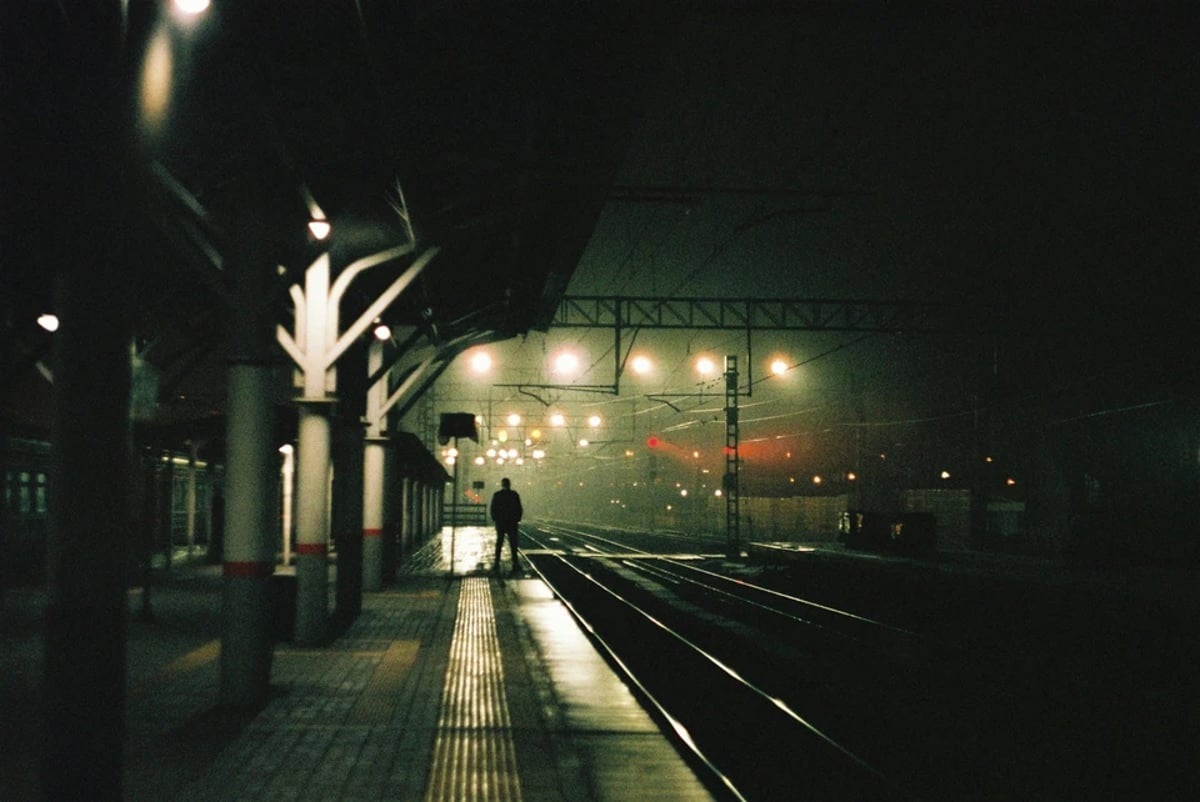
> Executive Summary > > Night exteriors live or die on three decisions made before the camera rolls: a lighting philosophy rooted in motivated sources, an exposure strategy that protects midtones and keeps shadows above the noise floor, and a noise plan that starts at native ISO rather than in post. Shoot at the camera's native (or second native) ISO, expose key skin to roughly 40–50 IRE on a Rec.709 monitor (true midtones in Log), keep shadows above ~18–20 IRE so they remain recoverable, and gel or dim practicals so they motivate the frame without clipping. Use fast glass (T1.3–T2) before reaching for higher ISO, build separation with low-angle motivated kickers, and treat post noise reduction (DaVinci Resolve, Neat Video) as polish, not rescue.
Table of Contents
1. Lighting Philosophy for Night Exteriors
---
Crafting compelling night exteriors demands a nuanced understanding of light, shadow, and the technical capabilities of modern cinema cameras. It is a precise balance between realism and dramatic intent, where every decision about illumination, exposure, and noise management directly impacts mood, story, and audience immersion. This guide covers the techniques and philosophies that elevate night scenes from merely visible to truly cinematic. For the complete overview of the entire camera and cinematography workflow, see our Cinematography Pipeline Guide: From Camera Tests to Deliverables.
Lighting Philosophy for Night Exteriors
The foundation of any successful night exterior is its lighting philosophy. Unlike day scenes where light is abundant, night work requires a deliberate construction of illumination that feels motivated and organic. The goal is not to "see" everything, but to guide the viewer's eye, create atmosphere, and reinforce the narrative. Cinematographers like Roger Deakins emphasize motivated lighting, ensuring every source on screen has a logical, real-world counterpart, whether a distant streetlight, the glow from a window, or an implied moon. For a deeper treatment of cohesive visual language, see The Architect of Light: Building a Cohesive Visual Language for Your Film.
A key principle in night exterior lighting is the strategic use of contrast. Instead of trying to illuminate the entire scene evenly, cinematographers aim for high contrast ratios (often 8:1 or higher) to evoke the inherent mystery and drama of darkness. This means allowing large areas to fall into deep shadow, using light selectively to highlight key elements or characters. Michael Ballhaus, known for his work on films like The Departed, frequently employed this approach, using direct, broken-up light rather than broad, soft illumination, to create gritty, immersive night looks that felt authentic to the urban environment.
When building a night lighting scheme, layer your light. Establish a key light for your subject, often placed low and slightly off-axis (30–45°), to create dramatic shadows that sculpt the face and add depth. Support the key with subtle fill (typically 1–2 stops under the key) to prevent crushing shadows entirely and allow some detail in darker areas. Backlight or kickers are used sparingly and with purpose, motivated by an off-screen source like a distant car headlight or a street lamp, to separate the subject from the background. Avoid the overly theatrical look where backlight appears unmotivated, creating artificial halo effects.
Color temperature is critical to the mood of a night scene. Cooler temperatures (around 5600K) can simulate moonlight or harsh urban lighting, evoking isolation or danger. Warmer temperatures (around 3200K) from practical sources such as windows or interior lights create pockets of intimacy or coziness within the larger darkness. Deakins' work in Skyfall shows how subtle shifts in color temperature for different sources can define emotional spaces within a night exterior.
Modern LED fixtures like the ARRI SkyPanel S60-C (a versatile RGBWW LED panel offering 2,800–10,000K tunability and IP54 weatherproof construction) are invaluable for night exteriors due to their precise color control and rugged build, allowing them to be used in challenging outdoor conditions. These panels integrate easily into a DMX or wireless network for remote control and rapid adjustments. For softening or adding a subtle bloom to highlights, diffusion filters such as 1/4 or 1/2 Black Pro-Mist are commonly used, introducing pleasing halation around bright sources without significantly softening facial detail. For more on filtration tradeoffs, see Filtration Deep Dive: Diffusion, ND, Polarization, and Artifact Management.
💡 Pro Tip: When planning your night exterior lighting, don't just think about what you want to light, but what you want to hide. Effective night cinematography uses darkness as a compositional tool, drawing attention to illuminated areas and allowing the unseen to contribute to mood and mystery. Use flags or solid blacks to subtract light and create "darkness that forbids," selectively revealing story beats.
Key and Supporting Light Placement and Motivation
The precise placement and motivation of key and supporting lights are paramount for believable, impactful night exteriors. Unlike daylight, where the sun provides a dominant, often singular, key source, night lighting is constructed from multiple, often smaller, motivated sources. Each light must have a reason to exist within the scene's reality, even if that reason is implied. For prelight planning that respects schedule and budget, see Lighting Prelight Strategy: When It's Worth It and How to Plan It.
For the primary subject, the key light is typically positioned low and frontal, often 30–45 degrees off-axis from the camera. This angle creates strong, dramatic shadows that sculpt the face and body, enhancing dimensionality and mood. The inverse-square law becomes a powerful tool here: placing the key relatively close to the talent (e.g., 6–8 feet) ensures rapid falloff, quickly transitioning from illuminated areas to deep shadow. This falloff is crucial for maintaining the sense of nighttime contrast. If the key is too far away, the light flattens and the falloff is less pronounced, diminishing the dramatic effect.
Supporting lights (fill, backlights, kickers) must also be meticulously motivated. Fill should be subtle, typically 1–2 stops below the key, designed to lift shadows just enough to retain detail without flattening the scene. This can be achieved with a smaller LED panel like a Litepanels Gemini 2x1 (an RGBWW panel, 2,700–10,000K, often battery-powered for flexibility) bounced into a large diffusion frame, such as an 8x8' butterfly with Lee 216 White Diffusion or a 1/4 Grid Cloth. The diffusion softens the fill, making it less directional and more ambient. For deeper soft-source craft, see Soft Sources Explained: Book Lights, Bounce, Diffusion, and Control.
Kickers and rim lights provide separation from the dark background and add sparkle. These should always be motivated by an on-screen or implied off-screen source. For instance, a kicker might represent a distant streetlamp, the glow from a shop window, or passing car headlights. The key is to ensure these lights catch only the edges of the subject, creating a subtle outline rather than a broad, unmotivated halo. Grids (e.g., a 15° honeycomb grid on an LED panel) precisely control beam spread, preventing spill onto unintended areas.
Michael Ballhaus's work on The Departed exemplifies the use of direct key lights with minimal bounce to create contrasty night looks grounded in the urban environment. He often used hard light to carve characters from their surroundings, relying on practicals and motivated sources to build the overall atmosphere. Modern IP-rated LED fixtures allow greater flexibility in placement, enabling cinematographers to position lights on high stands, cranes, or hidden within the environment without concern for weather. For end-to-end execution from prelight to set, see Lighting & Grip Masterclass: Prelight Strategy to Set Execution.
💡 Pro Tip: To ensure your lighting feels natural, always consider the direction and quality of your motivated sources. If a streetlight casts a shadow in a particular direction, make sure your artificial key or kicker aligns with that logic. Pre-lighting with on-set show LUTs that match your final grade provides a more accurate preview of how your light ratios and color temperatures will translate, preventing surprises in post.
Exposure Strategies to Preserve Detail
Exposure is a critical technical and artistic decision in night exteriors. The goal is to capture sufficient detail in both highlights and shadows while maintaining the inherent mood of darkness. Underexposing too much produces crushed blacks and excessive noise; overexposing flattens the image and loses the sense of night.
Modern cinema cameras such as the ARRI Alexa Mini LF (dual-native ISO 800/3200 with the ALEV 4 sensor, recording LogC3) and the ARRI Alexa 35 (native ISO 800 with REVEAL Color Science and LogC4, ARRI's stated 17 stops of dynamic range) offer significant latitude for low-light work. The prevailing strategy for night exteriors is to expose for the midtones, aiming for key skin tones to register around 40–50 IRE on a Rec.709 monitor (with the show LUT applied). While "Expose To The Right" (ETTR) is a common digital capture philosophy, for night exteriors it is usually shifted slightly left to preserve intended darkness while still retaining shadow information for recovery in post. Shadows should remain above the noise floor, not crushed to zero.
A crucial part of this strategy is understanding native ISO. Shooting at the camera's native ISO (e.g., 800 on the Alexa 35, Mini LF, or RED V-Raptor) provides the cleanest signal-to-noise ratio. Pushing beyond native ISO often introduces more noise, particularly chroma noise that is difficult to remove cleanly. If conditions demand higher sensitivity, dual-native ISO cameras (like the Alexa Mini LF's 3200 setting or the Sony VENICE 2's 800/3200 dual base) allow a cleaner signal at higher sensitivity, but use them only when necessary.
Shutter angle is another important consideration. For cinematic motion at 24 fps, a 180° shutter equates to 1/48 sec (1/50 sec on most monitors); a 1/60 sec exposure at 24 fps is closer to a 144° shutter and gives a slightly crisper, more staccato motion read. Deviating from 180° introduces motion artifacts (smearing or strobing) that should be a deliberate creative choice. Fast lenses, such as the Zeiss Supreme Primes (T1.5), Cooke S7/i FF (T2.0), or Sigma FF Classic Primes (T2.5), are invaluable for night exteriors, allowing more light to reach the sensor and reducing the need to push ISO. For deeper lens decisions, see Lens Selection Mastery: A Complete Guide for Cinematographers.
On-set monitoring is non-negotiable. Waveform monitors and false color are essential. False color, in particular, provides an immediate visual map of exposure across the frame, allowing the DP to quickly identify clipping highlights or shadows below the noise floor. For example, aiming skin to land in a specific false-color band (typically the green band on ARRI's false color) keeps exposure consistent across setups. For pipeline-wide monitoring planning, see Color Pipeline Planning: From Set Monitoring to Final Master.
A common pitfall is clipping highlights from unfiltered practicals within the scene. To avoid this, gel practicals with neutral density (e.g., Rosco E-Colour 298 1/4 ND or 209 0.3 ND) or swap to lower-wattage bulbs to reduce intensity before light reaches the sensor. This allows the practical to register as a bright, motivated source without blowing out to pure white, preserving detail and color information. Jess Hall's work on Ghost in the Shell demonstrates a masterful balance of key exposure with practical falloff, creating visually rich night environments.
💡 Pro Tip: When shooting Log (LogC3, LogC4, RED Log3G10, S-Log3), it is often beneficial to slightly overexpose ambient sky by about one stop on night exteriors. This provides more information in the upper end of the dynamic range, allowing greater flexibility in post to pull down highlights and sculpt the sky to the desired darkness without introducing posterization or banding. For grading methodology and tools, see Color Grading Mastery: From Technical Foundations to Creative Excellence.
Noise Management Techniques and Sensor Performance
Noise management is arguably the most critical technical challenge in night exteriors. While organic grain can add texture and realism, excessive or uncontrolled noise is distracting and degrades image quality. The primary strategy begins with proper exposure and an understanding of sensor performance.
The first line of defense against noise is shooting at the camera's native ISO. Cameras like the RED V-Raptor 8K VV (native ISO 800), Sony VENICE 2 (dual base 800/3200), and ARRI Alexa 35 (native 800) are designed to perform optimally at these settings, providing the cleanest signal. Pushing ISO significantly beyond native, especially on single-native-ISO sensors, introduces more digital noise (particularly chroma noise) that is harder to remove cleanly in post.
Full-frame sensors, increasingly common in modern cinema cameras, generally demonstrate strong low-light performance due to their larger photosites, which gather more light per pixel. This contributes to a cleaner image with less noise even in challenging conditions. Cinematographers like Paul Cameron, known for his precision and mastery of challenging environments, often leverage low-noise characteristics of these larger sensors in his night work.
When even native ISO and fast lenses (T1.3–T2) are insufficient, dual-base architectures (like the Alexa Mini LF's 3200 or VENICE 2's 3200) become invaluable. Even with these, the higher base provides a cleaner signal than gaining up a single-native sensor, but it may still introduce more subtle noise than the lower base. Use the upper base only when motivated by exposure, not as a default.
Post-production noise reduction is essential, but use it judiciously. DaVinci Resolve Studio offers powerful temporal and spatial noise reduction, often complemented by Neat Video for difficult plates. Temporal NR analyzes multiple frames to identify random noise patterns; spatial NR works within a single frame. Apply just enough to clean the image without making it look plastic, smearing fine detail, or introducing motion artifacts. For handheld shots or scenes with significant movement, temporal NR needs careful balance to avoid ghosting.
💡 Pro Tip: For critical low-light shots, especially those with subtle movement, consider shooting 2–3 takes of the same action from a locked tripod. In post, these takes can be stacked and averaged using temporal NR or median-blend techniques in Resolve, often yielding a cleaner image with less aggressive NR settings and better detail preservation.
Practical and Ambient Light Integration
Integrating practicals and existing ambient light is crucial for grounding night exteriors in reality. The goal is to make the scene feel as if the existing environment is providing illumination, even when it is being heavily augmented. For deeper craft on practical bulbs, dimming, and color rendering, see Practical Lighting: Bulbs, Dimming, CRI/TLCI Pitfalls, and Color Control.
Practicals (streetlights, lamps, neon signs, car headlights) serve as motivated sources. However, their actual output is often insufficient for cinematic exposure. The art lies in boosting these sources without making the augmentation obvious. Compact, high-output RGBWW fixtures like the Nanlite Forza 60C (a compact RGBWW point-source, approximately 2,700–7,500K) are ideal for this. They can be hidden behind existing practicals, within set dressing, or just out of frame to subtly increase output.
When boosting practicals, match the inherent quality of the source. If the practical is a bare bulb, the boost should also be hard and directional. If it is a diffused lamp, the boost should be softened, perhaps by bouncing the LED into a small piece of Rosco Cinegel 3208 1/4 Tough Frost. The aim is for the boost to feel like an extension of the practical, maintaining its character and falloff.
Ambient light, such as the glow from a city skyline, distant streetlights, or subtle moonlight, also plays a significant role. These sources contribute to overall fill and background illumination. Carefully observe the color temperature of these ambient sources and match or complement them with artificial lighting. Urban ambient light might lean cooler (5600K), while a warmer 3200K can be introduced from a window practical to create contrast and visual interest.
App-controlled RGB LED practicals are increasingly common, allowing precise color tuning and flicker-free operation, which is essential when shooting at 24 fps (verify the fixture's flicker-free range matches your shutter angle and frame rate). These can be adjusted remotely, even when hidden, to dial in the perfect color and intensity. Wireless control allows dynamic adjustments during a take, perhaps to simulate a passing car's headlights or a flickering neon sign.
A common mistake is having insufficient practical power, resulting in unnatural shadows or a practical that appears bright on camera but does not actually illuminate anything. Before the shoot, measure the output of practicals and supplementary lights with an incident meter (Sekonic L-858D) to ensure they can contribute meaningfully to the scene's exposure and mood.
💡 Pro Tip: When boosting practicals, pay close attention to the inverse-square law. Place your hidden LED booster at a distance from the practical that allows its falloff to blend seamlessly with the practical's natural light. Often, hiding the booster directly behind the practical and diffusing it slightly creates the illusion of increased output without disrupting the light's character.
Common Pitfalls, Fixes, and Pro Insider Techniques
Even with meticulous planning, night exteriors present unique challenges. Awareness of common pitfalls and seasoned pro techniques can streamline the process and elevate the final image.
Common Pitfalls and Their Fixes:
1. Excessive Fill Light Washing Out Night Mood: Too much fill flattens the image and negates the dramatic contrast inherent to night.
2. Unmotivated Backlight Creating Artificial Halos: Backlights without a logical source look fake. * Fix: Ensure all backlights or kickers are motivated by an on-screen or implied off-screen source. Use grids or flags to control spill so the light only catches the edges that would naturally be illuminated.
3. Lens Flares from Uncontrolled Backlight or Practicals: Unwanted flares are distracting in high-contrast night scenes. * Fix: Use a matte box with side flags, top flag (eyebrow), and a French flag to block direct light from the front element. This is critical for practicals or backlights positioned near the edge of frame.
4. Excessive Noise from Underexposure: Underexposing shadows below the noise floor produces grainy, unusable footage that even powerful NR struggles to clean. Fix: Prioritize exposing for midtones and ensure shadows register above roughly 18–20 IRE on a Rec.709 monitor (representing recoverable Log information). There should always be some* information in the shadows. If necessary, switch to the higher dual-base ISO or use faster lenses to gather more light.
5. Overly Theatrical Lighting: Lighting that screams "lit set" rather than feeling natural. * Fix: Study real-world night environments. Observe how light falls from streetlights, how shadows are cast by buildings, and the varied color temperatures present. Replicate these observations using multiple smaller sources rather than one dominant light.
Pro Insider Techniques:
1. "Light the Frame, Not the Talent": A technique often employed by cinematographers like Paul Cameron. Establish the overall lighting of the environment first: light background elements, create depth, and establish the mood of the space. Once the environment feels right, integrate the talent into that pre-established lighting scheme so the actor feels naturally situated within the scene.
2. Strategic Kicker Angles for Separation: For professional separation without looking artificial, use kickers positioned at 15–30 degrees relative to the subject and slightly behind them. This narrow angle catches just the edge, creating a subtle rim that lifts the subject from the dark background. Always ensure the kicker is motivated by an off-frame source.
3. Black Pro-Mist vs. Post Bloom: Black Pro-Mist filters add subtle halation to highlights on set; some cinematographers prefer a cleaner capture and add bloom in DaVinci Resolve or Nuke. In-camera Pro-Mist often yields a more organic feel because the filter spreads light before it hits the sensor; digital bloom is reversible but can look uniform. Test both for your aesthetic.
4. Weatherproofing as a Standard: For serious exterior work at night, all gear (lights, cameras, monitors) should be IP-rated or adequately protected. Modern fixtures (SkyPanel S60-C at IP54, Astera Titan Tubes at IP65) are increasingly built to these standards, preventing costly downtime due to rain or moisture.
5. Pre-Visualization with Lighting Plots and On-Set Show LUTs: Use lighting diagram software (Capture, Vectorworks Spotlight) to pre-visualize light placement and falloff. On set, apply specific show LUTs that reflect the intended final grade. This visual feedback helps the entire team (director, gaffer, DIT) understand how light ratios and color temperatures will translate, reducing guesswork and ensuring creative alignment.
Interface & Handoff Notes
Successful night exterior cinematography relies heavily on clear communication and defined deliverables at every stage of the pipeline.
What you receive (upstream inputs): * Detailed Script & Shot List: Indicating specific night exterior scenes, desired mood, and key narrative beats. (See Cinematography Script Breakdown: From Emotional Spine to Visual Rulebook.) * Director's Treatment / Lookbook: Visual references, color palettes, and stylistic guidelines for night scenes. * Location Scouting Reports: Existing ambient light sources, practicals, power availability, and rigging points. * Camera Test Reports: Dynamic range, noise floor at various ISOs, and lens characteristics, particularly for low-light performance. * Show LUTs: Pre-approved Look Up Tables to be used on set for monitoring, reflecting the intended final grade.
What you deliver (downstream outputs): * Camera Original Files (RAW/Log): Properly exposed, noise-managed footage with metadata embedded. * Camera Reports: Detailed logs including lens, focal length, T-stop, white balance, filtration, and any specific notes for each take. (See Camera Reports That Help Post: Metadata That Prevents Reconform Pain.) * CDLs / ASC-CDLs: Basic color adjustments made on set to guide dailies and the final grade. (For more, see Building a LUT Pipeline: Show LUTs, CDLs, and Governance.) * Reference Stills/Video: Key frame grabs or short clips with the on-set LUT applied, demonstrating the intended look. * DIT Reports: Confirming successful data offloads, checksum verification, and backup status. (See Media Management 101: Checksums, Folder Rules, and Backup Strategies.)
Top 3 Failure Modes for Night Exteriors:
1. Underexposure Leading to Unrecoverable Noise: The most common and damaging failure. If shadows fall below the camera's noise floor, no amount of post can cleanly recover detail without excessive grain or artifacts.
Browse This Cluster
- Cinematography Pipeline Guide: From Camera Tests to Deliverables
Next Steps
Ready to see how this fits into the bigger picture? Start with the complete guide.
📚 Complete Guide: Cinematography Pipeline Guide: From Camera Tests to Deliverables
---
© 2026 BlockReel DAO. All rights reserved. Licensed under CC BY-NC-ND 4.0 • No AI Training. Originally published on BlockReel DAO.