New MZed Course: Green Screen VP for Indies
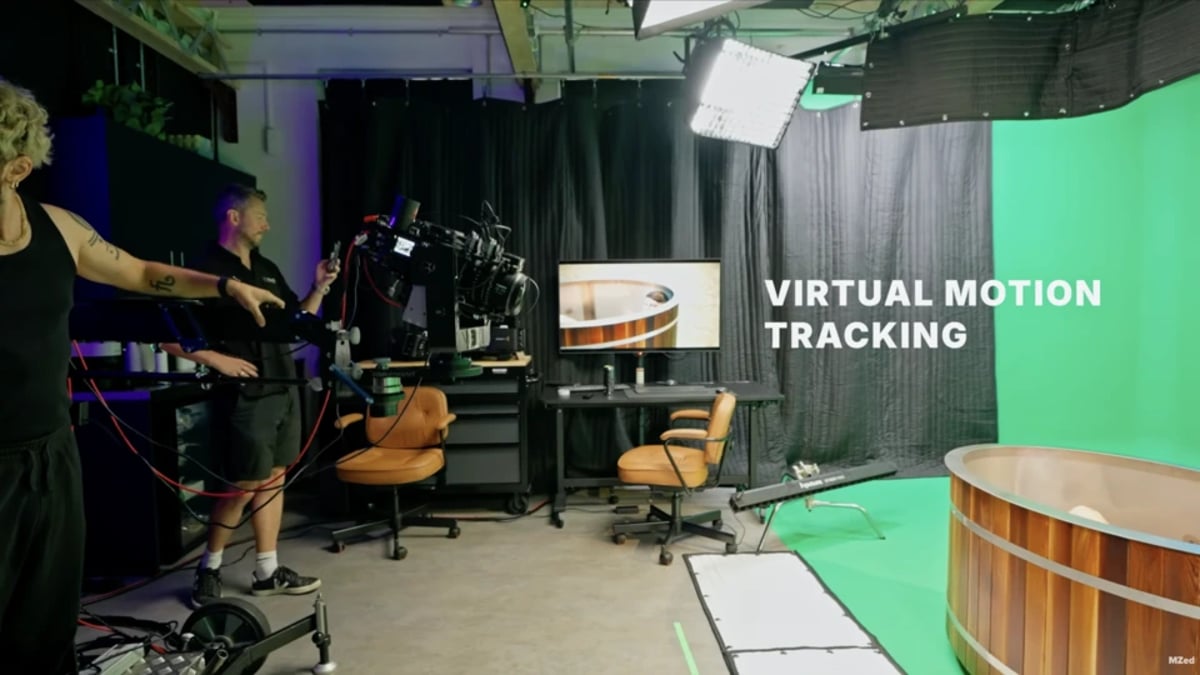
The hype cycle around virtual production consistently defaults to LED volumes, with their multi-million-dollar installations and specialized workflows seen on sets like The Mandalorian. Yet, a new MZed course, "Virtual Production for Beginners," takes a different tack. It posits that an accessible virtual production strategy doesn't require a sound stage built for large-scale feature film or episodic television. Instead, it proposes a focused approach based on green screen stages, Unreal Engine, and real-time compositing. This curriculum, taught by Biro Florin, is designed for the segment of the industry far more likely to integrate virtual production into their daily grind: indie filmmakers, commercial producers, and even YouTube content creators.
Florin, the founder of Virtual Production Coach and Masterwork Films in Brighton, anchors the course in the workflows he actively employs in his own studio. His facility produces a range of content, from branded commercial work and podcasts to original intellectual property, including game and dating show formats. This grounding in practical application means the "Virtual Production for Beginners" course isn't just theoretical; it's a direct peek into a working pipeline. It focuses on taking live talent and integrating them into virtual environments created using Unreal Engine, AI-generated assets, or pre-recorded video plates, all without the prohibitive cost of an LED volume rental.
A Systems-Engineered Approach to Green Screen VP
Before founding Masterwork Films, Florin built and sold a B2B SaaS business. This background is evident in the course's structure, which emphasizes a systems-engineering mindset. Every technical recommendation, from specific lighting setups to paint choices for the green screen, tracker mounts, and recording chains, is tied to a configuration Florin has personally implemented, tested, and iterated upon in a live production environment. This practical validation lends significant weight to the material.
For instance, the course explicitly challenges the conventional cinematic lighting instinct that prioritizes dramatic shadow. Instead, Florin advocates for significantly more fill light on talent when working with green screens. His reasoning is pragmatic: green spill, a common headache in keying, is significantly harder to manage in shadow areas. By flooding the talent with ample, even light, the green spill is minimized and more evenly distributed, simplifying the keying process. This is a battle-tested approach for maximizing clean plates and reducing post-production headaches, a critical consideration when trying to maintain real-time compositing workflows.
Similarly, Florin addresses the temptation to piece together disparate, low-cost components for camera tracking. While hybrid rigs might seem appealing for bootstrapped productions, he explains the long-term value and operational stability found in integrated optical systems, referencing his own experience with Stype systems. This speaks to a common on-set reality for line producers and technical directors: the cost savings on paper from mixed-vendor solutions often evaporate in the form of lost time, troubleshooting, and inconsistent results on the day. Precision tracking is fundamental to believable virtual production, and corners cut here invariably lead to compromises in the final image.
Florin also incorporates lessons learned from the crucible of client delivery. He recounts a critical incident where a key exhibited a subtle but significant flaw, a "hole" in the talent's clothing, that was only discovered a week after delivery. This experience underpins his emphatic recommendation for recording contingency layers. In any real-time compositing setup, capturing isolated elements, such as a clean plate of the background or a separate video feed of the talent before the key, provides essential insurance. These layers allow for adjustments or fixes in post-production if unexpected artifacts or keying issues arise, preserving the integrity of the project and mitigating potential reshoots. It's a pragmatic nod to the chaos inherent in any live production environment, where even the most meticulously planned pipeline can encounter unforeseen technical glitches.
Why Green Screen, Not LED? Strategic Workflow Choices
The core distinction of Florin's approach, and the MZed course, is its deliberate pivot away from the LED volume, which has dominated discussions around virtual production since its prominent use in series like The Mandalorian. While LED walls offer immediate in-camera finals and complex volumetric lighting, their capital expenditure and operational complexities place them out of reach for a significant portion of the filmmaking community.
Florin's justification for emphasizing green screen is rooted in accessibility and workflow flexibility. For producers of commercials, podcasts, brand content, and independent films, the ability to drop live talent into a pre-rendered or AI-generated environment without millions in infrastructure is a substantial advantage. The course details how to achieve real-time keying and compositing of these green screen feeds, routing them directly to switchers, recorders, or live streams. This offers a different kind of "in-camera" effect, one that prioritizes efficiency and a lower barrier to entry.
This approach acknowledges the diverse needs within the industry. Not every project requires the light-fidelity and parallax accuracy of an LED stage. For many, the visual storytelling benefits of virtual environments can be harnessed effectively and affordably through a well-executed green screen workflow. The craft insights here are about making strategic choices based on budget, visual requirements, and time constraints, rather than blindly chasing the most high-tech solution. The underlying technology, like Unreal Engine, remains central, but the method of integrating live action is adapted for a different scale of production.
Curriculum Breakdown: Nine Chapters of Practical Insights
The "Virtual Production for Beginners" course spans nine chapters, initially launching with seven modules, totaling over seven hours. The remaining two chapters, focusing on studio optimization and business strategy, are slated for release in the coming weeks, pushing the total course length past ten hours. This phased release reflects a dynamic approach to educational content, allowing for updates and deeper dives into evolving best practices.
The course is accompanied by a workbook and exercises, designed to reinforce theoretical concepts with practical application. This structure is intended to guide learners through the process of setting up and operating their own green screen virtual production pipeline, from initial calibration to final output. The emphasis on continuous updates also suggests an acknowledgment that virtual production, especially with tools like Unreal Engine and AI-generated environments, is a rapidly changing field, requiring ongoing learning and adaptation.
Accessibility and Real-Time Imperatives
For sound practitioners, this shift in virtual production methodology carries significant implications. While LED volumes often present challenges with reflections and fan noise, green screen stages, particularly independent setups, can introduce their own set of acoustic complexities. The course's mention of "real-time compositing" being routed to "recorders, switchers, or live streams" highlights scenarios where post-production isn't always the safety net. This makes clean production sound even more critical.
When working with real-time green screen workflows, dialogue clarity is paramount. Any noise or reverberation in the source audio, especially in smaller, less acoustically treated studios, becomes very difficult to hide once the visual background is added. This requires heightened attention to boom technique for dialogue clarity: angles, distance, and movement and careful consideration of microphone choice. The "contingency layers" approach, while visual, speaks to a broader philosophy that should extend to audio as well, always record isolated tracks. Recording individual lavalier microphones in addition to boom tracks, for example, provides invaluable flexibility down the line, especially when integrating talent into potentially complex virtual soundscapes.
The logistical implications for the sound department are also noteworthy. Smaller, indie-focused virtual production setups may not have the same dedicated sound stages or post-production budget as larger LED-driven projects. This often means sound mixers need to be even more proactive in managing ambient noise on set and collaborating closely with other departments to ensure ideal recording conditions. The sound they capture on "the day" could be closer to a final mix than in traditional workflows where extensive post-production sound clean-up is factored into the schedule and budget.
The Broader Context of Virtual Production Training
The MZed course arrives at a time when virtual production, in all its forms, is democratizing. While the high-end remains the domain of large studios, the foundational technologies are becoming more accessible. This course is aimed squarely at opening those technologies to a wider pool of creators, enabling them to integrate sophisticated visual effects earlier in the production chain.
This focus on practical application and real-world studio operation distinguishes "Virtual Production for Beginners" from purely conceptual courses. By grounding the curriculum in Florin's Masterwork Films studio, it offers an honest perspective on both the efficiencies and the challenges of green screen virtual production. It is a calculated move to equip filmmakers with tangible skills for a workflow that, while constantly evolving, is clearly here to stay. It prioritizes efficient, repeatable processes over aspirational, budget-busting techniques, making it a relevant training resource for any professional looking to expand their production toolkit beyond conventional methods.
---
© 2026 BlockReel DAO. All rights reserved. Licensed under CC BY-NC-ND 4.0 • No AI Training. Originally published on BlockReel DAO.