Pixboom Spark Ships May 1: 12-Bit RAW + ProRes RAW
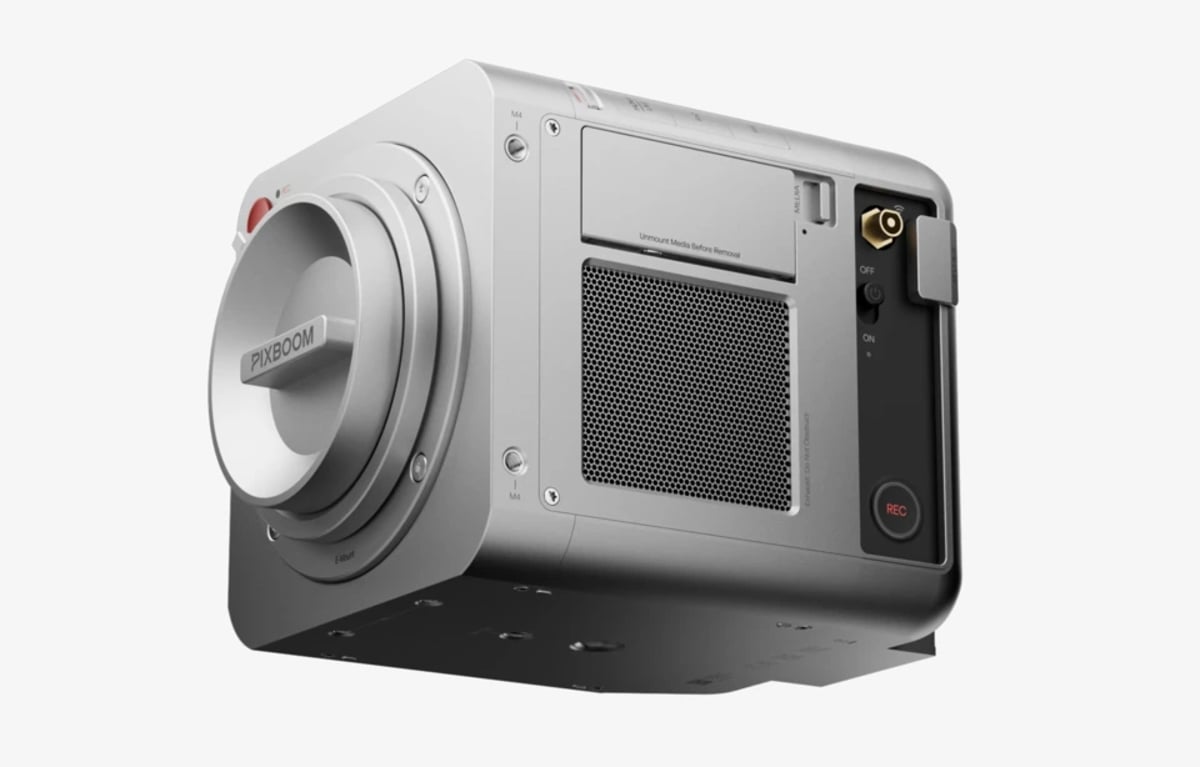
Pixboom Spark: High-Speed Camera Ships with 12-Bit RAW and Internal ProRes RAW on Deck
The high-speed camera market has long been a niche dominated by specialized manufacturers serving rental-house clients with precise demands. Pixboom''s Spark has been circling the idea of bringing that level of capture into a working DP''s kit since its tease at NAB 2025, and now its journey from prototype to production is hitting a key milestone: shipping commences May 1st, 2026. Pixboom has also announced two significant firmware upgrades on the way, a 12-bit RAW sensor readout and internal ProRes RAW recording.
Pixboom creative director Ariel Levesque confirmed the timeline at NAB 2026 in an interview with CineD. The Spark formally launched via Kickstarter at IBC last September, was reviewed in beta in October, and was used by cinematographer Gunther Machu to shoot a wildlife documentary in Goa with an early unit. This isn''t vaporware; it''s a tangible piece of tech making its way to market.
Shipping Timeline and Rollout
The first wave of Pixboom Spark units, a few hundred bodies, begins shipping to early Kickstarter backers on May 1st. The plan is to clear the Kickstarter queue over the summer months. Rental houses and resellers in North America are expected to carry stock around mid-June to early July, with European distribution targeted for early fall. Pixboom is anticipating general availability by the end of 2026.
Levesque noted that the team has used the past two months for refinement, with adjustments to color science, highlight retention, and the companion app''s file-transfer workflow. More sample footage is in the pipeline, including material shot specifically for Cine Gear and IBC later this year, which should give DPs a clearer picture of the camera''s capabilities across diverse production scenarios.
A 12-Bit Readout is Coming Via Firmware
The most substantial technical news is a forthcoming 12-bit sensor readout. This isn''t a hardware revision but a free firmware update promised for later in 2026. Until now the camera has operated with a 10-bit sensor readout, which will remain a fully supported mode.
Moving from 10-bit to 12-bit is a significant step, especially for high-speed capture where highlight and shadow detail can be easily lost in the extreme conditions often required for slow motion. Levesque suggests the 12-bit path pushes the dynamic range past 13 stops, "kissing 14" (a phrase warranting independent lab testing). Combined with a lower noise floor and deeper color depth, this could meaningfully improve the latitude and post-production flexibility of the Spark''s footage.
The trade-off, as expected, is data rate. At 12-bit, available frame rates will be roughly halved compared to the 10-bit mode. Levesque still projects around 500 fps at 4K in 12-bit, a respectable figure for a Super 35 sensor. That makes it particularly attractive for fashion, high-end commercials, and VFX plates, where bit depth, clean composites, and reliable keying tend to matter more than absolute frame rate. For the highest-speed work, the 10-bit mode keeps the full published ladder: up to 670 fps at 4.6K open gate and 2,182 fps at 2K 2.37:1.
This is a familiar discussion in camera acquisition: resolution vs. bit depth vs. frame rate. There''s no one-size-fits-all answer, and manufacturers constantly balance these factors against processing power and storage. For a dedicated high-speed camera, prioritizing bit depth options without sacrificing extreme frame rates is a pragmatic approach. It also reflects a broader trend in sensor design, recently seen in Sony''s IMX928 large-format global-shutter sensor, where speed and image fidelity are pushed in tandem.
ProRes RAW Lands Internally
The second headline is internal ProRes RAW, now official after Pixboom finalized its agreement with Apple. Levesque told CineD it will not be restricted by resolution, frame rate, or bit depth, meaning it works across 10-bit, 12-bit, and any of the Spark''s custom resolutions all the way up to the sensor''s full 4.6K open gate.
The practical payoff is a much simpler post workflow: files come straight off the Pixboom Pro Card ready for Final Cut Pro, DaVinci Resolve, and other NLEs that support ProRes RAW, with no transcoding step required. Pixboom''s own PXBC compressed RAW (which unpacks to CinemaDNG through the Pixboom Cine application) stays on the camera as the pristine master option for those who want it. According to Levesque, the 12-bit readout is on track to arrive slightly ahead of ProRes RAW, so the two features will roll out as sequential firmware drops rather than a single update.
Internal ProRes RAW also reduces the points of failure that come with external recorders, no extra cables, no extra power, no extra rigging, which on a high-speed shoot (where takes are short and resets are frequent) is a meaningful efficiency gain. It echoes the industry shift seen with Atomos Ninja RAW bringing ProRes RAW recording to the sub-$700 monitor segment, with Pixboom now folding that capability directly into the camera body.
Bringing High-Speed Out of the Rental House
The Pixboom Spark aims to make high-speed capture more accessible beyond the traditional rental-house model. With a compact Super 35 backside-illuminated global-shutter sensor and a body weighing under 1.1kg / 2.4lbs, it''s designed for single-operator use. A global shutter remains essential for high-speed work, eliminating the rolling-shutter artifacts that plague CMOS sensors in fast motion, and the Super 35 format keeps lens choices plentiful and affordable compared to larger formats that demand specialized glass.
Historically, accessible high-speed cameras came with significant resolution or bit-depth compromises, or were bulky and power-hungry, which kept them in rental inventories rather than daily kits. If the Spark delivers on its 12-bit signal and ProRes RAW integration, it could carve out a valuable niche, especially for documentary, narrative, and wildlife productions that would never have justified a dedicated Phantom Flex or Freefly Ember package. The cost-of-RAW conversation is rarely about the codec itself; storage, transfer, and DIT pipelines often define the real ceiling, a point worth reading alongside The Real Cost of RAW before committing to a high-data-rate workflow.
For productions integrating high-speed plates into VFX or virtual-production pipelines, a 12-bit recording offers more grading flexibility, cleaner keys, and more accurate color integration into compositing work. Combined with advanced post-production tools, including features highlighted in DaVinci Resolve 21''s photo page and AI toolset, the Spark''s output should slot into modern grading and finishing workflows without unusual friction.
Price and Availability
The Spark currently pre-orders at $13,999, which bundles the camera body with one electronic lens mount of choice (PL, E, or EF) and one 2.5TB Pixboom Pro Card. The first few hundred units ship May 1st, 2026, with the full Kickstarter queue expected to clear by summer. North American rental houses and resellers should be stocking units by mid-June to early July, European distribution arrives in early fall, and general availability is targeted for year-end 2026.
The 12-bit firmware and internal ProRes RAW updates are both free, with 12-bit landing slightly ahead of ProRes RAW as separate firmware drops later in the year.
---
© 2026 BlockReel DAO. All rights reserved. Licensed under CC BY-NC-ND 4.0 • No AI Training. Originally published on BlockReel DAO.