Props Workflow: Hero, Hand & Set Dressing Guide
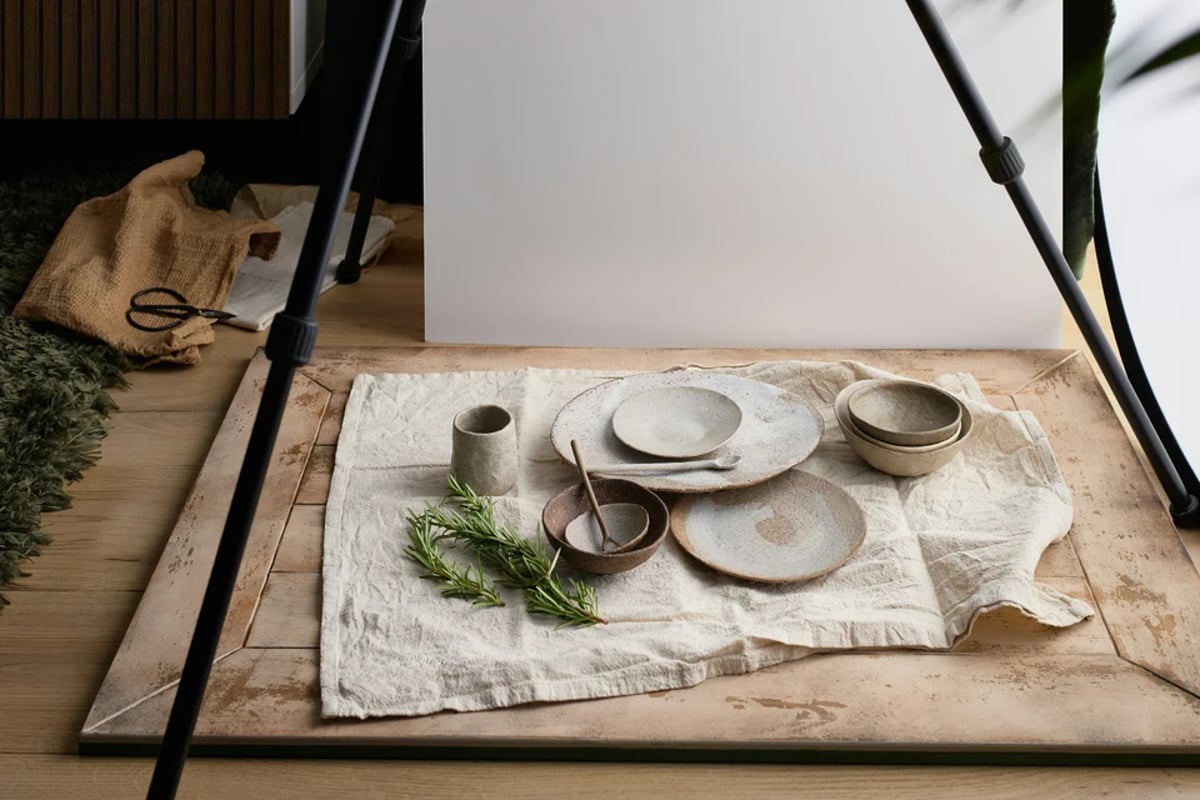
Effective prop management is a cornerstone of visual storytelling, yet its complexities are often underestimated. A clear, actionable workflow for props is not merely about sourcing items; it is about managing story-critical assets through the entire production lifecycle with clear categories, reliable documentation, continuity discipline, and cross-department communication. This guide details the practical distinctions between hero props, hand props, and set dressing, and outlines the workflows necessary to manage them efficiently from breakdown to wrap. For a complete overview of the Art Department's role and responsibilities, see our Art Department Production Guide: Design, Continuity, and Clearances.
Prop Categories: Defining Hero Props, Hand Props, and Set Dressing
A precise taxonomy is the foundation of an efficient prop workflow. Without it, productions risk continuity errors, budget overages, and avoidable reshoots. The distinctions between hero props, hand props, and set dressing are not arbitrary; they dictate the level of detail, duplication, and care each item requires.
Hero props are the items central to the narrative, intended for close-up shots, and often handled extensively by principal actors. These props must withstand detailed scrutiny on camera, meaning they require a high level of finish, functional detail, and often, multiple exact duplicates. Think of the One Ring in The Lord of the Rings films (2001-2003) or the glowing briefcase in Pulp Fiction (1994). Both are hero props because their appearance and functionality are critical to specific plot points and are repeatedly featured in close proximity to the lens. The property master, working closely with the production designer and director, identifies these items early in pre-production.
Hand props are objects performers physically interact with, but which may not demand the same extreme level of detail as a hero prop for close-ups. A coffee mug an actor drinks from, a pen they sign a document with, or a newspaper they read are all examples of hand props. While they need to be durable enough for repeated handling and resets, their visual fidelity might be acceptable at a medium shot distance, rather than the extreme close-up often reserved for hero items. The key differentiator is interaction: if an actor touches it, it's a hand prop.
Set dressing comprises the environmental elements that define the world of the film but are generally not intended for prominent handling by principal actors. These items support the visual narrative and atmosphere. This includes furniture, lamps, curtains, books on a shelf, or background clutter. While set dressing contributes significantly to the overall production design, its primary function is visual context. A stack of old magazines on a coffee table would generally be set dressing, unless an actor picks up a specific one to read a headline, at which point that specific magazine becomes a hand prop.
On larger productions, prop responsibilities are commonly split. The property master typically oversees all props, often delegating tasks to a team of prop assistants. Set decoration manages the set dressing, often with set dressing buyers and dressers responsible for sourcing and placement. The script supervisor is crucial for tracking continuity across all prop categories, ensuring items remain consistent from shot to shot. The art department coordinator facilitates communication and documentation between these various roles.
Widely used, verified tools and equipment
To manage these distinctions, productions often rely on structured documentation. Airtable and Google Sheets / Excel are commonly used for creating comprehensive prop lists, allowing filtering by category, scene, and status. For larger, more complex productions, ShotGrid (Autodesk) provides structured asset tracking and approval workflows, integrating with other production departments. Frame.io can be used for visual reference review and annotation, allowing the production designer and director to provide feedback on prop selections and finishes. Shared cloud storage solutions like Dropbox, Google Drive, or OneDrive are essential for housing reference images, design sketches, and approval documents.
💡 Pro Tip: Professionals often separate props into "visual priority tiers" that transcend simple categorical labels. A prop that is not a hero item in theory may still require hero-level finishing and continuity if it enters a close insert shot. Always note whether an object is static dressing, touchable, actively handled, or destined for a camera close-up.
Common Mistakes
A frequent error is treating "hero" as a vague label rather than a defined requirement based on camera proximity and narrative importance. This leads to hero props being under-fabricated or undersourced. Another pitfall is neglecting to document duplicates, breakaway versions, or stunt-safe versions of critical props, leading to delays or continuity breaks on set. Failing to distinguish between what is merely in frame, handled, or intended for close-up leads to misallocation of resources and attention. Finally, mixing prop ownership between art, props, wardrobe, and picture vehicles without clear handoff protocols can create significant confusion and accountability issues.
Preproduction Workflow: Breakdown, Sourcing, Duplicates, and Approvals
The meticulous work of prop management begins long before cameras roll, rooted deeply in the preproduction phase. This stage involves detailed script analysis, strategic sourcing, planning for multiples, and securing crucial approvals.
Prop planning formally begins during script breakdown and art department breakdown meetings. The property master, after an initial read-through, compiles a master prop list. This list is keyed to specific scenes, character actions, and story beats, detailing every item mentioned or implied. For instance, in No Country for Old Men (2007), the property master would have identified the captive bolt pistol as a critical hero prop early on, noting its unique functionality and the need for multiple versions (functional, safe, and potentially a hero close-up version).
High-risk items are identified and prioritized early. These include breakables, consumables (liquids, food), age-sensitive materials (like perishable items or newspapers that need to look current), replicated multiples, and specialty props such as period weapons. The standard industry practice, particularly for hero and frequently handled props, is to plan for a minimum of: * Primary hero: The main, camera-ready version.
* Backup hero: A second, identical version in case of damage or for specific coverage needs.
* Stunt-safe or padded version: For scenes involving physical action, ensuring performer safety.
* Continuity spare: Additional identical items to account for multiple takes, resets, or unforeseen issues.
Consider the meticulous prop management in films by David Fincher, where every detail serves the narrative. In Fight Club (1999), the various states of the apartment's destruction would have necessitated numerous duplicates and carefully aged versions of set dressing and hand props, all tracked rigorously.
Approvals for props generally flow through the production designer and director. For hero props, the cinematographer is also often involved to assess color, finish, and how the prop will appear under specific lighting and lens choices. These approvals are not merely aesthetic; they confirm the prop's narrative function and visual impact.
Widely used, verified tools and equipment
For managing the preproduction workflow, Airtable proves invaluable for creating searchable prop databases, allowing filtering by scene, status, and location. ShotGrid offers structured approval pipelines and version tracking, particularly useful for complex fabrications or modifications. Notion can serve as a lightweight prep wiki, centralizing prop bible information and reference images. Adobe Acrobat Pro is used for script markup, creating breakdown PDFs, and annotating visual references. For physical documentation and on-set labeling, Epson photo printers and standard office label printers are commonly used, while Zebra label printers provide durable, high-volume inventory labels.
💡 Pro Tip: For every hero prop, build a comprehensive photo reference packet. This should include front, back, and side views, a clear scale reference, detailed notes on its finish, and a damage/wear map if applicable. If a prop is critical, request an art department camera test under the intended lighting setup to preempt any issues.
Common Mistakes
A critical mistake is ordering only one version of a hero prop. This single point of failure can halt production if the prop is damaged. Approving props from low-resolution screen grabs or without considering how they will appear through the camera lens is another pitfall. Waiting too long to confirm materials, finishes, or engravings can cause significant delays. Productions often fail to account for how aging, wear, or specific lighting conditions will alter a prop’s appearance on screen. Finally, neglecting legal or safety checks for weapon-like props, substances, or copyrighted visible labels can lead to serious compliance issues.
The legal implications of visible trademarks and artwork are discussed further in Clearance for Art/Props: Trademarks, Artwork, and Signage Pitfalls.
On-Set Prop Handling: Continuity, Coverage, and Turnaround
Once a production moves to set, the focus shifts from sourcing and fabrication to meticulous handling and continuity. The property master, or a designated prop team member, is responsible for managing props until "picture lock" for a given scene.
Continuity is paramount and requires tracking every minute detail of a prop's state: its exact placement, orientation, wear patterns, fill levels (for liquids), fold states (for documents or clothing items used as props), and any damage. This extends to how props are handed over between takes and different camera setups. For hand props, reset discipline is critical. After each take, the prop must be returned to its photographed or documented starting state, ready for the next shot.
Hero props demand special handling protocols. This often includes using gloves, transporting them on trays, designated secure storage, and a strict "no-touch" policy for anyone other than the assigned handler. Think of the care given to the briefcase in Pulp Fiction (1994), which, despite its simple appearance, had immense narrative weight and would have required precise handling to maintain its mystique and continuity. Similarly, in Raiders of the Lost Ark (1981), the Ark of the Covenant's prop versions would have been subject to stringent handling and security.
For food, liquids, and other consumables, productions routinely use multiple matching units. This ensures consistent fill levels, freshness, and hygiene across numerous takes. An actor drinking from a glass will require a fresh glass with the same liquid level for each take, or at least for each setup, to maintain visual consistency.
Widely used, verified tools and equipment
The primary tool for on-set continuity is the continuity photo workflow. Most productions use smartphones or mirrorless cameras for this purpose. These photos are often organized in shared albums on iPhone / iPad devices or within note-taking apps that sync across the team. Clipboard shot logs or digital logs on tablets further document prop usage, placement, and any specific notes for the script supervisor. Bluetooth label printers are useful for quickly printing labels for takes, storage bins, or even directly onto props that require specific tracking. For secure transport of delicate or valuable props, Pelican cases are an industry standard, complemented by nitrile gloves, museum putty, soft wraps, foam inserts, and acid-free tissue for handling and storage.
💡 Pro Tip: After every approved take, shoot a "reset frame." This is a quick photo of the prop in its exact continuing state, which serves as an immediate visual reference for the next setup or take. This saves valuable time and prevents continuity errors.
Common Mistakes
Relying on memory instead of comprehensive photo documentation is a guaranteed path to continuity mistakes. Resetting a prop inconsistently between takes, or not accounting for how actors naturally handle an object (which can subtly change its position or condition), are frequent errors. Storing fragile hero props indiscriminately with general set dressing risks damage. Forgetting that changes in lighting, lens choice, or even actor blocking can alter the perceived color or scale of a prop can also lead to issues that only become apparent in editorial.
The script supervisor plays a vital role in flagging these issues and maintaining detailed logs, working closely with the prop department. Their notes are critical for the editorial team to ensure clean cuts.
Inventory, Storage, Transport, and Asset Control
Effective prop management extends beyond the set, encompassing rigorous inventory, secure storage, safe transport, and comprehensive asset control throughout the production's lifecycle. This is crucial for maintaining order, preventing loss, and ensuring efficient retrieval.
Professional prop management relies on location-based inventory, not just item-based tracking. This means knowing not only what a prop is, but precisely where it is stored or located at any given moment. Best practice dictates cataloging: * Item ID: A unique identifier for each prop.
* Scene Use: Which scenes the prop appears in.
* Condition: Its current state (e.g., "clean," "aged," "broken").
* Version: If it's a primary, backup, stunt, or breakaway version.
* Storage Location: Its specific bin, shelf, or case.
* Checkout Status: Who has the prop and for what purpose.
* Return Status: Confirmation of its return to storage.
For long-running productions, or those with extensive prop needs, props are often physically segregated into: * Active stage: Props currently in use on set.
* Archive storage: Props not immediately needed but required later.
* Repair queue: Props needing maintenance or restoration.
* Strike / discard: Props no longer needed.
When a production wraps, a detailed process typically involves cleaning, restoration (if required), condition photography, creation of a packing list, and chain-of-custody documentation, especially for high-value or unique items. This thoroughness ensures a smooth transition if props are returned to rental houses, stored for future projects, or sold.
Widely used, verified tools and equipment
Airtable or Smartsheet are excellent for creating dynamic inventory databases that can be updated in real-time. For large inventories, barcode labels and handheld scanners dramatically increase efficiency and accuracy. Zebra GK420d / ZD series label printers (or similar current models) are common in production environments for durable, high-volume label printing. For transport, Pelican or SKB hard cases provide rugged protection. For storage, cost-effective solutions like IKEA bins, US Plastics containers, or industrial shelving systems are often used, with acid-free boxes, archival tissue, and foam inserts protecting delicate items.
💡 Pro Tip: Implement a "two-label system" for storage: a visible bin label indicating general contents (e.g., "Dining Room - Tabletop") and an internal item label with specific details (e.g., "Prop ID #007 - Silver Candlestick - Scene 12"). This allows for quick visual identification while maintaining detailed item-level tracking.
Common Mistakes
Storing hero items in unmarked bins or haphazardly is a critical error. Using paper labels that are prone to tearing or failing in varying humidity or during transport leads to lost items. Mixing prop categories (e.g., hero props with general set dressing) can result in damage or misplacement. Failing to log who removed or returned a prop creates accountability gaps. Finally, neglecting the specific environmental needs for antiques, paper props, textiles, or food-safe replicas can lead to irreversible damage or degradation.
Materials, Fabrication, and Safety Standards for Hero and Hand Props
The design and construction of props, particularly hero and hand props, require a deep understanding of materials, fabrication techniques, and stringent safety standards. These elements directly impact a prop’s durability, visual fidelity, and its safety for cast and crew.
Hero props often demand durable finishes that resist chipping or wear, replaceable parts for easy repair, and hidden reinforcement to withstand repeated handling. Their surfaces must be camera-friendly, meaning they often require specific textures, matte finishes, or anti-glare coatings to prevent unwanted reflections. Hand props, while perhaps less visually demanding than hero props, must be durable enough to survive repeated handling and numerous reset cycles.
Productions frequently employ a mix of fabrication methods: * Fabrication shop builds: Custom-made items by prop makers.
* Sourced retail items: Purchased off-the-shelf items, often modified.
* 3D printing: For rapid prototyping, intricate details, or creating multiples.
* Scenic painting: To achieve specific finishes, aging, or weathering.
* Aging and distressing: To give props a lived-in, authentic appearance.
The property master and their team must consider the full lifecycle of the prop when choosing materials and fabrication techniques. For instance, a hero prop meant to be broken on screen requires a breakaway version made from materials like sugar glass or specific plastics that fracture safely and predictably.
Safety and compliance are paramount when props involve elements such as blades, replica firearms, pyrotechnic components, electrical parts, glass, liquids, or cosmetics/food substitutes. All such props must be vetted for safe use and often require specialized handlers or permits. For example, a prop gun must be clearly identifiable as a prop, never loaded with live ammunition, and handled only by trained professionals, as tragically underscored by incidents like the Rust (2021) shooting.
Widely used, verified tools and equipment
For prop design and prototyping, Fusion 360 and Blender are common choices for 3D modeling and visualization. For physical prototyping, currently shipping desktop FDM printers like the Bambu Lab X1 Carbon or Prusa MK4S are used for rapid, cost-effective iterations. For higher detail, resin printers such as the Formlabs Form 4 are employed. In prop fabrication shops, standard power tools from brands like DeWalt and Milwaukee, along with heat guns, Dremel rotary tools, various clamps, epoxy systems, and scenic paints, are indispensable. Safety is maintained through the use of 3M safety products, nitrile gloves, eye protection, and respirators.
💡 Pro Tip: When designing hero props, build in "sacrificial wear surfaces." These are areas designed to take the brunt of handling or minor impacts, making quick, on-set repairs easier and preserving the main integrity of the prop.
Common Mistakes
Building hero props without considering their repairability is a frequent error. Using finish materials that chip under the heat of set lights or show unacceptable glare can ruin a prop's visual integrity. Ignoring the weight and ergonomics of a prop can lead to actor discomfort or affect their performance. Overbuilding hand props to the point where they become cumbersome or unrealistic for performers to use is another pitfall. Finally, failing to test fake materials (e.g., prop blood, food replicas) under actual camera lighting can result in them looking obviously artificial on screen.
Communication Workflow: Coordination Between Art Department, Props, Wardrobe, Camera, and Script
Effective communication is the linchpin of a successful prop workflow, ensuring tight integration across all departments. Without clear, consistent information exchange, even the most meticulously prepared props can become continuity nightmares or logistical hurdles.
The cleanest workflow is built on clear handoffs and established communication lines: * Art Department: Provides initial reference, design intent, and aesthetic guidelines.
* Property Master: Confirms physical build, functionality, and on-set usage.
* Script Supervisor: Tracks all prop movements, states, and placements for continuity.
* Camera Department: Flags any visibility issues, reflective surfaces, or scale concerns.
* Wardrobe Department: Confirms interactions when props are worn, carried, or concealed by costumes.
Shared daily updates are standard, especially when props directly impact performance blocking, costume interaction, practical effects, or camera framing. The best-run shows incorporate short, focused daily check-ins during prep and scene turnovers to address potential prop issues before they escalate.
Consider the intricate prop work in a film like Wes Anderson's The Grand Budapest Hotel (2014), where every prop, from the Mendl's box to Zero's various possessions, is integral to the film's highly stylized aesthetic and narrative. Such precision demands constant coordination between the production designer, property master, and director, with all departments aware of the specific role each prop plays.
Widely used, verified tools and equipment
For status tracking and cross-department visibility, ShotGrid, Airtable, or Smartsheet offer centralized platforms. Slack, Microsoft Teams, or email are used for real-time production messaging. Frame.io facilitates visual review and feedback on prop selections or modifications, allowing the director and production designer to annotate images or videos. Zoom / Google Meet are essential for remote approvals and meetings. Shared call sheets and sides, distributed through production management platforms like StudioBinder or similar systems, ensure everyone has the most current information regarding prop needs for the day's shooting schedule.
💡 Pro Tip: Maintain a single, visible prop status board (digital or physical) accessible to the art department, props team, and script supervisor. For any visual change to a prop, always use photo-marked messages instead of text-only updates. This eliminates ambiguity and provides an undeniable visual record.
Common Mistakes
Sending critical prop updates in scattered messages across various platforms instead of consolidating them into one source of truth is a common communication breakdown. Failing to loop in the wardrobe department when a prop is worn, carried, or concealed by a costume can lead to unforeseen issues with fit, comfort, or continuity. Not informing the camera department about reflective surfaces, potential glare, or scale issues can result in wasted takes. Finally, approving prop changes verbally without written or visual confirmation creates a lack of accountability and can lead to misunderstandings further down the line.
Interface & Handoff Notes
The prop department's workflow is highly interconnected with other departments. Understanding these interfaces and potential failure points is crucial.
What you receive (upstream inputs): * Script: The foundational document detailing all prop needs, character actions, and environmental descriptions.
* Production Designer's Vision: Conceptual art, mood boards, and design sketches guiding the aesthetic and style of all props.
* Director's Notes: Specific requests or creative interpretations regarding prop functionality, appearance, or symbolic meaning.
* Budget & Schedule: Parameters defining what can be sourced, fabricated, or rented within financial and time constraints.
* Location Scouts/Surveys: Information on existing practical elements that might be used as set dressing or modified into props.
What you deliver (downstream outputs): * Master Prop List: A comprehensive, categorized inventory of all props.
* Fabricated/Sourced Props: Physical items ready for set.
* Prop Tracking Logs: Detailed records of prop usage, condition, and continuity.
* Safety Documentation: For specialized props (weapons, pyrotechnics, etc.).
* Wrap Reports: Inventory lists, condition reports, and return documentation for rental items or final disposition.
Top 3 failure modes for THIS specific topic:
1. Vague Prop Categorization: Lack of clear distinction between hero, hand, and set dressing leads to misallocation of resources, insufficient duplication, and continuity errors (e.g., a "hand prop" used in a close-up that wasn't prepared to hero standards).
2. Inadequate Duplication Planning: Not anticipating the need for multiples (primary, backup, stunt, continuity spares) for hero and frequently handled props, leading to production delays when an item is damaged or requires multiple states.
3. Lack of Visual Continuity Records: Relying on memory or text-only notes for prop placement and state, rather than comprehensive photo documentation, results in easily avoidable continuity mistakes between takes and setups.
Browse This Cluster
- Art Department Production Guide: Design, Continuity, and Clearances
Next Steps
Ready to see how this fits into the bigger picture? Start with the complete guide.
📚 Complete Guide: Art Department Production Guide: Design, Continuity, and Clearances
---
© 2026 BlockReel DAO. All rights reserved. Licensed under CC BY-NC-ND 4.0 • No AI Training. Originally published on BlockReel DAO.