Jodie Sweetin's 1-Cent Full House Check Exposes Streaming Pay
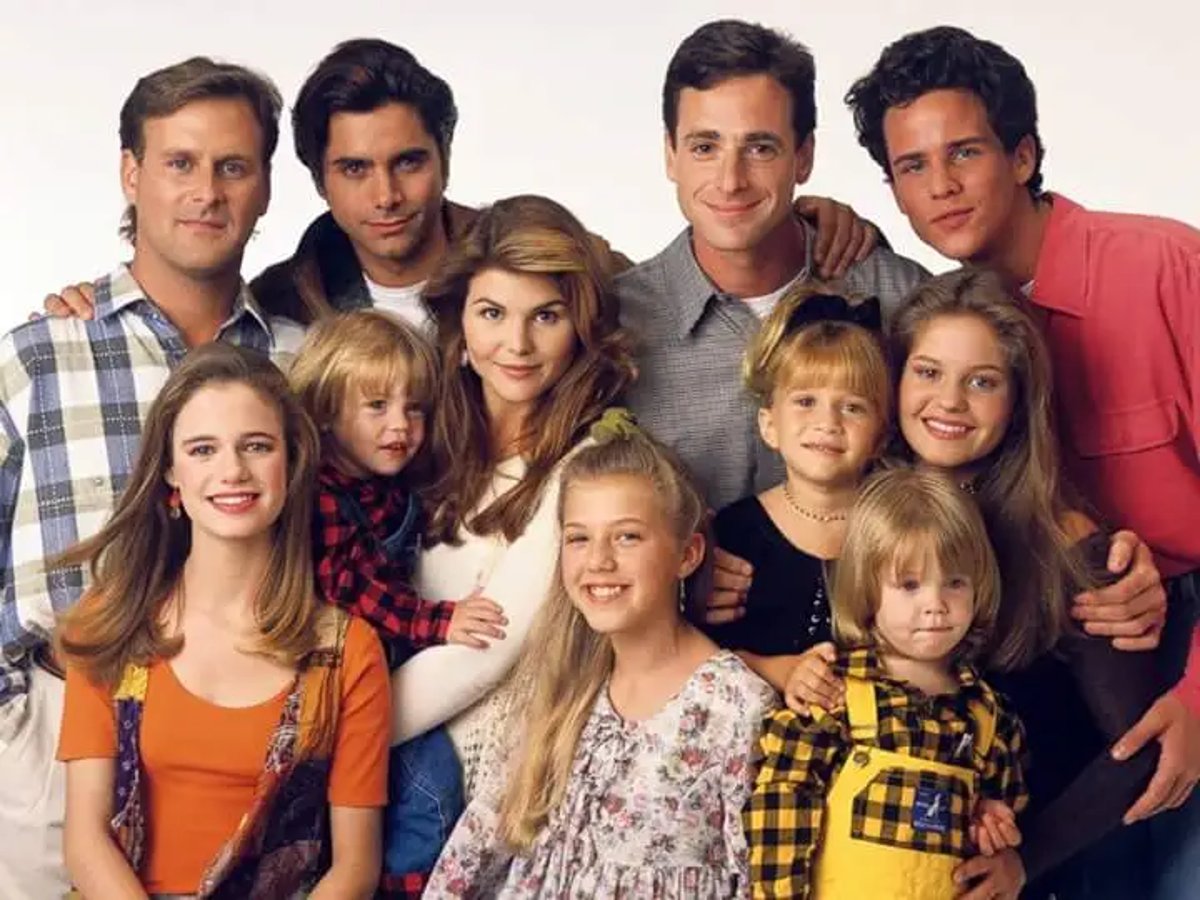
The business models that underpin our industry have always been a delicate, often contentious, dance between creative output and financial compensation. But when an actor like Jodie Sweetin, whose indelible performance as Stephanie Tanner on Full House remains a touchstone for an entire generation, openly waves a one-cent residual check from that iconic series, it is not just a sobering anecdote. It is a bellwether. It signals, with stark clarity, the profound disjuncture between our legacy compensation structures and the current realities of a streaming-dominated distribution landscape. What does it mean for careers, for the very possibility of building a sustainable filmmaking career, when decades of work on a massively popular show can amount to pocket change?
Sweetin's revelation, shared on The McBride Rewind podcast on April 21, 2026, was not merely a complaint about personal finances. It was an indictment of a system that, by her account, has evaporated traditional revenue streams for artists. "There's no syndication anymore because it's all in streaming," she explained, cutting right to the heart of the matter. "Who gets paid for that? Nobody gets paid for that." This is not an isolated lament. It echoes a growing chorus from actors, writers, and crew members whose livelihoods were once buttressed by predictable, if modest, residual checks from syndicated reruns. Remember a time when a long-running show meant a steady stream of income for performers, creating a semblance of financial stability many in the industry now find elusive? That era, it seems, is largely behind us.
The Disappearing Middle Class of Hollywood
For many, residuals were not the path to opulence, but the essential foundation for a sustainable career. Sweetin herself articulated this nuanced reality. She noted that in her 20s, while the checks from Full House reruns were "not reliable," they were "sometimes...nice," perhaps enough for "a nice dinner out." Crucially, she clarified that she was never "living some extravagant life" off them. Her current reality (renting a house, driving a 2023 used Hyundai Sonata, and confessing to maxed-out credit cards) underscores a critical point: the erosion of residuals impacts the working professional, not exclusively the marquee names whose upfront fees dwarf any back-end participation. This is a story about the collapsing middle class of Hollywood, a demographic vital for the health and diversity of our storytelling ecosystem.
The shift to streaming has fundamentally altered the economic equation for content creators. Under the traditional model, broadcast television and cable syndication agreements generated new money each time a program aired. These agreements often included a complex formula for residuals, a form of royalty paid to actors, writers, and directors for the reuse of their work. The rationale was simple: if a show continued to generate revenue for networks or studios long after its initial run, the people who made it should share in that continued success. This mechanism was a recognition that a performance, a script, or a directorial vision had intrinsic, enduring value beyond its first exhibition.
However, streaming platforms operate under a different philosophy. Their primary revenue model is subscription-based, predicated on accumulating and retaining subscribers, rather than selling individual ad spots or licensing content on a per-run basis. When a program is licensed to a streamer, or created in-house, the financial structure of distribution often becomes opaque, reduced, or, as Sweetin's experience suggests, functionally non-existent for legacy content. The argument from the streamers, often unspoken but implied, is that they are paying a hefty licensing fee upfront, or financing the entire production, and that the value is then absorbed into the subscription model. For the creative talent, however, this translates to minimal or no additional compensation for ongoing viewership. The incentive structure, thereby, shifts dramatically.
The Phantom Value of Library Content
Full House ran for eight seasons, from 1987 to 1995. Its enduring popularity even led to a Netflix reboot, Fuller House, which ran for five seasons from 2016 to 2020. This is precisely the kind of library content that streaming services crave: established IPs with built-in fanbases that drive subscriptions. Yet, the very platforms that benefit most from this long-tail viewership are the ones least inclined to compensate creators through traditional residual streams. It is a paradox: the more valuable a piece of legacy content becomes in aggregate viewership to a streamer, the less direct financial reward the original talent appears to receive on an ongoing basis.
This predicament has fueled significant unrest across the industry. In April 2026, Directors UK published an open letter signed by filmmakers including Asif Kapadia, Andrew Haigh, and Otto Bathurst, urging streamers to negotiate on residuals and reminding them, "You Know The Value We Bring." Similar guild-level concerns about industry consolidation have surfaced in legislative chambers. These are not isolated incidents. They are symptomatic of a broader existential crisis for above-the-line talent, and indeed, many below-the-line professionals whose employment opportunities are also dictated by these shifting economic sands.
One might question the economic logic of such a system. Is it sustainable for an industry to rely on the passion and creative output of artists while simultaneously diminishing their ability to earn a living wage from their work? When artists struggle to pay basic bills, as Sweetin candidly admits, it introduces a significant barrier to entry and retention for diverse voices. The talent pool narrows. The stories told might become homogenized, shaped by those with independent wealth or a willingness to work for rates that are, frankly, unsustainable for most.
Reimagining Compensation in the Digital Age
So, what is the fix? It is not straightforward, especially considering the proprietary nature of streaming metrics. Unlike traditional broadcast where viewership ratings were public and provided a clear basis for residual calculations, streaming engagement data remains largely shrouded in secrecy. This opacity further complicates efforts to tie ongoing compensation to actual usage. How can talent negotiate for a share of the pie when the size of the pie, and how it is being sliced, is a closely guarded secret?
One proposed solution involves moving towards greater transparency in reporting viewership numbers. If creators and their representatives had clear, verifiable data on how often their content is viewed and for how long, it would provide a tangible metric to base residual payments on. Another avenue might be rethinking the very definition of a "run" or an "exhibition" in the streaming context. Instead of a one-time licensing fee for perpetual availability, perhaps tiered agreements based on subscriber engagement milestones or time-based windows could be considered.
The challenges are considerable, to be sure. Streamers argue that their upfront investment is significantly higher, and that the subscription model inherently distributes value differently. They might also point to the expanded opportunities for content creation and distribution that the streaming era has ushered in. These are valid points, but they cannot entirely negate the legitimate concerns of a workforce whose economic stability has been fundamentally undermined.
What an Alternative Could Actually Look Like
Sweetin's story demands more than sympathy. It demands a structural response. What if the technology already existed to make every view countable, every payment traceable, and every contributor's share contractually locked before a single frame is shot?
That is the model BlockReel is building with its first original production: Sundown at the Salton Sea, a Nosferatu origin story directed by Emmy-winner Mark Hensley, the filmmaker behind Clown N Out. The production will source its crew directly from BlockReel's community of filmmakers, and every member who works on the film will receive a defined percentage of the streaming revenue based on their contribution.
Here is where the mechanics diverge sharply from the system Sweetin describes. On BlockReel's streaming platform, creators see their analytics in real time: views, watch duration, revenue generated, all visible on their dashboard the moment a viewer presses play. There is no opacity. There is no quarterly report delayed by months. There is no one-cent check arriving with zero explanation of how that number was calculated.
The payment rails matter too. When a viewer pays via Solana, the creator's share (80% of the transaction) settles directly to their wallet in real time, as the viewer watches. No intermediary holds the funds. No 90-day payment cycle. For viewers who pay with Stripe or credit card, the standard processing window applies (roughly two weeks), but even that is a fraction of the lag embedded in traditional residual structures. The 80/20 split is coded into the smart contract, visible to anyone, immutable. Compare that to the black-box formulas that produce a one-cent check from a show watched by millions.
For the Sundown at the Salton Sea crew specifically, each member's revenue share will be defined upfront, recorded on-chain, and enforced automatically. A gaffer who lights a pivotal sequence is not hoping that a guild arbitration eventually produces a check. Their share is a function of the contract, executed by code, every time someone watches the film. This is not theoretical. The streaming platform, the payment infrastructure, and the analytics dashboard are live today.
Does this model solve residuals for legacy content trapped in existing studio deals? No. But it establishes proof that a different architecture is possible: one where the people who make the work share in its ongoing success, transparently, and in real time. If the industry is serious about the principles it claims to uphold (fair compensation, creative partnership, transparency), the technology to deliver on those principles already exists. The question is whether anyone with influence will adopt it.
The Signal in the Noise
Sweetin's story is a particularly resonant one because Full House continues to be a beloved property. It is not a forgotten show gathering dust in an archive. It is actively contributing to a platform's value proposition. Yet, the actors who made it a phenomenon are, apparently, receiving the lowest possible denomination of legal tender for their ongoing contribution to its success. It forces a conversation beyond the anecdotal, towards a systemic problem.
As those of us who have witnessed the machinations of Hollywood boardrooms know, these types of conversations are rarely simple. The balance of power is often skewed. But the increasing public outcry, from actors like Sweetin to a collective of UK directors, indicates that the issue is reaching a critical mass. The industry cannot thrive if the foundation of its creative talent feels undervalued, or worse, exploited by antiquated payment systems in a new distribution paradigm.
The core issue remains: how do we adapt the fundamental principle of fair compensation for the reuse of creative work to a technological landscape that has erased traditional "reruns" and replaced them with always-on access? The problem is not merely an economic one. It is an ethical one. It questions the very definition of partnership between content owners and content creators. If the industry continues to ignore these flashing red signals, it risks not just financial instability for its workers, but a long-term erosion of the creative capital that fuels its global influence. The one-cent check is not just a financial symbol. It is a stark reminder that the streaming gold rush, for many, has not yet delivered on its promise of a more equitable future.
---
© 2026 BlockReel DAO. All rights reserved. Licensed under CC BY-NC-ND 4.0 • No AI Training. Originally published on BlockReel DAO.