Colony Review: Yeon Sang-ho's Cannes Misfire
Yeon Sang-ho's 'Colony': Technical Brilliance Meets Thematic Ambiguity at Cannes
Yeon Sang-ho, the director who masterfully redefined the modern zombie narrative with his 2016 juggernaut Train to Busan, has returned to the genre with Colony. Premiering at Cannes, the film once again showcases Yeon’s profound technical prowess, particularly in crafting visceral and relentlessly paced action sequences involving the undead. This isn't just about jump scares; it's about engineering chaos, about choreographing a frantic ballet of survival that few contemporary filmmakers can match. The film’s action is, by all accounts, as technically proficient as ever, building on his established reputation for staging compelling genre spectacle.
But here's the rub for us filmmakers, for anyone who's ever tried to infuse a bit more thematic heft into their exploitation picture, a bit more resonance into their thrills: while Colony delivers on the spectacle, its allegorical ambitions, particularly concerning AI and authoritarianism, apparently don't land with the same gut-punch precision we might hope for. It's an age-old challenge in genre filmmaking, isn't it? How do you balance the immediate, tangible impact of expertly rendered action with a more nuanced, thought-provoking undercurrent?
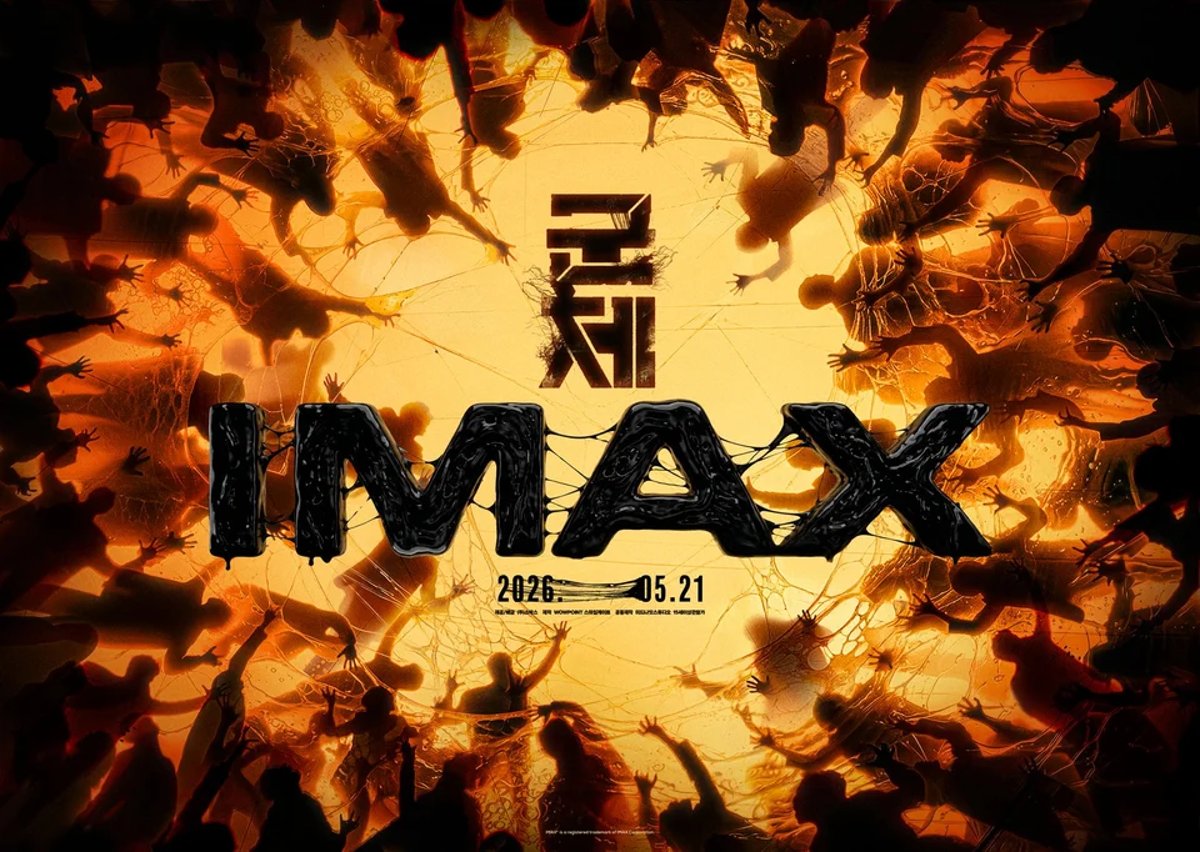
The core of Colony places a group of survivors, including an underdog brother-sister pair and some conveniently present corporate biotech conference attendees (because, of course, convenience is king in a zombie apocalypse), marooned inside a thirty-story office retail tower in downtown Seoul. This setup, immediately, screams enclosed-space tension, a classic horror trope that Yeon has proven adept at exploiting in the past. But this time, his zombies aren't just ravenous. These are furiously tactile, quadrupedal creatures whose movement is horrific, described as bone-crunching limb contortions and green-ghoulish, goo-smattered faces. The physicality is key, a constant reminder of the intense practical and visual effects work that goes into making these threats feel truly immediate and dangerous.
What sets these undead apart, however, is their capacity to communicate. This isn't just a horde; it's a hive mind. The script, co-written by Yeon and Choi Gyu-seok, explicitly builds this concept of "collective intelligence," "ants, anthills, and pheromones" directly into the narrative, almost to a fault. The review suggests that the film leans too heavily on exposition, with scientist characters (naturally) explaining this mechanism, as if the audience hasn't encountered the concept of emergent systems before. For those of us who've wrestled with infusing complex ideas into commercial narratives, this points to a perennial struggle: how much do you spell out a concept versus allowing the audience to intuit it through visual storytelling and character experience? Too little, and you risk ambiguity; too much, and it can feel didactic.
The film's exploration of communication, a notion the review calls "one of the most bastardized notions across cultures," serves as the backbone for its allegorical intent. The central antagonist, Dr. Suh Young-Chul (Koo Kyo-Hwan), apparently believes these perfectly communicating zombies represent a "second cognitive revolution," deserving of the earth more than humanity. This is where Colony attempts its deeper dive, pitting human individuality and the "capitalist, ableist grind" against a technologically advanced, collective consciousness.
Yeon's script establishes specific rules for these advanced zombies once a person is bitten. They can coordinate attacks with increased menace, detect human faces as if guided by a "sinister algorithm," seamlessly morph between quadrupedalism and bipedalism, and process new commands with an efficiency compared to a "forced iOS update". These are not just aesthetic choices; they are functional expansions of the zombie threat, forcing the filmmakers to develop increasingly complex choreography for the action sequences. Imagine the challenge for stunt coordinators and animators creating believable, coordinated attacks from creatures that can shift posture and communicate on the fly. It demands a rigorous understanding of physical space, frame composition, and cutting patterns to maintain coherence in such kinetic chaos. Observing how Yeon executes these sequences, despite the thematic criticisms, still offers a masterclass in dynamic action filmmaking.
However, the criticism leveled at Colony isn't about its technical execution of these concepts, but their broader impact. "Paints Civilizational Collapse with Too Broad a Brush" suggests that while the action is sharp, the thematic strokes feel blunt. In the pursuit of critiquing AI and authoritarianism, the narrative might be sacrificing nuance. This is a crucial conversation for filmmakers working today, as technology continues its relentless march. As we consider tools like ZEISS's ray-traced CinCraft LensCore for Nuke, or even the festival circuit's own reckoning with AI disclosure at the Cannes Film Market, the societal implications are ripe for exploration. But how do we explore them with complexity in a genre framework that often demands clear heroes and villains, clear dangers and triumphs?
Yeon Sang-ho's Train to Busan was lauded not just for its relentless pace but for its sharp social commentary baked into its narrative. It presented a clear critique of class disparity and individual selfishness versus collective good, all while delivering genuinely terrifying zombie action. The success of that film wasn't accidental; it was a deeply considered balance of craft and message. With Colony, it appears Yeon is attempting to tackle even grander, more abstract concepts: the nature of intelligence, the perils of unchecked technological progression, and the fragility of human society in the face of what might be an evolutionarily "superior" collective.
The idea of giving zombies a "collective intelligence" that allows them to communicate and coordinate is a fascinating narrative device. From a directorial standpoint, it exponentially complicates the blocking, the camera movement, and the editing. You're no longer just dealing with mindless, shambling threats; you’re dealing with a strategic opponent. This demands a heightened sense of tactical engagement from the characters and, by extension, from the audience. The precision required to depict such coordinated chaos without it dissolving into an incomprehensible mess is a testament to Yeon's skill. We’ve seen countless zombie films devolve into a blurry, indistinguishable mass, but Yeon traditionally avoids that by giving each "infected" a terrifying individual presence within the larger horde.
The film operates within a specific subgenre of horror that uses large-scale catastrophe to dissect human nature. Romero's films, for all their zombie-induced terror, were always about us, about our reactions to societal breakdown. The modern zombie film, particularly in the vein of Train to Busan, has often continued this tradition. Colony's ambition to explore AI and authoritarianism through this lens is admirable, but the critique suggests it might be biting off more than it can chew metaphorically, even while delivering physically.
This feedback from Cannes provides a valuable lesson for any filmmaker. Technical proficiency, while absolutely essential, is often not enough to carry a film's thematic weight. As cinematographers, editors, and directors, we pour countless hours into perfecting composition, timing, and visual storytelling. We understand the precise shutter angles, the nuanced color grading, the rhythm of a cut. But if the underlying narrative, the allegory, or the character development doesn't resonate, even the most stunning images or frenetic action can feel hollow.
The review points to a common pitfall: when a concept is "repeatedly explained" by characters, it often indicates a lack of confidence in the visual storytelling to convey that theme organically. Think of the subtle visual cues in a film like Children of Men, where the crumbling infrastructure and oppressive state are felt in every frame, not just articulated in dialogue. Or, on the flip side, consider how a clear metaphor, like the literal journey on a train in Train to Busan, naturally amplifies its themes of survival and class conflict.
What Colony seems to be grappling with, according to this early feedback, is the challenge of finding a fresh metaphorical container for its ideas. The "hive mind" concept, while unsettling, is not entirely new territory. The strength often lies in the specific, unique way a filmmaker can twist or apply these concepts to their story. Yeon Sang-ho’s past work demonstrates his ability to execute on this front, and it's a demanding standard he set for himself.
For indie filmmakers, the implication is clear: strong conceptual frameworks are vital, but their integration must feel seamless, not forced. It’s a delicate dance between making a film that's intellectually stimulating and one that delivers on the primal satisfaction of genre kinetics. We chase that perfect synthesis, don't we? Where every creative choice, from blocking to sound design, not only serves the immediate narrative but also subtly reinforces the deeper messages.
Yeon's ability to maintain "internal coherence" in Dr. Suh Young-Chul's delusional antagonist, even if the overall thematic point is broad, still speaks to a commitment to character logic within the chaos. The dedication to giving the character a belief system, however warped, allows for a more compelling conflict. Villain motivations, even in genre pictures, elevate the stakes beyond mere survival.
Ultimately, Colony at Cannes, as a follow-up to a monumental success like Train to Busan, serves as a reminder of the immense pressure and heightened scrutiny independent directors face when expanding their thematic scope within established genres. Yeon Sang-ho remains undeniably expert at crafting thrilling, terrifying action sequences, demonstrating a master-level understanding of visual dynamism in extreme circumstances. The film’s reception suggests that while the engine of its technical prowess is firing on all cylinders, the broader narrative might be struggling to steer its weighty allegorical freight with the same precision. It's a critique that every working professional understands: the pursuit of craft for craft's sake is admirable, but true cinematic impact often lives in the delicate, elusive balance of execution and resonant intention.
---
© 2026 BlockReel DAO. All rights reserved. Licensed under CC BY-NC-ND 4.0 • No AI Training. Originally published on BlockReel DAO.