Lens Breathing, Distortion & Falloff: Story-First Guide
Executive Summary
- Breathing is a choice, not a defect. Select cine primes when framing must lock; select breathier still glass when a subjective rack should feel unsettled.
Table of Contents
---
The pursuit of optical perfection often dominates discussions around cinematography, focusing on razor sharpness, minimal aberrations, and clinical precision. Yet, some of the most compelling visual storytelling arises from embracing, rather than eliminating, the inherent "imperfections" of lenses. Lens breathing, optical distortion, and characteristic focus falloff are not merely technical flaws to be corrected; they are powerful, often subconscious, tools that cinematographers can wield to shape narrative, convey emotion, and define a film's visual language. This guide explores how these optical characteristics, when understood and intentionally applied, become integral to a film's expressive power.
For the complete overview of the entire cinematic pipeline, see our Full guide: Cinematography Pipeline Guide: From Camera Tests to Deliverables. For a deeper treatment of glass selection strategy, see Lens Selection Mastery: A Complete Guide for Cinematographers.
Intentional Use of Lens Breathing as a Story Device
Lens breathing refers to the apparent change in image size or field of view that occurs when focus is racked, even when the camera itself remains stationary. Most true cinema lenses are meticulously engineered to minimize this phenomenon because, in many narrative contexts, consistent framing across focus pulls is paramount for a polished, controlled look. This is a key differentiator: still-photo lenses, optimized for single-shot capture, frequently exhibit more noticeable breathing, whereas cinema lenses (often PL mount, with geared focus rings and parfocal designs) prioritize image stability during movement.
However, the very characteristic often designed out of high-end glass can become a potent storytelling device. When used deliberately, breathing can subtly "compress" or "expand" the world, mirroring a character's internal state. Imagine a rack focus from a character's face to an ominous object in the background; if the lens breathes, that object might slightly magnify as it comes into focus, enhancing a sense of unease or threat. This visual shift can underscore subjective point-of-view, making the audience feel the character's internal tension.
Breathing can also contribute to a sense of disorientation or instability. Aggressive rack focuses on a lens with pronounced breathing can make the visual world feel unstable, reflecting panic, intoxication, or confusion. Conversely, in intimate close-ups, particularly with certain portrait lenses, noticeable breathing might make the space feel as if it's "breathing with" the character, emphasizing vulnerability and emotional shifts.
The professional approach is to treat breathing as a conscious choice within the visual language, not an accidental byproduct. This requires thorough lens tests, shooting framing charts, grid walls, and even actor tests to understand precisely how much breathing each lens exhibits across different focus distances and focal lengths. These tests are critical in pre-production to inform lens selection and shot design.
For productions aiming to minimize breathing, high-end cinema lenses like the ARRI Signature Prime series (LPL mount, PL-compatible via adapter) are widely recognized for their minimal breathing characteristics, alongside their cinematic sharpness and smooth mechanics. These are workhorse lenses on high-end productions where optical precision is a priority. For hybrid or full-frame mirrorless systems, the Sony FE 24-70mm f/2.8 GM II zoom is often praised for its improved optical design, which works to reduce breathing in video applications.
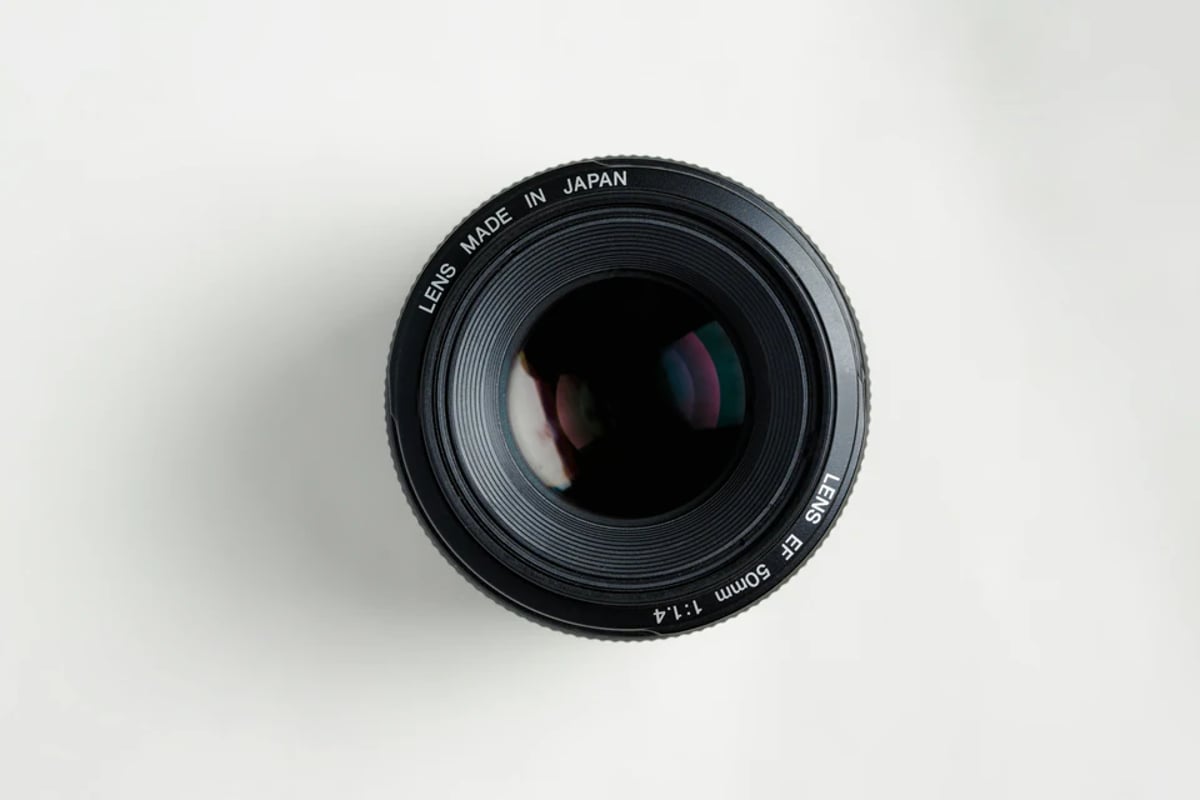
Conversely, if the intent is to embrace breathing, many standard still-photo zooms or fast primes (such as older 24-70mm f/2.8 designs or non-cine 50mm f/1.4 lenses) will naturally exhibit more noticeable breathing, particularly at closer focus distances. A common technique involves pairing such a breathy still lens with a locked-off camera and executing deliberate rack focuses, allowing the audience to distinctly perceive the image size shift. Documenting the breathing behavior of each lens in a project's lens test reference is a crucial step for consistent application.
💡 Pro Tip: When shooting VFX plates or elements that require precise match-moving and compositing, almost always opt for low-breathing cine glass. This minimizes complications in post-production, where any unintended image shifts can become difficult and costly to correct.
Common mistakes include unintentional breathing in locked-off dramatic scenes, where visible breathing during subtle dialogue racks can make a polished shot feel "wobbly." This can be avoided by either selecting low-breathing cinema lenses for conventional drama or, if breathing is desired, committing to it as an aesthetic and repeating it consistently within the sequence. Another pitfall is mixing lenses with radically different breathing characteristics within the same scene without a clear artistic motivation, which can create a jarring visual inconsistency. Relying on in-camera "breathing compensation" features (such as Sony's Breathing Compensation on select Alpha bodies) without thorough testing is also risky; these digital tools apply a small crop and only work with supported lens profiles, so test for cropping behavior and artifacts before committing.
Optical Distortion as Character and World-Building
Optical distortion manifests as deviations from straight lines in the real world appearing as curves in the image. The most common types are barrel distortion, where straight lines bow outward (prevalent in wide-angle lenses), and pincushion distortion, where lines bow inward (often seen in telephoto or some zoom lenses). More complex forms, like "moustache distortion," combine elements of both.
These distortions, often seen as imperfections, can be powerful tools for character and world-building. Wide lenses with noticeable barrel distortion, for example, can make environments feel vast, warped, or imposing, especially when used at close distances. This can be particularly effective in comedies, surreal sequences, or to convey a character's distorted psychological perspective, such as anxiety or intoxication. A wide lens placed below eye level, combined with distortion, can make a character appear larger-than-life or even monstrous, subtly altering power dynamics within a frame.
Anamorphic lenses offer a distinct form of distortion that, combined with their unique horizontal squeeze, bokeh, and flare characteristics, creates a stylized, "cinematic" spatial feeling. The specific distortion patterns of anamorphic glass can instantly evoke classic Hollywood, 70s thrillers, or the prestige television aesthetic often seen today. However, these lenses require careful testing for sharpness, flare, breathing, and specific distortion patterns to ensure they align with the desired visual language. For a full treatment of the format, see Anamorphic Filmmaking: The Definitive Guide for Serious Filmmakers.
The PL mount is an industry standard in cinema for its secure, flange-based connection that eliminates rotational play and maintains precise lens alignment, which is crucial for consistent distortion characteristics. High-end productions routinely conduct formal lens tests against grids and practical sets to meticulously document distortion, alongside breathing, flare, and color rendition, before principal photography commences. This allows the creative team to understand and leverage these characteristics intentionally. Distortion is frequently embraced in music videos, commercials, and genre films like horror, sci-fi, and highly stylized dramas, where an exaggerated visual language serves the narrative.
Lenses like modern anamorphic primes (from manufacturers such as ARRI, Cooke, Zeiss, and Atlas) are designed with signature distortion and flare characteristics that are widely employed in contemporary narrative features and streaming series. Ultra-wide cinema zooms (e.g., PL-mount lenses in the 15-40mm range) are also selected specifically for their ability to create exaggerated perspective and distortion.
💡 Pro Tip: On high-budget productions, lens maps detailing distortion characteristics are often shared between the camera department, VFX, and post-production. This ensures that everyone involved understands the lens's optical fingerprint, allowing distortion to be used deliberately rather than being fought or corrected unnecessarily in later stages.
Software tools like NLEs (Adobe Premiere Pro, DaVinci Resolve) and grading packages include lens distortion correction features. While these can be used to minimize unwanted distortion, they can also be selectively applied or partially bypassed to maintain a desired aesthetic. For visual effects, precise lens grids shot on set are used in VFX packages (e.g., Foundry Nuke) to build accurate distortion maps, allowing computer-generated elements to seamlessly match the optical characteristics of the photographed plates.
A common mistake is accidentally creating a comedic or cartoonish look by using a wide, heavily distorted lens for a serious close-up without realizing its impact on the audience's perception. Another critical error is ignoring distortion in VFX shots; failing to shoot calibration grids and document lens distortion can severely complicate post-production efforts to match CG elements to live-action plates. Mixing highly distorted anamorphic lenses with clean spherical lenses without clear intent can also be jarring for the audience, unless the shift is motivated by the story, such as transitioning between a dream sequence and reality.
Focus Falloff and Depth-of-Field as Emotional Structure
Focus falloff describes the rate at which sharpness transitions into softness as the image moves away from the precise focal plane. This characteristic is influenced by several factors: the aperture (f-stop), the camera's sensor size, the focal length of the lens, and the specific optical design of the lens itself, including elements like micro-contrast, spherical aberrations, and field curvature.
When wielded intentionally, shallow depth-of-field and graceful focus falloff isolate a subject from context, directing the audience's attention and shaping emotional resonance. A soft, gradual falloff (typical of vintage glass or select modern primes designed for "creamy" bokeh) suggests memory, intimacy, or reverie. A crisper falloff with more defined out-of-focus edges (common in modern, high-resolution cine primes) reads as clinical, alert, or observational. The choice between these registers is a story decision, not merely a technical one. For a deeper look at how lighting and lens interact to shape mood, see Beyond Three-Point: What We're Really Chasing with Light and Lens.
Aperture is the most immediate lever. Wide apertures (T1.5-T2.8 on cine primes) compress depth, throwing backgrounds into abstraction and rewarding precise focus work from the 1st AC. Stopping down (T4-T5.6) reintroduces environmental context, useful when the surrounding space is itself a character. Sensor size compounds this: Super 35 renders more depth than full-frame at the same T-stop and framing, while large-format sensors (ARRI Alexa 65, Sony Venice in full-frame mode) yield the shallowest, most sculptural falloff at equivalent field-of-view.
Older glass (such as rehoused Canon K35s, Cooke Speed Panchros, or Zeiss Super Speeds) often produces distinctive falloff with softer corners, gentle spherical aberration, and painterly bokeh, prized for period pieces and character-driven drama. Modern high-resolution primes (ARRI Signature Primes, Zeiss Supreme Primes, Cooke S8/i) offer cleaner, more predictable falloff suited to sharp contemporary dramas and VFX-heavy productions.
💡 Pro Tip: When rehearsing focus pulls for emotionally critical moments, ask the 1st AC to shoot two versions: one hitting sharp focus precisely on the eye, another with focus landing a beat late. In the edit, the delayed pull often reads as more emotionally alive because the audience feels the search for clarity.
Building a Unified Optical Language
The true power of these optical characteristics emerges when they are consciously integrated into a film's overall visual design, forming a coherent visual language. This begins in pre-production with deliberate choices about how much "optical personality" the show will exhibit, whether it aims for a clean, controlled look with minimal breathing and distortion, or an expressive, stylized aesthetic that leans into pronounced optical characteristics.
A crucial step is creating a "lens bible" for the project. This detailed document outlines which focal lengths are designated for close-ups versus wide shots, identifies specific lenses for flashbacks versus present-day scenes, and includes notes on the breathing, distortion, and falloff behavior of each chosen lens. This ensures consistency and intentionality across the entire production.
Industry standards dictate that major productions run comprehensive camera and lens tests using the exact bodies and lenses intended for the shoot. These tests meticulously record breathing characteristics (through chart racks), distortion (via grid tests), and falloff (by staging layered blocking with multiple focus planes). The results are then reviewed collaboratively by the Director of Photography, director, colorist, and 1st AC, allowing for unified decisions on how these optical traits will serve the story.
💡 Pro Tip: Experienced DPs often favor one main lens set for a project, only deviating for specific story moments like dreams, flashbacks, or altered realities. This approach helps maintain a consistent optical grammar throughout the film, grounding the audience in a recognizable visual world before intentionally disrupting it.
PL-mount and LPL-mount cinema cameras remain the standard for high-end productions due to their robust design, which securely supports heavy cinema lenses and maintains precise flange distance, crucial for consistent optical behavior. Industry-standard cine cameras from ARRI (Alexa 35, Alexa Mini LF) and Sony Cine (Venice 2) are widely used with thoroughly tested cinema lens sets.
Software like DaVinci Resolve is extensively used for lens tests and look development. It allows DPs and colorists to import test footage, apply base grades, and critically assess how breathing, distortion, and falloff interact with color and contrast. Shot-listing and previs tools (such as ShotDeck, Shot Designer, and StudioBinder) also enable teams to annotate specific lens choices and desired optical behaviors for each shot, further integrating these elements into the planning phase.
A common mistake is treating lenses as generic tools rather than distinct characters. Filmmakers might use whatever lens is mounted without fully considering how its inherent breathing, distortion, and falloff will impact the emotional tone of a scene. Inconsistent optical language across episodes or sequences, perhaps due to switching lens families mid-project without re-testing, can lead to a visually mismatched look that disorients the audience. A significant pitfall is a lack of communication between the camera department and post-production. If post-production is unaware of the specific lens characteristics, they might inadvertently over-correct distortion or sharpen falloff, unintentionally erasing the intended stylistic choices.
Professionals often develop a "look document" that incorporates stills from lens tests with detailed annotations, such as "notice slight expansion on rack" or "mild barrel distortion at 20mm, feels good for anxiety scenes." This document serves as a shared reference for the entire team. On productions with tight schedules, experienced crews will pre-mark focus pulls and blocking during rehearsals, leveraging their knowledge of breathing and falloff to avoid surprises and ensure artistic intent is met on set.
Practical Lens and Camera Choices for Common Story Situations
The deliberate application of breathing, distortion, and falloff can be tailored to specific story needs, guiding the cinematographer's lens and camera choices.
Character Intimacy and Psychological Close-ups
For scenes requiring character intimacy and psychological close-ups, cinematographers often select medium focal lengths (e.g., 40-75mm on Super 35 or their full-frame equivalents). These lenses typically offer gentle distortion and pleasing falloff, allowing for a natural, unforced rendering of faces. For "classical" dramatic scenes, minimal breathing is often preferred to maintain a sense of stability, achieved with high-end cinema primes like the ARRI Signature Prime mid-range focal lengths, known for their controlled distortion and refined falloff. However, if the scene demands a destabilizing or subjective feeling, a lens with more visible breathing can be deliberately chosen.
The Sony FE 24-70mm f/2.8 GM II offers versatility for close-ups and medium shots on Sony full-frame systems, balancing professional optical behavior with flexibility.
💡 Pro Tip: Many DPs achieve rich, dimensional skin tones by slightly underexposing the skin and then gently lifting it in the grade with controlled contrast. When combined with lenses that produce smooth falloff, this technique renders faces with depth and texture without appearing harsh.
World-Building and Environment Shots
When the goal is expansive world-building or visually impactful environment shots, wider lenses are often employed, allowing their inherent distortion to become part of the environmental storytelling. This can make crowded city streets feel overwhelming, oppressive architecture loom larger, or vast landscapes stretch to the horizon. Moderate breathing is generally acceptable in these shots if focus pulls are slow and subtle, but strong breathing can be used for stylized transitions or to emphasize a shift in perspective. Wide cinema zooms with PL mounts are frequently chosen for their consistent distortion characteristics and robust mechanics, which are essential for complex camera movements. For the choreography side of these shots, see The Definitive Guide to Camera Movement and Blocking.
💡 Pro Tip: For key locations, professionals often shoot a clean "reference frame" with minimal distortion and no extreme falloff. This provides a neutral baseline that can be used for trailers, alternative versions, or as a reference for post-production, even when the main shots embrace strong optical stylization.
Action, Chaos, and Disorientation
In sequences designed to convey action, chaos, or disorientation, cinematographers can lean heavily into optical distortion and breathing to amplify the kinetic energy. Handheld rigs paired with wide, distorted lenses, sometimes combined with visible breathing racks, can create a visceral, immersive experience. Fast primes with slightly imperfect corners can add texture and a sense of uncontrolled energy, particularly when characters push to the edges of the frame. While shallow depth-of-field and rapid falloff can be used sparingly for emotional emphasis, too much blur in action sequences can obscure critical narrative information, so a balance must be struck to maintain clarity while enhancing chaos.
💡 Pro Tip: For action scenes, experienced 1st ACs often mark "safe focus zones." These zones are determined by selecting an aperture that provides enough depth of field to be forgiving of rapid movement, while still allowing for emotional emphasis on key beats within the action. This pragmatic approach ensures performance and clarity are maintained without sacrificing visual impact.
Testing, Calibration, and Avoiding Technical Pitfalls
The intentional use of lens breathing, distortion, and falloff necessitates rigorous testing and calibration to ensure predictable and repeatable results. Without a structured approach, these powerful tools can quickly become uncontrollable liabilities.
Before any shoot, cinematographers and their teams conduct structured lens tests. These include breathing checks, where the camera is locked off and focus is racked between near and far subjects to observe and document changes in frame size. Distortion checks involve shooting grids, architectural elements, and horizon lines at various focal lengths to visually map the lens's distortion characteristics. Falloff checks require staging multiple actors or objects at different depths, then racking focus to observe and analyze the transitions from sharp to soft. All findings are meticulously documented with still frames and notes, which are then shared with post-production and visual effects teams.
These tests are typically performed using studio charts and test grids, often provided by rental houses or specialized camera departments. Controlled lighting conditions are also crucial during these tests, allowing for accurate judgment of falloff, flare, and other optical characteristics without the confounding variable of fluctuating exposure.
💡 Pro Tip: On productions with significant visual effects, DPs coordinate closely with the VFX supervisor during pre-production. This collaboration ensures that lens maps, breathing behavior, and distortion characteristics are accounted for within the CG pipeline from the very beginning, preventing costly reworks and ensuring a seamless integration of live-action and digital elements.
A common mistake is assuming that all lenses within a given set will behave identically. Manufacturing tolerances mean that individual lenses, even from the same series, can exhibit slight variations in breathing and focus behavior. Professionals test each serial number to understand its unique characteristics. Another pitfall is skipping tests for "known" lenses, especially when using them with new camera sensors, formats, or mounts. Changes in sensor size or flange distance can alter how a familiar lens renders distortion or falloff, making re-testing the exact camera-lens combination essential.
Ignoring mechanical factors, such as loose mounts or mis-shimmed lenses on PL cameras, can also introduce subtle skew or focus shifts, directly affecting perceived distortion and focus consistency.
Professionals maintain a "lens behavior log" throughout production, noting any specific quirks like "slight extra breathing on 50mm" or "corner softness at T1.5, avoid for group shots." Rental houses often provide optical test reports for high-end lens sets, which experienced DPs and 1st ACs review and cross-reference with their own on-set tests. This comprehensive approach ensures that every optical characteristic, whether intended as a flaw or a feature, is understood and controlled.
Common Mistakes
- Unmotivated Optical Shifts: Changing lens characteristics (e.g., suddenly introducing heavy distortion or breathing) without a clear narrative reason can pull the audience out of the story.
Interface & Handoff Notes
Upstream Inputs (What you receive):
Downstream Outputs (What you deliver):
Top 3 Failure Modes for This Topic:
2. Inconsistent Communication of Intent: If the DP's intentional use of optical characteristics is not clearly communicated to the director, editor, colorist, and VFX supervisor, these elements may be misinterpreted as flaws and "corrected" in post.
3. Over-reliance on Post-Production Fixes: Attempting to achieve complex optical looks or correct significant "imperfections" solely in post-production is often inefficient, expensive, and yields less authentic results than achieving them in-camera.
Browse This Cluster
- Cinematography Pipeline Guide: From Camera Tests to Deliverables
Next Steps
Ready to see how this fits into the bigger picture? Start with the complete guide.
📚 Complete Guide: Cinematography Pipeline Guide: From Camera Tests to Deliverables
---
© 2026 BlockReel DAO. All rights reserved. Licensed under CC BY-NC-ND 4.0 • No AI Training.