Netflix Paid $587M for Affleck's AI Firm InterPositive
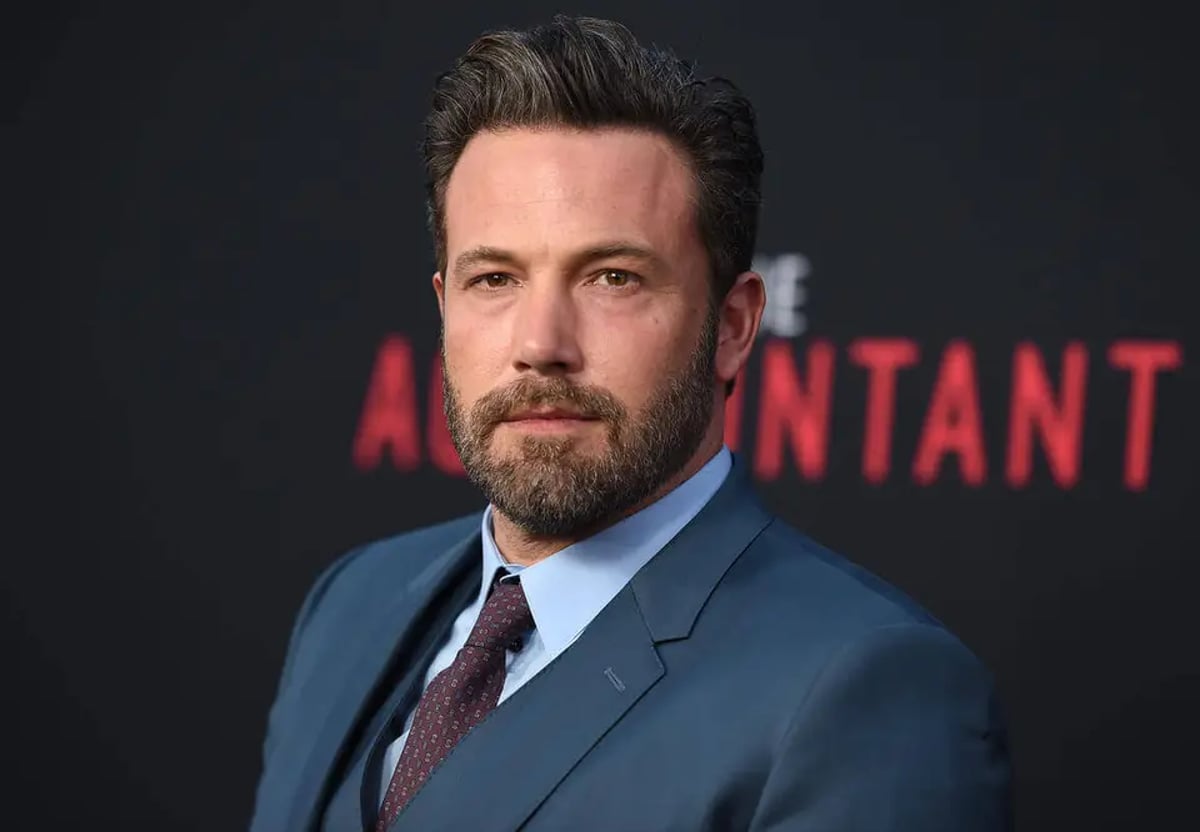
Remember those hushed whispers last March, the ones about Netflix shelling out a rumored nine-figure sum for Ben Affleck's AI venture, InterPositive? Well, the streaming behemoth has now formalized the figures, stating in a recent SEC filing that the acquisition indeed cost them $587 million. What does a nearly $600 million investment in an artificial intelligence firm founded by an actor and filmmaker say about the future of content creation and consumption? Perhaps it speaks volumes about the executive suites' unwavering belief that AI tools are not merely a passing Silicon Valley fancy, but an indispensable component of financial solvency in a perpetually tumultuous industry.
When the news first broke of this acquisition, some might have wondered if it was another celebrity-backed vanity project, destined to evaporate into the ether of forgotten tech endeavors. But Netflix's explicit confirmation, arriving as a more thorough overview of its second-quarter financial results, solidifies InterPositive’s position as a serious play in its strategic portfolio. Affleck, who silently founded InterPositive in 2022 and served as its CEO, will now transition into an advisory role, with his small staff reportedly integrated into Netflix’s existing infrastructure. It is a familiar narrative in these high-stakes acquisitions: the visionary, or perhaps the face, steps back as the corporate machinery absorbs the innovation.
The timing of this official valuation disclosure is particularly salient, coming amidst ongoing industry-wide discussions and, frankly, anxieties, about the role of AI in creative workflows. Studios and streamers are navigating a minefield of potential cost savings versus the very real concerns of the creative community regarding job displacement and ethical use of AI in production. Netflix Co-CEO Ted Sarandos, in the company’s quarterly earnings interview, addressed these issues head-on, articulating a vision where AI primarily functions as a pragmatic, cost-saving multiplier for content output.
Sarandos positioned gen-AI tools not as a replacement for human artistry (a position Steven Spielberg has publicly echoed), but as a mechanism to achieve what might otherwise be financially or logistically impossible. He noted, "It’s early days for InterPositive but we’re broadly seeing that gen-AI is starting to have an impact across hundreds of our productions." This isn’t a theoretical exploration; it's tangible application across a significant portion of their catalog. He elaborated further, explaining that "Gen AI is scaling quickly across the entertainment creation process, from concept to pre-vis through post and delivery," asserting that these tools lead to "higher-quality output more quickly and effectively than we would have using traditional methods."
The emphasis here, from Netflix's perspective, is clearly on efficiency and scale. Sarandos cited specific production areas where AI is already making inroads: visual effects, virtual production, and an in-house lab dedicated to animation. He then provided concrete examples, highlighting how "Gen AI workflows now have been used in roughly 300 of our titles, with the largest concentration to date in post-production." This suggests a strategic deployment, beginning where the computational heavy lifting can yield the most immediate, measurable returns.
Consider the practical implications on set and in the edit suite. Sarandos pointed to scenarios involving crowd shots or large-scale battle sequences, traditionally exorbitant elements in a production budget. His argument is that these are precisely the kinds of "key shots" that "productions would have left out... because they would not have been able to afford them, they would not have been able to do them in the timeframes that they’re working on." The implication is clear: AI isn't just making things cheaper, it's potentially enabling previously unachievable creative ambitions within existing budgetary and scheduling constraints.
This perspective, it must be acknowledged, often flies in the face of the romanticized ideal of filmmaking, where every frame is meticulously crafted by human hands, every crowd member an individual extra, every visual effect a bespoke creation. Yet, the realities of studio economics, particularly in the streaming wars, demand constant innovation in cost management and output volume. When a project's viability hinges on a particular visual spectacle, and AI can render that spectacle at a fraction of the cost or time, the temptation for adoption becomes almost irresistible. How many great ideas have languished in development hell because a key sequence was deemed too expensive for mere mortals to achieve?
Sarandos also offered a specific case in point: a documentary series titled _The American Experiment_. He revealed that 17 minutes of this series featured AI-enhanced footage, produced "twice as fast and at half the cost of previous options." Such statistics, if replicable across a broader range of content, paint a compelling financial picture for stakeholders. The investment in InterPositive, viewed through this lens, is not merely an expense, but a calculated move to optimize the entire content pipeline.
Of course, the critical question for filmmakers, particularly those who have dedicated their careers to the craft, is whether this efficiency comes at a qualitative cost. Can an AI truly replicate the nuanced performance of an actor in a crowd, or impart the textural richness that a seasoned visual effects artist brings to a fantastical landscape? Sarandos attempted to assuage these concerns, reiterating the corporate line that "it takes great artists to make something great, and AI is not changing that." This sentiment, while perhaps intended to be reassuring, often rings hollow in the ears of creatives who fear (as reflected in recent WGA AI protections) that "cost savings" will inevitably lead to "compromised quality" or, worse, "fewer jobs for humans."
The BlockReel DAO has consistently advocated for informed perspectives on these technological shifts. For every advancement like those employed in The Irishman's de-aging (which, incidentally, used traditional VFX methods and not generative AI), there are cautionary tales. The industry has seen its share of technological promises that ultimately fell short of their grand proclamations, or were applied without the necessary artistic oversight. This particular moment, however, feels different. The integration of AI, as espoused by Netflix, isn't about replacing the auteur, but rather about streamlining the often-arduous and expensive technical processes that support their vision.
The declared purpose of these savings, per Sarandos, is direct: reinvestment. He stated that those dollars "will likely be reinvested into more content on the service, which fuels higher-quality engagement. That whole revenue/profit flywheel that’s going to come from that is what we’ve been talking about from Day 1." It's the virtuous cycle theory of corporate finance: reduce costs, free up capital, pour it back into content, attract more subscribers, increase revenue, rinse, and repeat. But for the working professional, this raises further questions: what _kind_ of content? And will the reinvestment truly translate into more opportunities for human artists, or simply more demand for AI-driven solutions?
The acquisition of InterPositive by Netflix is a tangible manifestation of the industry's embrace of AI, not as a speculative future, but as a current operational tool. While the specific nature of InterPositive's undisclosed AI capabilities remains a point of industry speculation, the sheer valuation and Netflix's candid statements suggest a belief in its deep integration into the production lifecycle. This isn't just about a film studio dipping its toe; it’s about a streaming giant taking a deep plunge.
Filmmakers need to dissect these public statements with a discerning eye. When Sarandos mentions "higher-quality output more quickly and effectively," what metrics define that quality? Is it purely aesthetic, or does it incorporate efficiency in decision-making and rapid iteration? The tools like those mentioned by Sarandos are often lauded for their ability to accelerate pre-visualization, allowing directors and cinematographers to experiment with complex sequences without the prohibitive costs of traditional methods. Imagine a virtually rendered crowd scene, meticulously choreographed and lit, before a single extra is hired or a single dollar spent on location permits.
This strategic pivot by Netflix, solidified by the half-billion-dollar price tag, signals a trajectory many in the industry have quietly anticipated. The pressure to produce vast quantities of high-quality, engaging content for a global audience, all while managing formidable budgets, means that every efficiency edge will be exploited. Whether InterPositive's specific contributions lean into automated content tagging, predictive content optimization, or generative visual elements, the core function is ostensibly to lighten the load on the production pipeline.
What's clear is that the industry's relationship with AI is evolving from theoretical discussion to practical implementation. InterPositive's story, from its clandestine formation in 2022 to a near-$600 million acquisition in 2026, is a testament to the accelerated pace at which these technologies are being integrated. How this influences the collaborative spirit of filmmaking, the very essence of what we do, remains to be seen. Will it empower more filmmakers with tools to realize their grandest visions, or simply standardize the process into a more predictable, cost-efficient manufacturing line? As industry veterans, we've witnessed countless technological shifts, each promising a new dawn. This one, with its celebrity face and nine-figure price tag, is certainly making a statement. Perhaps the question isn't whether AI is coming to Hollywood, but rather, what Hollywood will look like once it's fully arrived.
---
© 2026 BlockReel DAO. All rights reserved. Licensed under CC BY-NC-ND 4.0 • No AI Training. Originally published on BlockReel DAO.