Dead by Daylight Film: Palsson Helms Blumhouse Pic
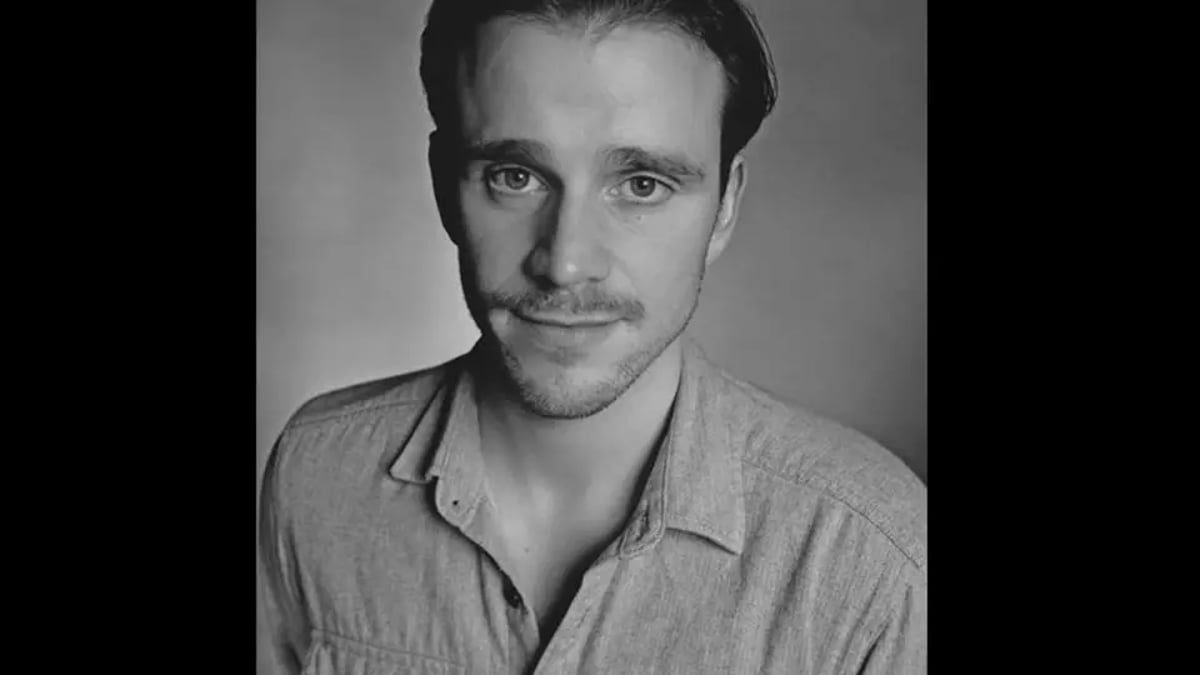
The IP mill continues to grind, doesn't it? Just when you thought every conceivable franchise had been plundered for cinematic potential, another video game property is making the leap. This time, it's the multiplayer horror sensation Dead by Daylight, with Icelandic director Thordur Palsson tapped to helm the feature adaptation. The announcement, made during the game's 10th anniversary celebration in Montreal, links Palsson with horror stalwarts Blumhouse Atomic Monster and Behaviour Interactive, suggesting a concerted effort to translate the long-running interactive experience into a theatrical one.
It’s an interesting move, particularly given the decade-long journey Dead by Daylight has already undertaken in the gaming world. For those unfamiliar with its digital mechanics, the game pivots on a deceptively simple premise: one player assumes the role of a Killer, while four others try to survive as Survivors, repairing generators to power exit gates, all while evading capture and sacrifice to a mysterious entity. It’s a dynamic that relies heavily on cat-and-mouse tension, environmental psychology, and a revolving door of iconic horror crossovers that have made it a fan favorite, drawing in "one million people daily," as James Wan pointed out. The question, then, for a filmmaker like Palsson, becomes how one translates that iterative, player-driven tension into a linear narrative without losing the core appeal.
Palsson, known for his work on Netflix's The Valhalla Murders and his debut feature The Damned, brings a particular sensibility to the horror genre. The Valhalla Murders, as Iceland's first Netflix Original series from 2020, showcased a knack for atmospheric storytelling and a chilling Nordic noir aesthetic that resonates with psychological dread. His feature, The Damned, which premiered at Tribeca and received a U.S. release last year, further cemented his reputation for building tension, a quality James Wan explicitly cited in his remarks. Wan noted Palsson’s capacity to "make you feel the walls closing in," calling it "exactly the instinct this film needs on screen." This focus on oppressive atmosphere and character-driven fear, rather than just jump scares, hints at the direction Blumhouse and Atomic Monster might be steering this project.
The collaboration itself is noteworthy. Blumhouse and Atomic Monster, led by Jason Blum and James Wan respectively, have carved out a significant niche in the contemporary horror landscape. Their track record with high-concept, relatively low-budget horror has reshaped studio perceptions of the genre's commercial viability. When Jason Blum states that "Thordur is the filmmaker we trust to carry Dead by Daylight from the screen you play on to the big screen you watch in theaters," it's not just a promotional soundbite. It reflects a strategic decision based on Palsson's demonstrated abilities. Their involvement suggests that while the source material is a video game, the cinematic approach will likely lean into the psychological and atmospheric elements that have defined their successful productions, rather than simply replicating game mechanics.
One of the enduring challenges in adapting video games to film is the inherent difference in medium. Games are experiential; films are observational. Dead by Daylight's strength lies in its emergent narratives, the unique, unscripted moments that arise from player interaction. The Killer's strategy, the Survivors' desperate teamwork, the near misses, the sacrifices, these are not pre-written scenes. A film adaptation, by its very nature, has to impose a singular story structure. How Palsson navigates this fundamental disconnect, translating the feeling of being hunted through diverse, procedurally generated maps and an ever-changing roster of playable Killers and Survivors, will be key. Will it embrace the anthology-like nature of the game, focusing on a specific instance of "trial" within the entity's realm, or attempt to weave a broader mythology? The game, after all, features crossovers with numerous horror franchises, suggesting a universe that is both expansive and somewhat open-ended in its lore.
Stephen Mulrooney, chief product officer for Behaviour Interactive and a producer on the film, highlighted Palsson's "distinct vision, atmospheric storytelling and ability to build tension." This emphasis on atmosphere, a crucial element in horror, suggests an understanding that simply rendering the game's mechanics on screen won't suffice. Think of the successful horror adaptations, cinematic or otherwise; they invariably find a way to tap into primal fears by building a palpable sense of dread, rather than just showing characters running from a monster. Guillermo del Toro, for instance, often speaks of the monster as a metaphor, the true horror lying in human behavior or psychological torment. If Palsson can imbue the Dead by Daylight universe with that kind of thematic weight, beyond just blood and chase sequences, it stands a better chance of resonating with an audience accustomed to sophisticated genre fare.
From a production standpoint, the executive producer list reads like a who’s who of horror and intellectual property management: Behaviour Interactive’s Remi Racine; Atomic Monster’s Michael Clear and Judson Scott; Blumhouse’s Ryan Turek; and Striker Entertainment’s Russell Binder. This collective of creative and business minds converging on a gaming IP signifies the continued studio appetite for pre-established fanbases, a trend that shows no signs of abating (a tension we unpacked in our study of IP and identity in Riz Ahmed's 'Bait', and one echoed in Gaumont U.S.'s recent option of Mary Kubica's 'It's Not Her'). It’s a well-worn path, of course, from games to screens, littered with both triumphs and cautionary tales. The trick, as always, is to satisfy the existing fanbase without alienating a broader theatrical audience.
Palsson's background, having graduated from the UK’s National Film and Television School with an MA in Directing Fiction, positions him as a filmmaker grounded in narrative craft. His experience creating a Netflix Original series signals an understanding of contemporary serialization and audience expectations, while his feature work indicates a command of the big screen. The jump from directing for television or independent features to helming a studio-backed adaptation of a globally recognized game is often substantial. It requires a specific kind of nimbleness, the ability to balance a distinctive artistic voice with the commercial imperatives and established canon of a major franchise.
One might consider the trajectory of other game-to-film adaptations. For every Resident Evil franchise that found its footing with a new, action-oriented interpretation, there are countless others that struggled to capture the essence of their interactive counterparts. The success of Dead by Daylight on screen will depend heavily on identifying what truly makes the game compelling beyond its playability. Is it the archetypal horror figures? The desperate struggle for survival? The claustrophobia of its maps? Palsson's challenge will be to distill these elements into a compelling, passive viewing experience. How does one maintain the sense of vulnerability and impending doom when the audience isn't actively controlling the Survivor's desperate dash towards a generator, or the Killer's methodical hunt?
Consider the game's inherent limitation: its maps. From the gloomy "Greenville" to the dilapidated "MacMillan Estate," these locations are more than just backdrops; they're active participants in the game's tension. Wan specifically mentioned these locales, signaling an awareness within the producing team of their importance. Translating these highly specific, often claustrophobic, and strategically designed spaces into cinematic environments that feel expansive yet terrifying is a meticulous task for a cinematographer and production designer. It isn't just about recreating their visuals, but about replicating their impact on the characters' psychology and the audience's suspense.
The casting, though not yet announced, will also play a pivotal role. The game thrives on recognizable archetypes, the hapless victim, the selfless leader, the cunning trickster, the unyielding monster. Finding actors who can embody these roles while also bringing depth to characters often defined by player choice will be crucial. And, of course, the portrayal of the various "Killers" from the Dead by Daylight universe, many of whom are licensed characters from other horror franchises, presents its own set of creative opportunities and constraints.
Ultimately, Palsson’s involvement with Blumhouse Atomic Monster and Behaviour Interactive in adapting Dead by Daylight represents another significant crossover in the ever-blurring lines between gaming and cinema. The track record of those involved, particularly Palsson’s demonstrated ability to craft atmospheric tension, suggests a project taking its horror roots seriously. The real test, as it always is with these adaptations, will be in how successfully the film navigates the chasm between interactive gameplay and linear storytelling, creating a horror experience that resonates with both the faithful and the uninitiated. It’s rarely as simple as it sounds, but then, few things worth doing are.
For further insights into the complexities of creative rights and adaptations, one might consider the implications discussed in Catherine Breillat Optioned Simenon's The Krull House, Cites Contemporary Resonance. Such discussions often highlight the delicate balance between honoring source material and forging a distinct artistic vision. Another perspective on navigating the intricacies of complex narrative structures in contemporary media can be found in analyzing how filmmakers distill intricate backstories and lore, as explored in How 'The Leader' Recasts Heaven's Gate for Today's Audience. These creative challenges, while different in their specifics, share a common thread of translating established universes into compelling new forms.
---
© 2026 BlockReel DAO. All rights reserved. Licensed under CC BY-NC-ND 4.0 • No AI Training. Originally published on BlockReel DAO.