Master studies, frame-by-frame film analysis, production guides, industry intelligence, and filmmaker interviews. Cinema covered through craft and technique.
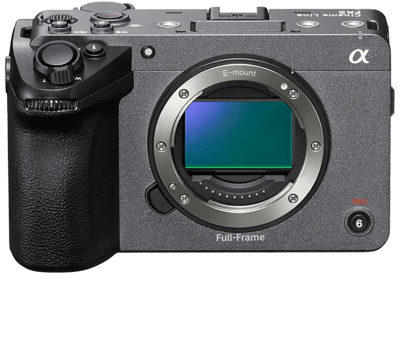
Sony Japan has moved the FX5 and three accessories to a late October 2026 or later release window. Here is what is confirmed, what remains unknown, and what pre-order customers should check.
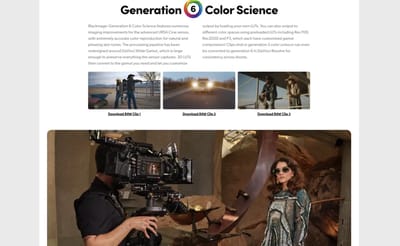
The color science within a camera system forms the fundamental bedrock of its image capture and, by extension, the entire post-production pipeline. For professional cinematographers and colorists, changes to this core engine are never trivial. Blackmagic Design recently announced Blackmagic Camer...
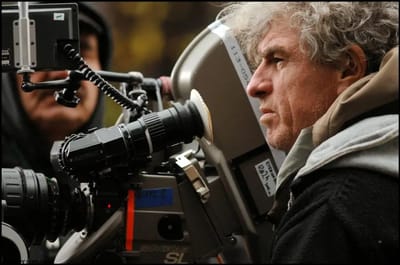
A smear of light drags across the frame, the tail-light of a bus bleeding into the rain-slicked Hong Kong asphalt. The camera is not on sticks. It is a nervous system, a participant, shouldering its way through a crowded noodle stall or stumbling alongside a character in fligh...
Setpieces are the narrative landmarks of a screenplay, the sequences designed to elevate the stakes, showcase character under pressure, and deliver significant emotional or visceral impact. Far from being mere spectacle, a well-crafted setpiece is a concentrated burst of storytel...
FUJIFILM ETERNA ProRemote brings live view, waveform, RGB parade, vectorscope, and focus control to the GFX ETERNA 55 from an iPhone or iPad. Here is what each of the three connection modes actually does, and where the app fits on a working set.
The antagonist is not merely a villain; it is the engine of conflict, the source of pressure that reveals and refines the protagonist. Its design is fundamental to the story's structure, driving both external plot and internal character development. Without effective antagonistic...
The engine of compelling screenwriting is often found in the escalating stakes faced by its characters. A narrative that lacks genuine escalation risks becoming stagnant, losing audience investment. However, forcing stakes can equally alienate viewers, making the plot feel contri...
Understanding the distinction between backup and archive is fundamental. A backup is a temporary copy of data for immediate recovery from accidental deletion or hardware failure. An archive, however, is a permanent, unique instance of finalized files moved off primary production...
Three consecutive cinematography Oscars, one method: very wide lenses held close to the face, light with a single justification, and takes long enough to make you a participant. A full study of Lubezki with Cuaron, Malick, and Inarritu.
Professional subtitle and caption workflow: reading speed and timing rules in characters per second, format choice from SRT to IMSC and SCC, plus version control that survives a twelve-language delivery.
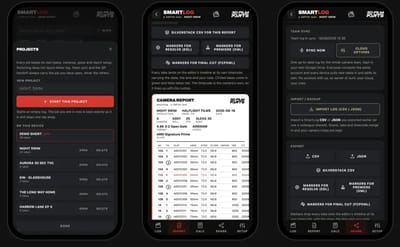
SmartLog is a free camera report app from 3D Film Parts, now in open beta. Nineteen camera department calculators, manufacturer-sourced data for 87 bodies, timecode repair across a range, and exports to Silverstack, Drylab, Resolve, Premiere, and Final Cut. Here is how it fits a real shooting day.
The journey of a picture vehicle begins long before it rolls onto set, often originating from a collaborative effort between the art department and the locations team. This initial phase defines the vehicle's role, character, and practical requirements, setting the stage for all...
The cornerstone of effective hair/makeup continuity, especially for dynamic effects like sweat, blood, and prosthetics, lies in rigorous documentation and a proactive approach to planning. Unlike static looks, these effects are designed to change, degrade, or be reapplied, making...
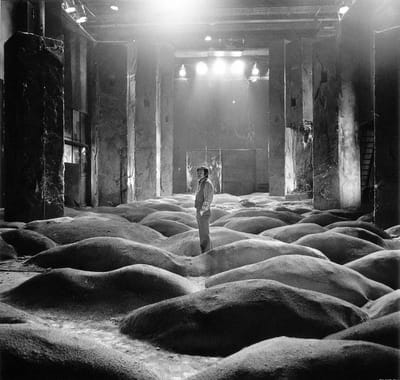
A camera tracks, unhurried, over a waterlogged floor. Objects float in the still, murky water: debris, papers, perhaps a syringe. The movement isn’t motivated by a character’s point of view or a narrative event demanding attention. It is a contemplative gaze, an act of looking...
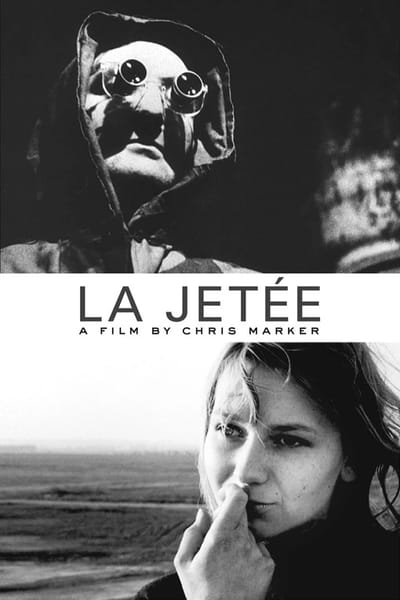
Chris Marker made a time-travel film almost entirely from still photographs, then broke his own rule exactly once. A craft study of how sound, shot duration, and withheld motion do the work that camera movement usually does.
Ambience is the sonic wide shot. How to build ambient beds in layers, match perspective to shot size, and move a scene from dawn to night without the audience hearing the seams.
The FCC is taking comment on whether to block imports and sales of DJI drones already cleared for the US market, including replacement parts. Here is what the proposal actually says, which gear is exposed, and what it means for aerial units, budgets, and insurance before the September 2 comment deadline.
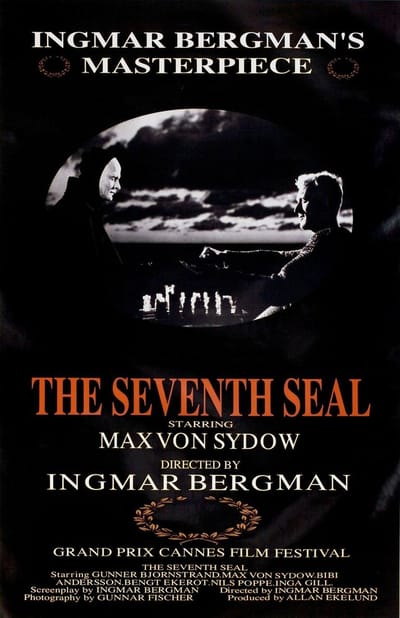
Bergman had about 35 days, a soundstage, and roughly $150,000. The Seventh Seal turned every one of those limits into an argument about faith, death, and the artifice of the image.
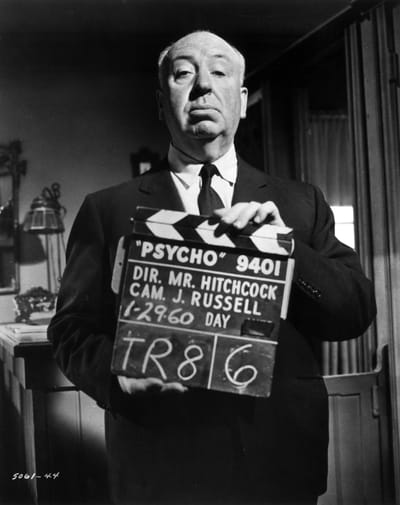
Hitchcock's suspense was never about what the camera showed. It was about what the audience knew and the character did not. A study of the restricted point of view, the danger staged in ordinary daylight, the Burks-Tomasini-Herrmann unit, and what a working crew can take from all of it.
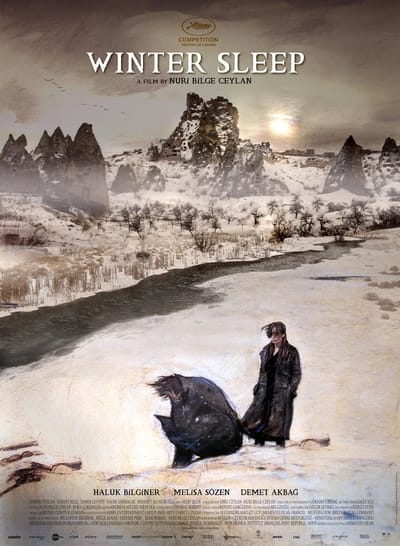
A fire crackles in a hearth, the only source of warmth in a room carved from stone and lined with books. Two people sit across from one another, separated by a desk cluttered with papers. Outside, the Anatolian winter has buried the landscape in snow. Inside, the air is thick ...
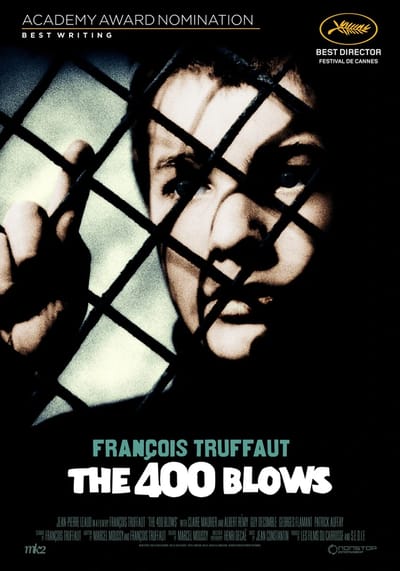
The frame of *The 400 Blows* works against itself. In 1959, the anamorphic widescreen format was a technology of spectacle, engineered for historical epics and grand musicals. It promised audiences an immersive visual event that the small television screen could not replicate....
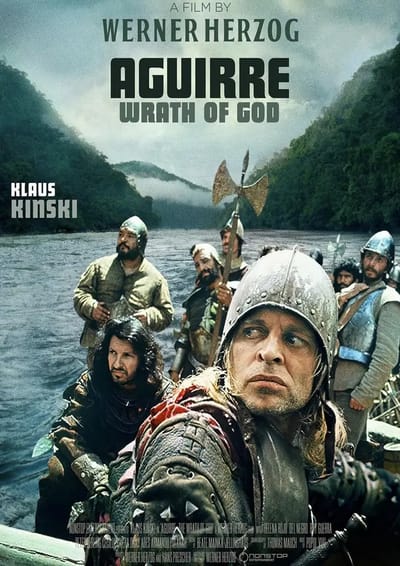
Werner Herzog made a period epic on the Amazon for around $370,000 with a crew of roughly eight. A frame-level study of how that constraint produced the 1.37:1 framing, the available-light photography, the withheld coverage, and the choir-organ score.
To see the work of Vittorio Storaro is to witness an argument. It is an argument made not in dialogue but in photons, a sustained thesis that light is not merely a tool for exposure but the primary emotional and philosophical material of cinema. His images are rarely just beau...
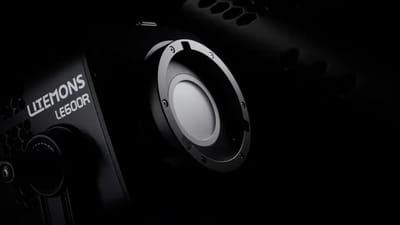
The pursuit of finer granular control over color, output, and integration continues to drive lighting manufacturers, and Godox has just released an update that leans into this demand. The company has officially announced its LITEMONS LE Series RGB LED Lights, introducing three new fixtures: the L...
The image burns. Not metaphorically, but literally. A carbon arc lamp sputters, the film strip catches, and the celluloid melts into a bubbling, abstract horror. This is the rupture at the heart of *Persona* (1966), a self-inflicted wound on the cinematic body that announces t...
Achieving seamless dialogue in film often requires replacing production audio with newly recorded lines, a process known as Automated Dialogue Replacement (ADR). The true mark of mastery in post-production sound is when this replacement goes entirely unnoticed by the audience. Th...
The air in a Hayao Miyazaki film has weight. One feels it in the resistance against an airship’s wing, the humid stillness of a forest floor, or the sudden vacuum of a spiritual passage. Consider the bathhouse in *Spirited Away* (2001). The film’s texture is built not only fro...
The light from the motel window in *No Country for Old Men* (2007) is not an aesthetic choice so much as a physical fact. It is a hard, unforgiving key that bisects the room, carving out a space of temporary safety while leaving the rest in an abyss of shadow. The darkness isn...
The final battle begins in rain. Not a cinematic drizzle, but a torrential, elemental downpour that turns the earth to a churning slurry of mud. Figures slip and fall, their footing lost to a world dissolving under their feet. The environment is not a backdrop; it is an antago...
The camera does not hurry. It proceeds with an unnerving and inhuman steadiness, gliding down a corridor, across a patterned floor, or through the vacuum of space. Its movement is not that of a human observer, prone to saccades and casual glances. It is the movement of a syste...
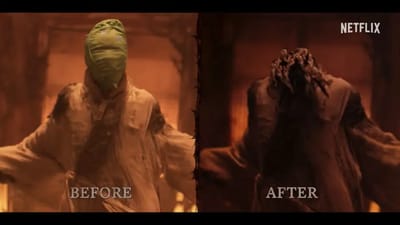
The visual effects driving the storytelling in "The East Palace" are being showcased in a newly released featurette. The piece, distributed by Netflix K-Content, offers a look into the film's VFX implementation.
Automated Dialogue Replacement (ADR) is a fundamental yet often misunderstood component of modern filmmaking. It is the process of re-recording dialogue in a studio after principal photography, typically to improve audio quality, clarify lines, or add new dialogue. Unlike voiceov...
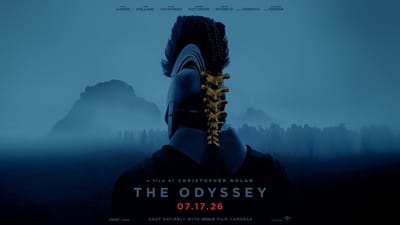
We've all been there: the fervent discussions in post-production houses, the trade-offs in the color suite, the endless debates over how best to present a film. Christopher Nolan's “The Odyssey” has certainly ignited its share of these conversations, primarily regarding its presentation in 70mm a...
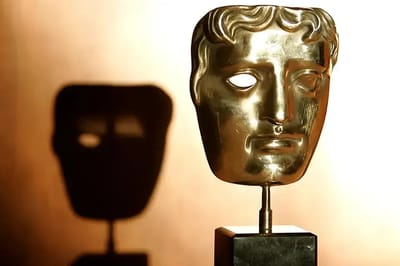
The British Academy, ever the staid counterpoint to Hollywood's more theatrical pronouncements, has quietly rolled out a series of adjustments to its film awards eligibility and voting protocols for the 2027 season. While perhaps lacking the dramatic flourish of some recent AMPAS overhauls, these...
The concept of "picture lock" is often treated as a sacred milestone in filmmaking, signaling the moment when the picture editor has finalized the visual cut and the post-production sound team can begin their work in earnest. In reality, especially in independent and fast-paced p...
The pursuit of clean production sound is a constant battle against the inherent noise of the world. From the hum of essential machinery to the unpredictable sounds of traffic and the often-overlooked clamor of the crew, every set presents a unique acoustic challenge. For filmmake...
The visual effects industry often garners attention for its spectacular, larger-than-life sequences. Yet, a significant portion of the craft thrives in invisibility, seamlessly integrating digital artistry with practical footage to enhance narrative without drawing overt attention to itself. The ...
Capturing clean dialogue is a cornerstone of effective filmmaking, yet some of the most emotionally charged moments often involve voices that challenge standard recording practices. Whispers convey intimacy and secrets, shouts punctuate conflict and climax, and overlapping dialog...
Remember those hushed whispers last March, the ones about Netflix shelling out a rumored nine-figure sum for Ben Affleck's AI venture, InterPositive? Well, the streaming behemoth has now formalized the figures, stating in a recent SEC filing that the acquisition indeed cost them $587 million. Wha...
Capturing clean, intelligible dialogue is paramount in narrative filmmaking, and while the boom microphone remains the primary tool, there are countless scenarios where its reach is limited. This is where the strategic deployment of plant microphones becomes essential. Plant mics...
Filmmaking often demands creating compelling visuals within the constraints of real-world locations, and few challenges are as persistent as working in cramped interiors. From a character's intimate confession in a small apartment to a tense confrontation in a crowded office, sma...
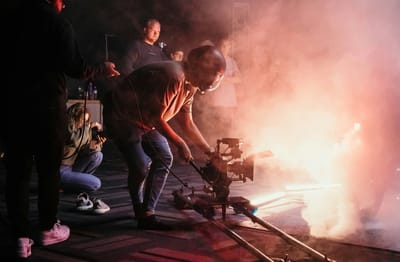
The first and most critical consideration when using atmospheric effects is safety. Rain, smoke, and haze introduce unique hazards that must be identified, mitigated, and constantly monitored. Ignoring these protocols not only endangers the crew but can halt production and incur...
Intentional handheld camera work elevates a film from merely shaky footage to a powerful, visceral storytelling tool. This isn't about avoiding a tripod because one isn't available; it's about making deliberate choices that amplify narrative tension, character intimacy, or a scen...
Securing financing and distribution for an independent film often feels like navigating a labyrinth. However, for those who approach the process with the mindset of a sales agent, the path becomes clearer. Packaging a film "like a sales agent" means assembling and presenting the...
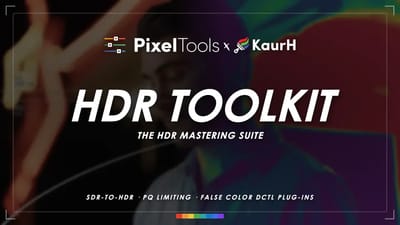
The complexity of managing dual HDR and SDR deliverables has long been a chokepoint in post-production. Colorists and post-production supervisors know the painstaking process of trimming a high-brightness container after an SDR master has been approved, often leading to additional, granular appro...
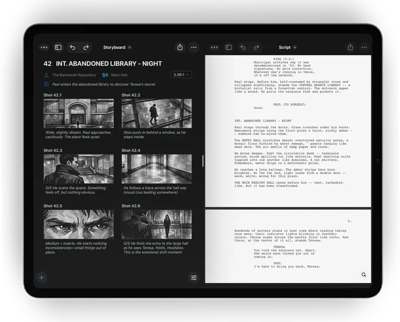
The landscape of pre-production tools for professional filmmakers continues to evolve, with Cadrage Studio officially transitioning out of its early access phase. Developed by Cadrage GmbH, the team behind the widely adopted Cadrage director's viewfinder app, this pre-production suite is now avai...
Does a company ever truly sharpen its focus without first shedding some significant weight? Apparently not even one as entrenched in the bedrock of cinematic image-making as ARRI. The venerable German manufacturer has reportedly entered into an agreement to sell its global rental activities in Eu...
Another Emmy nomination cycle has come and gone, and the reverberations are already settling across the industry. For those of us who have spent years navigating the labyrinthine corridors of studio development and tracking the ebb and flow of critical reception, the 78th Emmy nominations offer a...
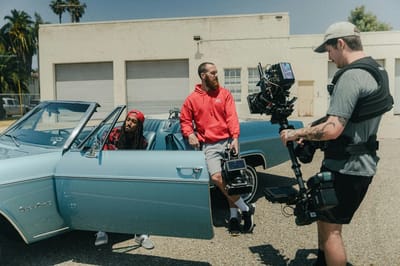
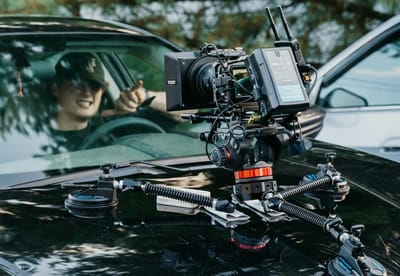
Capturing compelling footage from, in, or around moving vehicles presents unique challenges that blend cinematography with complex engineering and rigorous safety protocols. This guide focuses on the practicalities of professional vehicle-mounted cinematography, emphasizing safet...