Godox LITEMONS LE200R/LE300R/LE600R RGB: Specs & Price
> This article contains affiliate links. BlockReel may earn a small commission on qualifying purchases at no extra cost to you. All commissions go directly toward funding our DAO Film Festival and supporting independent filmmakers.
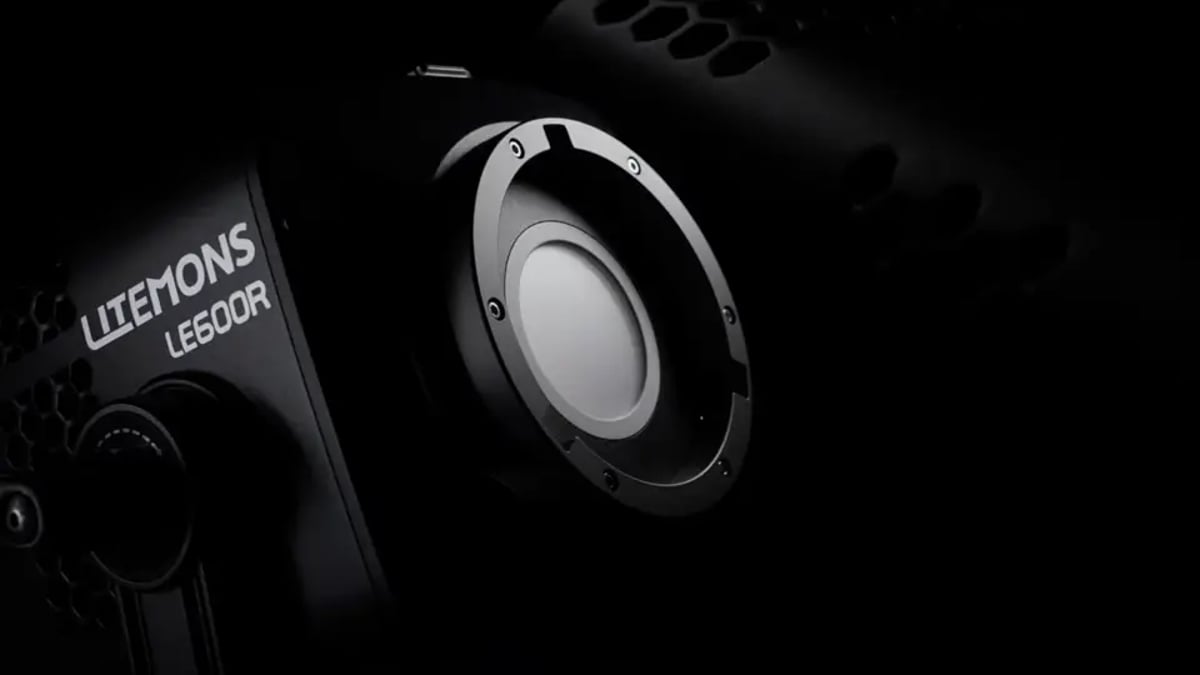
The pursuit of finer granular control over color, output, and integration continues to drive lighting manufacturers, and Godox has just released an update that leans into this demand. The company has announced its LITEMONS LE Series RGB LED Lights, introducing three new fixtures: the LITEMONS LE200R RGB, LITEMONS LE300R RGB, and LITEMONS LE600R RGB. These additions expand the existing LITEMONS LE Bi-color line, providing filmmakers and gaffers with full RGB capabilities in a familiar form factor.
For those of us working in the trenches, RGB fixtures aren't just about a splash of color. They change how we approach lighting design, offering precision in color temperature, saturation, and hue that gels and bi-color units can't replicate without trade-offs. The flexibility to dial in an exact shade of teal, magenta, or amber without losing intensity to gels (or dealing with their practical hassles) is valuable, especially on sets where time is currency.
Technical Specifications: Inside the LITEMONS RGB Line
Godox states that these new LITEMONS RGB fixtures are RGB versions of the previously released Bi-color series (the LE200Bi, LE300Bi, and LE600Bi), which were announced in September 2025. That continuity keeps the LITEMONS platform consistent for users already invested in it. One notable detail: these RGB lights do not use the PaletteLab lighting engine found in Godox's KNOWLED PL600RF and PL1200RF flagship fixtures. We covered that engine in detail when it debuted, in Godox Unveils PaletteLab Color Engine and Five New Fixtures at NAB 2026. Its absence here points to a different internal architecture, aimed at a lower price tier.
The core strength of any RGB fixture is its color capability, and the LITEMONS LE Series RGB lights cover the expected ground. They carry a CCT (Correlated Color Temperature) range from 1800K to 10,000K, wide enough to match candlelight at one end and heavily overcast daylight at the other. Beyond CCT, these units include G/M (Green/Magenta) shift correction, which matters when you are mixing with practicals or shooting under existing fluorescent fixtures. That kind of fine color control is the same discipline we unpack in Beyond Three-Point: What We're Really Chasing with Light and Lens.
The LITEMONS RGB series supports multiple operating modes:
- HSI (Hue, Saturation, Intensity): The fundamental mode for direct color selection, with intuitive control over the color wheel.
Those 14 effects include:
- RGB cycle
Effects modes get dismissed as novelty, but a well-implemented set is useful for adding believable practical motion to a scene without complex programming. A subtle TV flicker on a sleeping actor, or the wash of emergency lights passing a window, are exactly the cues that otherwise cost you a board operator and a chase.
Ergonomics and Control: Power and Precision
The physical design and control interface of a fixture drive on-set efficiency. Godox has carried over the all-in-one design from the Bi-color LITEMONS, combining power supply and control in a single unit. That reduces cable clutter and simplifies rigging, which matters most when you are working tight. Our guide on Working Fast in Small Spaces: Blocking and Lighting Collaboration covers why footprint often beats raw output in cramped locations.
Control options cover most workflows:
- Onboard Adjustments: Rear local controls and a color screen. For small setups or quick tweaks, this stays the fastest method.
Color rendering is claimed at CRI 96 and TLCI 95. Those are working numbers rather than reference-grade ones, and they sit slightly below the CRI/TLCI 98 that Godox claimed for the bi-color LE units. That is a normal trade for adding color emitters, but it is worth knowing before you mix these with higher-spec fixtures in the same frame. A high TLCI (Television Lighting Consistency Index) matters specifically because it measures how a source renders for camera sensors rather than for the eye. If you want the deeper background on how this feeds downstream, see Color Pipeline Planning: From Set Monitoring to Final Master.
Dimming runs 0 to 100%, with four dimming curves:
- Linear
Curve selection gives gaffers control over how the light ramps, which changes how a live dim reads on camera. Linear is fine for a straight fade. An S-curve tends to look more natural through a lens, especially across the bottom of the range where banding and stepping show up first.
Power and Output: Breaking Down the Models
LITEMONS LE200R RGB
- Output: Claimed 71,700 lux at 1m (3.3′) with the included reflector at 5600K.
The 230W draw and corresponding output make the LE200R a reasonable accent, rim, or small-space key light. Its low weight helps on light stands you would not trust with a heavier head.
LITEMONS LE300R RGB
- Output: Claimed 94,400 lux at 1m (3.3′) with the included reflector at 5600K.
At 330W, the LE300R gains real intensity, which is what you want once the light is pushed through a large softbox or bounced. It holds nearly the same weight as the LE200R, which is the more interesting part of the spec sheet.
LITEMONS LE600R RGB
- Output: Claimed 130,000 lux at 1m (3.3′) with the included reflector at 5600K.
The LE600R, at 635W and a claimed 130,000 lux, is the key-light option in the range, with enough punch to work through heavy diffusion or hold up against ambient daylight through a window. Weight roughly doubles over the smaller heads, but 11.5 lb is still a one-person lift onto a combo stand.
All three units are fan cooled, which is expected for COB (Chip on Board) fixtures at this power. Bowens S mount compatibility is the practical headline, since it opens the whole third-party modifier market. Godox specifically calls out compatibility with its separately sold UL series softboxes, the QR-PT quick release parabolic softbox, and the CS-T collapsible lantern.
The Professional Toolkit: Where Do These Fit?
For documentary crews, indie features, and commercial work on tighter budgets, the combination of full RGB, claimed color accuracy, and Bowens mount at these prices is worth a look. The direct competition is clear: Nanlite's PavoSlim 360C attacks the same territory from the soft-panel side, while ARRI's Omnibar sits well above on price and color science. Within Godox's own catalog, the KNOWLED P1200R and P600R panels remain the higher-tier option.
The integrated power supply cuts both ways. Fewer bricks on the floor is a genuine benefit, but it also puts all the heat and mass in the head. Godox lists these as AC-powered with an integrated supply, with no V-mount or Gold-mount plate mentioned, so battery operation would need an inverter and the extra weight that implies. For studio and stage work on house power, that is a non-issue. For run-and-gun location days, it is the first thing to check against your schedule.
The RGB side, particularly HSI and GEL modes, buys you a palette without gels that fade, tear, and eat output. Sickly green for a hospital corridor, deep blue for a moonlight wash, both are a dial rather than a trip to the expendables cart. Just keep the discipline of matching what you build on set to what your colorist expects, which we cover in Bridging the Color Divide: What Your Colorist REALLY Wants You to Know, DP.
The absence of the PaletteLab engine is the clearest line Godox has drawn between tiers. Anyone chasing the most accurate spectral output the company can produce is still pointed at the KNOWLED range. For the majority of practical applications, the described feature set here should hold up.
Godox continues to push capability down into more accessible price tiers. The LITEMONS LE Series RGB lights present a practical option for filmmakers who need color control, AC-powered simplicity, and Bowens mount compatibility in one integrated head. Worth examining before your next package rental turns into a purchase.
---
© 2026 BlockReel DAO. All rights reserved. Licensed under CC BY-NC-ND 4.0 • No AI Training.